
Introduction
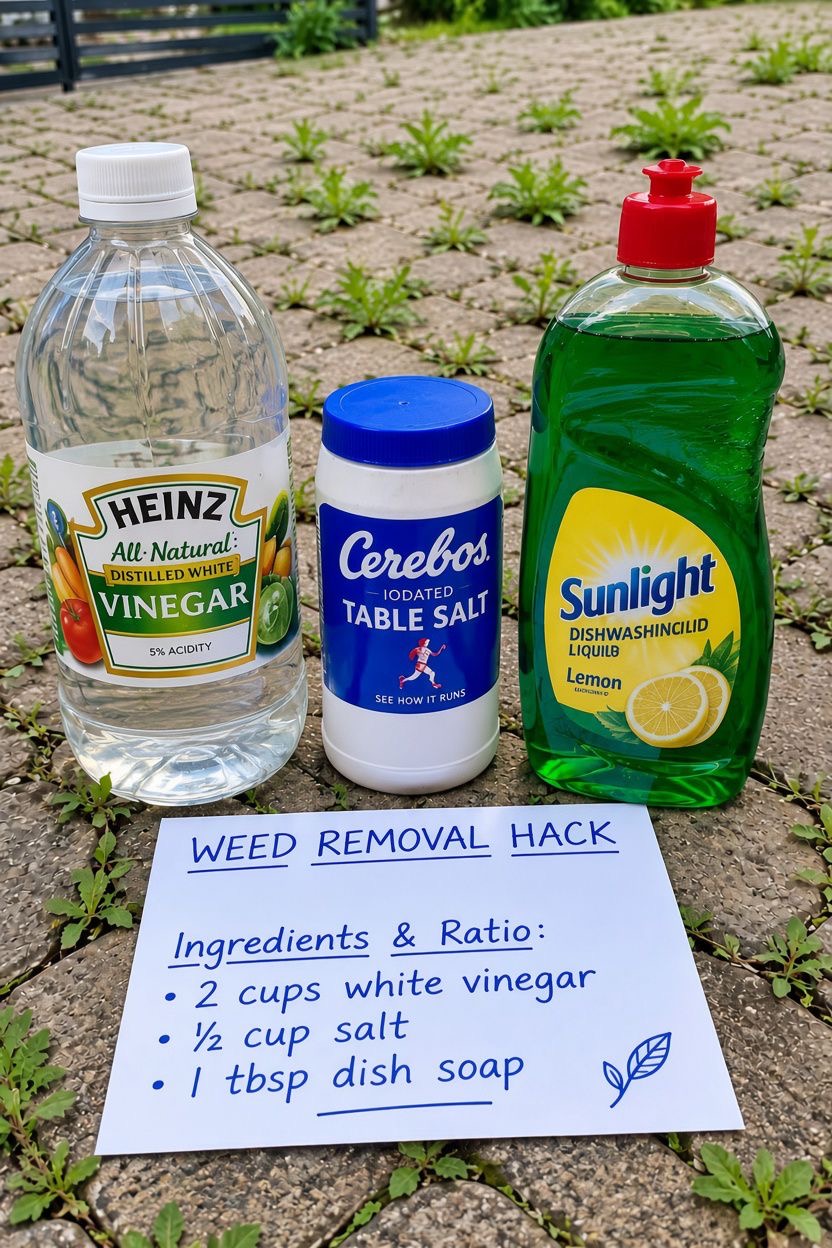
Tired of pulling weeds by hand or spending money on commercial weed-control products? This simple homemade weed killer uses just three common household ingredients: white vinegar, salt, and dish soap.
It can be useful for controlling unwanted weeds growing in driveway cracks, patio joints, gravel paths, and other areas where you do not want vegetation.
The vinegar can damage the leaves on contact, while the dish soap helps the solution spread across the foliage. Salt can make the treatment more persistent, but it can also damage soil and nearby plants, so careful application is essential.
⚠️ Important: This is a non-selective weed killer. It can damage or kill desirable plants and can make treated soil unsuitable for future planting.
Recipe Overview
| Feature | Details |
| Prep Time | 2 minutes |
| Active Time | 3 minutes |
| Total Time | 5 minutes |
| Yield | About 2½ cups |
| Difficulty | Very Easy |
| Category | DIY Garden & Home Care |
Why You’ll Love This Recipe
Budget-Friendly: Uses inexpensive household ingredients.
Simple: Only three ingredients are needed.
Easy to Apply: The finished solution can be applied with a spray bottle.
Useful for Hard Surfaces: It is best suited to weeds growing in cracks and areas where surrounding plants are not wanted.
Quick Visible Results: Under warm, sunny conditions, treated foliage may begin to wilt or brown within several hours.
Ingredients
| Ingredient | Quantity | Purpose |
| White vinegar, approximately 5% acidity | 2 cups | Provides acetic acid that can damage plant foliage |
| Table salt | ½ cup | Helps dehydrate plant tissue but may persist in soil |
| Liquid dish soap | 1 tablespoon | Helps the solution spread and adhere to leaves |
Step-by-Step Instructions
Prepare the Spray Bottle
Use a clean spray bottle that holds at least 24 ounces. A small funnel can make filling easier and reduce spills.
Add the Salt
Pour ½ cup of table salt into the bottle.
Add the Vinegar
Carefully add 2 cups of white vinegar.
Dissolve the Salt
Close the bottle securely and gently shake or swirl it until the salt has dissolved as much as possible.
Add the Dish Soap
Open the bottle and add 1 tablespoon of liquid dish soap.
Mix Gently
Swirl the bottle gently rather than shaking it vigorously. This helps prevent excessive foam.
Apply to the Weeds
Choose a dry, calm day and spray the solution directly onto the unwanted weeds, thoroughly wetting their foliage.
Avoid spraying desirable plants, lawn grass, flowers, vegetables, shrubs, or trees.
Best Tips for Success
Choose Dry Weather
Avoid applying the mixture immediately before rain. Rain can wash the solution away and reduce its effectiveness.
Use Directly on the Foliage
Aim carefully at the leaves of the unwanted plants rather than spraying the surrounding area.
Avoid Windy Conditions
Wind can carry droplets onto desirable vegetation.
Treat Young Weeds
Small, actively growing weeds are generally easier to control than large, established plants.
Repeat Carefully if Necessary
Some perennial weeds may regrow from their roots. A second application may be necessary, but repeated applications containing salt can progressively damage the soil.
Best Ingredient Options
Standard White Vinegar
Regular household white vinegar is the simplest option for a basic homemade spray.
Higher-Acidity Horticultural Vinegar
Stronger vinegar products are available for gardening purposes, but they are substantially more hazardous to skin and eyes. Follow the product label and use appropriate protective equipment.
Liquid Dish Soap
A small amount of ordinary liquid dish soap can help the solution spread over plant leaves.
Recipe Variations
Simple Vinegar Weed Spray
For areas where soil salinization is a concern, you can omit the salt and use vinegar with a small amount of dish soap. This may require repeated treatment because vinegar primarily damages the foliage rather than reliably killing the entire root system.
Salt-Free Version
Use:
- 2 cups white vinegar
- 1 tablespoon liquid dish soap
This is a better choice when you may want to grow plants in the treated area later.
Larger Batch
For a larger batch, maintain the same proportions:
- 8 cups white vinegar
- 2 cups table salt
- 4 tablespoons liquid dish soap
Mix only as much as you can safely store and use.
Where to Use It
This homemade weed treatment is most appropriate for isolated weeds growing in places such as:
- Driveway cracks
- Patio joints
- Gravel pathways
- Areas between paving stones
- Unplanted edges around hardscaping
Avoid using it in vegetable gardens, flower beds, lawns, or anywhere you want plants to grow.
Make-Ahead Instructions
You can prepare the solution ahead of time.
Mix the vinegar and salt first and allow the salt to dissolve. Add the dish soap afterward and mix gently.
Transfer the finished solution to a clearly labeled container.
Do not store it in a container that could be mistaken for a food or beverage.
Storage
Keep the solution tightly closed in a clearly labeled container.
Store it in a cool, dry location away from children, pets, food, and beverages.
Keep the spray bottle upright to prevent accidental leakage.
Reheating
Not applicable.
Never heat this mixture. Use it at room temperature and avoid deliberately inhaling concentrated vinegar fumes.
Freezing
Not applicable.
Do not freeze the mixture. Freezing can cause the liquid to expand and may damage the container.
Common Mistakes to Avoid
Spraying Near Desired Plants
The solution is non-selective and can damage almost any plant it contacts.
Using It on Your Lawn
It can kill grass as well as weeds.
Using Salt in Planting Areas
Salt can accumulate in soil and interfere with the growth of desirable vegetation. Avoid using salt-containing mixtures where you plan to plant later.
Spraying on a Windy Day
Wind can carry droplets onto nearby flowers, shrubs, or trees.
Applying Before Rain
Rain can dilute or wash away the treatment.
Assuming It Always Kills the Roots
Vinegar-based sprays can produce dramatic leaf damage without eliminating established perennial root systems.
Overusing the Mixture
More applications are not necessarily better. Excessive salt can create long-term soil problems.
Safety Information
This is a garden-use mixture and must never be consumed.
Although the individual ingredients may be common household products, concentrated salt and dishwashing liquid can cause illness if swallowed.
Wear gloves if you have sensitive skin and avoid contact with the eyes.
Keep children and pets away during application and until the treated area has completely dried.
Do not spray near edible crops or harvestable plants.
Frequently Asked Questions
How long does it take to work?
Visible wilting or browning may begin within several hours under warm, sunny conditions. The exact timing depends on the weed species, weather, plant maturity, and concentration.
Will it kill grass?
Yes. The spray is non-selective and can damage grass and other desirable vegetation.
Will it kill the roots?
Not necessarily. Vinegar primarily causes damage to foliage. Some established perennial weeds can recover from their roots.
Is salt necessary?
No. Salt can make the mixture more persistent, but it also increases the risk of soil damage. For areas where future planting is important, a salt-free approach is preferable.
Can I use it in my vegetable garden?
It is best avoided. Accidental contact can damage vegetables and other desirable plants, while salt can negatively affect the soil.
Can I spray it around flowers?
No. Avoid spraying anywhere that desirable flowers or other plants could be contacted by the solution.
Can I use it on a hot day?
Warm, dry conditions can help foliage dry quickly, but avoid spraying during windy conditions or when rain is expected.
Is it safe for pets?
Keep pets away while the solution is being applied and while the treated vegetation is wet. Once completely dry, the immediate exposure risk is lower, but the safest approach is to prevent animals from contacting treated areas whenever practical.
Final Thoughts
A homemade vinegar-based weed spray can be a simple, inexpensive option for dealing with unwanted weeds in driveways, patio cracks, gravel paths, and other unplanted areas.
The most important consideration is where you use it. Because vinegar and salt can damage desirable vegetation—and salt can negatively affect soil—apply the mixture carefully and selectively.
For areas where you intend to plant in the future, a salt-free vinegar solution or non-chemical weed-control method is a better choice.