
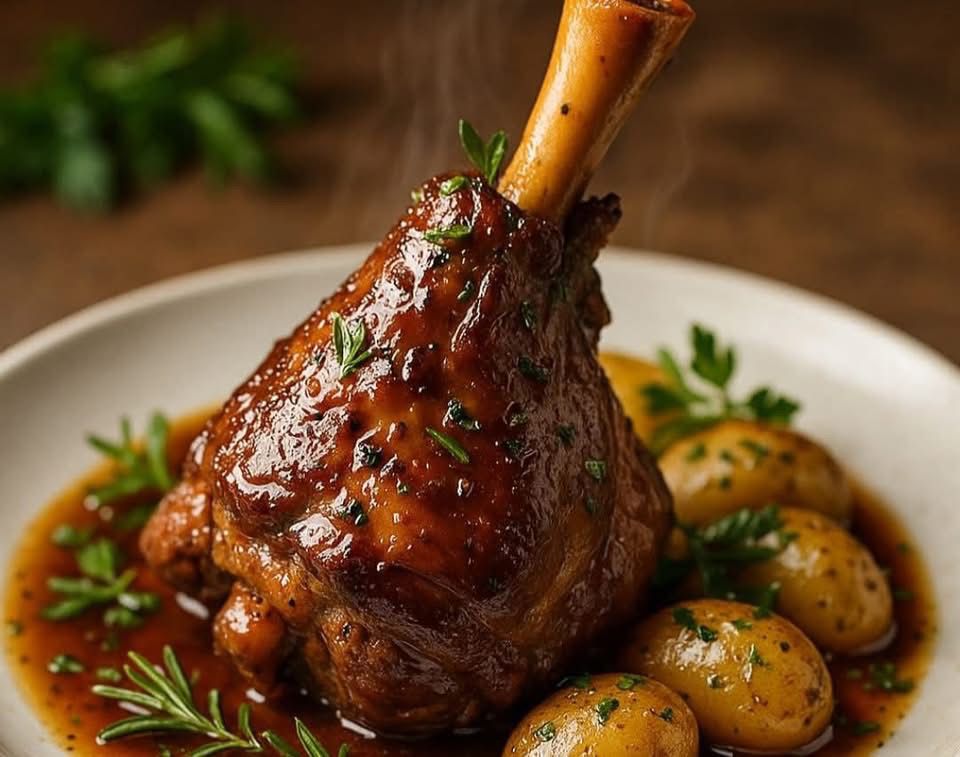
These Red Wine Braised Lamb Shanks with Potatoes are the ultimate comfort food for a cozy Sunday dinner, holiday meal, or special occasion. Slowly braised with red wine, beef broth, garlic, rosemary, thyme, onions, and carrots, the lamb becomes incredibly tender and flavorful.
The potatoes cook alongside the lamb, absorbing the rich braising juices and creating a satisfying one-pot meal with restaurant-quality flavor.
Recipe Overview
| Details | Information |
| Prep Time | 20 minutes |
| Cook Time | 2 hours 30 minutes |
| Resting Time | 10 minutes |
| Total Time | 3 hours |
| Servings | 4 servings |
| Difficulty | Intermediate |
| Category | Dinner |
| Cuisine | Comfort Food |
| Dietary | High-Protein, Gluten-Free Option |
Why You’ll Love This Recipe
- Fall-apart tender lamb: Slow braising breaks down the connective tissue and creates exceptionally tender meat.
- Rich red wine gravy: Wine, broth, vegetables, and pan drippings create an intensely flavorful sauce.
- One-pot dinner: Everything cooks in one Dutch oven for easier preparation and cleanup.
- Perfect for entertaining: It looks impressive enough for holidays and dinner parties.
- Comforting and satisfying: Tender lamb and creamy potatoes make this an ideal cold-weather meal.
- Make-ahead friendly: The flavors can become even better after resting overnight.
Ingredients
The Lamb and Aromatics
| Ingredient | Quantity | Notes |
| Bone-in lamb shanks | 4, about 1 lb (450 g) each | Trim excess surface fat |
| Sea salt | To taste | For seasoning |
| Freshly ground black pepper | To taste | For seasoning |
| Extra virgin olive oil | 2 tablespoons | For searing |
| Yellow onion | 1 large | Diced |
| Carrots | 2 medium | Diced |
| Garlic cloves | 6 | Minced |
Braising Liquid and Vegetables
| Ingredient | Quantity | Notes |
| Tomato paste | 2 tablespoons | Adds richness and color |
| Dry red wine | 1 cup (240 ml) | Cabernet Sauvignon or Merlot |
| Low-sodium beef broth | 2½ cups (600 ml) | Chicken broth can also work |
| Fresh rosemary | 2 sprigs | Plus extra for garnish if desired |
| Fresh thyme | 4 sprigs | Fresh is preferred |
| Baby potatoes | 1 lb (450 g) | Wash thoroughly; leave whole if small |
Step-by-Step Instructions
Step 1: Prepare and Season the Lamb
Remove the lamb shanks from the refrigerator approximately 30 minutes before cooking.
Pat them thoroughly dry with paper towels. Season generously on every side with sea salt and freshly ground black pepper.
Dry meat browns much more effectively, so don’t skip this step.
Step 2: Sear the Lamb
Preheat your oven to 160°C (325°F).
Place a large heavy-bottomed Dutch oven over medium-high heat and add the olive oil.
When the oil is hot, carefully add the lamb shanks. Work in batches if necessary so the pot isn’t overcrowded.
Sear for approximately 4–5 minutes per side, turning until the lamb develops a deep golden-brown crust.
Transfer the browned shanks to a plate.
Step 3: Sauté the Aromatics
Reduce the heat slightly.
Add the diced onion and carrots to the same Dutch oven, using the flavorful fat left behind by the lamb.
Cook for approximately 5 minutes, stirring occasionally, until the vegetables begin to soften.
Add the minced garlic and tomato paste.
Cook for another 1 minute, stirring frequently, until the garlic becomes fragrant and the tomato paste begins to darken slightly.
Step 4: Deglaze With Red Wine
Pour the red wine into the Dutch oven.
Using a wooden spoon, scrape the bottom of the pot to release all the browned bits.
These caramelized pieces add tremendous flavor to the finished sauce.
Bring the wine to a gentle simmer and cook for approximately 3–4 minutes, or until it has reduced by about half.
Step 5: Begin the Braise
Return the browned lamb shanks to the Dutch oven, along with any juices that collected on the plate.
Pour in the beef broth.
Add the rosemary and thyme.
The liquid should come partway up the sides of the lamb rather than completely cover the shanks.
Bring the liquid to a gentle simmer on the stovetop.
Step 6: Add the Potatoes
Nestle the baby potatoes around the lamb shanks.
If the potatoes are particularly large, cut them in half. Small baby potatoes can remain whole.
Make sure they are partially submerged in the braising liquid so they absorb the flavorful juices as they cook.
Step 7: Cover and Braise
Cover the Dutch oven tightly with its lid.
Transfer it to the preheated 160°C (325°F) oven.
Bake for approximately 2 hours.
After about 1½ hours, check the lamb and potatoes. The lamb should be becoming very tender and the potatoes should be easily pierced with a fork.
For especially large lamb shanks, an additional 20–30 minutes may be needed.
Step 8: Check for Tenderness
The lamb is ready when the meat is extremely tender and nearly falling away from the bone.
A fork should slide into the meat with very little resistance.
If the lamb is still firm, cover the pot again and continue cooking until tender.
The exact cooking time can vary depending on the size of the shanks.
Step 9: Finish the Sauce
Carefully remove the lamb shanks and potatoes from the Dutch oven and place them on a serving platter.
Remove the rosemary and thyme stems.
If the braising liquid seems too thin, place the Dutch oven on the stovetop over medium-high heat and simmer uncovered for several minutes until the liquid reduces slightly.
Taste and adjust the seasoning with additional salt and black pepper if needed.
For an especially smooth sauce, strain the braising liquid before serving.
Step 10: Rest and Serve
Allow the lamb to rest for approximately 10 minutes.
Spoon some of the rich red wine sauce over the lamb and potatoes.
Garnish with fresh rosemary or thyme.
Serve warm with plenty of the flavorful braising sauce.
Best Tips for Tender Lamb Shanks
Don’t Skip the Sear
Deeply browning the lamb before braising creates a flavorful foundation for the entire dish.
Don’t Rush the Braising Process
Lamb shanks contain connective tissue that needs time to break down. Cooking them gently until fork-tender produces the best texture.
Keep the Pot Covered
A tightly covered Dutch oven traps moisture and prevents the braising liquid from evaporating too quickly.
Don’t Fully Submerge the Lamb
The lamb doesn’t need to be completely covered with liquid. The combination of braising liquid and trapped steam cooks the meat gently.
Check the Potatoes
Baby potatoes can become tender before the lamb is completely finished. If they become very soft, carefully remove them and return them to the pot before serving.
Ingredient Substitutions
Red Wine
For a non-alcoholic version, replace the red wine with additional beef broth plus 1–2 tablespoons of balsamic vinegar for acidity.
Beef Broth
Chicken broth or vegetable broth can be substituted, although beef broth provides a richer flavor.
Baby Potatoes
Yukon Gold potatoes, red potatoes, or other waxy potatoes can be used.
Fresh Herbs
If fresh rosemary and thyme aren’t available, use dried herbs. Use them more sparingly because dried herbs have a more concentrated flavor.
Recipe Variations
Mediterranean-Style Lamb Shanks
Add chopped tomatoes, olives, oregano, and a little lemon zest to create a Mediterranean-inspired version.
Garlic Herb Lamb Shanks
Increase the garlic and add fresh parsley near the end for an even more pronounced herb flavor.
Mushroom Red Wine Lamb Shanks
Sauté sliced mushrooms with the onions and carrots for an earthy variation.
Extra-Vegetable Version
Add celery, parsnips, or pearl onions to the braising liquid for a heartier vegetable-packed meal.
What to Serve With Lamb Shanks
Although the potatoes make this a satisfying one-pot meal, you can serve the lamb with additional sides.
Excellent choices include:
- Crusty bread
- Mashed potatoes
- Creamy polenta
- Roasted carrots
- Green beans
- Steamed asparagus
- Simple green salad
- Roasted root vegetables
A piece of crusty bread is particularly useful for soaking up the rich red wine sauce.
Make-Ahead Instructions
This recipe is excellent for making ahead.
Prepare the lamb completely, allow it to cool, and refrigerate it in its braising liquid.
For best quality, consume refrigerated leftovers within 3–4 days.
When making it ahead for guests, gently reheat the lamb and sauce on the stovetop or in a covered oven until thoroughly hot.
The flavors often become even more developed after resting overnight.
Storage
Allow leftovers to cool promptly before transferring them to airtight containers.
Store the lamb, potatoes, and sauce in the refrigerator for 3–4 days.
Keep the meat stored with some of the braising sauce to help prevent it from drying out.
Reheating
For the best results, reheat the lamb gently.
Place the lamb and sauce in a covered Dutch oven or saucepan over low to medium-low heat.
Heat until the lamb and sauce are thoroughly hot.
If the sauce has become too thick, add a small splash of beef broth or water.
You can also reheat it in a covered oven at approximately 150°C (300°F) until heated through.
Freezing
The braised lamb can be frozen successfully.
Allow it to cool completely, then place the lamb and sauce in freezer-safe airtight containers.
Freeze for up to 3 months for best quality.
Thaw overnight in the refrigerator before reheating gently.
The potatoes may change texture slightly after freezing, so for the best result, consider preparing fresh potatoes when reheating.
Common Mistakes to Avoid
1. Not Drying the Lamb
Wet lamb will steam instead of developing a deep brown crust.
2. Crowding the Pot
Sear the shanks in batches if necessary. Overcrowding lowers the temperature and prevents proper browning.
3. Skipping the Deglazing Step
The browned bits on the bottom of the Dutch oven contain concentrated flavor. Scrape them thoroughly into the sauce.
4. Using Too Much Liquid
The lamb doesn’t need to be completely submerged. Too much liquid can result in a thin, diluted sauce.
5. Cooking at Too High a Temperature
A gentle braise is the key to tender lamb. Excessively high heat can make the meat tougher and cause the liquid to evaporate too quickly.
6. Removing the Lamb Too Early
If the meat is still tough, it usually needs more cooking time rather than less. Continue braising until it becomes fork-tender.
Nutrition Estimate
Approximate values per serving:
| Nutrient | Amount |
| Calories | 650–750 kcal |
| Protein | 50–55 g |
| Total Fat | 30–40 g |
| Saturated Fat | 10–14 g |
| Carbohydrates | 30–35 g |
| Dietary Fiber | 5–6 g |
| Sugars | 7–9 g |
| Sodium | 500–700 mg |
Nutrition values are estimates and can vary depending on the size and fat content of the lamb shanks, amount of sauce consumed, and specific ingredients used.
Frequently Asked Questions
Can I make lamb shanks without red wine?
Yes. Replace the wine with additional beef broth and add a small amount of balsamic vinegar or another acidic ingredient to provide some of the complexity that wine contributes.
Why are my lamb shanks tough?
Lamb shanks can remain tough if they haven’t been cooked long enough. They contain connective tissue that needs time to break down. Continue braising until the meat is very tender.
Can I use boneless lamb?
Yes, but cooking time will vary. Bone-in lamb shanks generally provide excellent flavor and are particularly well suited to slow braising.
Can I make this recipe in a slow cooker?
Yes. Brown the lamb and sauté the aromatics first, then transfer everything to a slow cooker. Cook on LOW for approximately 7–8 hours, or until the lamb is fork-tender. Add the potatoes according to their size and desired texture.
What red wine works best?
A dry, full-bodied red wine such as Cabernet Sauvignon or Merlot works well. Choose a wine that you would enjoy drinking because its flavor will concentrate during cooking.
Can I prepare this dish the day before?
Absolutely. In fact, preparing it a day ahead can make the dish even more convenient for entertaining. Refrigerate the lamb in its sauce and gently reheat before serving.
How do I thicken the sauce?
The easiest method is to remove the meat and vegetables and simmer the braising liquid uncovered until it reduces to your preferred consistency.
Final Thoughts
These Red Wine Braised Lamb Shanks with Potatoes are a beautiful example of how simple ingredients can become an extraordinary meal with slow cooking.
The combination of deeply browned lamb, aromatic vegetables, red wine, beef broth, garlic, rosemary, and thyme creates a rich sauce packed with savory flavor. Meanwhile, the potatoes slowly absorb the braising juices and become wonderfully tender.
Take your time with the searing and don’t rush the braising process. Once the pot goes into the oven, most of the work is done.
Serve the tender lamb with plenty of sauce, potatoes, and a simple vegetable or crusty bread for an unforgettable comfort food dinner that’s worthy of a special occasion.