
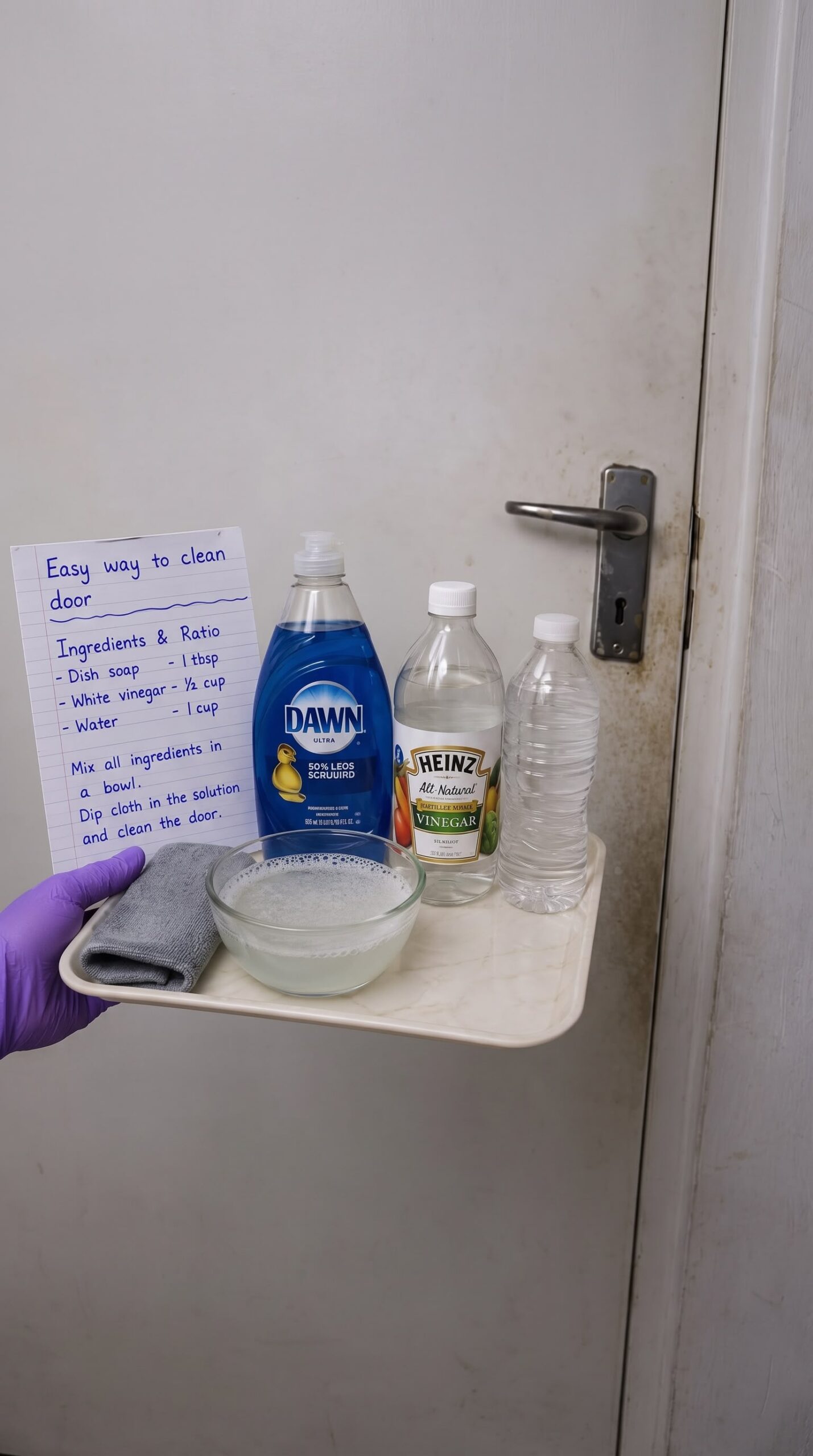
🧼 Easy Way to Clean Doors with Dish Soap & White Vinegar
Cleaning doors doesn’t have to be complicated. Everyday fingerprints, dust, cooking residue, and grime can make doors look dull, especially around handles and frequently touched areas.
This simple homemade cleaning solution combines dish soap, white vinegar, and water to create an easy cleaning mixture for many washable door surfaces.
🧽 Cleaning Recipe Overview
| Detail | Information |
| Prep Time | 2 minutes |
| Cleaning Time | 10–15 minutes |
| Total Time | 15–20 minutes |
| Difficulty | Easy |
| Yield | About 1¾ cups cleaning solution |
| Best For | Many washable door surfaces |
🧴 Ingredients
| Ingredient | Quantity | Purpose |
| 🧼 Dish soap | 1 tablespoon | Helps lift dirt and greasy residue |
| 🫗 White vinegar | ½ cup (120 ml) | Helps loosen certain deposits and marks |
| 💧 Water | 1 cup (240 ml) | Dilutes the cleaning solution |
🧰 Supplies
| Supply | Quantity |
| 🧽 Microfiber cloths | 2–3 |
| 🥣 Bowl or container | 1 |
| 🧤 Cleaning gloves | Optional |
| 🪣 Clean water | For rinsing |
🧼 How to Make the Cleaning Solution
Pour 1 cup of water into a clean bowl.
Add ½ cup of white vinegar.
Add 1 tablespoon of dish soap.
Stir gently until everything is combined.
There’s no need to create a large amount of foam.
🚪 How to Clean a Door
Step 1: Remove Dust
Before using the cleaning solution, wipe the door with a dry microfiber cloth.
Remove loose dust, hair, and other particles from the surface.
This makes the wet-cleaning step much easier.
Step 2: Test the Surface
Before cleaning the entire door, test the solution on a small, inconspicuous area.
This is especially important for painted doors, finished wood, stained surfaces, and delicate finishes.
Make sure the surface doesn’t discolor, become cloudy, or otherwise react negatively.
Step 3: Prepare the Cloth
Dip a microfiber cloth into the cleaning solution.
Wring it out thoroughly.
The cloth should be damp rather than soaking wet.
Step 4: Wipe the Door
Start at the top of the door and work your way downward.
Gently wipe the surface using overlapping strokes.
Pay extra attention to areas with fingerprints, dirt, or greasy marks.
Step 5: Clean Around the Handle
Door handles and the areas surrounding them often collect more dirt than the rest of the door.
Use the damp microfiber cloth to clean around the handle, edges, and frequently touched areas.
Step 6: Rinse
Take a second clean microfiber cloth and dampen it with plain water.
Wring it out well and wipe the door to remove remaining soap and cleaning residue.
Step 7: Dry
Finish with a clean, dry microfiber cloth.
Dry the entire surface, paying particular attention to edges, corners, and joints.
✨ For Heavily Soiled Doors
If the door has stubborn buildup, work in small sections rather than scrubbing the entire surface aggressively.
Apply the solution with a damp cloth and allow it to sit for a short period while keeping the surface wet.
Then gently wipe the area.
Repeat the process if necessary.
For delicate finishes, avoid prolonged contact with the solution.
💡 Best Cleaning Tips
Use microfiber. A soft microfiber cloth can remove everyday dirt without requiring aggressive scrubbing.
Don’t oversaturate the door. Too much liquid can damage some wood-based materials and finishes.
Work from top to bottom. This prevents dirty water from running onto areas you’ve already cleaned.
Clean the handles separately. Handles receive frequent contact and can require extra attention.
Change the solution when dirty. If the mixture becomes visibly dirty, prepare a fresh batch.
Dry the surface afterward. This is particularly important for wood and moisture-sensitive finishes.
🪵 Cleaning Different Door Materials
Painted Doors
Use a soft, well-wrung microfiber cloth.
Avoid abrasive sponges, which can dull or damage certain painted finishes.
Finished Wood Doors
Use minimal moisture and avoid allowing liquid to sit on the surface.
Dry the door immediately after cleaning.
Laminate or Melamine Doors
These surfaces can often be cleaned with a damp microfiber cloth, but always follow the manufacturer’s care instructions.
Glass Doors
The vinegar solution can help with certain marks and deposits.
Wipe the glass thoroughly afterward with a clean, dry microfiber cloth to reduce streaking.
⚠️ Surfaces That Require Extra Care
White vinegar is acidic and isn’t suitable for every material.
Avoid using vinegar-based cleaning solutions on marble, limestone, and other acid-sensitive natural stone surfaces, as the acidity can damage them.
Be cautious with waxed surfaces, unsealed wood, delicate finishes, and certain metals.
Always check the manufacturer’s cleaning recommendations when available.
Never mix vinegar with bleach or other incompatible household cleaners.
🧹 Common Mistakes to Avoid
Using Too Much Water
A soaking-wet cloth isn’t necessary. Excess moisture can seep into seams, joints, and wood surfaces.
Scrubbing Too Hard
Let the cleaning solution help loosen the dirt instead of using excessive pressure.
Skipping the Test Patch
Different paints, coatings, and materials can react differently to cleaning products.
Leaving Soap Residue
Always follow up with a clean, damp cloth to remove remaining detergent.
Forgetting to Dry
Leaving moisture on certain doors for an extended period can cause problems, especially with wood-based materials.
❓ Frequently Asked Questions
Can I use this solution on every door?
No. Door materials and finishes vary. Always check the manufacturer’s recommendations and test an inconspicuous area first.
Can I use warm water?
Yes. Lukewarm or moderately warm water can be used. There’s no need for extremely hot water.
Do I need to rinse the door?
Rinsing with a clean, damp microfiber cloth is recommended because it removes remaining soap and vinegar residue.
Can I use a sponge instead of microfiber?
Yes, provided the sponge is soft and non-abrasive. Microfiber is a good choice for many painted and finished surfaces.
How often should I clean my doors?
For regularly used doors, a quick wipe once a week can help prevent dirt and fingerprints from building up. A deeper cleaning can be done as needed.
🧼 Quick Recipe Card
1 cup water
- ●
½ cup white vinegar
- ●
1 tablespoon dish soap
→ Mix in a bowl.
→ Dip a microfiber cloth into the solution.
→ Wring it out well.
→ Wipe the door.
→ Rinse with a clean, damp cloth.
→ Dry with a clean microfiber cloth.
🏡 Final Thoughts
This simple dish soap and white vinegar cleaning solution is an inexpensive way to tackle everyday dirt, fingerprints, and grime on many washable door surfaces.
The most important steps are to test the solution first, avoid excessive moisture, rinse away residue, and dry the surface thoroughly.
With a few basic household supplies and a microfiber cloth, you can give suitable doors a cleaner, fresher appearance without complicated cleaning routines.