
Introduction
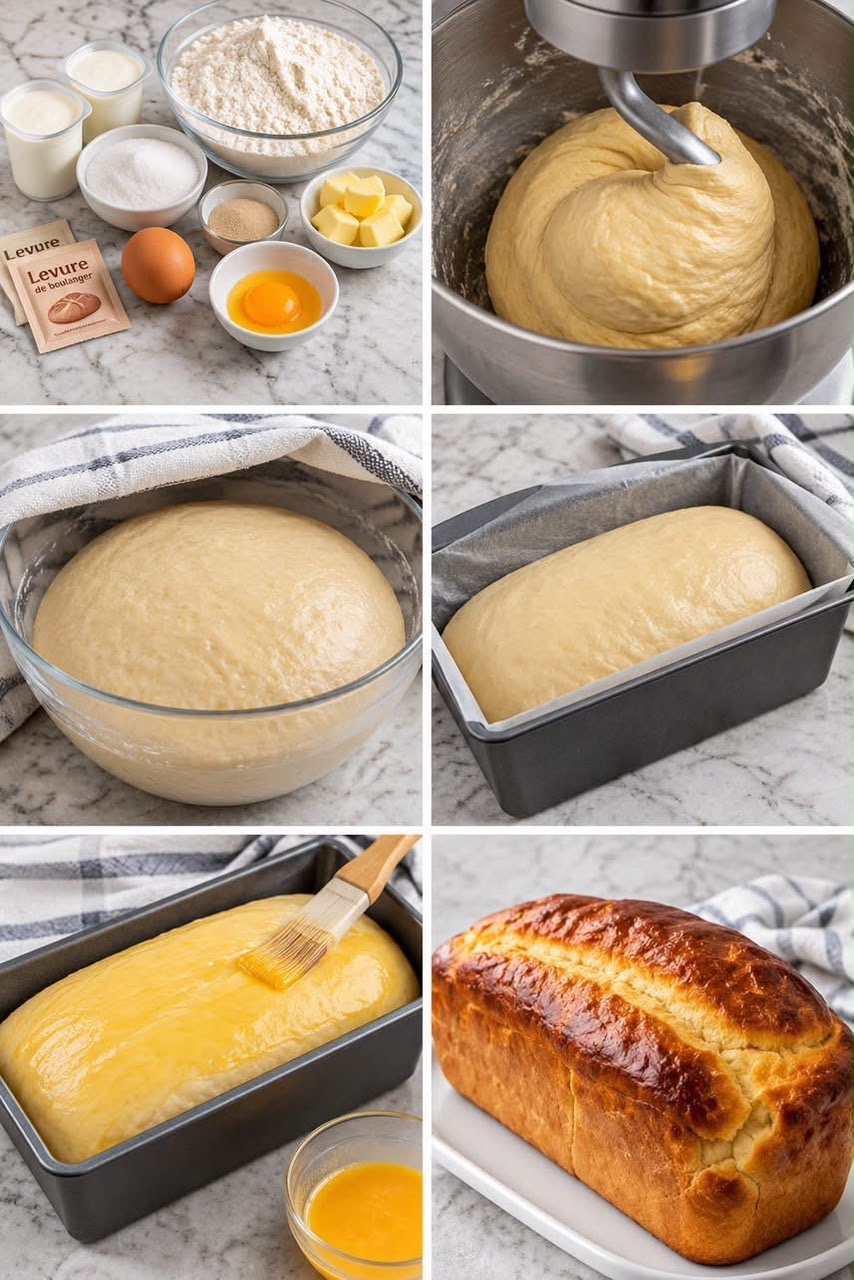
This Classic French Brioche Bread Loaf is soft, buttery, lightly sweet, and beautifully golden on the outside.
Made with eggs, butter, milk, and yeast, this homemade brioche has a rich texture that makes it perfect for breakfast, brunch, French toast, sandwiches, or an afternoon treat.
The dough is simple to prepare with a stand mixer, and the finished loaf has a tender crumb with a delicate buttery flavor.
If you’re searching for an easy homemade bread recipe, French brioche recipe, soft breakfast bread, or bakery-style bread you can make at home, this recipe is an excellent choice.
Recipe Overview
| Recipe Detail | Information |
| Prep Time | 20 minutes |
| Proofing Time | 2–3 hours |
| Bake Time | 30–35 minutes |
| Total Time | About 3 hours 30 minutes |
| Yield | 1 loaf |
| Difficulty | Intermediate |
| Cuisine | French |
| Baking Temperature | 180°C / 350°F |
Why You’ll Love This Recipe
This homemade brioche is incredibly soft and buttery without being overly sweet.
The combination of eggs, butter, and milk creates the characteristic rich texture associated with classic French brioche.
It is delicious fresh from the oven and remains versatile throughout the week.
Serve it with butter and jam, use it for French toast, or enjoy thick slices with coffee or tea.
Ingredients
For the Brioche Dough
| Ingredient | Amount |
| 🌾 All-purpose or bread flour | 500 g (about 4 cups) |
| 🍞 Active dry or instant yeast | 14 g (2 packets) |
| 🍚 Granulated sugar | 60 g (¼ cup) |
| 🧂 Salt | 1 tsp |
| 🥛 Warm milk | 150 ml |
| 🥚 Whole egg | 1, room temperature |
| 🥚 Egg yolk | 1, room temperature |
| 🧈 Unsalted butter | 100 g, softened and cubed |
For the Egg Wash
| Ingredient | Amount |
| 🥚 Egg yolk | 1 |
| 🥛 Milk | 1 tbsp |
Step-by-Step Instructions
Prepare the Yeast
Warm the milk until it feels comfortably warm, not hot.
The ideal temperature is approximately 38–43°C / 100–110°F.
Add the warm milk, 1 tablespoon of the sugar, and the yeast to a small bowl.
Stir gently and allow the mixture to stand for 5–10 minutes if using active dry yeast.
It should become slightly foamy.
If using instant yeast, you can mix it directly with the dry ingredients instead.
Make the Dough
Add the flour, remaining sugar, and salt to the bowl of a stand mixer fitted with a dough hook.
Add the whole egg, egg yolk, and yeast mixture.
Mix on low speed for approximately 3–5 minutes.
The dough will initially look rough and slightly sticky.
Add the Butter
Begin adding the softened butter one piece at a time.
Allow each piece to become incorporated before adding the next.
Continue kneading on medium-low to medium speed for approximately 10–12 minutes.
The dough should become smooth, glossy, elastic, and soft.
It may remain slightly sticky, which is normal for brioche dough.
Avoid adding excessive flour because this can make the finished bread heavy.
First Rise
Lightly grease a large bowl.
Transfer the dough into the bowl and shape it gently into a ball.
Cover with plastic wrap or a clean damp kitchen towel.
Place it in a warm, draft-free area.
Allow the dough to rise for approximately 1–1½ hours, or until it has roughly doubled in size.
The exact rising time depends on the room temperature.
Shape the Brioche
Gently press down the risen dough to release some of the air.
Transfer it to a lightly floured work surface.
Shape the dough into a smooth loaf.
You can also divide it into 3 equal pieces, roll each piece into a smooth ball, and place the balls side by side in the loaf pan for a traditional brioche appearance.
Second Rise
Line a standard loaf pan with parchment paper or lightly grease it.
Place the shaped dough into the pan.
Cover loosely with plastic wrap or a clean kitchen towel.
Allow it to rise for another 45–60 minutes.
The dough should become noticeably puffy and approach the top of the pan.
Avoid letting it overproof.
Prepare the Egg Wash
Whisk together 1 egg yolk and 1 tablespoon of milk.
The mixture should be smooth.
Bake the Brioche
Preheat the oven to 180°C / 350°F.
Gently brush the risen brioche with the egg wash.
Be careful not to press down on the dough.
Place the loaf in the center of the preheated oven.
Bake for approximately 30–35 minutes.
The top should become deep golden brown.
If the top begins browning too quickly, loosely cover it with aluminum foil during the final portion of baking.
The internal temperature should generally be around 88–93°C / 190–200°F when fully baked.
Cool Completely
Remove the brioche from the loaf pan.
Place it on a wire rack.
Allow it to cool completely before slicing.
Although the aroma will make it tempting to cut immediately, cooling helps the crumb finish setting properly.
Best Tips
Use room-temperature eggs and softened butter for the smoothest dough.
Don’t melt the butter before adding it. Soft butter incorporates gradually and gives the dough its characteristic texture.
Be patient during kneading.
Brioche dough is naturally rich and sticky, and it can take several minutes before it becomes smooth and elastic.
Avoid adding lots of extra flour.
A dough that feels slightly sticky can produce a much softer brioche than a heavily floured dough.
Keep the dough in a warm but not excessively hot environment during proofing.
Best Ingredient Options
Flour
Bread flour creates a slightly stronger structure and chewy texture.
All-purpose flour works well and produces a tender, soft brioche.
Butter
Use good-quality unsalted butter for the best flavor.
European-style butter can provide an especially rich result.
Milk
Whole milk gives the brioche a rich, tender texture.
You can use another milk variety, although the final texture may vary slightly.
Yeast
Active dry yeast and instant yeast can both work.
Instant yeast does not require the same activation step, so it can be mixed directly with the flour.
Recipe Variations
Chocolate Brioche 🍫
Add chocolate chips or chopped dark chocolate to the dough after the butter has been incorporated.
Cinnamon Brioche
Add a small amount of ground cinnamon to the dough for a warm breakfast flavor.
Orange Brioche 🍊
Add finely grated orange zest to the dough for a fresh citrus aroma.
Raisin Brioche
Fold in raisins after the dough has been kneaded.
Soak the raisins briefly in warm water first, then drain and dry them thoroughly.
Almond Brioche
Top the egg-washed loaf with sliced almonds before baking.
What to Serve With
Fresh brioche is delicious with butter and fruit preserves.
Serve it with strawberry jam, apricot preserves, honey, or chocolate spread for a simple breakfast.
It also makes an excellent base for French toast.
For brunch, serve thick slices with fresh fruit, yogurt, coffee, or tea.
You can also use leftover brioche to make bread pudding.
Make-Ahead Instructions
The brioche dough can be prepared in advance.
After kneading, cover the dough tightly and refrigerate it overnight.
The cold temperature slows fermentation while allowing the dough to develop additional flavor.
The next day, allow the dough to sit briefly at room temperature before shaping.
Shape it and complete the second rise before baking.
Storage
Store completely cooled brioche in an airtight container or tightly wrapped at room temperature.
For the best texture, enjoy it within 2–3 days.
Avoid refrigerating the bread unless necessary because refrigeration can make homemade bread stale more quickly.
Reheating
For a warm slice, heat brioche gently in the microwave for approximately 10–15 seconds.
You can also warm slices in a toaster or a low-temperature oven.
Be careful not to overheat it because the bread can become dry.
Freezing
Brioche freezes very well.
Allow the loaf to cool completely before wrapping it tightly in plastic wrap.
Place it inside a freezer-safe bag or airtight container.
Freeze for up to approximately 2–3 months for best quality.
Thaw at room temperature before serving.
Common Mistakes to Avoid
Using hot milk: Excessively hot milk can damage the yeast. Use comfortably warm milk.
Adding too much flour: Brioche dough should remain soft and slightly sticky.
Adding butter too quickly: Gradually incorporating softened butter creates a smoother dough.
Skipping the kneading: Proper kneading develops the gluten needed to support the rich dough.
Underproofing: The dough should become visibly puffy during both rises.
Overproofing: Excessive fermentation can cause the loaf to collapse or develop a weak structure.
Slicing immediately: Allow the brioche to cool completely for the best crumb.
Nutrition Estimate
Approximate values per slice, assuming the loaf is divided into 12 slices. Actual nutrition will vary depending on ingredients and slice size.
| Nutrient | Estimated Amount |
| Calories | ~230 kcal |
| Protein | ~6 g |
| Fat | ~9 g |
| Carbohydrates | ~31 g |
| Fiber | ~1 g |
| Sugar | ~6 g |
| Sodium | ~230 mg |
Frequently Asked Questions
Why is my brioche dough sticky?
Brioche contains a high amount of butter and eggs, so the dough is naturally softer and stickier than ordinary bread dough.
Continue kneading before adding extra flour.
Can I make brioche without a stand mixer?
Yes.
You can knead the dough by hand, although it will require more time and effort.
Add the butter gradually and continue kneading until the dough becomes smooth and elastic.
Can I use instant yeast?
Yes.
Instant yeast can usually be mixed directly with the flour instead of being activated separately.
Why didn’t my brioche rise?
Several factors can affect rising, including inactive yeast, cold ingredients, or a cool room.
Give the dough enough time and keep it in a comfortably warm, draft-free location.
Can I refrigerate brioche dough overnight?
Yes.
Overnight refrigeration is a convenient way to prepare the dough ahead and can also improve its flavor.
What is the best way to eat brioche?
Fresh brioche is delicious with butter and jam.
It is also excellent for French toast, breakfast sandwiches, bread pudding, or simply served with coffee or tea.
Final Thoughts
This Classic French Brioche Bread Loaf is a beautiful homemade bread with a soft crumb, rich buttery flavor, and golden exterior.
Once you master the slow incorporation of butter and give the dough enough time to rise, making bakery-style brioche at home becomes surprisingly approachable.
Whether you’re preparing breakfast, brunch, French toast, or a special weekend treat, this classic French bread recipe is a delicious addition to your baking collection. 🥖🧈🇫🇷