
Introduction
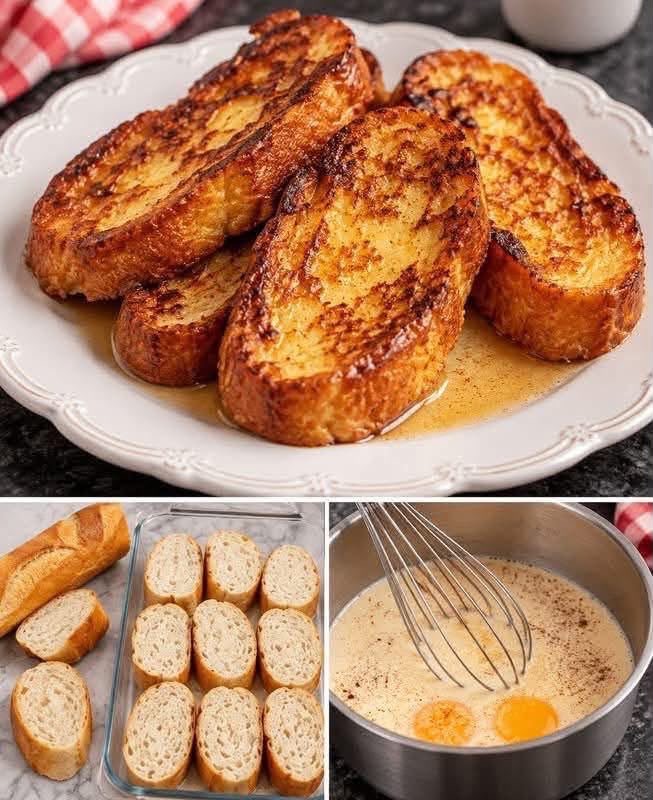
Golden French Baguette Toast is a simple and delicious breakfast recipe made with thick slices of French baguette soaked in a sweet, cinnamon-spiced custard and pan-fried until golden brown.
The outside becomes beautifully crisp while the center stays soft, tender, and creamy.
This easy French toast recipe is perfect for weekend breakfast, brunch, holidays, or a comforting homemade breakfast that feels a little special.
Recipe Overview
| Category | Details |
| Prep Time | 10 minutes |
| Cook Time | 10 minutes |
| Soaking Time | 2–3 minutes |
| Total Time | 20–25 minutes |
| Servings | 3–4 |
| Difficulty | Easy |
| Cuisine | French-Inspired |
| Best For | Breakfast, Brunch, Holiday Breakfast |
Why You’ll Love This Recipe
This baguette French toast is crispy on the outside and wonderfully soft in the center.
Using day-old French baguette gives the bread enough structure to absorb the custard without falling apart.
The combination of cinnamon, vanilla, and a touch of nutmeg creates a warm, bakery-style flavor.
It is also an affordable homemade breakfast that requires simple pantry ingredients.
Serve it with maple syrup, fresh fruit, honey, or powdered sugar for an easy family breakfast.
Ingredients
For the French Baguette Toast
| Ingredient | Amount |
| French baguette | 1 |
| Large eggs | 3 |
| Whole milk | ¾ cup |
| Granulated or brown sugar | 2 tbsp |
| Pure vanilla extract | 1 tsp |
| Ground cinnamon | 1 tsp |
| Ground nutmeg | Pinch, optional |
| Salt | Pinch |
| Unsalted butter | 2–3 tbsp |
For Serving
| Ingredient | Amount |
| Maple syrup | As desired |
| Honey | As desired |
| Powdered sugar | As desired |
| Fresh berries | Optional |
| Sliced banana | Optional |
Step-by-Step Instructions
Prepare the Baguette
Slice the French baguette into rounds approximately 2.5 cm (1 inch) thick.
Day-old or slightly stale baguette works best because it absorbs the custard without becoming too soft.
If using a very fresh baguette, leave the slices uncovered for 30–60 minutes before preparing the custard.
Make the Custard
In a wide, shallow bowl or baking dish, whisk together the eggs, whole milk, sugar, vanilla extract, cinnamon, nutmeg, and salt.
Whisk until the eggs are completely incorporated and the mixture looks smooth.
For an extra-rich French toast, replace some or all of the milk with heavy cream.
Soak the Baguette
Place the baguette slices into the custard.
Let each side soak for approximately 1 minute.
Thicker or slightly drier bread may need a little longer, while very soft bread should be soaked for less time.
The goal is to allow the custard to penetrate the center while keeping the slices firm enough to handle.
Heat the Skillet
Place a large non-stick skillet or griddle over medium heat.
Add 1–2 tablespoons of unsalted butter.
Allow the butter to melt and become lightly foamy, but do not let it burn.
Cook the French Toast
Carefully lift each soaked baguette slice from the custard and allow excess liquid to drip back into the bowl.
Place the slices in the hot skillet without overcrowding the pan.
Cook for approximately 2–3 minutes on the first side, until deeply golden brown.
Flip gently and cook the other side for another 2–3 minutes.
The edges should be crisp and golden while the center remains soft.
Add a little more butter between batches if necessary.
Check for Doneness
The French toast should have a rich golden-brown exterior.
The center should feel soft but not wet or liquid.
If the outside is browning too quickly, reduce the heat to medium-low and continue cooking until the center is properly heated.
Serve
Transfer the golden baguette toast to a serving platter.
Drizzle generously with warm maple syrup or honey.
Dust lightly with powdered sugar.
Add fresh berries, sliced bananas, or other fruit if desired.
Serve immediately while warm.
Best Tips
Use day-old baguette whenever possible. Slightly stale bread absorbs the custard beautifully while maintaining its shape.
Cut the baguette into thick slices. Around 1 inch provides a good balance between a crisp exterior and soft center.
Do not soak the bread for too long. Over-soaking can make the slices difficult to flip.
Cook over medium heat so the outside becomes golden while the inside has time to warm through.
Use butter for the best flavor, but watch the pan carefully because butter can brown quickly.
Cook in batches instead of overcrowding the skillet. This helps each slice develop a crisp, golden surface.
Best Ingredient Options
Bread
A traditional French baguette works beautifully, but you can also use brioche, challah, or another sturdy crusty bread.
Milk
Whole milk gives the best balance of richness and tenderness.
For a richer breakfast, use heavy cream or a combination of milk and cream.
Sugar
Granulated sugar provides clean sweetness, while brown sugar adds a deeper caramel-like flavor.
Vanilla
Pure vanilla extract gives the custard a warm, aromatic flavor.
Spices
Cinnamon is the main spice, while a tiny amount of nutmeg adds extra warmth.
Recipe Variations
Orange Cinnamon Baguette Toast
Add 1 teaspoon of finely grated orange zest to the custard for a bright citrus flavor.
Vanilla Berry French Toast
Top the finished toast with fresh strawberries, blueberries, or raspberries and a drizzle of maple syrup.
Caramel Baguette Toast
Drizzle with homemade or prepared caramel sauce instead of maple syrup.
Apple Cinnamon Toast
Serve the golden baguette toast with warm cinnamon apples for a cozy fall-inspired breakfast.
Chocolate French Toast
Add a small amount of cocoa powder to the custard and serve with fresh berries and powdered sugar.
Almond French Toast
Add a few drops of almond extract to the custard and finish with sliced toasted almonds.
What to Serve With
Serve Golden French Baguette Toast with fresh berries and warm maple syrup for a classic breakfast combination.
For a more filling brunch, pair it with scrambled eggs, fresh fruit, or Greek yogurt.
A spoonful of whipped cream can turn the dish into a delicious weekend brunch treat.
For special occasions, serve with fresh strawberries, blueberries, powdered sugar, and a drizzle of honey.
Make-Ahead Instructions
The custard can be prepared up to 24 hours ahead and stored covered in the refrigerator.
The baguette can also be sliced in advance.
For the best texture, cook the French toast shortly before serving.
If necessary, cooked slices can be kept warm in a low oven while the remaining batches are prepared.
Storage
Allow leftover French toast to cool completely.
Place the slices in an airtight container and refrigerate for up to 3 days.
Keep the toppings separate whenever possible.
Reheating
For the best texture, reheat the baguette toast in a skillet over medium-low heat for 1–2 minutes per side.
An air fryer can also be used at approximately 175°C (350°F) for 3–5 minutes.
Microwaving works for convenience, but the exterior will be softer.
Freezing
Cooked French toast can be frozen for up to 2 months.
Allow the slices to cool completely, then place parchment paper between the slices before transferring them to a freezer-safe bag or container.
Reheat directly from frozen in a toaster oven, skillet, or air fryer until hot and crisp.
Common Mistakes to Avoid
Using Very Fresh Bread
Fresh baguette can become too soft when soaked. Day-old bread provides a much better texture.
Over-Soaking
Leaving the bread in the custard for too long can make it soggy and difficult to flip.
Cooking at Excessive Heat
High heat can burn the outside before the custard center has time to cook.
Overcrowding the Pan
Too many slices at once reduce the pan temperature and prevent proper browning.
Burning the Butter
If the butter becomes dark and smells burnt, wipe out the pan and add fresh butter before continuing.
Cutting the Bread Too Thin
Thin slices can become fragile after soaking. Thick baguette rounds are ideal for this recipe.
Nutrition Estimate
Approximate nutrition per serving, before optional toppings:
| Nutrient | Estimated Amount |
| Calories | 350–420 kcal |
| Protein | 13–16 g |
| Carbohydrates | 45–52 g |
| Fat | 13–17 g |
| Sugar | 10–14 g |
| Fiber | 2–3 g |
Nutrition values are estimates and vary according to the bread, milk, butter, and toppings used.
Frequently Asked Questions
Can I use fresh baguette?
Yes, but slightly stale baguette is preferable. If your bread is fresh, allow the slices to dry uncovered before soaking.
Why is my French toast soggy?
The most common reasons are overly soft bread, excessive soaking, or cooking at too low a temperature.
Can I use heavy cream instead of milk?
Yes. Heavy cream creates a richer and more decadent French toast. You can also use half milk and half cream.
Can I prepare the custard ahead of time?
Yes. The custard can be whisked together and refrigerated until you are ready to cook.
Can I make this recipe without cinnamon?
Absolutely. You can omit cinnamon or replace it with a small amount of cardamom, nutmeg, or orange zest.
What is the best syrup for baguette French toast?
Pure maple syrup is a classic choice, but honey, caramel sauce, or fruit compote also works beautifully.
Can I use brioche instead of baguette?
Yes. Brioche produces a softer and richer version, while baguette provides more contrast between the crisp exterior and tender center.
Final Thoughts
Golden French Baguette Toast is an easy breakfast recipe that transforms a simple baguette into something wonderfully crisp, golden, and comforting.
The cinnamon-vanilla custard gives every slice a warm homemade flavor, while maple syrup, honey, fresh fruit, or powdered sugar adds the perfect finishing touch.
Whether you’re preparing a quick family breakfast or an impressive weekend brunch, this recipe is simple, affordable, and delicious.