
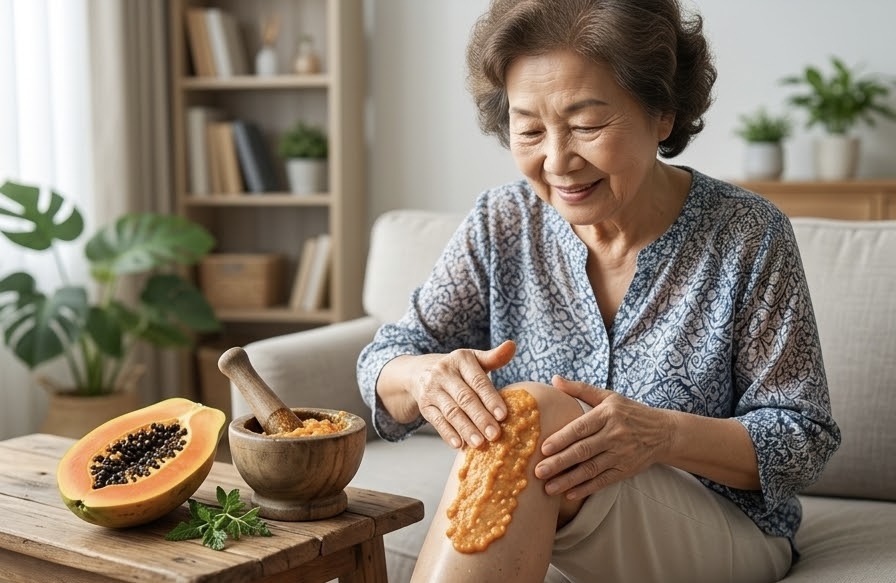
If you enjoy simple plant-based self-care routines, this homemade papaya paste is an easy option to try. Made with ripe papaya, fresh mint, and a small amount of coconut oil, this refreshing topical mixture can be applied to intact skin for a cool and soothing self-care experience.
Papaya contains naturally occurring enzymes, including papain, while mint provides a refreshing sensation. This recipe is intended for cosmetic and relaxation purposes and should not be considered a treatment for arthritis, injuries, inflammation, or other medical conditions.
Recipe Overview
| Property | Details |
| Prep Time | 10 minutes |
| Application Time | 15–20 minutes |
| Total Time | 30 minutes |
| Yield | 2 applications |
| Category | Natural Wellness / Topical Self-Care |
| Method | Mashing / Blending |
| Estimated Cost | Approximately $4 |
Why You’ll Love This Recipe
This homemade papaya paste requires only a few simple ingredients and can be prepared in just a few minutes.
The soft texture of ripe papaya makes it easy to turn into a smooth topical mixture, while fresh mint gives the paste a naturally refreshing feel.
A small amount of coconut oil helps create a smoother consistency and makes the mixture easier to spread over clean, intact skin.
It can be incorporated into a relaxing at-home self-care routine whenever you want to enjoy a simple fruit-based skincare experience.
Ingredients
Main Paste Ingredients
| Ingredient | Quantity | Notes |
| Ripe papaya | 1 cup, cubed | Fresh and soft |
| Fresh mint leaves | 8–10 leaves | Washed and dried |
| Virgin coconut oil | 1 tsp | Pure or cold-pressed |
Optional Ingredients
| Ingredient | Quantity | Notes |
| Turmeric powder | ½ tsp | Optional |
| Raw honey | 1 tsp | Optional for texture and moisture |
Step-by-Step Instructions
1. Prepare the Papaya
Peel the ripe papaya and remove all of the seeds.
Cut the fruit into small pieces so it is easier to mash or blend.
2. Add the Mint
Place the papaya pieces and fresh mint leaves into a clean bowl.
You can use a fork, potato masher, mortar and pestle, or small food processor.
3. Create the Paste
Mash or blend the ingredients until you obtain a relatively smooth paste.
A few tiny pieces of fruit are fine, but a smoother consistency will make application easier.
4. Add the Coconut Oil
Add 1 teaspoon of virgin coconut oil and mix thoroughly until evenly incorporated.
If using honey or turmeric, add the optional ingredient at this stage and mix well.
5. Perform a Patch Test
Before applying the mixture more broadly, place a small amount on a small area of intact skin.
Wait and observe for any redness, burning, itching, or irritation. If irritation occurs, wash the area and do not continue using the mixture.
6. Apply the Paste
Clean and dry the area of skin where you plan to apply the paste.
Spread a thin-to-moderate layer over the intact skin. Avoid broken, scratched, sunburned, or irritated skin.
7. Relax and Rinse
Leave the paste on the skin for approximately 15–20 minutes.
Rinse thoroughly with lukewarm water and gently pat the skin dry with a clean towel.
Discontinue use if you experience burning, significant redness, itching, or discomfort.
Best Tips
Use a fully ripe papaya because its soft texture makes it much easier to mash into a smooth paste.
Always use clean utensils, a clean bowl, and freshly washed ingredients when preparing a homemade topical mixture.
A patch test is particularly important because natural ingredients can still cause skin irritation or allergic reactions.
Do not apply the mixture to cuts, wounds, eczema flares, sunburned skin, or other damaged areas.
Keep the application time relatively short rather than leaving the mixture on the skin for extended periods.
Best Ingredient Options
Fresh ripe papaya is the easiest choice because it produces a naturally soft and spreadable paste.
Fresh mint leaves provide a mild cooling and refreshing sensation. If you have sensitive skin, it is preferable to keep the recipe simple rather than adding concentrated essential oils.
Virgin coconut oil gives the mixture a smoother texture. If coconut oil does not suit your skin, you can simply leave it out rather than replacing it with a concentrated essential oil.
If using turmeric, remember that it can temporarily discolor light-colored fabrics and may leave a yellow tint on some surfaces.
Recipe Variations
Simple Papaya Paste
For the simplest version, combine only ripe papaya and a few fresh mint leaves. This is a good option if you prefer to keep the ingredient list short.
Papaya and Coconut Oil Paste
Adding a small amount of coconut oil produces a smoother, more spreadable mixture and gives the paste a richer cosmetic texture.
Papaya and Honey Paste
A small amount of honey can be incorporated for a softer, more moisturizing-feeling mixture. Perform a patch test first, particularly if you have sensitive skin.
Papaya and Turmeric Paste
You can add a small amount of turmeric powder for color and a traditional botanical skincare variation. Be aware that turmeric can stain clothing, towels, and other fabrics.
What to Pair With Your Self-Care Routine
Because this is a topical self-care recipe, there is nothing that needs to be eaten or consumed alongside it.
For a relaxing routine, you can simply combine the application with a quiet environment, comfortable clothing, gentle stretching, or a warm caffeine-free beverage.
Remember that consuming a particular food or drink does not make a topical preparation medically effective.
Make-Ahead Instructions
For best freshness, prepare this paste immediately before use.
If necessary, the prepared mixture can be refrigerated briefly in a clean, airtight glass container, but homemade fruit mixtures are highly perishable.
For hygiene and freshness, making a fresh batch for each application is preferable.
Storage
Refrigerator
If you have leftover paste, place it immediately in a clean airtight container and refrigerate it.
Because the mixture contains fresh fruit and no preservatives, it is best used as soon as possible rather than storing it for several days.
Discard the mixture if it develops an unusual smell, color, texture, or visible signs of spoilage.
Reheating
Do not heat the papaya paste.
This preparation is intended for cool or room-temperature topical use.
If the mixture has been refrigerated, allow it to sit briefly until it reaches a comfortable temperature before applying it.
Freezing
Freezing is not recommended for this recipe because repeated freezing and thawing can significantly change the texture of the fresh fruit mixture.
For the best consistency and freshness, prepare a small amount immediately before use.
Common Mistakes to Avoid
Using underripe papaya can result in a firm, difficult-to-spread mixture. Choose a ripe, soft fruit instead.
Applying the paste to broken or irritated skin can cause stinging or additional irritation, so use it only on intact skin.
Do not leave the mixture on the skin for excessive periods. A short 15–20 minute application is sufficient for a simple self-care experience.
Avoid adding undiluted essential oils. Concentrated essential oils can irritate the skin and are not necessary for this recipe.
Finally, do not assume that because an ingredient is natural, it is automatically suitable for every person or every skin type.
Nutrition Estimate
Because this recipe is intended for topical use, nutrition information is not applicable.
| Property | Information |
| Serving Size | 1 topical application |
| Intended Use | External cosmetic/self-care use |
| Main Fruit | Ripe papaya |
| Fresh Botanical | Mint |
| Optional Ingredient | Turmeric or honey |
| Consumption | Not intended for consumption as a topical preparation |
Frequently Asked Questions
Can I use papaya paste on my knees?
You can apply a small amount to intact skin around the knee as a cosmetic self-care preparation. However, the paste should not be considered a treatment for knee pain, arthritis, swelling, or an underlying joint condition.
How long should I leave the papaya paste on my skin?
Approximately 15–20 minutes is sufficient. Rinse it off sooner if you experience burning, itching, redness, or discomfort.
How often can I use this papaya paste?
There is no medically established frequency for using homemade papaya paste for joint discomfort. If you are using it purely as a cosmetic skin-care or relaxation routine, occasional use is preferable, and you should stop if irritation develops.
Can I use frozen papaya?
Thawed frozen papaya can be mashed into a paste, although its texture may be softer or more watery than fresh ripe papaya.
Can I use papaya paste on broken skin?
No. Avoid applying this mixture to cuts, scratches, wounds, irritated skin, rashes, or sunburn.
Can I add turmeric?
Yes, a small amount of turmeric can be added as an optional ingredient. However, turmeric can stain skin temporarily and can permanently stain some fabrics.
Can I use essential oils instead of fresh mint?
It is better to use fresh mint rather than adding concentrated essential oils to this recipe. Essential oils can cause skin irritation if used incorrectly or without appropriate dilution.
Can this recipe treat arthritis or joint pain?
No. This homemade paste should not be presented as a treatment for arthritis, inflammation, injuries, or chronic joint pain. Persistent or significant joint symptoms should be evaluated by a qualified healthcare professional.
Final Thoughts
This homemade papaya paste is a simple way to enjoy a refreshing, plant-based self-care routine using a few readily available ingredients.
Ripe papaya creates a soft, spreadable texture, while fresh mint adds a pleasant refreshing sensation. Coconut oil can be included to create a smoother consistency, making the preparation easy to apply and rinse away.
Always perform a patch test before broader use, apply the mixture only to intact skin, and stop immediately if irritation occurs.
For persistent, severe, or unexplained joint pain, swelling, stiffness, or reduced mobility, seek appropriate medical advice rather than relying on a homemade topical preparation.
⚠️ This recipe is intended for general self-care and cosmetic use and is not a medical treatment. It may not be suitable for everyone. If you have persistent joint pain, a skin condition, allergies, or other health concerns, consult a qualified healthcare professional before using homemade topical remedies.