
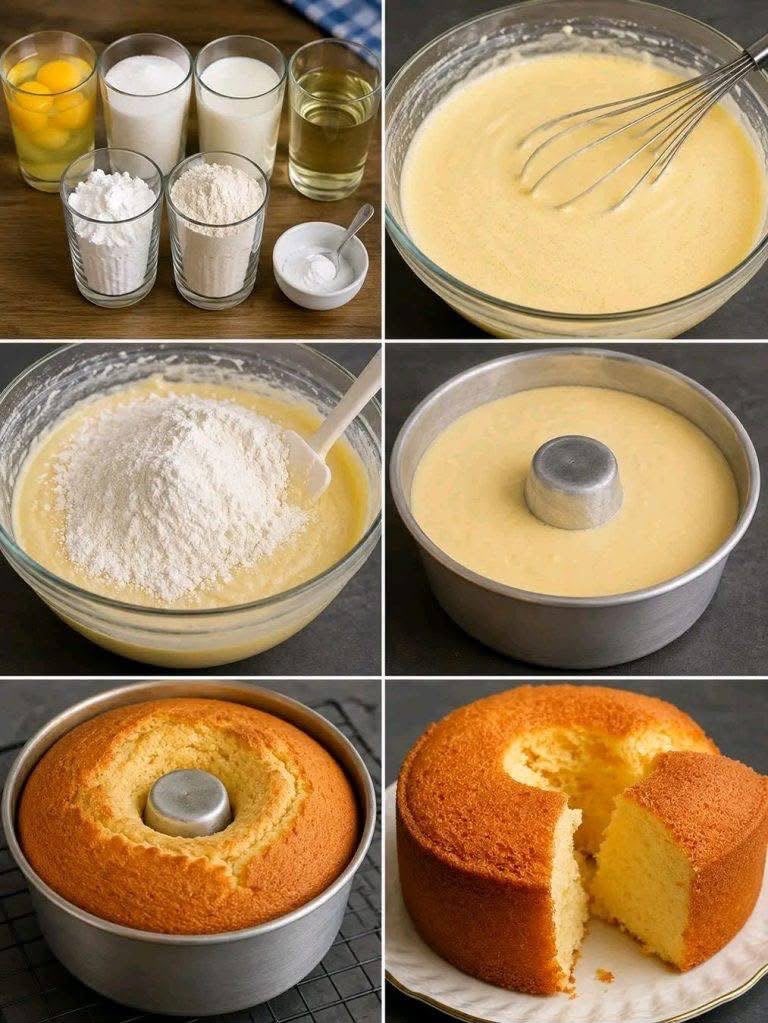
This Classic Soft Vanilla Bundt Cake is a simple, fluffy homemade cake made with eggs, sugar, milk, oil, flour, and cornstarch. The result is a beautifully golden cake with a tender crumb and a light vanilla flavor.
It is an easy homemade dessert recipe that works beautifully for breakfast, afternoon coffee, family gatherings, or a simple weekend treat.
The recipe uses basic baking ingredients and does not require expensive equipment. A mixing bowl, whisk, measuring cups, and a Bundt or tube pan are enough to create this soft and moist cake at home.
For home bakers who enjoy practical recipes, this cake is also an affordable way to make a bakery-style dessert using everyday pantry staples.
Recipe Overview
| Category | Details |
| Recipe | Classic Soft Vanilla Bundt Cake |
| Cuisine | American-inspired / Homemade |
| Prep Time | 15 minutes |
| Bake Time | 40–50 minutes |
| Total Time | About 1 hour |
| Servings | 10–12 slices |
| Difficulty | Easy |
| Oven Temperature | 350°F (175°C) |
| Texture | Soft, fluffy, and tender |
| Main Flavor | Vanilla |
| Pan | 10-inch Bundt or tube pan |
Why You’ll Love This Recipe
This cake has a wonderfully soft texture thanks to the combination of flour and cornstarch. The cornstarch helps create a delicate crumb without making the recipe complicated.
The batter comes together quickly, making it a convenient option when you want a homemade dessert without spending hours in the kitchen.
The neutral vanilla flavor also makes this cake incredibly versatile. You can serve it plain, dust it with powdered sugar, or add a simple glaze for a more elegant presentation.
It is also a budget-friendly baking recipe because most of the ingredients are common pantry and refrigerator staples.
Ingredients
For the Cake
| Ingredient | Amount |
| Large eggs | 4 |
| Granulated sugar | 1 cup (200 g) |
| Whole milk | 1 cup (240 ml) |
| Neutral vegetable oil | 1 cup (240 ml) |
| All-purpose flour | 2 cups (250 g) |
| Cornstarch | 1 cup (120 g) |
| Baking powder | 1 tablespoon (about 12 g) |
| Vanilla extract | 1 teaspoon |
| Salt | ¼ teaspoon |
Optional Finish
| Ingredient | Amount |
| Powdered sugar | 2–3 tablespoons |
| Vanilla glaze | As desired |
| Fresh berries | Optional |
| Whipped cream | Optional |
Step-by-Step Instructions
1. Prepare the Oven and Pan
Preheat your oven to 350°F (175°C).
Grease a 10-inch Bundt or tube pan thoroughly with butter or nonstick baking spray. Lightly dust it with flour if desired.
A properly prepared pan helps prevent the cake from sticking and makes releasing the finished cake much easier.
2. Beat the Eggs and Sugar
Add the eggs and granulated sugar to a large mixing bowl.
Whisk or beat for approximately 3–5 minutes, until the mixture becomes lighter in color and slightly thickened.
This step helps incorporate air into the batter, contributing to a lighter texture.
3. Add the Wet Ingredients
Slowly add the milk, vegetable oil, and vanilla extract.
Whisk until everything is evenly combined.
Do not worry if the mixture looks relatively thin at this stage. The dry ingredients will give the batter its final consistency.
4. Combine the Dry Ingredients
In a separate bowl, whisk together the all-purpose flour, cornstarch, baking powder, and salt.
Combining the dry ingredients separately helps distribute the baking powder evenly throughout the cake.
5. Make the Batter
Gradually add the dry ingredients to the wet mixture.
Mix gently until the flour has just disappeared and the batter is smooth.
Avoid overmixing because excessive mixing can make the finished cake heavier and less tender.
6. Fill the Pan
Pour the batter evenly into the prepared Bundt pan.
Gently tap the pan once or twice on the counter to remove any large air pockets.
The pan should not be filled all the way to the top because the cake will rise during baking.
7. Bake
Place the pan in the center of the preheated oven.
Bake at 350°F (175°C) for approximately 40–50 minutes.
The cake is ready when the top is golden brown and a wooden toothpick inserted into the center comes out clean or with only a few moist crumbs attached.
8. Cool the Cake
Remove the cake from the oven and let it cool in the pan for approximately 10–15 minutes.
Carefully turn it onto a wire cooling rack and allow it to cool completely before slicing.
9. Finish and Serve
Once completely cool, dust the cake lightly with powdered sugar.
For a more decorative dessert, drizzle it with a simple vanilla glaze or serve individual slices with fresh berries and whipped cream.
Best Tips
Use room-temperature eggs and milk when possible. Ingredients that are not extremely cold tend to combine more easily and can help produce a smoother cake batter.
Measure flour carefully. Too much flour is one of the most common reasons homemade cakes become dry or dense. For the most accurate results, weighing the ingredients with a kitchen scale is ideal.
Do not overmix after adding the flour. Mix only until the ingredients are incorporated for a soft and tender crumb.
Grease every part of the Bundt pan, especially around the center tube and decorative edges. These areas can be difficult to release if they are not properly prepared.
Allow the cake to cool before cutting. A freshly baked cake is delicate, and slicing it too early can cause the crumb to break apart.
Best Ingredient Options
All-purpose flour is the easiest choice for this recipe and provides a reliable structure. For the softest result, measure it accurately rather than adding extra flour.
Cornstarch gives the cake a finer, more delicate texture. If you do not have cornstarch, you can replace it with additional all-purpose flour, although the texture will be slightly different.
Use whole milk for a richer and more tender cake. Reduced-fat milk can also work, but the finished cake may be slightly less rich.
A neutral oil such as sunflower, canola, or vegetable oil works particularly well because it keeps the cake moist without overpowering the vanilla flavor.
Pure vanilla extract gives the best flavor, but vanilla essence can also be used as a more economical option.
Recipe Variations
For a lemon version, add the finely grated zest of one lemon to the egg and sugar mixture. A small amount of lemon juice can also be added to a simple glaze.
For a chocolate variation, replace a portion of the flour with unsweetened cocoa powder. Add enough milk to maintain a smooth, pourable batter.
For a citrus cake, add orange zest and finish the cooled cake with a light orange glaze.
You can also fold a handful of chocolate chips, chopped nuts, or dried fruit into the finished batter before pouring it into the pan.
For a bakery-style presentation, drizzle the cooled cake with vanilla glaze and finish with a light dusting of powdered sugar.
What to Serve With
Serve slices of this cake with freshly brewed coffee for an easy afternoon dessert.
Tea is another excellent pairing, especially with vanilla, lemon, or citrus variations of the cake.
For a more complete dessert, add fresh strawberries, blueberries, raspberries, or sliced peaches alongside each serving.
A spoonful of whipped cream or a scoop of vanilla ice cream can turn a simple slice into a more indulgent homemade dessert.
Make-Ahead Instructions
This cake is an excellent make-ahead dessert.
Bake it up to one day in advance, allow it to cool completely, and keep it covered at room temperature until serving.
For the best presentation, add powdered sugar or glaze shortly before serving.
If preparing the cake for a celebration, you can bake it the day before and decorate it on the day of serving.
Storage
Store the cooled cake in an airtight container at room temperature for up to 3 days.
If your kitchen is particularly warm, refrigerate the cake in a tightly covered container.
Bring refrigerated slices back toward room temperature before serving for the best texture.
Reheating
Individual slices can be gently warmed in the microwave for approximately 10–15 seconds.
Avoid overheating because too much microwave time can make the cake dry or rubbery.
You can also allow refrigerated cake to sit at room temperature for approximately 20–30 minutes before serving.
Freezing
Allow the cake to cool completely before freezing.
Wrap individual slices tightly in plastic wrap, then place them in a freezer-safe airtight container or freezer bag.
The cake can generally be frozen for up to 2–3 months for best quality.
Thaw individual slices overnight in the refrigerator or for several hours at room temperature.
Common Mistakes to Avoid
Avoid adding too much flour. An excessive amount of flour can absorb too much moisture and result in a dry cake.
Do not skip the pan-greasing step. Bundt cakes have many edges and curves where batter can stick.
Avoid opening the oven repeatedly during the first part of baking. Sudden temperature changes can interfere with the cake’s rise.
Do not immediately remove the cake from the pan after taking it from the oven. Giving it 10–15 minutes to settle makes releasing it much easier.
Avoid cutting the cake while it is still very hot. Allowing it to cool helps the crumb set properly and produces cleaner slices.
Nutrition Estimate
Approximate values per slice, based on 12 servings and excluding optional toppings.
| Nutrient | Estimated Amount |
| Calories | 330 kcal |
| Carbohydrates | 43 g |
| Protein | 5 g |
| Fat | 16 g |
| Saturated Fat | 2.5 g |
| Sugar | 17 g |
| Fiber | 1 g |
| Sodium | 150 mg |
Nutrition values are estimates and can vary depending on ingredient brands, portion sizes, and substitutions.
Frequently Asked Questions
Can I make this cake without a Bundt pan?
Yes. A tube pan can be used, and you can also use another appropriately sized cake pan. Baking time may need to be adjusted depending on the depth and size of the pan.
Why is cornstarch used in this cake?
Cornstarch helps reduce the amount of gluten-forming flour in the batter, creating a finer and more tender crumb.
How do I know when the cake is done?
Insert a wooden toothpick into the thickest part of the cake. It should come out clean or with a few moist crumbs attached. The top should also be golden and spring back lightly when touched.
Can I use butter instead of oil?
Yes. Melted butter can be substituted for the oil, although the texture and flavor will change. Oil generally produces a particularly moist cake.
Why did my Bundt cake stick to the pan?
This can happen when the pan was not thoroughly greased, when the cake was removed too quickly, or when the pan has areas where the coating has become damaged.
Can I add a glaze?
Absolutely. A simple mixture of powdered sugar, vanilla, and a small amount of milk makes an easy vanilla glaze for this cake.
Is this a good cake for beginners?
Yes. The ingredient list is straightforward and the preparation does not require advanced baking techniques, making it a practical recipe for beginner home bakers.
Final Thoughts
This Classic Soft Vanilla Bundt Cake is proof that a delicious homemade dessert does not need complicated ingredients or professional baking equipment.
With its golden exterior, soft center, and delicate vanilla flavor, it is an easy recipe to keep in your regular baking collection.
Whether you are making it for breakfast, afternoon coffee, a family gathering, or a special occasion, this homemade cake offers an affordable and dependable way to enjoy fresh baking at home.
For a beautiful finish, simply add powdered sugar or a vanilla glaze just before serving.