
Introduction
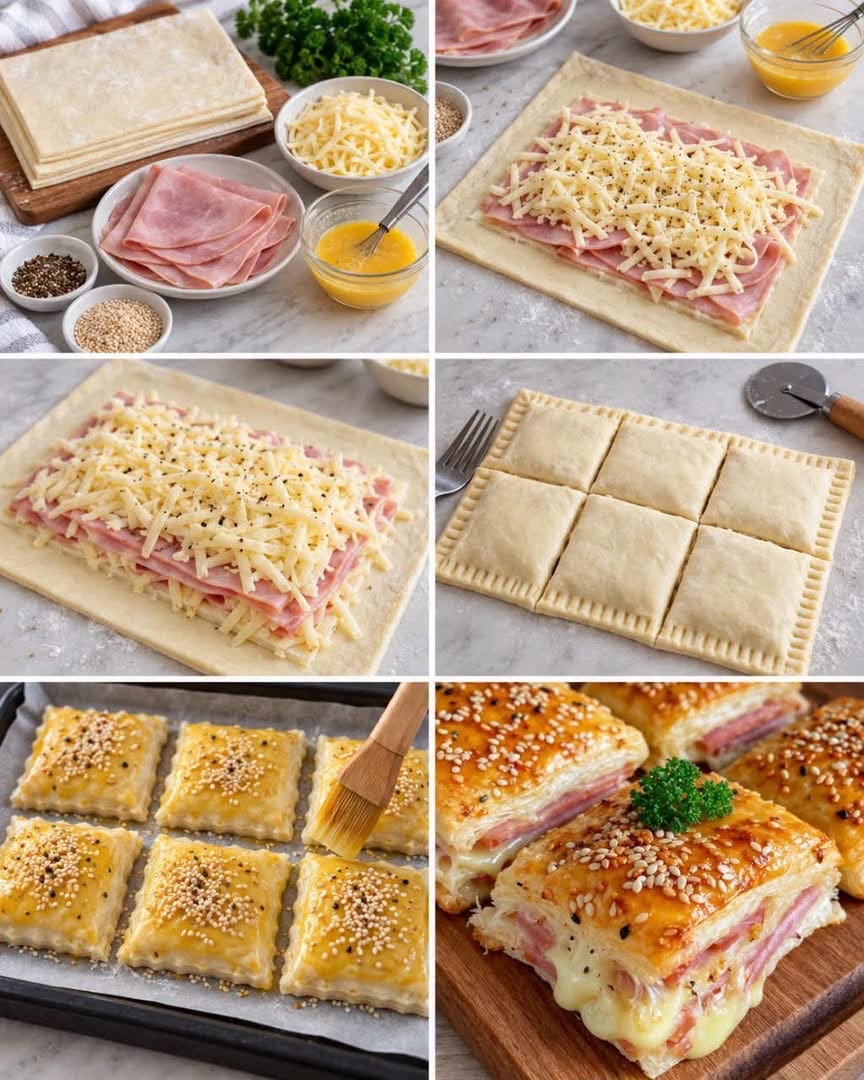
These Crispy Ham and Cheese Puff Pastry Pockets are golden, flaky, and filled with melted cheese and savory ham. Made with ready-to-use puff pastry, they are incredibly easy to prepare and require only a handful of ingredients.
The puff pastry becomes beautifully crisp and golden in the oven while the cheese melts into a warm, creamy filling. Sesame seeds add a delicate crunch and an attractive finish to every pastry pocket.
These homemade puff pastry pockets are perfect for an appetizer, brunch, quick lunch, family snack, party food, or an easy dinner served with a fresh green salad.
Recipe Overview
| Category | Details |
| Recipe Name | Crispy Ham and Cheese Puff Pastry Pockets |
| Cuisine | French-Inspired |
| Preparation Time | 15 minutes |
| Baking Time | 18–22 minutes |
| Total Time | About 35 minutes |
| Servings | 6 large pockets |
| Difficulty | Easy |
| Texture | Flaky, crisp, and cheesy |
| Main Ingredients | Puff pastry, ham, cheese, egg |
| Best Served | Warm |
Why You’ll Love This Recipe
These puff pastry pockets are incredibly simple to make. With refrigerated puff pastry and a few basic ingredients, you can prepare a delicious savory snack without making dough from scratch.
The contrast between the crisp pastry and warm melted cheese makes every bite satisfying. The ham adds a savory flavor while the sesame seeds provide a subtle nutty crunch.
They are also very versatile. Serve them as an appetizer at a family gathering, pack them for lunch, or pair them with a salad for a quick homemade meal.
Because they are prepared in individual portions, they are also perfect for parties and entertaining.
Ingredients
For the Puff Pastry Pockets
| Ingredient | Amount |
| Puff pastry sheets | 2 rolls |
| Thinly sliced cooked ham | 200 g |
| Grated cheese | 200 g |
| Large egg | 1 |
| Sesame seeds | 1 tablespoon |
| Black pepper | To taste |
| Salt | To taste, if needed |
Recommended Cheese Options
You can use Emmental, Gruyère, mozzarella, cheddar, or a combination of cheeses.
For the best texture, choose a cheese that melts smoothly without releasing excessive moisture.
Step-by-Step Instructions
1. Preheat the Oven
Preheat your oven to 200°C (400°F).
Line a large baking sheet with parchment paper and set it aside.
If your puff pastry is frozen, allow it to thaw according to the package instructions while keeping it cold enough to remain easy to handle.
2. Prepare the First Puff Pastry Sheet
Unroll the first puff pastry sheet onto a lightly floured work surface.
Keep the pastry as cold as possible while working with it. Cold puff pastry generally gives a better rise and creates crisp, flaky layers during baking.
3. Add the Ham
Arrange the thinly sliced ham over the center of the pastry.
Spread it evenly, leaving a small border around the edges. This border will help you seal the two pastry sheets together.
4. Add the Cheese
Sprinkle the grated cheese evenly over the ham.
Add a small amount of freshly ground black pepper.
Taste the filling only if appropriate, and remember that the ham and cheese may already contain enough salt, so additional salt may not be necessary.
5. Prepare the Egg Wash
Crack the egg into a small bowl and beat it thoroughly.
Brush a thin layer of beaten egg around the exposed pastry border.
The egg will help the second sheet of pastry adhere securely to the first.
6. Cover With the Second Pastry Sheet
Carefully place the second puff pastry sheet over the filling.
Gently press around the edges to remove any large air pockets.
Using the tines of a fork, firmly press around the entire perimeter to seal the two pastry sheets together.
7. Cut Into Individual Pockets
Using a sharp knife or pizza cutter, cut the assembled pastry into approximately 6 large squares.
You can make smaller squares if you prefer bite-sized appetizers.
Try to cut the pockets evenly so they bake at approximately the same rate.
8. Transfer to the Baking Sheet
Carefully transfer the individual pastry pockets to the prepared baking sheet.
Leave a little space between each one to allow the hot air to circulate during baking.
9. Brush With Egg Wash
Brush the remaining beaten egg over the top of each pastry pocket.
Try to avoid brushing the egg wash heavily onto the cut edges because excessive egg wash can sometimes interfere with the pastry’s ability to puff properly.
10. Add Sesame Seeds
Sprinkle sesame seeds generously over the top of each pastry.
For extra visual appeal, you can use a mixture of white and black sesame seeds.
11. Bake
Place the baking sheet in the preheated oven.
Bake at 200°C (400°F) for approximately 18–22 minutes, or until the puff pastry is beautifully risen, golden brown, and crisp.
The exact baking time may vary slightly depending on your oven and the size of your pastry pockets.
12. Cool Slightly and Serve
Remove the pastries from the oven and let them cool for approximately 5 minutes.
The filling will be extremely hot immediately after baking, so allowing the pockets to rest briefly makes them easier and safer to eat.
Serve warm while the pastry is still crisp and the cheese is melted.
Best Tips
Keep the puff pastry cold while assembling the pockets. If the pastry becomes soft or sticky, place it in the refrigerator for several minutes before continuing.
Do not overload the pastry with filling. Too much ham or cheese can make the pockets difficult to seal and may cause the filling to escape during baking.
Leave a clean border around the pastry edges. This gives you enough room to create a secure seal.
Press the edges firmly with a fork. A well-sealed border helps prevent melted cheese from leaking onto the baking sheet.
Do not skip the egg wash. It gives the puff pastry its beautiful golden-brown appearance and glossy finish.
Bake the pockets in a fully preheated oven. Puff pastry needs strong initial heat to create steam and help its layers rise.
Best Ingredient Options
For the puff pastry, use a good-quality all-butter pastry if available. It provides excellent flavor and beautifully flaky layers.
Emmental and Gruyère are excellent choices when you want a classic savory flavor.
Mozzarella creates a particularly stretchy, melty filling.
Cheddar gives the pockets a stronger and slightly sharper cheese flavor.
For extra flavor, freshly ground black pepper works particularly well with the creamy cheese filling.
Sesame seeds are optional but highly recommended because they add a pleasant crunch and make the finished pastries look more appetizing.
Recipe Variations
Chicken and Cheese Pockets
Replace the ham with finely sliced or shredded cooked chicken. Add a little garlic powder and black pepper for extra flavor.
Turkey and Cheese Pockets
Use thinly sliced turkey with your favorite melting cheese for a lighter-tasting variation.
Spinach and Cheese Pockets
Combine cooked, well-drained spinach with mozzarella and a little garlic. Make sure the spinach is thoroughly drained so the pastry remains crisp.
Mushroom and Cheese Pockets
Sauté sliced mushrooms until their excess moisture has evaporated, then combine them with Gruyère or mozzarella.
Three-Cheese Puff Pastry Pockets
Combine mozzarella, cheddar, and Gruyère for an especially rich and cheesy filling.
Mediterranean-Style Pockets
Add chopped roasted peppers, a little feta, and dried oregano for a Mediterranean-inspired version.
What to Serve With
These puff pastry pockets are delicious served with a fresh green salad. The crisp vegetables provide a refreshing contrast to the rich pastry and melted cheese.
A simple tomato and cucumber salad also works beautifully for a light lunch.
For an appetizer platter, serve them with a creamy garlic dip, tomato sauce, or a mild mustard dipping sauce.
They also pair nicely with vegetable soup for a comforting and easy meal.
Make-Ahead Instructions
You can assemble the pastry pockets several hours before baking.
Prepare the pockets, seal them, cut them, and arrange them on a parchment-lined baking sheet. Cover them and refrigerate until you are ready to bake.
For the best puff pastry texture, brush them with egg wash and add the sesame seeds just before baking.
You may need to add a few extra minutes to the baking time if the pastries go directly from the refrigerator into the oven.
Storage
Allow leftover pastries to cool completely before storing them.
Place them in an airtight container and refrigerate for up to 3 days.
For the best texture, reheat them in an oven or air fryer rather than eating them cold.
Reheating
Preheat your oven to 180°C (350°F).
Place the pastry pockets on a baking sheet and heat for approximately 7–10 minutes, or until warmed through and crisp again.
You can also reheat them in an air fryer at approximately 170°C (340°F) for 4–6 minutes.
Avoid reheating them in the microwave when possible because the puff pastry can become soft and chewy.
Freezing
These pastries can be frozen either before or after baking.
For unbaked pockets, assemble and seal them, then place them on a parchment-lined tray and freeze until firm. Transfer them to a freezer-safe container or bag.
Bake them directly from frozen, adding several minutes to the normal baking time.
For baked pastries, allow them to cool completely before wrapping them individually and freezing them for up to 2 months.
Reheat frozen baked pastries in a preheated oven until hot and crisp.
Common Mistakes to Avoid
Using warm puff pastry can make it difficult to work with and may reduce the amount of rise during baking. Keep the pastry chilled until needed.
Adding too much filling can prevent the edges from sealing properly. A moderate amount of filling gives you a better balance between pastry and cheese.
Leaving too little border around the filling can cause melted cheese to escape. Always leave enough pastry around the edges for sealing.
Failing to seal the edges firmly can cause the pockets to open during baking. Press around the edges carefully with a fork.
Overloading the baking sheet can prevent the pastry from browning evenly. Leave enough space between the pockets for good air circulation.
Removing the pastries immediately and cutting into them can result in very hot, runny cheese. Let them rest for a few minutes before serving.
Nutrition Estimate
Nutrition will vary depending on the specific puff pastry, ham, and cheese used.
| Nutrient | Estimated Amount Per Serving |
| Calories | 430–480 kcal |
| Carbohydrates | 25–30 g |
| Protein | 17–21 g |
| Fat | 28–32 g |
| Saturated Fat | 12–16 g |
| Fiber | 1–2 g |
| Sugar | 2–4 g |
| Sodium | 700–900 mg |
Frequently Asked Questions
Can I use store-bought puff pastry?
Yes. Store-bought puff pastry is perfect for this recipe and makes preparation much faster.
Can I make smaller pastry pockets?
Absolutely. Cut the pastry into smaller squares to create bite-sized appetizers. Keep an eye on them during baking because smaller pieces may cook faster.
What cheese melts best?
Mozzarella, Gruyère, Emmental, cheddar, and similar melting cheeses work very well.
Can I prepare them ahead of time?
Yes. You can assemble the pockets several hours ahead and keep them refrigerated until ready to bake.
Why did my pastry not puff?
The pastry may have become too warm before baking, or the oven may not have been fully preheated. Keeping the pastry cold and starting with a hot oven helps create better puffing.
Can I freeze these puff pastry pockets?
Yes. Both baked and unbaked pockets can be frozen. Unbaked pockets can be baked directly from frozen with additional baking time.
Can I use different toppings?
Yes. Sesame seeds can be replaced with poppy seeds, dried herbs, grated Parmesan, or a mixture of seeds.
How do I keep the pastry crispy?
Bake the pockets until deeply golden and crisp, then cool them on a wire rack. For leftovers, reheat them in an oven or air fryer rather than a microwave.
Final Thoughts
These Crispy Ham and Cheese Puff Pastry Pockets are an easy way to turn a few simple ingredients into a delicious homemade appetizer or quick meal.
The flaky golden pastry, savory filling, melted cheese, and crunchy sesame topping create a satisfying combination in every bite.
Whether you’re preparing a family snack, party appetizer, brunch dish, or quick weeknight meal, these homemade puff pastry pockets are simple, versatile, and incredibly delicious.
Serve them warm with a fresh salad or your favorite dipping sauce for an easy comfort-food recipe the whole family can enjoy.