
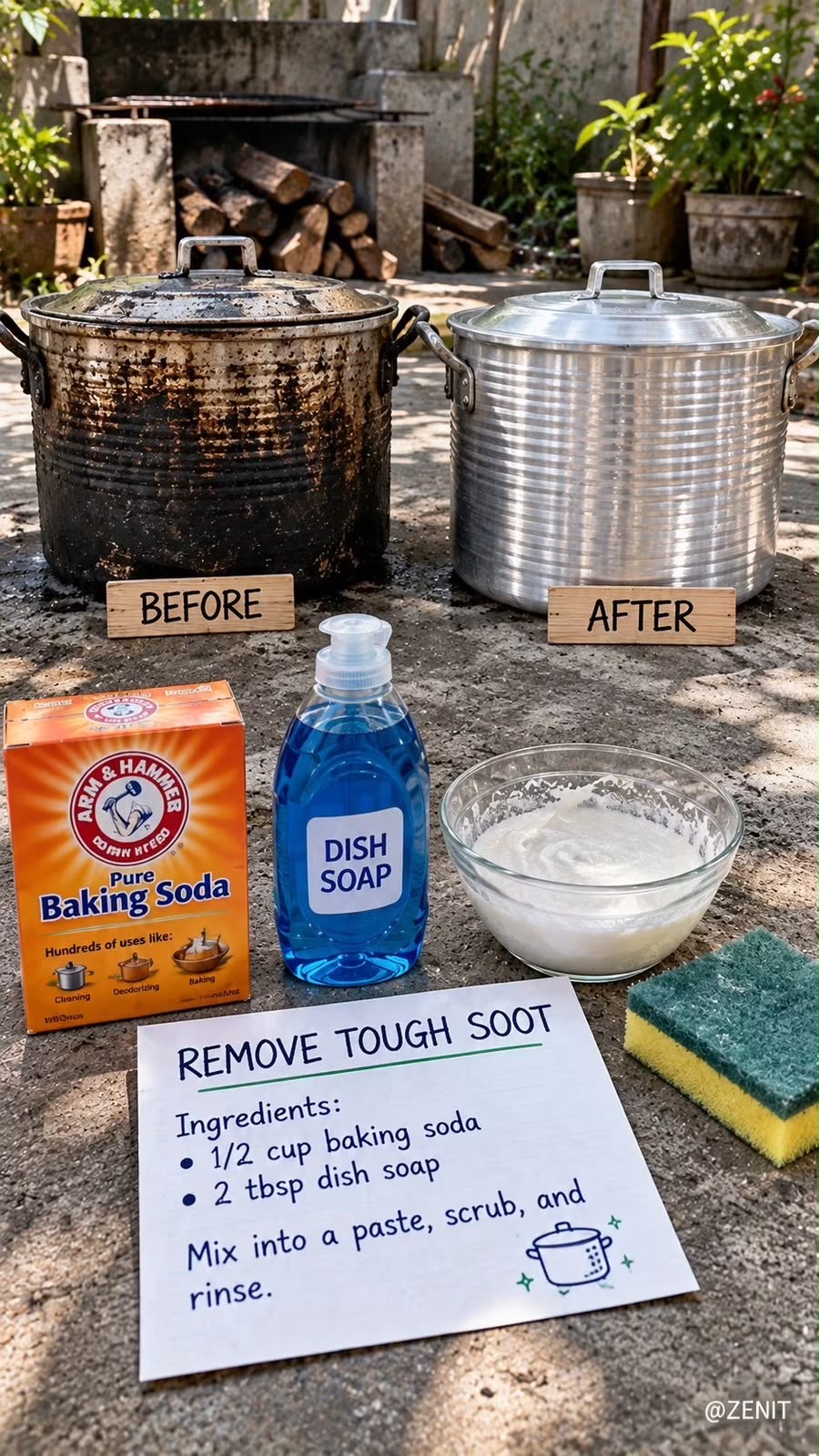
Blackened pots and pans can quickly develop stubborn stains from grease, burnt food, smoke, and soot. Over time, these dark marks can make even a well-used cooking pot look difficult to restore.
Fortunately, a simple homemade cleaning paste made with baking soda and dish soap can help loosen greasy residue and surface grime. This easy method requires only a couple of common household ingredients and a little gentle scrubbing.
Recipe Overview
| Detail | Information |
| Cleaning method | Baking soda and dish soap paste |
| Best for | Grease, soot, and surface grime |
| Preparation time | 2 minutes |
| Application time | 5–10 minutes |
| Difficulty | Very easy |
| Ingredients | 2 |
| Equipment | Bowl and suitable sponge |
Why You’ll Love This Cleaning Method
This homemade cleaning method is simple, inexpensive, and easy to prepare. You only need baking soda and dish soap to create a thick paste that can be spread directly over dirty areas.
Baking soda provides mild abrasive action that can help loosen surface grime, while dish soap helps break down greasy residue.
The method is also easy to repeat. If the first application does not completely remove the marks, you can clean the surface again instead of immediately using an extremely aggressive scrubber.
Ingredients
| Ingredient | Amount |
| Baking soda | 1/2 cup |
| Dish soap | 2 tablespoons |
Equipment
| Item | Purpose |
| Small bowl | Mixing the cleaning paste |
| Soft abrasive sponge | Scrubbing the surface |
| Soft cleaning brush | Reaching difficult areas |
| Clean water | Rinsing |
| Clean cloth | Drying |
Step-by-Step Instructions
Step 1: Let the Pot Cool
Before cleaning, make sure the pot or pan is completely cool.
Never apply cleaning products to a very hot cooking surface. Allow the cookware to cool naturally before beginning.
Remove any loose food particles or debris from the surface.
If the blackened marks are mainly on the outside of the pot, focus the cleaning paste on the exterior surface.
Step 2: Make the Cleaning Paste
Add 1/2 cup of baking soda to a small bowl.
Add 2 tablespoons of dish soap.
Mix the ingredients thoroughly until they form a thick, spreadable paste.
The consistency should be thick enough to stay on the blackened surface rather than running off immediately.
If the mixture is too thin, add a little more baking soda. If it is too dry, add a few drops of dish soap.
Step 3: Apply the Paste
Spread a generous layer of the cleaning paste over the blackened areas.
Make sure the visible soot, grease, and residue are well covered.
Allow the paste to sit for approximately 5 to 10 minutes.
For particularly stubborn buildup, you may repeat the application rather than relying on excessive scrubbing.
Step 4: Scrub the Surface
Using a sponge appropriate for the cookware material, gently scrub the treated areas.
Work in small circular motions and concentrate on areas with heavier buildup.
Start with gentle pressure and increase it gradually if the surface allows it.
Avoid using an extremely abrasive tool unless you are certain it is safe for the cookware.
Step 5: Rinse Thoroughly
Once the residue has been loosened, rinse the pot thoroughly with clean water.
Make sure all traces of baking soda and dish soap have been removed.
If some dark marks remain, repeat the cleaning process rather than immediately using excessive force.
Step 6: Dry and Inspect
Dry the cookware completely with a clean cloth.
Inspect the surface under good lighting.
If you can still see stubborn residue, apply another small amount of the paste and repeat the process.
Some dark discoloration may be permanent and may not disappear completely through cleaning.
Best Tips for Better Results
For heavily soiled cookware, work gradually rather than trying to remove everything with one aggressive scrubbing session.
Use a cleaning sponge that is appropriate for the material of your pot. Some surfaces can scratch easily, especially delicate finishes.
Warm water can help loosen greasy residue before cleaning, but avoid exposing hot cookware to sudden temperature changes.
For best results, clean the cookware regularly instead of allowing layers of grease and burnt residue to accumulate over a long period.
Best Cleaning Options for Different Cookware
Stainless Steel
Baking soda can be useful for cleaning certain stains and residue from stainless steel. Scrub gently and, when the grain of the stainless steel is visible, work in the direction of the grain.
Cast Iron
Cast iron requires special care. Avoid prolonged soaking and dry the surface thoroughly after cleaning.
If the cookware has a seasoned surface, aggressive cleaning can remove some of that protective seasoning.
Aluminum
Use caution when cleaning aluminum because abrasive products and vigorous scrubbing can alter the appearance of the surface.
Test the cleaning method on a small, less visible area first.
Nonstick Cookware
Avoid abrasive sponges and aggressive scrubbing on nonstick coatings.
Use a soft sponge and gentle pressure to help protect the coating.
Common Mistakes to Avoid
Do not scrub aggressively without first checking what material your cookware is made from. A rough metal scrubber can leave permanent scratches on certain surfaces.
Do not clean a very hot pot. Allow it to cool completely before handling it.
Avoid randomly mixing household cleaning products. Never combine bleach with vinegar, ammonia, or other incompatible cleaning products.
Always rinse the cookware thoroughly after cleaning to remove all remaining cleaning paste.
What If the Black Marks Do Not Come Off?
Some black marks are caused by layers of grease and soot that can be loosened with cleaning. Others may be permanent discoloration or changes to the cookware’s surface.
If the first treatment does not completely work, repeat the process gently.
If the discoloration remains after several cleaning attempts, avoid applying excessive pressure. Scrubbing harder can damage the finish without necessarily removing permanent discoloration.
How Often Should You Clean Your Pots?
A quick cleaning after every use can help prevent grease and food residue from building up.
For exterior surfaces, perform a deeper cleaning whenever you notice dark residue beginning to accumulate.
Regular maintenance is generally easier than trying to remove several months of baked-on buildup at once.
Frequently Asked Questions
Can I use this method on every type of pot?
Not necessarily. The safest cleaning method depends on the cookware material and finish. Always check the manufacturer’s care instructions when available and test an unfamiliar cleaning method on a small area first.
How long should I leave the paste on?
Start with approximately 5 to 10 minutes. For stubborn buildup, repeating the treatment can be preferable to leaving the mixture on the surface for an extended period.
Can I use steel wool?
It depends on the cookware. Steel wool can scratch certain surfaces and damage nonstick coatings. A sponge suitable for the specific material is usually a safer choice.
Can I use warm water?
Yes. Warm water can help loosen greasy residue and make cleaning easier. However, avoid sudden temperature changes, especially when dealing with hot cookware.
Will this remove every black stain?
No cleaning method can guarantee that every dark mark will disappear. The paste can help loosen many types of surface grime, grease, and soot, but permanent discoloration or damage to the cookware may remain.
Can I repeat the treatment?
Yes. If residue remains after the first cleaning, allow the surface to dry and repeat the process gently.
Final Thoughts
Cleaning a blackened pot does not always require expensive specialty cleaners. A simple paste made with baking soda and dish soap can help loosen grease, soot, and stubborn surface residue.
The key is to work patiently: apply the paste, allow it to sit briefly, scrub with an appropriate sponge, and rinse thoroughly.
Always consider the material and finish of your cookware before choosing an abrasive cleaning method. With regular care and gentle cleaning, your pots and pans can stay cleaner and look better for longer.