
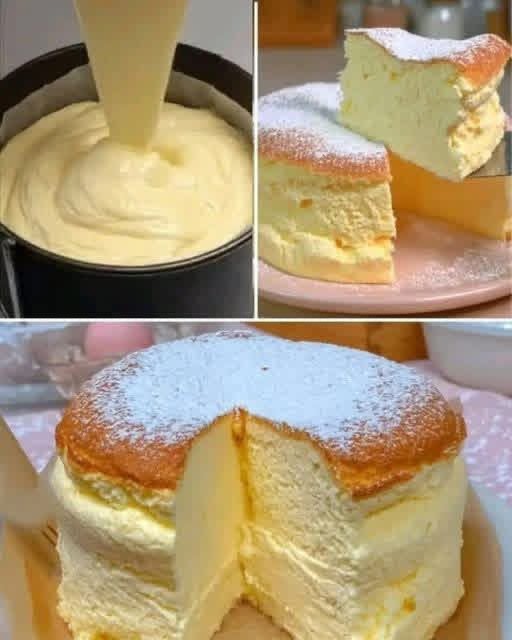
Japanese Soufflé Cheesecake, often called Cotton Cheesecake, is an incredibly light and delicate dessert with a soft, airy texture that almost melts in your mouth. Unlike dense traditional cheesecake, this Japanese-style version combines cream cheese with a fluffy meringue to create a beautifully tall and cloud-like cake.
The gentle water-bath baking method helps the cheesecake cook evenly while keeping the inside moist and tender. A light dusting of powdered sugar provides a simple finishing touch that lets the delicate golden surface shine.
Recipe Overview
| Category | Details |
| Recipe | Japanese Soufflé Cheesecake |
| Also Known As | Cotton Cheesecake |
| Preparation Time | 30 minutes |
| Baking Time | 80 minutes |
| Resting Time | 15 minutes |
| Total Time | About 2 hours |
| Servings | 8–10 |
| Oven Temperature | 150°C / 300°F, then 110°C / 230°F |
| Difficulty | Moderate |
Why You’ll Love This Recipe
This Japanese cheesecake is wonderfully light compared with classic cheesecake. The whipped egg whites create an airy structure that gives every slice its signature soft and delicate texture.
The combination of cream cheese, butter, milk, vanilla, and lemon creates a creamy flavor without making the cake feel overly heavy.
The water bath is another important part of the recipe. It provides gentle, even heat and helps prevent the cheesecake from drying out while it rises and sets.
Although the technique requires a little care, the ingredients themselves are simple and easy to find.
Ingredients
For the Cream Cheese Batter
| Ingredient | Amount |
| Cream cheese, softened | 250 g / 8.8 oz |
| Unsalted butter | 60 g / 4 tablespoons |
| Whole milk | 100 ml / about ⅓ cup + 1 tablespoon |
| Egg yolks | 6 |
| All-purpose flour | 60 g / about ½ cup |
| Cornstarch | 20 g / about 2½ tablespoons |
| Vanilla extract | 1 teaspoon |
| Fresh lemon juice | 1 tablespoon |
For the Meringue
| Ingredient | Amount |
| Egg whites, room temperature | 6 |
| Granulated sugar | 140 g / about ⅔ cup |
| Salt | 1 pinch |
For Finishing
| Ingredient | Amount |
| Powdered sugar | For dusting |
Step-by-Step Instructions
1. Prepare the Pan and Oven
Preheat your oven to 150°C / 300°F.
Line the bottom and sides of a round springform or loose-bottom cake pan with parchment paper.
Allow the parchment on the sides to extend slightly above the rim of the pan. This gives the rising cheesecake room to expand.
If using a springform pan, wrap the outside bottom and sides tightly with aluminum foil to help prevent water from entering during the water bath.
2. Prepare the Cream Cheese Mixture
Place the cream cheese, butter, and whole milk in a heatproof bowl.
Set the bowl over a saucepan of gently simmering water to create a double boiler.
Heat gently while whisking until the cream cheese and butter have completely melted and the mixture becomes smooth and fluid.
Do not allow the mixture to boil.
Remove the bowl from the heat and let it cool for several minutes until warm rather than hot.
3. Add the Egg Yolks
Add the egg yolks one at a time to the warm cream cheese mixture.
Whisk gently after each addition until fully incorporated.
Add the vanilla extract and fresh lemon juice.
Mix until smooth.
4. Add the Dry Ingredients
Sift the flour and cornstarch directly into the cream cheese mixture.
Whisk gently until the batter is completely smooth and free of visible lumps.
Avoid vigorous mixing because excessive air at this stage can make the final texture less even.
5. Prepare the Meringue
Place the room-temperature egg whites in a large, completely clean and dry mixing bowl.
Add the pinch of salt.
Beat the egg whites until they become foamy.
Gradually add the sugar in three additions, continuing to beat between each addition.
Continue beating until the meringue becomes glossy and forms soft to medium peaks.
When you lift the whisk, the peak should stand but gently bend at the tip.
Avoid beating the meringue until it becomes extremely stiff and dry. A smooth, flexible meringue incorporates more easily and helps create the characteristic soft texture of Japanese cheesecake.
6. Combine the Meringue and Cheesecake Batter
Add approximately one-third of the meringue to the cream cheese batter.
Gently whisk or fold it in to lighten the batter.
Add the remaining meringue in two additions.
Use a rubber spatula and gently fold from the bottom of the bowl upward, rotating the bowl as you work.
Stop as soon as no large streaks of meringue remain.
Do not overmix because you want to preserve as much of the whipped air as possible.
7. Fill the Pan
Pour the light, airy batter into the prepared pan.
Gently tap the pan against the countertop once or twice to release any very large air bubbles.
Do not hit the pan forcefully, as this can remove too much air from the batter.
8. Prepare the Water Bath
Place the cake pan inside a larger deep roasting pan.
Carefully pour hot water into the roasting pan until it reaches approximately 2–3 cm / ¾–1¼ inches up the outside of the cake pan.
The water should surround the cake pan without getting inside it.
9. Bake the Cheesecake
Place the water bath in the preheated oven.
Bake at 150°C / 300°F for 60 minutes.
After 60 minutes, reduce the oven temperature to 110°C / 230°F.
Continue baking for another 20 minutes, or until the surface is lightly golden and the cheesecake has set while retaining a gentle wobble.
Avoid opening the oven frequently because sudden temperature changes can cause the delicate cheesecake to collapse.
10. Cool the Cheesecake Gradually
Turn off the oven once the baking time is complete.
Leave the cheesecake inside for approximately 15 minutes with the oven door slightly open.
This gradual cooling helps reduce the risk of a sudden temperature change causing the cake to shrink dramatically.
11. Remove and Finish
Carefully remove the cheesecake from the water bath.
Gently remove it from the pan and transfer it to a cooling rack.
Allow it to cool completely.
Once cool, dust the top generously with powdered sugar.
Use a sharp knife to cut the cheesecake into soft, delicate slices.
Best Tips
Room-temperature egg whites whip more easily and generally produce a more stable meringue.
Make sure the mixing bowl and beaters are completely clean and free from grease. Even a small amount of fat can make whipping the egg whites difficult.
Do not overbeat the meringue. The ideal texture is glossy and flexible with soft-to-medium peaks rather than extremely stiff peaks.
When folding the meringue into the cream cheese mixture, use gentle movements. Preserving the air bubbles is one of the most important steps for achieving the signature cotton-like texture.
The water bath should contain hot water, but make sure the water cannot leak into the cake pan.
Avoid opening the oven repeatedly during baking. A stable oven temperature helps the cheesecake rise and set evenly.
Best Ingredient Options
Use full-fat cream cheese for the richest flavor and smoothest texture.
Whole milk is recommended because it contributes to the creamy consistency of the batter.
Use unsalted butter so you can control the amount of salt in the recipe.
Fresh lemon juice provides a subtle brightness that balances the richness of the cream cheese.
For the best meringue, use fresh eggs and separate the whites carefully. Even a small amount of yolk can interfere with whipping.
Recipe Variations
For a stronger citrus flavor, add a little finely grated lemon zest to the cream cheese mixture.
For a vanilla-forward version, increase the vanilla extract slightly.
You can create a subtle matcha version by replacing a small portion of the flour with sifted matcha powder.
For a chocolate variation, add a small amount of unsweetened cocoa powder to the dry ingredients and adjust the flour accordingly.
Fresh berries can also be served alongside individual slices for a colorful and refreshing presentation.
What to Serve With
Japanese Soufflé Cheesecake is delicious on its own with a simple dusting of powdered sugar.
Fresh strawberries, raspberries, blueberries, or sliced peaches make excellent accompaniments.
A small spoonful of berry sauce adds a pleasant fruity contrast to the creamy cheesecake.
For a classic afternoon treat, serve it with green tea, black tea, coffee, or a lightly sweetened latte.
Make-Ahead Instructions
This cheesecake is an excellent make-ahead dessert.
After cooling completely, cover it carefully and refrigerate it until ready to serve.
For the best texture, prepare it several hours before serving so the cheesecake has time to fully settle.
Dust with powdered sugar shortly before serving for the cleanest appearance.
Storage
Store the cheesecake covered in the refrigerator.
It is best enjoyed within 3–4 days.
Because this cake is very delicate, keep it on a flat surface and avoid placing heavy containers on top of it.
Reheating
Reheating is not recommended because Japanese cheesecake is intended to be enjoyed chilled or at cool room temperature.
For a softer, more delicate texture, remove a slice from the refrigerator and allow it to sit at room temperature for approximately 15–20 minutes before serving.
Freezing
The cheesecake can be frozen, although the texture may change slightly after thawing.
Cut the completely cooled cheesecake into individual portions and wrap each slice carefully.
Place the wrapped slices in a freezer-safe container.
Freeze for up to 1 month for the best texture.
Thaw overnight in the refrigerator, then allow the cheesecake to sit at room temperature for a short time before serving.
Common Mistakes to Avoid
Avoid using cold egg whites if possible. Room-temperature whites generally whip more efficiently and create a more stable meringue.
Do not overbeat the egg whites into very stiff peaks. A dry, overly firm meringue can be difficult to fold into the batter and may contribute to cracking or uneven texture.
Do not fold the meringue aggressively. Rough mixing can remove the air that gives the cheesecake its characteristic lightness.
Avoid baking without a water bath. The gentle moisture and heat distribution are important for this delicate cake.
Do not remove the cheesecake from the oven immediately after baking. Gradual cooling helps reduce dramatic shrinking.
Avoid opening the oven door repeatedly during baking because sudden temperature changes can cause the cheesecake to deflate.
Nutrition Estimate
Nutrition values are approximate and will vary depending on the exact cream cheese, butter, and portion size.
| Nutrient | Approximate Amount Per Serving |
| Calories | 280–320 kcal |
| Protein | 7–9 g |
| Carbohydrates | 25–30 g |
| Fat | 16–19 g |
| Saturated Fat | 9–11 g |
| Fiber | 0–1 g |
| Sugar | 17–21 g |
| Sodium | 180–240 mg |
Frequently Asked Questions
Why did my Japanese cheesecake collapse?
Some shrinking is normal because the cake contains a large amount of whipped egg whites. Significant collapse can occur when the meringue is over- or under-whipped, the batter is overmixed, the cake is underbaked, or it cools too quickly.
Should the meringue have stiff peaks?
No. For this style of cheesecake, glossy soft-to-medium peaks are generally easier to incorporate while preserving the airy structure.
Why is a water bath necessary?
The water bath provides gentle, even heat and helps maintain moisture in the oven. This is particularly useful for delicate soufflé-style cheesecakes.
Can I use a regular cake pan?
Yes, provided it is deep enough and can safely be used with a water bath. A springform or loose-bottom pan makes removing the finished cheesecake easier.
Why did my cheesecake crack?
Cracking can result from excessive oven temperature, overbaked edges, an overly stiff meringue, or rapid temperature changes. Gentle baking and gradual cooling can help.
Can I make this cheesecake without cornstarch?
The cornstarch contributes to the structure and delicate texture. It can sometimes be replaced with additional flour, but the final texture may be slightly different.
Should I refrigerate Japanese cheesecake?
Yes. Once completely cooled, store it covered in the refrigerator. Allowing it to sit at room temperature for a short time before serving gives it a softer texture.
Can I serve it warm?
It is possible, but the cake is generally easier to handle and more flavorful once it has cooled and settled. Chilled or slightly cool room temperature is ideal.
Final Thoughts
Japanese Soufflé Cheesecake is a beautiful dessert that combines the richness of cream cheese with the airy texture of a delicate meringue. Its soft, cloud-like crumb and lightly golden surface make every slice feel special.
The key to success is gentle handling: prepare a smooth cream cheese mixture, whip the egg whites to a glossy and flexible consistency, fold everything together carefully, and bake slowly in a water bath.
Finished with nothing more than a generous dusting of powdered sugar, this Cotton Cheesecake is elegant, light, and wonderfully delicate.