
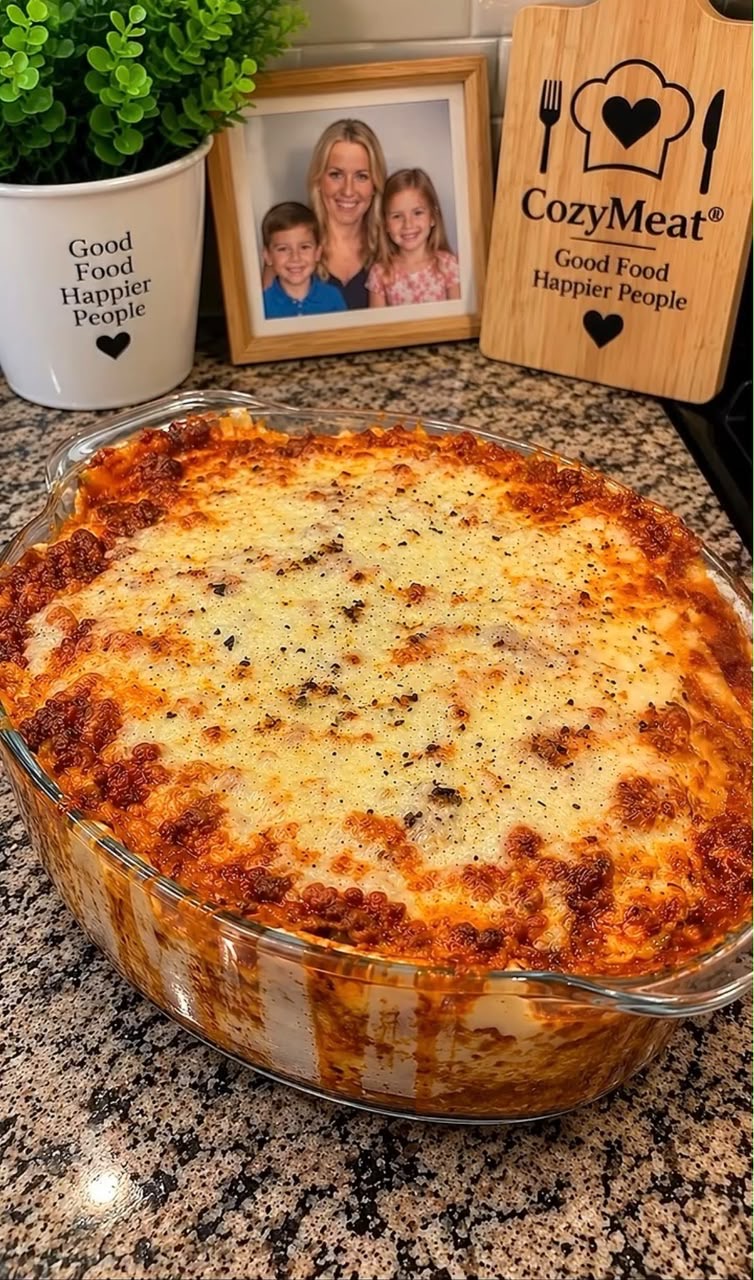
This Classic Baked Beef Lasagna Bolognese is the ultimate comfort-food dinner, made with tender lasagna sheets, rich homemade beef tomato sauce, creamy béchamel, and a generous layer of melted mozzarella and Parmesan.
Each layer combines hearty seasoned ground beef with silky white sauce and tender pasta. The top becomes beautifully golden and bubbling in the oven, while the inside remains creamy, rich, and satisfying.
This homemade lasagna is perfect for family dinners, weekend meals, gatherings, and special occasions. It can also be prepared ahead of time, making it a practical choice when you want a comforting meal ready for the oven.
Recipe Overview
| Category | Details |
| Recipe | Classic Baked Beef Lasagna Bolognese |
| Preparation Time | 30 minutes |
| Cooking Time | 35–40 minutes |
| Resting Time | 10–15 minutes |
| Total Time | About 1 hour 30 minutes |
| Servings | 8 |
| Cuisine | Italian-Inspired |
| Main Ingredient | Ground Beef |
| Cooking Method | Oven |
| Difficulty | Intermediate |
Why You’ll Love This Recipe
This classic beef lasagna brings together several layers of comforting flavors and textures. The rich tomato and beef sauce is hearty and savory, while the béchamel adds a creamy element that makes every bite wonderfully satisfying.
The combination of mozzarella and Parmesan creates a beautiful golden cheese topping. As the lasagna bakes, the cheese melts into the sauce and develops a lightly browned crust.
This recipe is also ideal for family meals because one large baking dish produces generous portions. It can be prepared ahead of time and reheated beautifully, making it especially convenient for busy days.
Ingredients
For the Beef Bolognese Sauce
| Ingredient | Amount |
| Ground beef | 600 g |
| Medium onion, finely chopped | 1 |
| Garlic cloves, minced | 2 |
| Crushed or puréed tomatoes | 800 g |
| Tomato paste | 2 tablespoons |
| Olive oil | 2 tablespoons |
| Dried oregano or basil | 1 teaspoon |
| Salt | To taste |
| Black pepper | To taste |
For the Béchamel Sauce
| Ingredient | Amount |
| Unsalted butter | 50 g |
| All-purpose flour | 50 g |
| Milk | 750 ml |
| Ground nutmeg | 1 pinch |
| Salt | To taste |
| Black pepper | To taste |
For Assembly and Topping
| Ingredient | Amount |
| No-boil lasagna sheets | 12–15 sheets |
| Shredded mozzarella | 200 g |
| Grated Parmesan | 50 g |
| Freshly ground black pepper | For finishing |
Step-by-Step Instructions
1. Prepare the Beef Bolognese Sauce
Heat the olive oil in a large skillet or heavy-bottomed saucepan over medium heat.
Add the finely chopped onion and cook for approximately 3–4 minutes, stirring occasionally, until softened.
Add the minced garlic and cook for another 30 seconds.
Add the ground beef and break it apart with a wooden spoon or spatula.
Cook for approximately 6–8 minutes, stirring regularly, until the beef is nicely browned and fully cooked.
Stir in the tomato paste and cook for about 1 minute.
Add the crushed or puréed tomatoes.
Season with oregano or basil, salt, and black pepper.
Reduce the heat to low and simmer for approximately 20 minutes, stirring occasionally.
The sauce should become thicker and more concentrated. If it looks too watery, allow it to simmer uncovered for a few additional minutes.
2. Prepare the Béchamel Sauce
While the meat sauce is simmering, prepare the béchamel.
Melt the butter in a medium saucepan over low to medium heat.
Add the flour and whisk continuously for 1–2 minutes to create a smooth roux.
Gradually pour in the cold milk while whisking constantly.
Continue whisking as the sauce heats and thickens.
Once the béchamel has reached a smooth, creamy consistency, season with salt, black pepper, and a small pinch of freshly grated nutmeg.
Remove from the heat.
If the sauce becomes too thick while sitting, whisk in a small splash of milk to loosen it.
3. Prepare the Oven and Baking Dish
Preheat the oven to 190°C (375°F).
Lightly grease a large rectangular or oval oven-safe baking dish.
A deep dish is recommended because you will be creating several layers.
4. Start the Lasagna Layers
Spread a thin layer of béchamel over the bottom of the baking dish.
Arrange the first layer of no-boil lasagna sheets over the sauce.
Depending on the shape of your dish, you may need to slightly overlap the sheets.
5. Add the Bolognese and Béchamel
Spread a generous layer of the beef Bolognese sauce over the pasta.
Add a layer of béchamel over the meat sauce.
Spread it gently so the sauces cover most of the surface.
6. Continue Layering
Repeat the layers in the following order:
Lasagna sheets → beef Bolognese → béchamel
Continue until you have used most of the ingredients.
Aim for approximately 3–4 layers, depending on the depth of your baking dish.
Try to distribute the sauces evenly so every portion contains pasta, beef sauce, and béchamel.
7. Finish the Lasagna
Finish with a final layer of sauce.
Cover the entire surface generously with the shredded mozzarella and grated Parmesan.
Add a light sprinkle of freshly ground black pepper.
Make sure the pasta is well covered with sauce because this helps prevent exposed edges from becoming dry during baking.
8. Bake
Place the assembled lasagna in the preheated oven.
Bake uncovered at 190°C (375°F) for approximately 35–40 minutes.
The lasagna is ready when the cheese is completely melted, bubbling, and evenly golden brown.
If the top starts browning too quickly before the lasagna is fully heated through, loosely cover the dish with aluminum foil and continue baking.
9. Rest Before Serving
Remove the lasagna from the oven and let it rest for 10–15 minutes before cutting.
This step is important because it allows the sauces to settle and gives the layers time to firm up.
Cut into generous squares and serve warm.
Best Tips for Perfect Lasagna
Allow the Bolognese sauce to simmer until it becomes thick and flavorful. A sauce that is too watery can make the finished lasagna difficult to slice.
Do not make the béchamel excessively thick. It should be creamy and spreadable so it can distribute evenly between the layers.
Use enough sauce around the pasta sheets, especially when using no-boil lasagna sheets. They need sufficient moisture to become tender during baking.
Spread each layer evenly rather than creating very thick sections of meat in one area.
For a beautifully browned topping, combine mozzarella with Parmesan. The mozzarella melts well while Parmesan contributes a savory flavor and golden finish.
Always let the lasagna rest before slicing. Cutting it immediately after baking can cause the layers and sauces to slide apart.
Best Ingredient Options
Ground beef gives this lasagna a rich and hearty flavor. Choose ground beef with some natural fat for a more tender and flavorful sauce.
For the tomatoes, crushed tomatoes create a slightly textured sauce, while tomato purée produces a smoother Bolognese.
Mozzarella is excellent for melting and creating a stretchy cheese topping. Parmesan adds a stronger savory flavor and helps the top become golden.
You can use dried oregano, dried basil, or a combination of Italian herbs to season the meat sauce.
For the béchamel, whole milk creates a particularly creamy texture, although lower-fat milk can also be used.
Recipe Variations
Extra-Cheesy Beef Lasagna
For an even richer lasagna, add a little extra mozzarella between the layers in addition to the cheese on top.
Mushroom Beef Lasagna
Sauté finely sliced mushrooms with the onion before adding the ground beef. The mushrooms add an earthy flavor and extra texture.
Vegetable Beef Lasagna
Add finely diced carrots, zucchini, bell peppers, or spinach to the Bolognese sauce for additional vegetables.
Spicy Beef Lasagna
Add a pinch of chili flakes to the tomato sauce for a gentle spicy flavor.
Herb-Focused Lasagna
Add fresh basil or parsley to the finished Bolognese sauce for a fresh herbal note.
What to Serve With Lasagna
A simple green salad with lettuce, cucumber, tomatoes, and a light lemon dressing pairs beautifully with rich beef lasagna.
Roasted vegetables such as zucchini, broccoli, carrots, or green beans also make excellent side dishes.
For a classic family dinner, serve the lasagna with a fresh salad and warm bread.
Make-Ahead Instructions
Lasagna is an excellent make-ahead meal.
You can assemble the entire dish, cover it tightly, and refrigerate it for up to 24 hours before baking.
When ready to cook, remove it from the refrigerator while the oven preheats.
Because the lasagna will be cold, it may require a few additional minutes in the oven.
You can also prepare the Bolognese and béchamel sauces in advance and assemble the lasagna later.
Storage
Allow leftover lasagna to cool before placing it in an airtight container.
Store leftovers in the refrigerator for up to 3–4 days.
Individual portions are particularly convenient for reheating throughout the week.
Reheating
For the best texture, reheat individual portions in the oven at approximately 175°C (350°F) until heated through.
Cover the portion loosely with foil to prevent the cheese from drying out.
For a quicker option, microwave individual portions in short intervals until hot throughout.
Freezing
Lasagna freezes very well.
You can freeze the entire assembled but unbaked lasagna or freeze already cooked portions.
For cooked leftovers, allow the lasagna to cool completely before wrapping individual portions tightly and placing them in a freezer-safe container.
For best quality, use within 2–3 months.
Thaw frozen cooked portions overnight in the refrigerator before reheating.
Common Mistakes to Avoid
Avoid making the Bolognese sauce too thin. Excess liquid can make the lasagna watery and prevent clean slices.
Do not forget the béchamel between the layers. It provides moisture and gives the finished lasagna its creamy texture.
Avoid leaving large areas of pasta uncovered by sauce because exposed edges can become dry or hard.
Do not overfill the baking dish. Leave enough space at the top for the sauce to bubble without overflowing.
Avoid cutting the lasagna immediately after removing it from the oven. The resting period is essential for stable layers.
Finally, watch the cheese during the final part of baking. If it becomes deeply browned too quickly, cover the dish loosely with foil.
Nutrition Estimate
Values are approximate and depend on the exact brands, cheese quantities, portion size, and ingredients used.
| Nutrient | Approx. Per Serving |
| Calories | 620 kcal |
| Protein | 35 g |
| Carbohydrates | 48 g |
| Fat | 32 g |
| Saturated Fat | 16 g |
| Fiber | 5 g |
| Sugar | 8 g |
| Sodium | 780 mg |
Frequently Asked Questions
Can I use regular lasagna sheets?
Yes. If your lasagna sheets require boiling, cook them according to the package instructions before assembling the dish. No-boil sheets can be used directly when there is enough sauce and moisture in the casserole.
Can I prepare lasagna the day before?
Yes. Assemble the lasagna, cover it tightly, refrigerate it, and bake it the following day.
Why is my lasagna watery?
The most common causes are a tomato sauce that is too thin, vegetables releasing excess moisture, or cutting the lasagna immediately after baking. Letting the Bolognese simmer until thick and allowing the finished lasagna to rest can help.
How many layers should lasagna have?
There is no single required number, but approximately 3–4 layers of pasta and filling works well for a deep baking dish.
Can I freeze homemade lasagna?
Yes. Lasagna freezes very well when properly wrapped and stored in an airtight freezer-safe container.
Can I add vegetables to the Bolognese?
Absolutely. Mushrooms, carrots, zucchini, spinach, and bell peppers can all be added.
How long should lasagna rest before serving?
Allow it to rest for approximately 10–15 minutes after baking. This helps the layers settle and makes it easier to cut neat portions.
What cheese is best for lasagna?
Mozzarella is excellent for melting, while Parmesan adds a stronger savory flavor. Combining both creates a flavorful golden topping.
Final Thoughts
This Classic Baked Beef Lasagna Bolognese combines everything that makes homemade lasagna so comforting: rich tomato and beef sauce, creamy béchamel, tender pasta sheets, and a beautifully melted cheese topping.
The layers are simple to prepare, and the recipe is easy to make ahead for family dinners or special occasions. Allowing the finished lasagna to rest before serving gives you neat, generous portions with creamy sauce and hearty beef in every layer.
Serve it with a crisp green salad, warm bread, or roasted vegetables for a complete and satisfying homemade Italian-inspired dinner.