
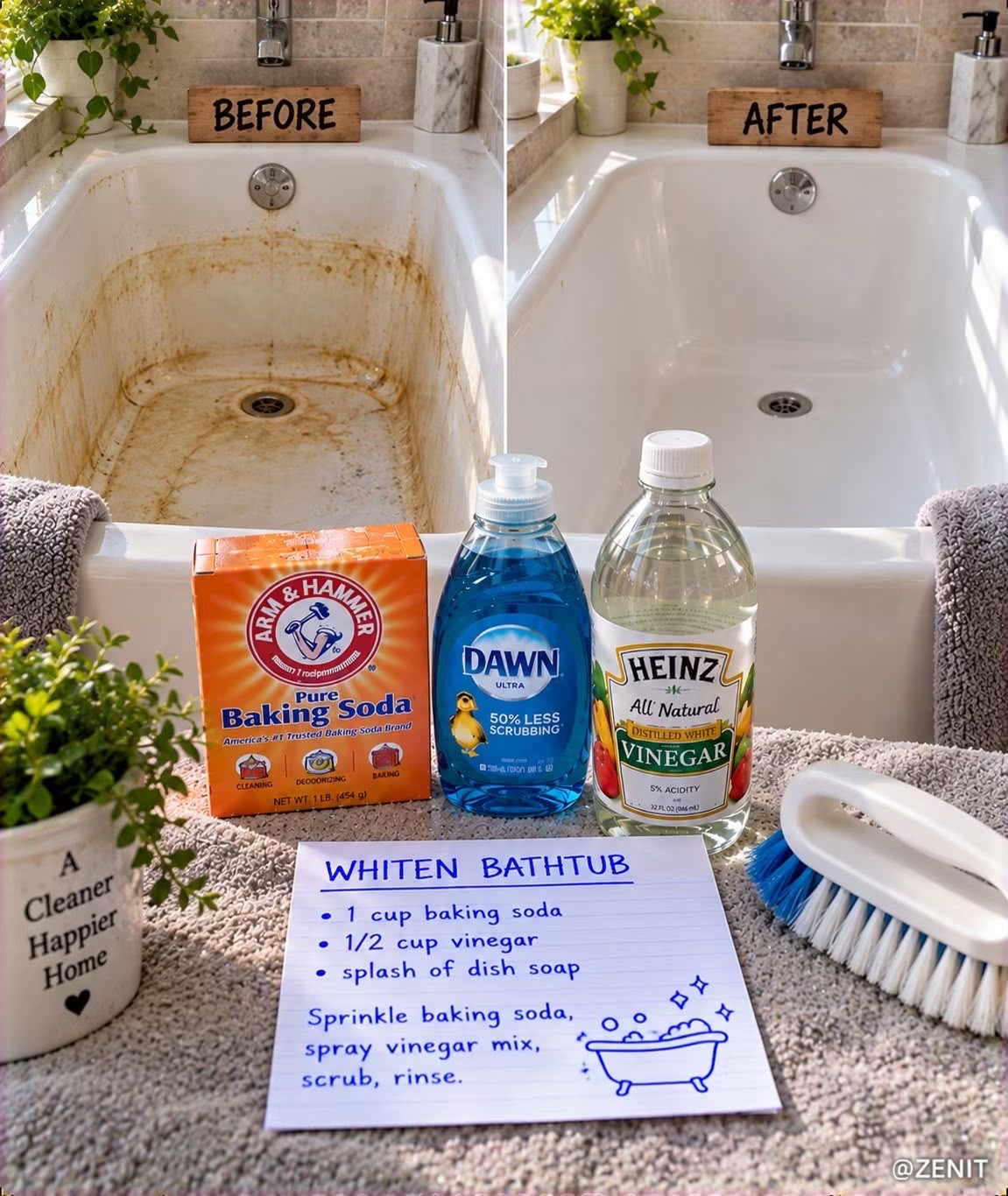
A bathtub can quickly develop soap scum, mineral deposits, and dull-looking residue, especially with frequent use. This simple homemade bathtub cleaner combines baking soda, white vinegar, and a small amount of dish soap to help loosen everyday grime and leave the surface looking cleaner and fresher.
The formula is easy to prepare with common household ingredients and works well as part of a regular bathroom cleaning routine.
Cleaning Overview
| Detail | Information |
| Preparation Time | 5 minutes |
| Cleaning Time | 10–15 minutes |
| Total Time | About 20 minutes |
| Difficulty | Easy |
| Best For | Soap scum, everyday grime, light mineral residue |
| Surface | Bathtub and compatible bathroom surfaces |
Why You’ll Love This Homemade Bathtub Cleaner
This homemade cleaner uses simple ingredients that are inexpensive and easy to find. Baking soda provides gentle scrubbing power, while dish soap helps loosen greasy soap residue and everyday buildup.
The combination can be useful for routine bathroom maintenance without requiring a complicated cleaning process.
It is especially convenient when you want to freshen up a bathtub quickly before guests arrive or as part of your weekly cleaning routine.
Ingredients
| Ingredient | Amount | Purpose |
| Baking soda | 1 cup | Helps loosen residue and provides gentle scrubbing action |
| White vinegar | ½ cup | Helps dissolve some mineral and soap deposits |
| Dish soap | A small splash | Helps break down greasy residue |
Equipment
| Item | Quantity |
| Scrub brush | 1 |
| Spray bottle | 1 |
| Clean water | As needed |
| Clean cloth or sponge | Optional |
Step-by-Step Instructions
1. Prepare the Bathtub
Remove bottles, bath mats, toys, and other items from the bathtub.
Rinse the surface with warm water to remove loose dirt and hair. This allows the cleaning mixture to work more directly on the remaining buildup.
2. Apply the Baking Soda
Sprinkle approximately 1 cup of baking soda evenly over the bathtub surface.
Pay particular attention to areas where soap scum or residue tends to accumulate.
3. Prepare the Spray
Pour ½ cup of white vinegar into a spray bottle.
Add a small splash of dish soap and gently mix.
Avoid shaking the bottle vigorously, especially if it contains dish soap, because it can create excessive foam.
4. Spray the Surface
Spray the vinegar and dish soap mixture over the baking soda.
The mixture will begin to fizz as the vinegar reacts with the baking soda. This reaction is normal, but keep in mind that the fizzing itself is not what does most of the cleaning—the mechanical scrubbing and the cleaning ingredients are important for removing buildup.
5. Let It Sit Briefly
Allow the mixture to sit for approximately 5–10 minutes.
This gives the cleaning solution time to soften soap residue and loosen surface buildup.
Do not allow the mixture to dry completely on the bathtub.
6. Scrub the Bathtub
Use a suitable scrub brush to work over the entire surface.
Concentrate on the bottom of the tub, corners, around the drain, and other areas where soap residue commonly collects.
For stubborn deposits, apply gentle additional scrubbing rather than using excessive force.
7. Rinse Thoroughly
Rinse the bathtub generously with clean water.
Make sure all traces of baking soda, vinegar, soap, and loosened residue have been removed.
If necessary, wipe the surface with a clean damp cloth or sponge and rinse again.
8. Dry the Surface
Use a clean microfiber cloth to dry the bathtub.
Drying the surface can help prevent water spots and leave the bathtub looking cleaner.
Best Tips for Cleaning a Bathtub
Always remove loose dirt and hair before applying the cleaning mixture. This makes the cleaning process more efficient.
For heavy soap buildup, repeat the cleaning process rather than aggressively scrubbing the surface.
Use a soft or non-abrasive brush on delicate bathtub finishes to reduce the risk of scratches.
Regular cleaning is easier than allowing soap scum and mineral deposits to accumulate for long periods.
If you are unsure whether this mixture is suitable for your bathtub, test it first on a small, inconspicuous area and follow the manufacturer’s care instructions for the tub material.
Best Surface Options
This type of homemade cleaner may be suitable for some common bathtub surfaces, but bathtub materials and finishes vary.
Acrylic, fiberglass, porcelain, enamel, natural stone, and specialty finishes can have different cleaning requirements. Always check the manufacturer’s recommendations before using homemade cleaning products.
For delicate or easily scratched surfaces, choose a soft sponge or cloth rather than a coarse scrubber.
Important Cleaning Safety Tips
Never mix vinegar with chlorine bleach. Combining these products can release dangerous chlorine gas.
Do not mix vinegar with other strong chemical cleaners unless the product manufacturer specifically states that they are compatible.
Use the cleaner in a well-ventilated bathroom and avoid getting the mixture in your eyes.
Keep cleaning ingredients away from children and pets.
If you have a natural stone bathtub or stone surfaces nearby, avoid using vinegar unless the manufacturer confirms that it is safe, because acidic cleaners can damage some natural stone materials.
Common Mistakes to Avoid
Do not use an abrasive brush on a delicate bathtub finish.
Do not leave the mixture sitting until it completely dries on the surface.
Do not assume that more vinegar or more baking soda will automatically produce better cleaning results.
Avoid combining this homemade cleaner with bleach, ammonia, or other chemical cleaning products.
Do not skip rinsing. Any remaining baking soda or dish soap can leave a residue on the bathtub.
Frequently Asked Questions
Does baking soda and vinegar whiten a bathtub?
The mixture can help remove surface grime, soap scum, and some mineral residue that makes a bathtub look dull. It does not permanently bleach or change the color of the bathtub material.
How often should I clean my bathtub?
For a regularly used bathtub, a weekly cleaning routine can help prevent heavy buildup. Light rinsing and wiping after use can also reduce soap residue between deeper cleanings.
Can I use this cleaner on an acrylic bathtub?
Check the bathtub manufacturer’s cleaning instructions first. Acrylic surfaces can scratch easily, so use a soft sponge or a non-abrasive cleaning tool.
Can I leave the mixture overnight?
It is not recommended. A short contact time followed by thorough rinsing is generally preferable, especially for surfaces with specific care requirements.
Can I use lemon juice instead of vinegar?
Lemon juice is also acidic, but it should not be assumed to be safe for every bathtub material. Always check the surface manufacturer’s recommendations.
Can this cleaner remove hard-water stains?
It may help with light mineral residue and water deposits. More stubborn or extensive mineral buildup may require a product specifically formulated for hard-water deposits and compatible with the bathtub material.
Final Thoughts
This simple baking soda, white vinegar, and dish soap formula can be a convenient option for routine bathtub cleaning. With a few inexpensive ingredients and a little scrubbing, it can help remove everyday soap residue and surface grime.
For the best results, use gentle cleaning tools, rinse thoroughly, and always check the manufacturer’s care instructions for your particular bathtub finish.