
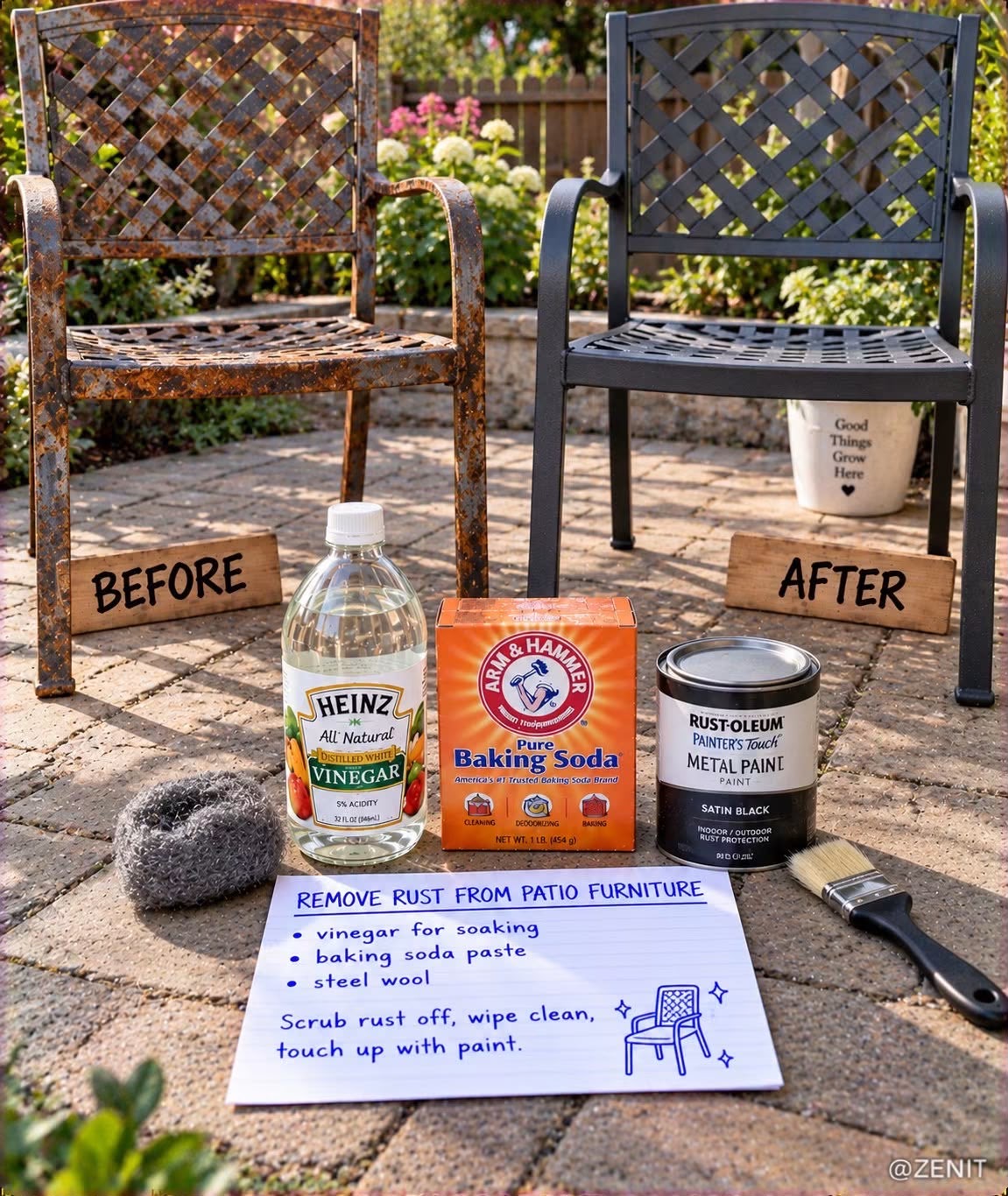
If your outdoor metal furniture has started to develop rust, don’t throw it away just yet. With a few simple household supplies, some scrubbing, and a fresh coat of metal paint, you can restore a rusty garden chair, table, or other metal furniture and give it a clean, refreshed appearance.
This simple DIY rust removal method helps loosen surface rust, remove residue, and protect the metal from future outdoor exposure.
What You’ll Need
| Material | Purpose |
| White vinegar | Helps loosen and dissolve surface rust |
| Baking soda | Helps create a gentle abrasive cleaning paste |
| Water | For making the paste and rinsing |
| Steel wool or wire brush | For removing loosened rust |
| Clean cloth or sponge | For wiping and cleaning |
| Rust-resistant metal paint | Protects the metal after restoration |
| Paintbrush | For applying the metal paint |
Step-by-Step Instructions
1. Prepare the Furniture
Move the metal furniture to a well-ventilated outdoor or work area.
Remove loose dirt, dust, and debris with a dry brush or cloth. This allows the rust treatment to work directly on the affected areas.
If the furniture has peeling paint, remove as much loose paint as possible with a wire brush or scraper.
2. Apply White Vinegar
Pour white vinegar directly onto the rusty areas.
For heavily rusted sections, soak clean cloths in white vinegar and place them over the affected metal.
Leave the vinegar in contact with the rust for approximately 30 minutes to 1 hour.
For severe rust, a longer treatment may be necessary, but check the surface periodically.
3. Make a Baking Soda Paste
In a small container, mix baking soda with a small amount of water.
Add the water gradually until you have a thick, spreadable paste.
Apply the paste to stubborn rusty areas after the vinegar treatment.
Important: Vinegar is acidic and baking soda is alkaline, so mixing them together causes a reaction that largely neutralizes both. For this reason, it is more effective to use them sequentially rather than mixing them together at the same time.
4. Scrub Away the Rust
Use steel wool or a wire brush to scrub the affected areas.
Work firmly over the rusty sections until the loose rust and flaky residue begin to disappear.
For heavily corroded areas, repeat the vinegar treatment and scrubbing process as needed.
Continue until the remaining metal feels reasonably smooth and the loose rust has been removed.
5. Clean the Surface
Wipe away the loosened rust, baking soda residue, and remaining cleaning solution with a clean damp cloth or sponge.
Rinse the surface with clean water if appropriate for the furniture.
Make sure no cleaning residue remains before moving on to painting.
6. Dry the Metal Completely
Dry the entire piece thoroughly with a clean cloth.
Allow the furniture to air-dry completely before applying any paint.
This step is especially important because trapped moisture can encourage rust to return underneath the new coating.
7. Prepare for Painting
Inspect the surface carefully.
If there are still rough or flaky areas, brush them again with the wire brush or steel wool.
For the best finish, the metal should be as clean, dry, and smooth as possible before painting.
8. Apply Rust-Resistant Metal Paint
Choose a paint specifically designed for metal and outdoor use.
A rust-resistant satin or matte metal paint can provide both a refreshed appearance and an additional protective coating.
Apply a thin, even coat with a suitable paintbrush.
Allow it to dry according to the manufacturer’s instructions before applying another coat if needed.
9. Let the Furniture Cure
Allow the final coat of paint to dry and cure completely before using the furniture outdoors.
Avoid exposing freshly painted furniture to rain or heavy moisture until the paint manufacturer’s recommended curing time has passed.
Best Tips for Rust Removal
Treat rust as soon as you notice it. Small rusty spots are generally easier to clean than heavily corroded areas.
For stubborn rust, several shorter treatment and scrubbing sessions may work better than trying to remove everything at once.
Use a wire brush for heavily rusted metal and steel wool for areas where you want more controlled abrasion.
Always dry outdoor metal furniture thoroughly after cleaning.
Choose an exterior-grade, rust-resistant metal paint to provide better protection against moisture and weather.
Common Mistakes to Avoid
Do not paint directly over loose, flaky rust because the new coating may peel quickly.
Do not leave vinegar residue on the metal before painting. Clean and dry the surface thoroughly.
Do not mix large amounts of vinegar and baking soda and expect a stronger rust remover. Their acid-base reaction neutralizes much of their cleaning action.
Do not apply paint to damp metal.
Do not rush the drying process between cleaning and painting.
How Often Should You Maintain Metal Garden Furniture?
Inspect your outdoor metal furniture at least a few times throughout the year, especially after periods of heavy rain or humidity.
If you notice small areas of rust, treat them early before the corrosion spreads.
Keeping the surface clean and maintaining the protective paint coating can help extend the life of your outdoor furniture.
Final Thoughts
Restoring rusty metal garden furniture doesn’t have to be complicated or expensive.
With white vinegar, baking soda, an abrasive brush, and a quality rust-resistant metal paint, you can remove surface rust and give an old outdoor piece a fresh new appearance.
The most important steps are removing loose rust, cleaning the surface thoroughly, drying the metal completely, and protecting it with suitable outdoor metal paint.