
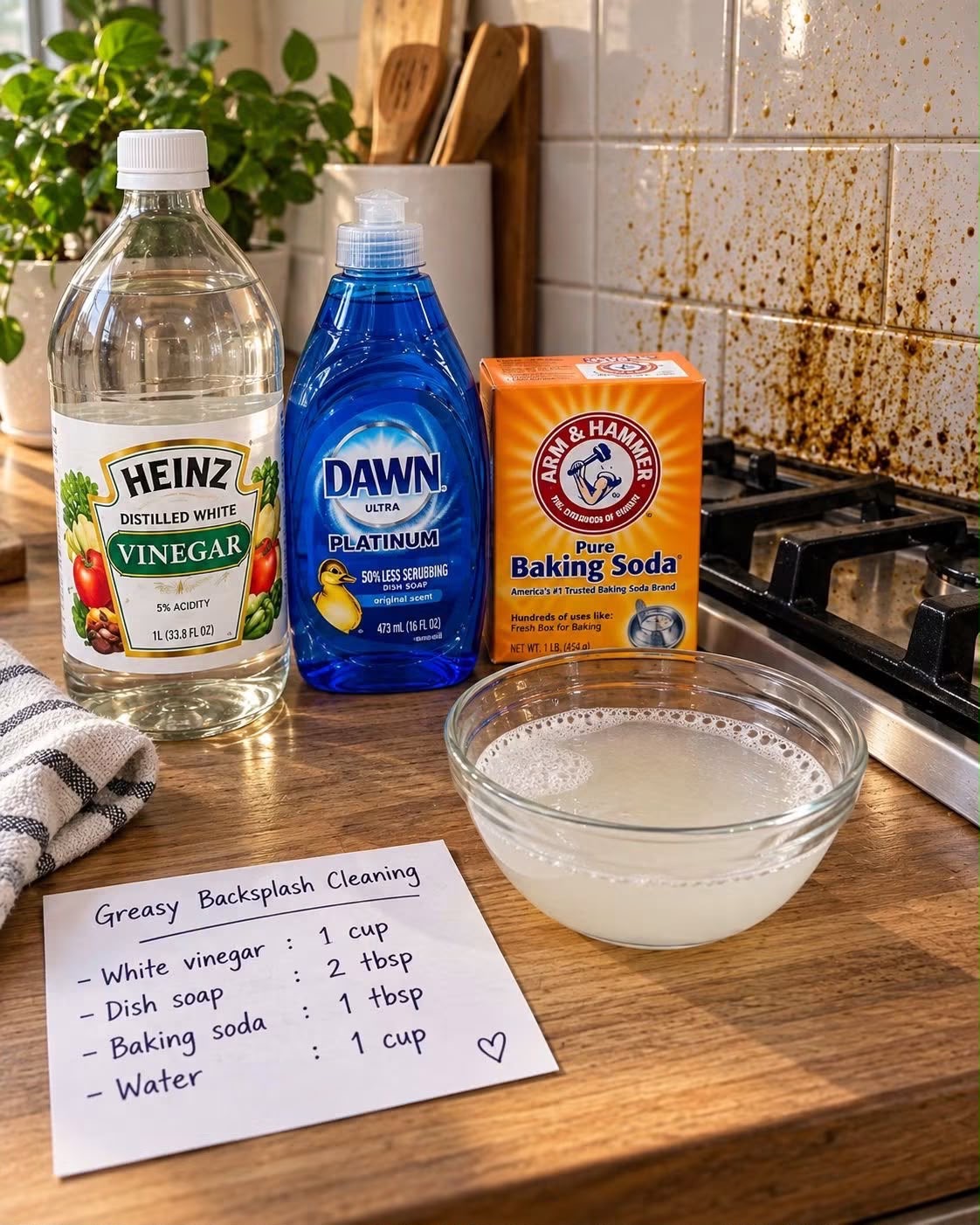
Greasy kitchen backsplashes can quickly become covered with cooking oil, food splatters, and sticky residue, especially around the stove and cooktop. Fortunately, you can make a simple homemade cleaning solution using a few common household ingredients.
This DIY backsplash cleaner combines white vinegar, dish soap, baking soda, and water to help loosen everyday grease and grime. It is easy to prepare and can be useful for routine kitchen cleaning.
Cleaning Solution Overview
| Details | Information |
| Preparation Time | 5 minutes |
| Application Time | 5–15 minutes |
| Difficulty | Easy |
| Best For | Everyday grease and kitchen grime |
| Surface | Suitable for many washable backsplash surfaces |
| Storage | Best prepared fresh |
Why You’ll Love This Homemade Cleaner
This homemade kitchen cleaner requires only a few inexpensive household ingredients that many people already have at home.
The dish soap helps break down greasy residue, while diluted white vinegar can help remove everyday grime and odors.
Baking soda provides mild abrasive action when used carefully, making it useful for loosening stubborn surface residue.
The solution is particularly convenient for areas behind the stove where cooking splashes and grease can accumulate.
Ingredients
| Ingredient | Quantity |
| White vinegar | 1 cup |
| Dish soap | 2 tablespoons |
| Baking soda | 1 tablespoon |
| Water | 1 cup |
Step-by-Step Instructions
1. Prepare Your Container
Choose a clean, reasonably large bowl or container.
Because baking soda and vinegar react and produce foam, avoid using a very small container. Give the mixture enough room to fizz without overflowing.
2. Add the Liquid Ingredients
Pour 1 cup of water into the container.
Add 1 cup of white vinegar and 2 tablespoons of dish soap.
Stir gently to combine the ingredients.
3. Add the Baking Soda Slowly
Add 1 tablespoon of baking soda gradually.
The baking soda will react with the acidic vinegar and create fizzing and bubbling. Add it slowly to help control the reaction.
Once the bubbling has settled, gently stir the mixture.
4. Test the Surface
Before applying the cleaner over the entire backsplash, test a small, inconspicuous area.
This is especially important for delicate, painted, porous, natural-stone, or specialty surfaces.
Allow the test area to dry and make sure there is no discoloration, dullness, or surface damage.
5. Apply the Cleaner
Apply a small amount of the solution to the greasy backsplash using a sponge or soft cleaning cloth.
Work in manageable sections, particularly if the backsplash has a significant amount of built-up grease.
6. Let It Work
For ordinary grease, allow the solution to sit for approximately 3–5 minutes.
Do not allow the solution to dry completely on the surface.
For heavier grease, gently work the area with a non-scratch sponge or soft cloth.
7. Wipe Away the Grease
Use the sponge or cloth to wipe the backsplash in gentle circular motions.
Pay particular attention to areas directly behind the cooktop, where cooking oils and food splatters tend to accumulate.
For stubborn spots, repeat the application rather than aggressively scrubbing the surface.
8. Rinse
After cleaning, wipe the backsplash thoroughly with a clean damp cloth to remove the cleaning solution and loosened grease.
Rinse the cloth frequently as you work.
9. Dry the Surface
Finish by wiping the backsplash with a clean, dry microfiber cloth.
Drying the surface helps prevent water spots and leaves the backsplash looking cleaner and more polished.
Best Tips
Clean grease splashes regularly instead of allowing several weeks of residue to accumulate. Fresh grease is generally easier to remove than hardened buildup.
For heavy grease around a stove, first wipe away loose oil with a paper towel or disposable cloth. This prevents you from spreading a thick layer of grease across the backsplash.
Use a soft sponge or microfiber cloth whenever possible. Abrasive scrubbers can scratch some backsplash materials.
Work in small sections so the cleaning solution does not dry on the surface.
Always check the manufacturer’s cleaning recommendations for your specific backsplash material before using vinegar-based solutions.
Best Ingredient Options
Plain white distilled vinegar is the simplest choice for this cleaner because it is inexpensive and widely available.
A standard grease-cutting dish soap works well for everyday kitchen residue.
Regular baking soda is sufficient. There is no need to use a specialty cleaning-grade product.
Clean water is all you need to dilute the mixture and rinse the surface afterward.
Important Surface Considerations
This cleaner may be suitable for many washable surfaces such as certain ceramic or porcelain tiles and glass, but not every backsplash material should be cleaned with vinegar.
Avoid using acidic vinegar solutions on natural stone such as marble, limestone, travertine, or other acid-sensitive surfaces unless the manufacturer specifically confirms that vinegar is safe.
For painted surfaces, delicate finishes, grout, or specialty materials, always perform a small hidden-area test first.
Cleaning Variations
For light grease, you can make the cleaning process simpler by using warm water with a small amount of dish soap and skipping the vinegar and baking soda.
For a particularly greasy backsplash, apply dish soap directly to a damp sponge first and gently work on the greasy area before rinsing.
For routine maintenance, wiping the backsplash with a damp microfiber cloth after cooking can help prevent grease from building up.
How Often Should You Clean a Kitchen Backsplash?
A backsplash located directly behind a stove may benefit from a quick wipe after cooking, especially after frying or sautéing.
A deeper cleaning can be done once a week or whenever visible grease and food splatters begin to accumulate.
Regular maintenance makes each cleaning session faster and reduces the need for aggressive scrubbing.
Make-Ahead Instructions
It is better to prepare this solution in small quantities when you need it rather than making a large batch for long-term storage.
The vinegar, dish soap, and water can be combined ahead of time, but adding baking soda creates an immediate chemical reaction that reduces its usefulness as a stored mixture.
For best results, prepare the amount you need shortly before cleaning.
Storage
Do not store a sealed container containing freshly mixed vinegar and baking soda.
The reaction produces carbon dioxide gas, which can build pressure inside a closed container.
If you want to prepare a cleaning solution ahead of time, keep the ingredients separate and combine them only when needed.
Safety Precautions
Never mix vinegar with chlorine bleach or bleach-containing cleaners. This can produce dangerous chlorine gas.
Do not mix this cleaner with other household cleaning chemicals unless you have confirmed that the combination is safe.
Wear household cleaning gloves if you have sensitive skin.
Keep cleaning solutions away from children and pets.
Always follow the care instructions provided by the manufacturer of your backsplash material.
Common Mistakes to Avoid
Do not add baking soda rapidly to a small container because the mixture can foam up quickly.
Do not use vinegar on marble, limestone, travertine, or other acid-sensitive natural stone surfaces.
Do not use rough steel wool or abrasive pads on delicate backsplash finishes.
Do not leave the solution sitting on the surface for an extended period.
Do not assume that a homemade cleaner is automatically safe for every material. A small test area is always a smart precaution.
Frequently Asked Questions
Does this homemade cleaner remove kitchen grease?
It can help loosen and remove many types of everyday grease and cooking residue, particularly when combined with gentle scrubbing and thorough rinsing.
Can I use this cleaner on glass backsplash tiles?
Glass is generally resistant to vinegar, but you should still check the manufacturer’s care instructions and test a small area first.
Can I use it on marble?
No. Vinegar is acidic and can damage or etch acid-sensitive natural stone such as marble.
Why does the mixture foam?
The vinegar is acidic and baking soda is alkaline. When they come into contact, they react and release carbon dioxide, producing the visible fizzing.
Can I use hot water?
Warm water can be useful for cutting through grease, but avoid extremely hot water on surfaces where sudden temperature changes could cause damage.
How can I remove very old grease?
For heavy buildup, first remove excess grease with paper towels, then use a suitable grease-cutting cleaner and a non-abrasive sponge. Several gentle cleaning passes are safer than aggressive scrubbing.
Final Thoughts
A greasy backsplash does not always require an expensive specialty cleaner. This simple homemade solution combines common household ingredients to help tackle everyday cooking splatters and surface grease.
For the best results, use the cleaner on an appropriate washable surface, test a small area first, rinse thoroughly, and always follow the manufacturer’s care instructions.
Regular wiping after cooking is the easiest way to keep your kitchen backsplash looking fresh and prevent grease from becoming difficult to remove.