
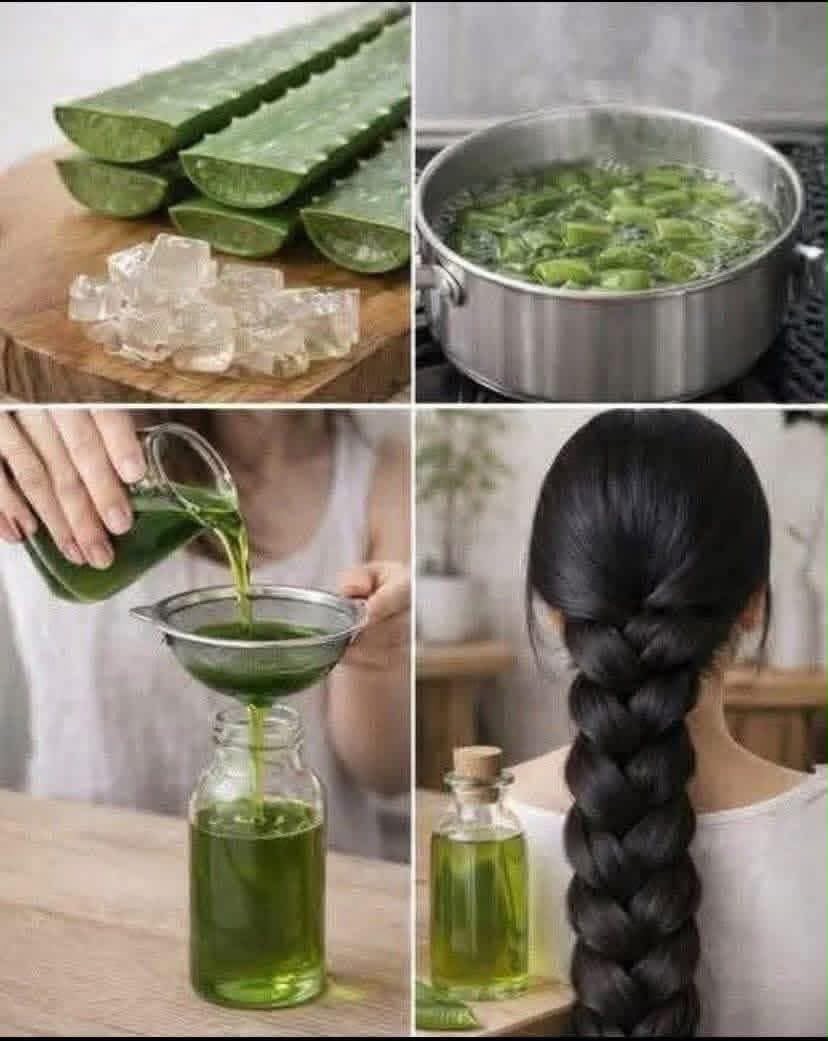
Aloe vera is a popular ingredient in homemade hair-care routines because of its refreshing, plant-based properties. Combined with a nourishing carrier oil such as coconut oil, olive oil, or sweet almond oil, it can be used as a pre-shampoo treatment for the scalp and hair lengths.
This homemade aloe vera hair oil is easy to prepare and can help leave the hair feeling softer, smoother, and more conditioned.
Although this recipe is often described as a natural hair-growth oil, it is important to keep expectations realistic. No homemade oil can guarantee faster hair growth. Hair growth is influenced by genetics, hormones, nutrition, overall health, and scalp condition.
Recipe Overview
| Details | Information |
| Preparation Time | 10 minutes |
| Infusion Time | 15–20 minutes |
| Total Time | About 30 minutes |
| Yield | About 200 ml |
| Type | Pre-shampoo hair treatment |
| Recommended Use | 1–2 times per week |
| Suitable For | Most hair types, depending on tolerance |
Why You’ll Love This Aloe Vera Hair Oil
This homemade hair oil requires only a few simple ingredients and can easily become part of your weekly hair-care routine.
The carrier oil helps condition dry-looking hair and can make the lengths feel softer and more manageable.
Aloe vera adds a plant-based ingredient to the treatment, while a gentle scalp massage makes the application relaxing and enjoyable.
The treatment can also be applied to the hair lengths and ends, especially when they feel dry or rough.
Ingredients
For the Hair Oil
| Ingredient | Amount |
| Fresh aloe vera leaves | 2–3 leaves |
| Carrier oil | 200 ml |
Choose Your Carrier Oil
You can use one of the following oils:
Coconut oil: A popular option for dry hair and hair lengths.
Olive oil: A rich option that works well as a pre-shampoo treatment.
Sweet almond oil: A lighter-feeling option that can be pleasant for hair that becomes weighed down easily.
Equipment Needed
| Equipment | Purpose |
| Small saucepan | Gently heating the ingredients |
| Knife | Preparing the aloe vera |
| Fine-mesh strainer or cheesecloth | Filtering the oil |
| Clean glass bottle | Storing the finished oil |
| Spoon | Handling the ingredients |
Step-by-Step Instructions
1. Prepare the Aloe Vera
Wash the aloe vera leaves thoroughly under clean running water.
Trim off the ends and carefully remove the sharp edges with a clean knife.
Fresh aloe vera contains a yellow latex-like sap that can irritate the skin. Remove and rinse away this yellow layer carefully before continuing with the recipe.
2. Cut the Aloe Vera
Cut the prepared aloe vera leaves into small pieces.
For this method, the pieces will be gently heated in the carrier oil to help remove their moisture.
Because fresh aloe vera contains a significant amount of water, it is important to remove as much moisture as possible during preparation.
3. Add the Oil
Pour 200 ml of your chosen carrier oil into a clean saucepan.
Add the prepared aloe vera pieces.
Place the saucepan over very low heat.
The goal is to warm the ingredients gently rather than fry or burn them.
4. Gently Heat
Allow the mixture to heat for approximately 15–20 minutes over very low heat.
Stir occasionally and monitor the saucepan carefully.
The aloe vera pieces should gradually change in appearance as their moisture evaporates.
Do not allow the oil to smoke. If the oil becomes very hot, remove the saucepan from the heat immediately.
5. Cool the Mixture
Remove the saucepan from the heat.
Allow the mixture to cool completely before handling or filtering it.
This is important both for safety and for easier handling.
6. Strain the Oil
Place a fine-mesh strainer or clean cheesecloth over a clean bowl.
Carefully pour the mixture through the strainer.
Press gently if necessary to extract the oil, then discard the remaining aloe vera pieces.
The finished oil should contain no visible pieces of plant material.
7. Transfer to a Bottle
Pour the filtered oil into a clean, completely dry glass bottle.
Close the bottle tightly.
For convenience, you can label the bottle with the preparation date.
How to Use Aloe Vera Hair Oil
Before applying the oil to your entire scalp, perform a small patch test to check your skin’s tolerance.
Pour a small amount of oil into your palms and gently massage it onto the scalp.
Use your fingertips to massage the scalp in small circular movements for approximately 5 minutes.
Avoid scratching or applying excessive pressure.
Next, distribute a small amount of oil through the lengths and ends of your hair.
Leave the treatment on for approximately 45 minutes to 1 hour.
Then wash your hair thoroughly with your regular shampoo to remove the excess oil.
Start with one application per week and increase to twice weekly only if your scalp and hair tolerate the treatment well.
Best Tips
Use clean, dry equipment throughout the preparation process.
Keep the heat very low. High temperatures can damage the carrier oil and may increase the risk of scalp irritation.
Do not use excessive amounts of oil. A small quantity is usually enough to coat the scalp and hair without leaving the hair excessively greasy.
Massage the scalp gently rather than aggressively.
If your hair is particularly dry, focus more of the treatment on the lengths and ends.
Best Carrier Oil Options
Coconut oil is a popular choice for pre-shampoo hair treatments and can leave the lengths feeling conditioned.
Olive oil provides a richer texture and can work well for dry or coarse hair.
Sweet almond oil has a lighter texture and may be preferable for people who dislike heavier oils.
Choose the oil that works best with your hair type and personal preference.
Recipe Variations
You can prepare the recipe using only coconut oil if you prefer its texture and fragrance.
For a richer treatment, olive oil can be used as the main carrier oil.
For a lighter-feeling treatment, sweet almond oil is another option.
It is best not to add numerous essential oils or other active ingredients to a homemade scalp treatment, especially if you have sensitive skin.
How Often Should You Use It?
Start with one treatment per week.
If your scalp responds well and your hair does not become excessively oily, you can use the treatment up to twice a week.
Using more oil more frequently does not necessarily provide better results and may cause buildup or make the hair feel greasy.
Storage
Homemade preparations containing fresh plant material are more difficult to preserve than commercially formulated hair oils because residual moisture can encourage spoilage.
Store the finished oil in a clean, completely dry, airtight glass bottle.
Keep it in a cool, dry place away from direct sunlight.
Because this is a homemade preparation, it is safer to prepare small batches rather than storing it for an extended period.
Discard the oil if you notice an unusual smell, significant changes in appearance or texture, cloudiness, or any signs of mold.
Reheating
There is generally no need to reheat the finished hair oil before application.
If the oil becomes thick because of a cooler room temperature, warm a small amount gently between your hands.
Avoid placing the entire bottle near a strong heat source.
Common Mistakes to Avoid
Using high heat is one of the most common mistakes. The oil should be gently warmed rather than overheated.
Leaving pieces of aloe vera in the finished bottle can make the preparation more difficult to store safely.
Using a damp bottle can introduce unwanted moisture into the oil.
Applying too much oil can make the hair greasy and difficult to wash.
Do not apply the preparation to an irritated, broken, or damaged scalp.
Do not assume that a homemade hair oil will automatically make hair grow faster. Hair growth depends on many biological and individual factors.
Frequently Asked Questions
Does aloe vera hair oil make hair grow faster?
There is no guarantee that this homemade oil will accelerate hair growth. It can be used as a conditioning scalp and hair treatment, but hair growth is influenced by genetics, hormones, nutrition, health, and other factors.
Can I apply this oil directly to my scalp?
Yes, if your skin tolerates the ingredients. Always perform a small patch test before applying it to the entire scalp.
Can I leave the oil on overnight?
You do not need to leave it overnight. A 45-minute to 1-hour treatment is sufficient for a pre-shampoo routine.
If you choose a longer treatment, make sure your scalp tolerates the oil well and protect your bedding from staining.
Can I use this oil on dry hair?
Yes. It can be used as a pre-shampoo treatment for hair that feels dry, rough, or lacking softness.
Can I use store-bought aloe vera gel?
This recipe is specifically designed for fresh aloe vera leaves. Commercial aloe vera gels may contain water, preservatives, thickeners, or other ingredients and may not behave the same way when heated in oil.
How often should I use aloe vera hair oil?
Start with once a week. If your scalp and hair tolerate it well, you can increase the frequency to twice a week.
Can this oil stop hair loss?
A homemade oil should not be considered a treatment for unexplained or significant hair loss. Persistent or sudden hair loss can have many causes and should be evaluated by a healthcare professional.
⚠️ Important Safety Information
Fresh aloe vera can cause skin irritation or an allergic reaction in some people. The yellow latex-like sap found in fresh aloe leaves should be carefully removed and rinsed away before preparation.
Always perform a patch test before using the oil extensively.
Do not apply the preparation to broken, inflamed, or irritated skin.
Stop using the product if you experience burning, significant redness, itching, swelling, or another unusual reaction.
If you have persistent scalp problems or significant hair loss, consult a dermatologist rather than relying solely on homemade hair treatments.
⚠️ This recipe may not be suitable for everyone, so it is advisable to consult a doctor or dermatologist if you have a scalp condition, known allergies, persistent hair loss, or concerns about using aloe vera on your skin.
Final Thoughts
Aloe vera hair oil is a simple homemade treatment that can be incorporated into a regular pre-shampoo hair-care routine.
The carrier oil can help condition the hair and improve its softness, while the gentle scalp massage makes the treatment relaxing and easy to incorporate into your weekly routine.
However, it is important to have realistic expectations. This homemade oil should not be considered a guaranteed hair-growth treatment or a cure for hair loss.
For healthier-looking hair, combine gentle hair care with a balanced diet, good scalp hygiene, and appropriate professional advice when persistent hair or scalp problems occur.