
Over time, the rubber seal around a refrigerator door can collect grease, food residue, dust, and moisture. The folds and grooves can be particularly difficult to clean, and neglected areas may develop unpleasant odors or visible buildup.
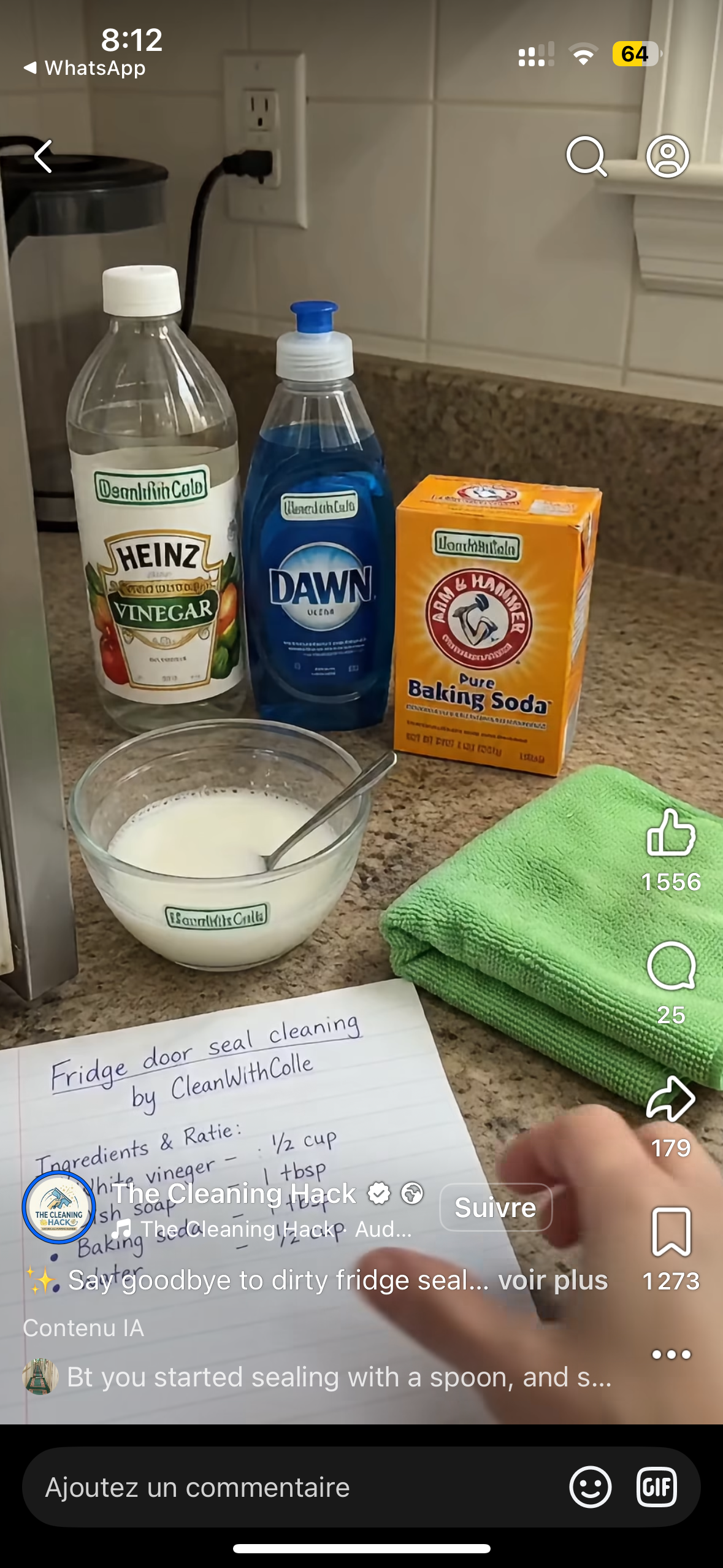
This simple homemade cleaning solution combines white vinegar, baking soda, dish soap, and water to help loosen grime and make refrigerator door seals easier to clean.
The method is inexpensive, quick, and requires only a few common household ingredients.
Cleaning Overview
| Category | Details |
| Preparation Time | 5 minutes |
| Cleaning Time | 10–15 minutes |
| Difficulty | Easy |
| Best For | Refrigerator door seals |
| Main Ingredients | Vinegar, baking soda, dish soap, water |
| Tools | Bowl, microfiber cloth, soft toothbrush |
Why You’ll Love This Cleaning Method
This homemade refrigerator seal cleaner uses simple household ingredients that are easy to find.
The combination of dish soap and gentle scrubbing helps loosen greasy residue and dirt trapped inside the folds of the rubber gasket.
A microfiber cloth makes it easy to wipe away the loosened grime, while an old soft toothbrush can reach narrow grooves and corners.
Regular cleaning can also help keep the refrigerator door seal looking cleaner and functioning properly.
Ingredients
| Ingredient | Amount |
| White vinegar | 1/2 cup (120 ml) |
| Dish soap | 1 tablespoon |
| Baking soda | 1/2 cup |
| Water | 1/2 cup |
Materials Needed
| Tool | Purpose |
| Small bowl | Mixing the cleaning solution |
| Spoon | Combining the ingredients |
| Microfiber cloth | Wiping and cleaning the seal |
| Old soft toothbrush | Reaching folds and grooves |
| Clean damp cloth | Removing residue |
| Dry cloth | Drying the rubber seal |
Step-by-Step Instructions
1. Prepare the Cleaning Solution
Place the baking soda in a bowl.
Add the dish soap, followed by the water.
Slowly add the white vinegar while stirring gently.
Because vinegar reacts with baking soda and produces fizzing, add it gradually to help prevent the mixture from overflowing.
Stir carefully until you have a workable cleaning mixture.
2. Apply the Solution
Dip a microfiber cloth into the mixture and wring out the excess liquid.
Alternatively, use a soft toothbrush to apply the solution directly to the folds of the refrigerator gasket.
Do not soak the refrigerator door seal excessively.
3. Clean the Rubber Seal
Gently scrub the entire seal, paying particular attention to the folds, corners, and grooves where dirt and moisture can accumulate.
Use the toothbrush for narrow areas that are difficult to reach with a cloth.
Work around the entire perimeter of the refrigerator door.
For stubborn buildup, allow the solution to sit on the affected area for a few minutes before gently scrubbing again.
4. Wipe Away the Residue
Use a clean cloth lightly dampened with water to wipe away the remaining cleaning solution and loosened dirt.
Make sure no baking soda or soap residue remains trapped inside the folds.
5. Dry Thoroughly
Use a clean, dry microfiber cloth to dry the entire gasket.
Pay special attention to the folds and corners.
Allowing the seal to remain damp can encourage additional moisture buildup, so thorough drying is an important final step.
Best Tips
Clean the refrigerator door seal regularly rather than waiting for heavy buildup to develop.
Use a soft toothbrush instead of an abrasive brush because harsh scrubbing can damage the rubber.
Do not pull or stretch the gasket aggressively while cleaning.
Always wipe away the cleaning solution thoroughly after scrubbing.
Dry the folds carefully because moisture can remain hidden inside the gasket.
If the seal is cracked, torn, loose, or no longer making good contact with the refrigerator door, cleaning may not solve the problem and the gasket may need to be inspected or replaced.
Best Cleaning Options
Microfiber cloth: Ideal for everyday cleaning because it is soft and absorbs moisture effectively.
Soft toothbrush: Useful for reaching narrow grooves and folds.
Dish soap: Helps loosen greasy residue and everyday grime.
White vinegar: Useful for general household cleaning and helps remove certain residues and odors.
Baking soda: Provides mild abrasive action that can help loosen stubborn dirt.
How Often Should You Clean a Refrigerator Seal?
For most households, cleaning the refrigerator gasket approximately once a month is a practical routine.
If the refrigerator is used heavily or the seal becomes dirty quickly, it may need to be cleaned more frequently.
A quick wipe every week can also help prevent dirt and moisture from accumulating.
Safety Tips
Do not mix this cleaning solution with chlorine bleach or other chemical cleaners.
Keep the mixture away from food and food-contact surfaces unless those surfaces are subsequently cleaned according to the manufacturer’s recommendations.
Avoid getting excessive liquid inside the refrigerator, especially around electrical components or controls.
If your refrigerator manufacturer recommends a specific cleaning product or method for the door gasket, follow those instructions first.
Common Mistakes to Avoid
Do not pour the solution directly over the refrigerator door seal. Applying a small amount to a cloth or soft brush gives you better control.
Do not use steel wool, abrasive pads, or harsh brushes because they can scratch surfaces or damage the rubber.
Do not leave large amounts of moisture trapped inside the gasket folds.
Do not scrub aggressively. Gentle repeated cleaning is safer for the rubber seal.
Do not mix vinegar with bleach or chlorine-based cleaning products.
Frequently Asked Questions
Can I use this solution on a freezer door seal?
Yes, the same gentle cleaning approach can generally be used on a freezer gasket. Make sure the surface is suitable for the ingredients and follow the appliance manufacturer’s cleaning recommendations.
Can I use an old toothbrush?
Yes. Choose a clean, soft-bristled toothbrush rather than a hard or abrasive brush.
How long should I leave the cleaner on the seal?
For ordinary dirt, you can scrub immediately. For stubborn buildup, allow the solution to sit for a few minutes before gently scrubbing.
Does this cleaner remove mold?
It can help clean visible surface buildup, but persistent mold growth may require a more appropriate cleaning approach. If the gasket is deeply affected, damaged, or repeatedly develops mold, consider replacing it or consulting the refrigerator manufacturer’s guidance.
How can I keep the refrigerator seal clean longer?
Wipe spills and food residue as soon as you notice them, keep the gasket dry, and give the folds a quick inspection regularly.
Final Thoughts
Cleaning your refrigerator door gasket does not have to be difficult.
This simple homemade cleaning method combines baking soda, white vinegar, dish soap, and water to help loosen everyday grime and buildup from the folds and grooves of the rubber seal.
For the best results, scrub gently, rinse away the residue, and dry the gasket thoroughly.
Regular maintenance can help keep your refrigerator cleaner and your door seal in good condition.