
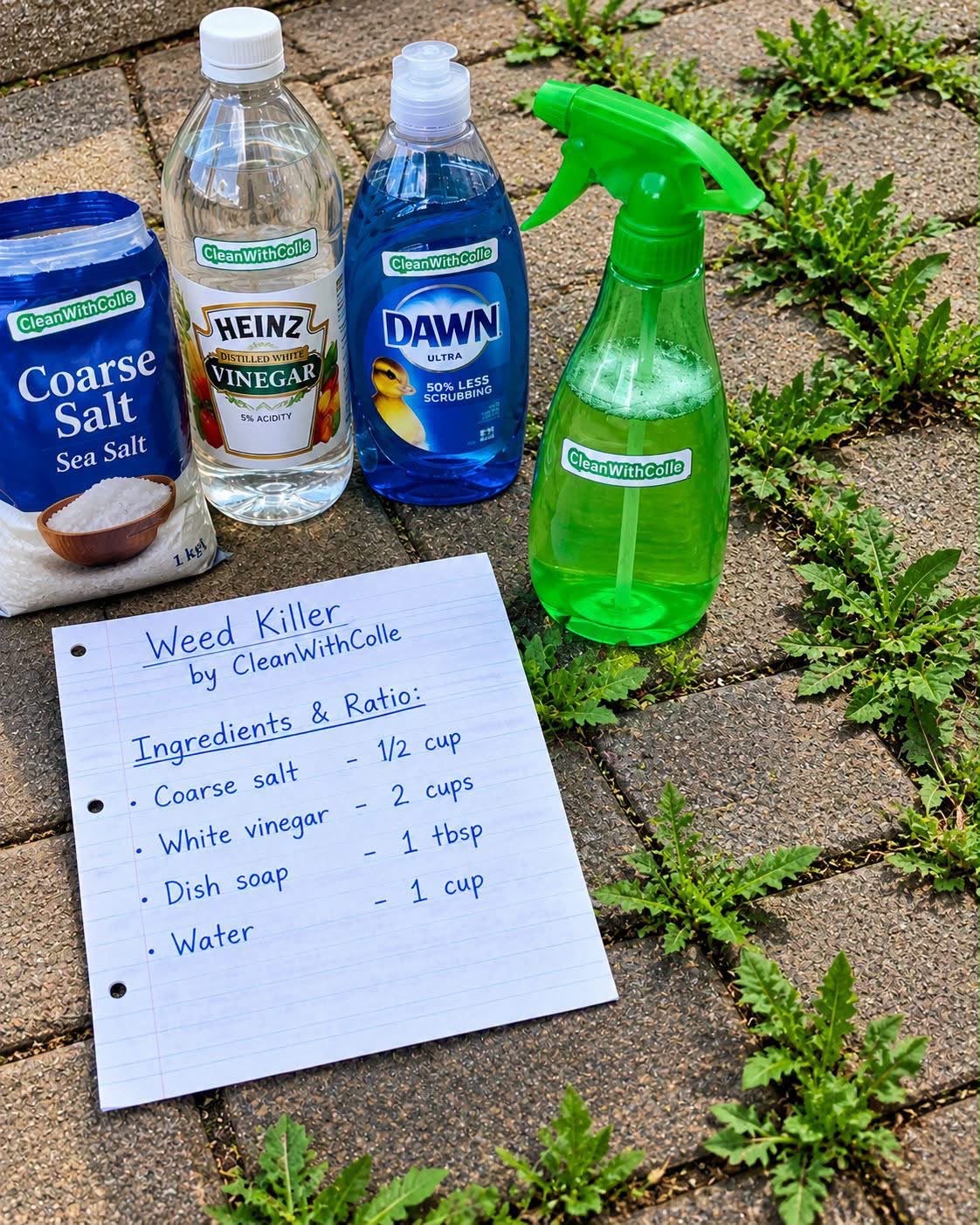
If you’re looking for a simple homemade solution for unwanted weeds growing between paving stones, along walkways, or in areas where you don’t want vegetation, this vinegar and salt weed killer is easy to prepare.
Made with white vinegar, coarse salt, water, and a small amount of dish soap, this homemade weed killer works as a contact treatment. The vinegar can damage the leaves it touches, while the salt helps dry out plant tissue. The dish soap helps the solution spread and adhere to the foliage.
Recipe Overview
| Category | Details |
| Recipe | Homemade Natural Weed Killer |
| Preparation Time | 5 minutes |
| Yield | About 1 liter |
| Difficulty | Very easy |
| Application | Direct spraying |
| Best Use | Weeds on hard surfaces and unwanted vegetation |
Why You’ll Love This Homemade Weed Killer
This homemade weed killer requires only a few inexpensive ingredients that are commonly found around the house.
White vinegar works as a contact treatment on the foliage it touches.
Salt can contribute to drying out plant tissue, although it should be used carefully because repeated applications can affect the soil.
A small amount of dish soap helps the liquid spread over the leaves instead of immediately running off.
The mixture can be useful for small areas such as cracks in paving stones, walkways, and other places where vegetation is not wanted.
Ingredients
| Ingredient | Amount |
| Coarse salt | ½ cup |
| White vinegar | 2 cups |
| Water | 1 cup |
| Dish soap | 1 tablespoon |
Equipment
You will need a clean spray bottle suitable for garden use or a large container for mixing.
A spoon or stirring utensil can also be used to help dissolve the salt.
Wearing gardening gloves during preparation and application is recommended.
Step-by-Step Instructions
Step 1: Combine the Vinegar and Water
Pour the white vinegar and water into a large container.
Stir briefly to combine the two liquids.
Step 2: Add the Salt
Add the coarse salt and stir thoroughly until it is as fully dissolved as possible.
Proper mixing helps distribute the ingredients more evenly throughout the solution.
Step 3: Add the Dish Soap
Add 1 tablespoon of dish soap to the mixture.
Stir gently to avoid creating excessive foam.
If you’re transferring the mixture to a spray bottle, do so carefully and avoid overfilling the bottle.
Step 4: Spray the Weeds
Spray the solution directly onto the leaves of the unwanted weeds.
Try to cover the foliage without unnecessarily spraying surrounding areas.
For better control, use the spray on a calm day when there is little or no wind.
Best Tips for Using Homemade Weed Killer
Apply the solution on a dry, sunny day when rain is not expected. This gives the mixture more time to remain on the foliage.
Avoid windy weather because spray droplets can drift onto flowers, vegetables, grass, or other plants you want to keep.
Apply the solution directly to unwanted weeds rather than spraying an entire area.
For small areas, targeted application is preferable to widespread spraying.
Because this recipe contains salt, avoid repeatedly treating garden soil where you plan to grow plants in the future.
Where Can You Use This Weed Killer?
This homemade weed killer is best reserved for areas where you do not want vegetation to grow.
It can be used for targeted treatment around certain cracks between paving stones, along some hard-surface walkways, and in other non-planted areas.
Avoid using it on lawns, vegetable gardens, flower beds, or around plants you want to preserve.
Important Safety Precautions
This homemade weed killer is non-selective, meaning it can damage desirable plants just as easily as unwanted weeds.
Keep the spray away from flowers, vegetables, herbs, shrubs, trees, and grass.
Do not spray during windy weather.
Keep children and pets away from the treated area during application and until the area has dried.
Avoid contact with the eyes and skin. If the mixture gets into the eyes, rinse thoroughly with clean water.
Store any remaining mixture in a clearly labeled container, away from children and pets.
Common Mistakes to Avoid
Do not spray the solution directly onto plants you want to keep. The vinegar and salt do not distinguish between weeds and desirable vegetation.
Do not apply the mixture immediately before heavy rain because the solution may be diluted or carried into surrounding areas.
Avoid treating large areas of bare soil with a salt-based weed killer because repeated salt applications can affect soil quality and future plant growth.
Do not spray excessively. Targeted application is generally preferable to soaking large areas.
Natural Alternatives for Garden Beds
If weeds are growing in a vegetable garden or flower bed, consider methods that do not introduce salt into the soil.
Hand weeding can remove unwanted plants directly from the root.
Mulching can help block sunlight and reduce the space available for new weeds to emerge.
For paths and other suitable areas, physical removal with a garden tool can also provide a simple alternative.
Frequently Asked Questions
Does white vinegar kill weeds?
White vinegar can damage plant foliage when sprayed directly onto it. Its effectiveness can vary depending on the plant species, its stage of growth, and environmental conditions.
Can I use this mixture on my lawn?
No. This is not a selective weed killer. It can damage or kill grass that comes into contact with the solution.
Can I use this recipe in my vegetable garden?
It is best to avoid salt-based weed killers in areas where you grow vegetables or other plants. Salt can accumulate in the soil and interfere with future plant growth.
Why is dish soap included?
Dish soap can help the solution spread across and adhere to plant leaves. It does not make the mixture selective, however, so desirable plants can still be damaged.
Is a sunny day better for application?
A dry, sunny day can provide favorable conditions for a contact treatment because the solution can remain on the foliage longer. Avoid windy conditions to reduce accidental spray drift.
Can I spray this everywhere in my garden?
No. Use it selectively and avoid areas containing plants you want to preserve. Because the mixture contains vinegar and salt, repeated use can also affect soil conditions.
Final Thoughts
This homemade vinegar and salt weed killer is a simple option for targeted weed control on suitable hard surfaces and areas where vegetation is unwanted.
The most important thing is to apply it carefully. Keep the spray away from desirable plants, avoid windy conditions, and avoid repeated salt applications to garden soil.
For lawns, vegetable gardens, and flower beds, consider manual weeding, mulching, or other gardening methods that are less likely to affect the surrounding soil and plants.