
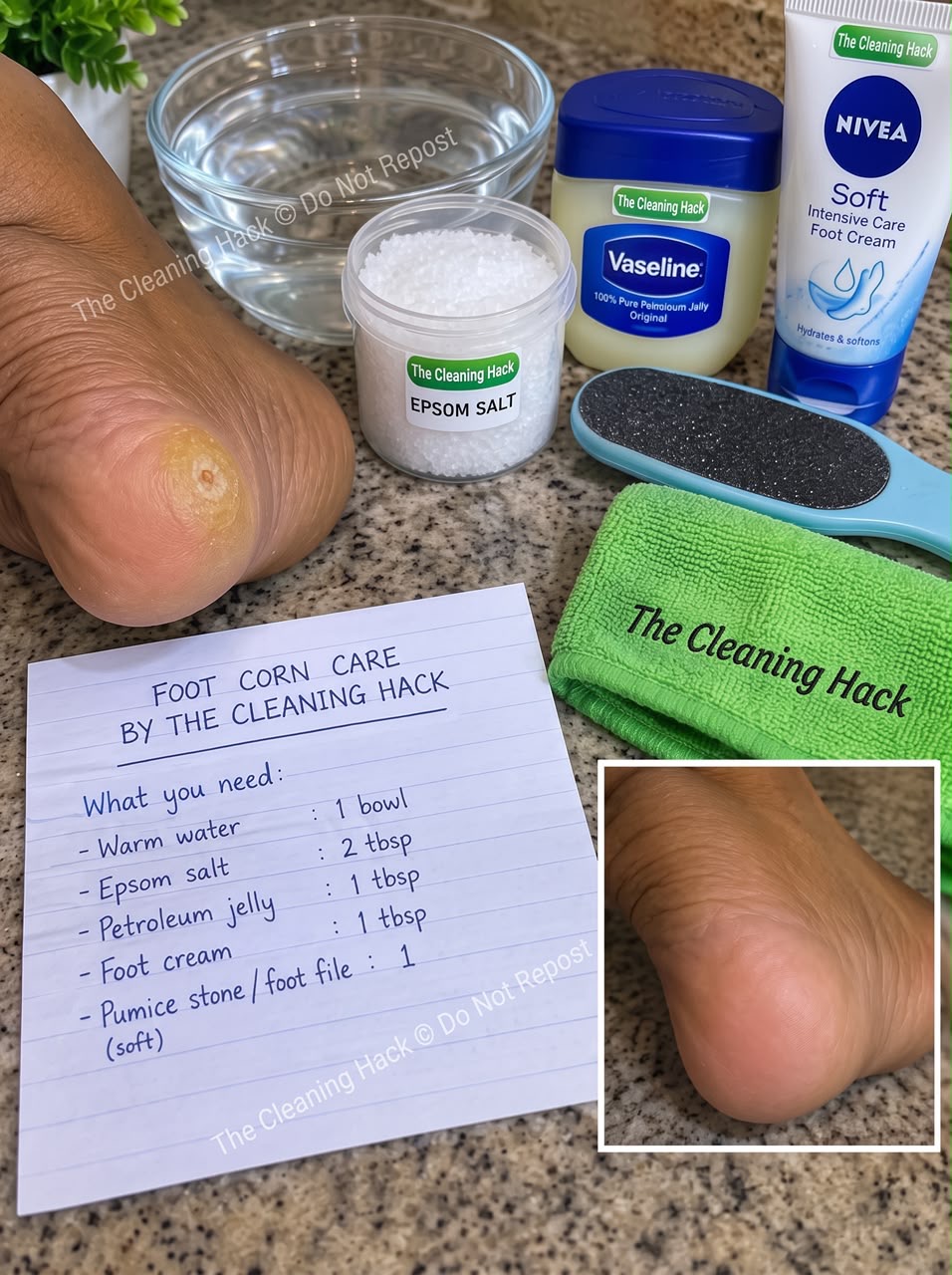
Foot corns are areas of thick, hardened skin that commonly develop because of repeated pressure or friction. Tight shoes, uncomfortable footwear, and pressure on specific areas of the feet can all contribute to their formation.
A gentle at-home foot-care routine can help soften dry, hardened skin and keep your feet feeling smoother and more comfortable.
This simple treatment combines a warm foot soak, gentle exfoliation, and intensive moisturizing with petroleum jelly and foot cream.
Recipe Overview
| Details | Information |
| Preparation Time | 5 minutes |
| Soaking Time | 15–20 minutes |
| Treatment Time | About 5 minutes |
| Difficulty | Very Easy |
| Type | Foot Care Treatment |
| Best For | Dry, rough, thickened skin |
Why You’ll Love This Foot Care Treatment
This easy foot-care routine requires only a few simple ingredients and basic household supplies.
The warm water helps soften hardened skin temporarily, making gentle exfoliation easier.
Petroleum jelly and foot cream provide rich moisture to dry areas, helping your feet feel softer and smoother.
Wearing cotton socks overnight can also help keep the moisturizing products in contact with the skin.
Ingredients
| Ingredient | Amount |
| Warm water | 1 bowl |
| Epsom salt | 2 tablespoons |
| Petroleum jelly (Vaseline) | 1 tablespoon |
| Foot cream | 1 tablespoon |
Equipment
| Equipment | Amount |
| Pumice stone or gentle foot file | 1 |
| Clean towel | 1 |
| Cotton socks | 1 pair |
| Bowl or small basin | 1 |
Step-by-Step Instructions
Step 1: Prepare the Foot Soak
Fill a bowl or small basin with warm, comfortable water.
Add 2 tablespoons of Epsom salt and stir until it is mostly dissolved.
The water should be comfortably warm, not extremely hot. Very hot water can irritate or burn the skin.
Step 2: Soak Your Foot
Place the affected foot in the warm water and soak it for approximately 15–20 minutes.
The warm water helps soften the outer layer of hardened skin, making the following foot-care step easier.
There is no need to soak your feet for an excessively long period.
Step 3: Gently Exfoliate
Remove your foot from the water and gently pat it with a towel.
Using a soft pumice stone or gentle foot file, carefully work over the thickened area.
Use light pressure and slow movements.
Do not try to remove the entire corn in one session. Excessive rubbing can cause irritation, small cuts, or skin damage.
Step 4: Dry Your Foot
After gently exfoliating, rinse your foot if necessary and dry it thoroughly with a clean towel.
Pay particular attention to the areas between the toes and make sure they are not left excessively damp.
Step 5: Make the Moisturizing Treatment
In a clean small bowl, combine:
1 tablespoon of petroleum jelly
and
1 tablespoon of foot cream.
Mix until the two products are evenly combined.
Petroleum jelly creates an occlusive layer that helps reduce moisture loss from the skin.
Step 6: Apply the Treatment
Apply a generous layer to the dry and thickened areas of the foot, including around the corn and on dry heels.
Massage gently without applying excessive pressure to the affected area.
Avoid applying a thick layer between the toes, where excessive moisture may contribute to certain skin problems.
Step 7: Wear Cotton Socks
Put on a clean pair of cotton socks after applying the moisturizer.
You can leave the treatment on overnight to help keep the skin moisturized.
In the morning, wash your feet normally and dry them thoroughly.
Best Tips
Consistency is more important than aggressive exfoliation. It is better to gradually reduce thickened skin than to try to remove everything at once.
Choose comfortable shoes with enough room for your toes. Shoes that are too tight can increase pressure and friction.
Clean, comfortable socks can also help reduce friction between your feet and footwear.
Never use a razor, knife, scissors, or another sharp object to cut away a corn at home.
How Often Should You Use This Treatment?
You can use the moisturizing part of this routine regularly if your skin tolerates it well.
Exfoliation should remain gentle and moderate. If the skin becomes painful, irritated, red, or sensitive, stop exfoliating and allow the area to recover.
Best Footwear Choices
Comfortable footwear is an important part of managing foot corns.
Choose shoes with enough room around the toes and avoid footwear that repeatedly presses against the same area.
If a particular shoe consistently causes friction or pressure, changing the footwear may help prevent the thickened skin from returning.
Common Mistakes to Avoid
Do not scrub the corn aggressively in an attempt to remove it immediately.
Do not use sharp objects to cut or shave the hardened skin.
Do not exfoliate an open wound, blister, or damaged area.
Do not use extremely hot water for a foot soak.
Do not continue wearing shoes that repeatedly cause significant pressure or friction.
⚠️ Important Safety Precautions
People with diabetes, poor circulation, reduced sensation in their feet, or certain neurological conditions should be particularly careful with foot treatments.
If you have one of these conditions, avoid treating a corn yourself with a pumice stone, foot file, or corn-removal product unless a healthcare professional has advised you that it is appropriate.
Seek professional medical advice if the area is very painful, bleeding, swollen, increasingly red, warm, or showing signs of infection.
If the corn keeps returning despite wearing comfortable footwear and using gentle foot care, a healthcare professional or podiatrist can help identify the underlying cause.
Frequently Asked Questions
Does Epsom salt remove foot corns?
An Epsom salt foot soak may help soften the skin temporarily, but Epsom salt itself should not be considered a treatment that permanently removes a corn.
Can I use a pumice stone on a corn?
A pumice stone can be used gently to reduce thickened skin. Avoid aggressive rubbing, and never use it on broken, bleeding, or infected skin.
Is petroleum jelly good for dry feet?
Yes. Petroleum jelly can help create a protective barrier that reduces moisture loss and can be useful for very dry skin.
Why do foot corns keep coming back?
Corns are commonly associated with repeated pressure or friction. If the underlying pressure continues, the skin may become thickened again even after the area has been treated.
Can I cut a corn off myself?
It is best not to cut a corn yourself with a blade or other sharp instrument. Doing so can cause an injury and increase the risk of infection.
Can I use this treatment if my skin is cracked?
Avoid exfoliating cracked, bleeding, or wounded skin. Focus on gentle protection and moisturizing, and seek professional advice if the cracks are deep, painful, or not healing.
Nutrition Information
This is a topical foot-care treatment, so there is no meaningful nutritional information to calculate.
Final Thoughts
Taking care of dry, thickened feet does not have to be complicated. A warm foot soak, gentle exfoliation, and rich moisturizing treatment can be a simple addition to your regular foot-care routine.
The most important rule is to be gentle. Do not try to remove a corn aggressively or cut it away yourself.
Most importantly, address the pressure or friction that may be causing the corn in the first place by choosing comfortable, properly fitting footwear.
⚠️ If you have diabetes, circulation problems, reduced foot sensation, an open wound, signs of infection, or a persistent painful corn, consult a healthcare professional before treating it at home.