
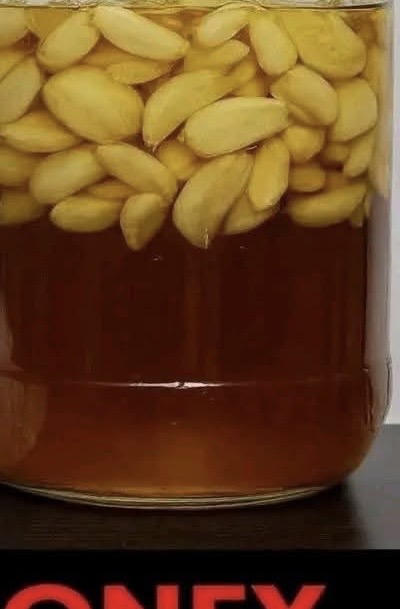
Fermented garlic honey is a simple homemade preparation made with fresh garlic cloves and raw honey. As the garlic slowly ferments, its sharp flavor becomes milder, sweeter, and more mellow, while the honey becomes thinner and infused with garlic flavor.
It can be enjoyed in small amounts as a flavorful addition to savory dishes, marinades, dressings, roasted vegetables, or warm drinks.
Recipe Overview
| Category | Details |
| Prep Time | 15 minutes |
| Fermentation Time | 2–4 weeks |
| Total Time | 2–4 weeks |
| Yield | About 1 small jar |
| Difficulty | Easy |
| Storage | See safety notes below |
Ingredients
| Ingredient | Amount |
| Fresh garlic cloves | From 2 whole heads |
| Raw honey | About 350 g, enough to completely cover the garlic |
| Apple cider vinegar | 1 tablespoon, optional |
Step-by-Step Instructions
1. Prepare the Garlic
Separate the garlic cloves and peel them carefully.
Gently crush each clove with the flat side of a knife. Do not completely mince the garlic; the goal is simply to slightly break the cloves and release their juices.
2. Prepare the Jar
Place the prepared garlic cloves into a very clean glass jar.
Use a jar that is large enough to leave some space at the top rather than filling it completely.
3. Add the Honey
Pour the raw honey over the garlic until all of the cloves are completely covered.
If using apple cider vinegar, add 1 tablespoon and gently mix.
Leave approximately 2–3 cm of headspace at the top of the jar.
4. Begin Fermentation
Close the jar and place it in a cool, dark location at room temperature.
Allow the mixture to ferment for approximately 2–4 weeks.
The garlic may gradually release liquid, causing the honey to become thinner. Small bubbles may also appear during fermentation.
5. Turn the Jar Regularly
During the fermentation period, gently turn the jar once a day so the honey continues to coat the garlic cloves.
During the first week, briefly loosen or open the lid as appropriate to release accumulated fermentation gases, then close it again.
Do not shake the jar aggressively.
6. Check the Fermentation
Over time, the garlic should become softer and less sharp in flavor, while the honey becomes more fluid and strongly infused with garlic.
If you notice mold, an unpleasant rotten smell, unusual discoloration, or other signs of spoilage, discard the entire preparation rather than tasting it.
7. Enjoy
Once properly fermented, the garlic honey can be used in small amounts as a flavorful ingredient.
Try it with roasted vegetables, savory marinades, salad dressings, sauces, or other dishes where a sweet garlic flavor works well.
Best Tips
Use fresh, firm garlic cloves without bruises, mold, or damaged areas for the best results.
Choose a clean glass jar with a tight-fitting lid and avoid contaminating the mixture with wet or dirty utensils.
Make sure the garlic remains covered with honey as much as possible during fermentation.
Leave enough headspace in the jar because fermentation can produce gas and increase pressure.
Fermentation times can vary depending on temperature and the ingredients used, so do not rely on the number of days alone to determine whether the preparation is safe.
Best Ingredient Options
Raw honey can provide a rich, floral flavor, while milder varieties produce a more delicate finished product.
Fresh garlic is preferable because old, damaged, or spoiled cloves can negatively affect the preparation.
Apple cider vinegar can add acidity and a pleasant tang, but simply adding vinegar should not be considered a guarantee that a homemade garlic-and-honey mixture is safe from foodborne pathogens.
Recipe Variations
For a warmer flavor, you can add a small amount of dried chili after considering the food-safety implications of adding additional ingredients.
For a citrus-inspired version, a small amount of lemon zest can be used as a flavoring, although it does not replace proper food-safety controls.
You can also use the finished garlic honey as part of a homemade savory glaze for roasted vegetables or cooked meats.
What to Serve With
Fermented garlic honey can be drizzled over roasted vegetables for a sweet and savory finish.
It can also be incorporated into salad dressings, marinades, sauces, and glazes.
A small amount can add depth to roasted chicken, beef, or other savory dishes.
Make-Ahead Instructions
Because this preparation requires fermentation, it must be started several weeks before you plan to use it.
Prepare the jar with clean equipment and monitor it throughout the fermentation period rather than leaving it unattended.
Storage
Homemade garlic preserved in honey requires particular food-safety care. Garlic is a low-acid food, and storing garlic in an oxygen-limited environment can create conditions associated with botulism.
For that reason, a homemade garlic-honey mixture should not be assumed to be safe simply because it contains honey or because vinegar has been added.
For a safer approach, use a tested preservation method or a commercially prepared product that has been processed under controlled food-safety conditions.
Reheating
This preparation does not require reheating.
If you use the garlic honey in a cooked recipe, simply add it according to the recipe’s instructions.
Freezing
Freezing is generally unnecessary for this preparation. If you need longer-term storage, use a food-preservation method that has been specifically tested for garlic.
Common Mistakes to Avoid
Do not use garlic cloves showing signs of mold, rot, or spoilage.
Do not completely fill the jar because fermentation can produce gases and pressure.
Do not assume that raw honey automatically makes garlic safe for room-temperature storage.
Do not rely solely on adding apple cider vinegar to guarantee a safe pH. The actual acidity of a homemade mixture can vary, and measuring pH accurately requires an appropriate calibrated pH meter.
Do not give honey to babies under 12 months of age because honey can cause infant botulism.
Frequently Asked Questions
Is fermented garlic honey healthy?
Garlic and honey contain various compounds that have been studied for potential health effects. However, fermented garlic honey should be considered a food rather than a proven treatment or cure for a disease.
How long does garlic honey take to ferment?
A traditional preparation may be left for approximately 2–4 weeks, although fermentation speed varies with temperature and other conditions.
Does the garlic become sweet?
The garlic generally becomes softer and less pungent over time, while absorbing some of the sweetness and flavor of the honey.
Can I use apple cider vinegar?
Apple cider vinegar can be used as a flavoring ingredient, but adding a small amount does not by itself guarantee that the finished mixture reaches a safe pH.
Can children eat garlic honey?
Honey should never be given to children under 12 months old, regardless of whether it has been fermented.
Can fermented garlic honey cure infections or other illnesses?
There is not enough evidence to consider homemade garlic honey a treatment or cure for infections, cancer, or other diseases. It should not replace medical care or prescribed treatment.
Food Safety Note
⚠️ Important: Homemade garlic stored in honey at room temperature requires careful food-safety consideration because garlic is a low-acid food and oxygen-limited environments can allow Clostridium botulinum to grow and produce toxin.
Raw honey, fermentation, or a splash of apple cider vinegar should not be presented as a guaranteed method for preventing botulism.
For the safest preparation, follow a validated food-preservation recipe specifically designed for garlic, or use a commercially prepared product made under controlled food-safety conditions.
Never give honey to children under 1 year of age.
Final Thoughts
Fermented garlic honey is an interesting sweet-and-savory preparation with a mellow garlic flavor and many culinary uses. If you decide to make it at home, pay close attention to hygiene and food-safety considerations, and avoid treating homemade fermentation as automatically safe simply because it contains honey or vinegar.