
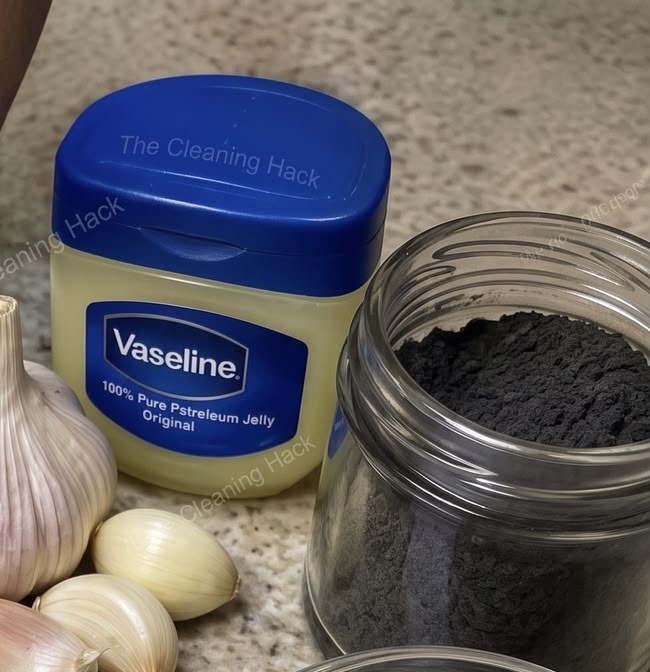
A viral home remedy sometimes recommends mixing raw garlic, petroleum jelly, and charcoal ash to treat ringworm.
Although these ingredients may sound natural, this mixture is not a recommended or proven treatment for ringworm and may actually irritate or damage the skin.
Ringworm is a fungal skin infection. Despite its name, it is not caused by a worm.
What Is Ringworm?
Ringworm is a contagious fungal infection that can affect different areas of the body.
It may appear as an itchy, red, scaly, or ring-shaped rash. The affected area can gradually become larger if the infection is not treated appropriately.
Because ringworm is caused by fungi, treatment generally requires an antifungal medication, rather than a homemade antibacterial or soothing remedy.
The Viral Garlic, Vaseline and Charcoal Ash Remedy
The mixture shown in the viral remedy contains:
| Ingredient | Claimed Use | Important Concern |
| Raw garlic | Natural antifungal | Can cause significant skin irritation and burns |
| Petroleum jelly | Used as a base | Does not treat the fungal infection |
| Charcoal ash | Claimed to help dry the infection | Non-sterile ash can irritate damaged skin and introduce contaminants |
Why You Should Avoid Raw Garlic on Ringworm
Raw garlic contains compounds that can be irritating when applied directly to the skin.
On already inflamed or damaged skin, raw garlic can cause severe irritation, blistering, or a chemical-burn-like reaction.
A natural ingredient is not automatically safe for topical use, particularly when it is applied directly to an active skin infection.
Why Charcoal Ash Is Not Recommended
Charcoal ash is not a standardized medical treatment for fungal infections.
Ash that has not been prepared for medical use may contain contaminants and can further irritate broken or inflamed skin.
Applying non-sterile substances to an existing skin infection can also make the skin more vulnerable to additional problems.
Safer Treatment Options for Ringworm
For uncomplicated ringworm affecting the skin, an appropriate topical antifungal medication is generally used.
Common antifungal ingredients include terbinafine, clotrimazole, and miconazole.
Follow the product instructions carefully and use the medication for the recommended duration. Stopping treatment as soon as the rash looks better can allow the infection to return.
If you are unsure which product is appropriate, ask a pharmacist or healthcare professional.
Good Skin Hygiene
Keep the affected area clean and dry.
Wash the area gently and dry it thoroughly, especially after bathing.
Wash clothing, towels, and bedding regularly to reduce the possibility of spreading the infection.
Do not share towels, clothing, brushes, or other personal items with other people while the infection is active.
Avoid scratching the affected area because scratching can irritate the skin and potentially spread the infection to other areas.
Can Ringworm Spread to Other People?
Yes. Ringworm can spread through close skin-to-skin contact and through contaminated personal items such as towels, clothing, and bedding.
Pets can also sometimes carry fungal infections that can spread to people. If several household members develop similar itchy or ring-shaped rashes, professional medical advice is recommended.
When Should You See a Doctor?
Seek medical advice if the rash is spreading rapidly, becoming painful, severely inflamed, or producing significant swelling or discharge.
You should also consult a doctor or dermatologist if the rash does not begin improving after appropriate antifungal treatment or if you are uncertain whether the rash is actually ringworm.
Some other skin conditions can look similar to ringworm, so an accurate diagnosis is important.
Ringworm affecting the scalp or nails generally requires medical evaluation because topical creams alone may not be sufficient.
Common Mistakes to Avoid
Do not apply raw garlic directly to an irritated rash because it can cause additional skin injury.
Do not put charcoal ash or other non-sterile substances on an active skin infection.
Do not assume that every circular or itchy rash is ringworm. Several skin conditions can produce similar symptoms.
Do not stop an antifungal treatment too early simply because the rash starts looking better.
Avoid sharing towels, clothing, or bedding with someone who has a suspected fungal infection.
Frequently Asked Questions
Is garlic a proven cure for ringworm?
No. Raw garlic should not be considered a safe or reliable treatment for ringworm. Direct application can cause significant skin irritation or burns.
Can Vaseline cure ringworm?
No. Petroleum jelly can act as a skin barrier or moisturizer, but it does not eliminate the fungus responsible for ringworm.
Is charcoal ash safe for ringworm?
Charcoal ash is not a recommended medical treatment for ringworm. Non-sterile ash can irritate damaged skin and may introduce contaminants.
What is commonly used to treat ringworm?
Topical antifungal medicines containing ingredients such as terbinafine, clotrimazole, or miconazole are commonly used for uncomplicated fungal infections of the skin.
How long does ringworm take to improve?
Improvement depends on the location, severity, and treatment used. Follow the antifungal product instructions and seek medical advice if the infection is not improving as expected.
Can I prevent ringworm from spreading?
Keeping the skin clean and dry, washing towels and clothing regularly, avoiding shared personal items, and avoiding scratching can help reduce transmission.
Final Thoughts
The viral mixture of raw garlic, petroleum jelly, and charcoal ash should not be used as a home treatment for ringworm.
Ringworm is a fungal infection that requires an appropriate antifungal approach. Using harsh or non-sterile substances on irritated skin can make the problem worse rather than better.
If you suspect that you have ringworm, speak with a pharmacist, doctor, or dermatologist about an appropriate antifungal treatment, particularly if the infection is spreading or does not improve.
⚠️ This information is for educational purposes only and is not a substitute for professional medical advice. If you have a persistent, spreading, painful, or uncertain skin rash, consult a doctor or dermatologist.