
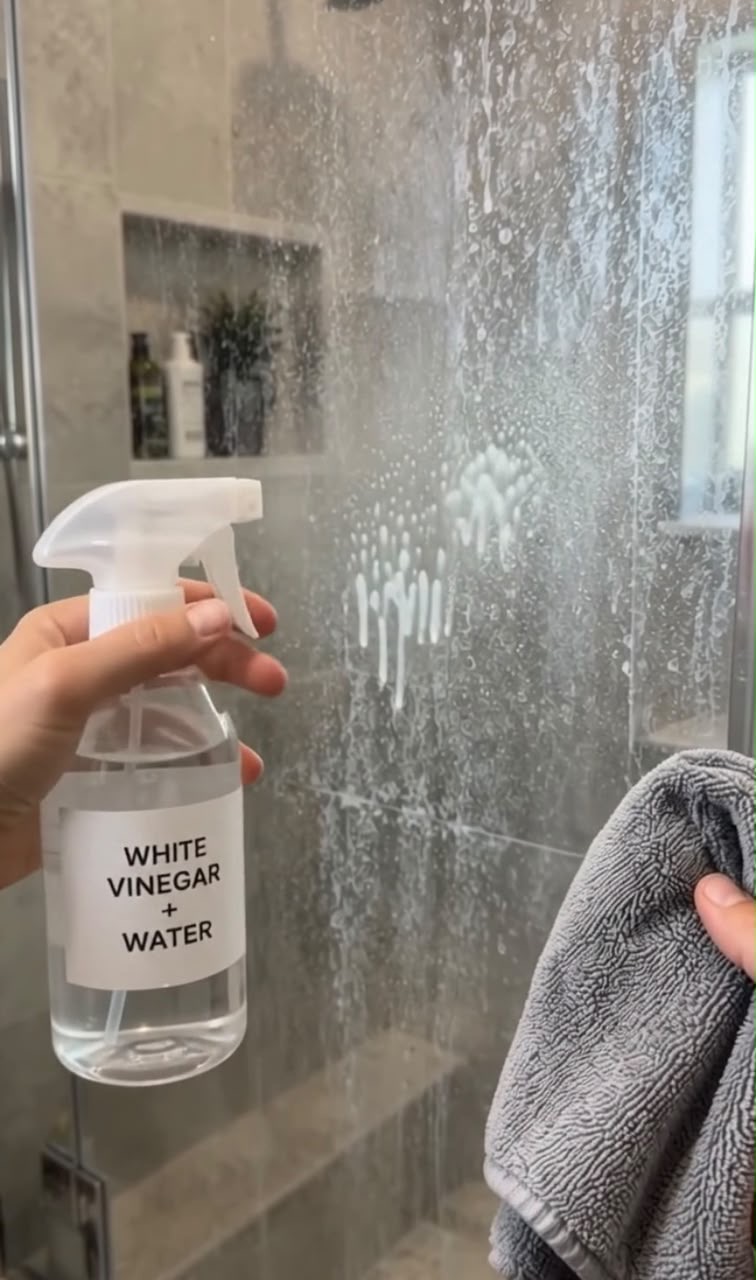
If your shower glass looks cloudy, covered with hard water spots, or has a stubborn layer of soap scum, you don’t need a complicated cleaning routine. This simple homemade glass cleaner uses white vinegar and warm water to help loosen mineral deposits and leave your shower doors looking fresh and clear.
It takes only a few minutes to prepare and is especially useful as part of a regular bathroom cleaning routine.
Recipe Overview
| Detail | Information |
| Preparation Time | 2 minutes |
| Application Time | 5–10 minutes |
| Difficulty | Easy |
| Yield | About 2 cups of cleaner |
| Best For | Shower glass, glass doors, soap scum, hard water spots |
Why You’ll Love This Homemade Glass Cleaner
This DIY glass and shower cleaner requires only a few simple ingredients that are easy to find.
White vinegar helps loosen mineral deposits left behind by hard water, while warm water makes the solution easy to spray and spread across the glass.
The optional dish soap can provide additional cleaning power when your shower doors have a combination of soap residue, body oils, and water spots.
It is also an inexpensive alternative to buying specialized bathroom cleaning products.
Ingredients
| Ingredient | Amount |
| White vinegar | 1 cup |
| Warm water | 1 cup |
| Dish soap, optional | 1 teaspoon |
Step-by-Step Instructions
Step 1: Prepare the Solution
Pour 1 cup of white vinegar and 1 cup of warm water into a clean spray bottle.
If you want additional degreasing power, add 1 teaspoon of dish soap.
Close the bottle securely and gently shake to combine the ingredients.
Step 2: Spray the Shower Glass
Spray the solution evenly over the cloudy shower glass, paying particular attention to areas with visible hard water spots and soap scum.
Avoid oversaturating surrounding surfaces.
Step 3: Let It Sit
Allow the solution to remain on the glass for approximately 5–10 minutes.
This gives the vinegar time to help loosen mineral deposits and residue.
Do not allow the solution to dry completely on the surface.
Step 4: Wipe the Glass
Use a clean microfiber cloth to gently wipe the glass.
For large shower doors, a glass squeegee can also be useful for removing the loosened residue and excess liquid.
Step 5: Rinse Thoroughly
Rinse the glass with clean water to remove the remaining cleaning solution.
Finish with a dry microfiber cloth or squeegee to reduce water marks and streaks.
Best Tips for Crystal-Clear Shower Glass
Use this cleaner regularly rather than waiting until thick mineral deposits have accumulated. Regular maintenance usually makes bathroom cleaning much easier.
After every shower, use a squeegee to remove excess water from the glass. This simple habit can help reduce the amount of mineral residue that builds up over time.
For particularly stubborn buildup, repeat the cleaning process rather than aggressively scrubbing the glass.
Always test homemade cleaning solutions on a small, inconspicuous area first, especially if you are unsure how a surrounding surface will react.
Best Ingredient Options
Plain white vinegar is the best choice for this recipe because it is inexpensive, readily available, and acidic enough to help loosen mineral deposits.
A mild dish soap can be added when the main problem is soap scum or greasy residue.
Use warm rather than boiling water when preparing the mixture.
Important Surface Safety
Avoid using vinegar on natural stone surfaces such as marble, limestone, travertine, or other acid-sensitive stone. Acids can etch or damage these materials.
If your shower contains natural stone, keep the vinegar solution away from the stone and use a cleaner specifically designed for that material.
Never mix vinegar with chlorine bleach or bleach-containing cleaning products. Combining these products can create dangerous chlorine gas.
Common Mistakes to Avoid
Do not leave the cleaning solution on the glass until it completely dries. A wet application followed by wiping and rinsing generally makes the process easier.
Do not use abrasive pads or harsh scrubbing tools on glass, as they can potentially scratch the surface.
Do not assume that more vinegar automatically means better cleaning. The simple 1:1 mixture is sufficient for routine maintenance.
Do not forget the edges and lower sections of the shower door, where water and soap residue often accumulate.
How Often Should You Clean Shower Glass?
For bathrooms with frequent use or hard water, a light cleaning once or twice a week can help keep buildup under control.
Using a squeegee after each shower can reduce the amount of water left on the glass and make deeper cleaning less frequent.
Frequently Asked Questions
Can I use this cleaner on all shower surfaces?
No. The mixture is intended primarily for compatible glass surfaces. Avoid applying vinegar to natural stone such as marble and travertine.
Does vinegar remove hard water stains?
Vinegar can help loosen mineral deposits caused by hard water, particularly when the buildup is relatively light or moderate.
Can I add dish soap?
Yes. Adding about 1 teaspoon of dish soap can help with soap scum and greasy residue.
How long should I leave the cleaner on the glass?
Allow it to sit for approximately 5–10 minutes, then wipe and rinse the surface.
Can I use this cleaner every day?
For everyday maintenance, simply wiping the glass with a squeegee after showering is usually more practical. Use the vinegar solution as needed for mineral deposits and soap residue.
Final Thoughts
This DIY glass and shower cleaner is a simple way to maintain cleaner-looking shower doors using white vinegar, warm water, and an optional small amount of dish soap.
The key to maintaining crystal-clear glass is consistency. Regular cleaning, combined with using a squeegee after each shower, can help prevent hard water spots and soap scum from becoming difficult to remove.