
Home Cleaning • DIY Cleaning Tips • Natural Cleaning Solution
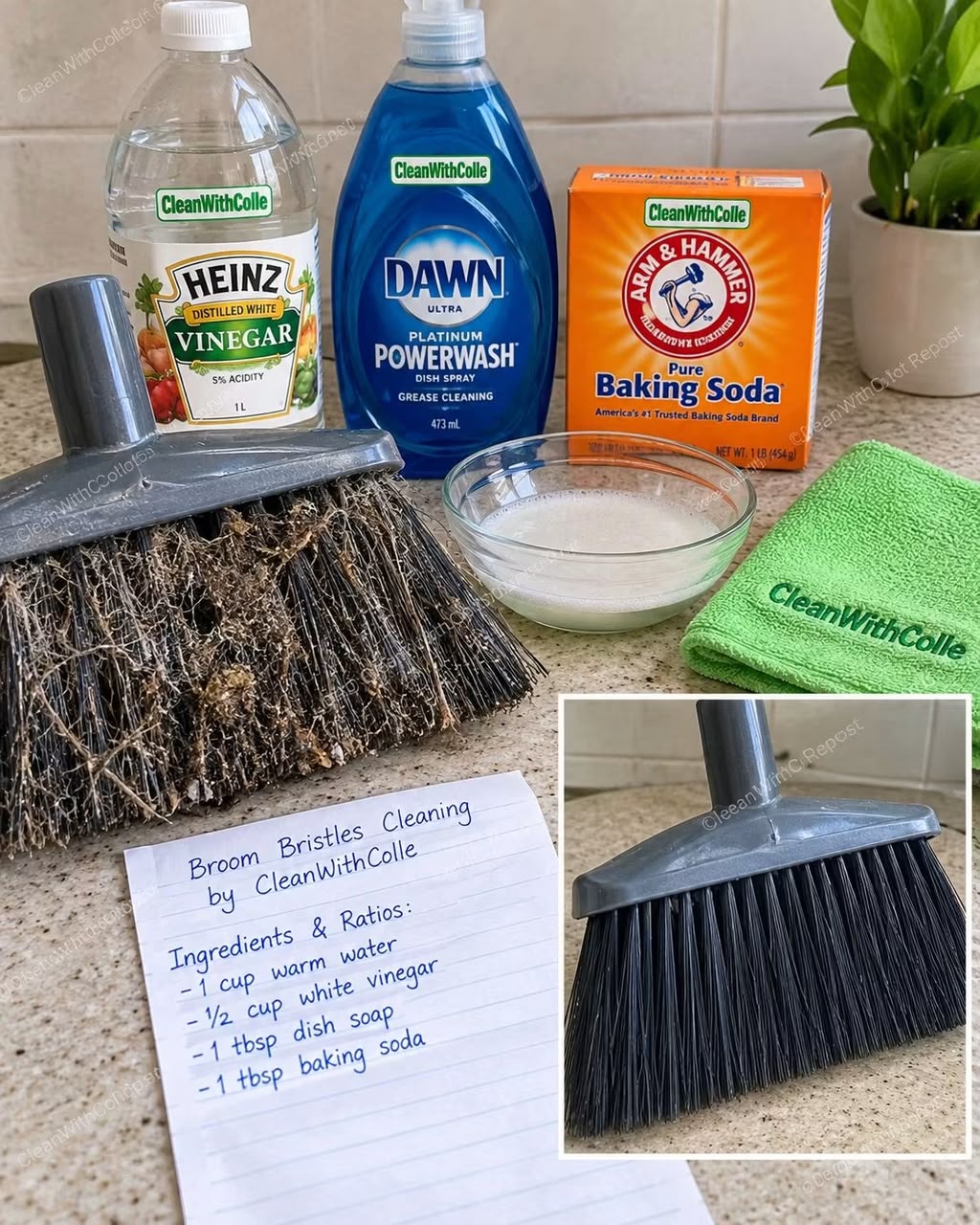
Keep your broom fresh, clean, and ready for everyday use with this simple homemade broom bristle cleaning solution. Using warm water, white vinegar, dish soap, and baking soda, this easy cleaning method helps loosen trapped dust, grease, hair, and stubborn dirt from broom bristles.
Regularly cleaning your broom can help reduce unpleasant odors, remove accumulated grime, and keep your cleaning tools in better condition for longer.
Recipe Overview
| Detail | Information |
| Preparation Time | 5 minutes |
| Soaking Time | 15–20 minutes |
| Total Time | 20–25 minutes |
| Difficulty | Easy |
| Cost | Budget-friendly |
| Best For | Removing dust, grease, and dirt from broom bristles |
Why You’ll Love This Cleaning Recipe
Affordable and easy: This homemade cleaning solution uses common household ingredients, helping you clean your broom without purchasing specialized cleaning products.
Helps remove stubborn dirt: White vinegar and dish soap help loosen grime, grease, and residue trapped between the bristles.
Simple maintenance: Regular broom cleaning helps prevent dirt from spreading around your home when you sweep.
Suitable for routine cleaning: This method is useful for many everyday household brooms, provided the bristle material can safely tolerate water.
Ingredients
| Ingredient | Quantity | Purpose |
| Warm water | 1 cup | Helps loosen dirt and residue |
| White vinegar | ½ cup | Helps remove mineral deposits and odors |
| Dish soap | 1 tablespoon | Helps break down grease |
| Baking soda | 1 tablespoon | Provides mild abrasive cleaning action |
Step-by-Step Instructions
Step 1: Remove Loose Dirt
Before washing your broom, remove tangled hair, dust, lint, and larger pieces of debris by hand. You can also use an old comb to gently remove material caught between the bristles.
Step 2: Prepare the Cleaning Solution
Pour 1 cup of warm water and ½ cup of white vinegar into a suitable container. Add 1 tablespoon of dish soap.
If you choose to use baking soda, add it slowly and allow the fizzing to subside before proceeding. Vinegar and baking soda react with each other, neutralizing much of their cleaning action, so they are generally more useful separately than mixed together.
Step 3: Soak the Broom Bristles
Place the broom head in the cleaning solution, keeping the handle and any wooden or metal joints out of the water whenever possible.
Allow the bristles to soak for 15–20 minutes to help loosen accumulated dirt and grease.
Avoid prolonged soaking, especially if your broom has natural fibers, wooden components, or glued bristles.
Step 4: Gently Scrub the Bristles
Move the bristles through the solution to loosen remaining dirt. If necessary, use an old cleaning brush to gently scrub the broom head.
Pay particular attention to areas where hair, dust, and sticky residue tend to collect.
Step 5: Rinse Thoroughly
Rinse the broom bristles under clean running water until the remaining dirt, soap, and cleaning solution have been removed.
Avoid leaving soap residue in the bristles, as it may attract more dirt during future use.
Step 6: Dry Completely
Shake off excess water and gently press the bristles with a clean towel if necessary.
Hang the broom with its bristles facing downward or position it so that air can circulate freely around the broom head. Allow it to dry completely before using it again.
Best Tips for Cleaning Broom Bristles
Clean your broom regularly. Washing it every few weeks, or whenever it becomes visibly dirty, can help maintain its performance.
Remove hair after every use. Taking a few seconds to remove tangled hair and debris makes deep cleaning easier.
Use warm, not boiling, water. Excessive heat can damage certain synthetic fibers, soften adhesives, or warp plastic components.
Check the material first. Natural-fiber brooms and wooden broom heads may need a gentler cleaning method with minimal water.
Store your broom properly. Keep it in a dry, ventilated area and avoid resting its weight on the bristles, which can cause them to bend.
Best Ingredient Options
White vinegar is a useful household cleaning ingredient for loosening certain mineral deposits and reducing some odors. However, it is not a registered disinfectant for every application and should not be relied upon to sterilize a broom.
Dish soap is particularly helpful for greasy residue because it helps lift oils and dirt from the bristles.
Baking soda can be used separately as a mild abrasive when extra scrubbing is needed. For best results, apply a small amount with water, scrub gently, and rinse thoroughly rather than combining it with vinegar in the same solution.
Common Mistakes to Avoid
Mixing all ingredients without considering their reaction. Vinegar and baking soda fizz when combined, but the reaction also neutralizes much of their individual cleaning ability. Use them separately when practical.
Soaking the entire broom. Submerging wooden handles, metal joints, or glued components can cause damage over time.
Using the broom while it is damp. Moist bristles can develop unpleasant odors if stored without adequate ventilation.
Expecting complete disinfection. Cleaning removes dirt and residue, but it does not guarantee that harmful microorganisms have been eliminated. Use an appropriate disinfectant according to its label when disinfection is necessary.
Frequently Asked Questions
How often should I clean my broom?
For ordinary household use, clean your broom every two to four weeks or sooner if it becomes visibly dirty. Remove hair and loose debris after each use.
Can I use this solution on all types of brooms?
Many synthetic-bristle brooms tolerate gentle washing, but natural-fiber brooms, wooden heads, and glued components may require a different method. Check the manufacturer’s care instructions first.
Does white vinegar disinfect broom bristles?
White vinegar can help with certain cleaning tasks and odors, but it should not be considered a reliable substitute for an approved household disinfectant.
Can I use baking soda and vinegar together?
Yes, they can be combined, but they react with each other and reduce one another’s effectiveness. Using dish soap for grease removal and reserving baking soda for separate gentle scrubbing is often more practical.
How can I stop my broom from smelling bad?
Remove trapped hair and dirt, rinse the bristles thoroughly when washing, allow the broom to dry completely, and store it in a ventilated area.
Final Thoughts
Cleaning your broom bristles is a simple household maintenance task that can make everyday sweeping more effective. With warm water, dish soap, and a little white vinegar, you can loosen accumulated dirt and refresh many types of broom heads without spending much money.
For the best results, clean gently, avoid soaking delicate components, and always let the bristles dry completely before storing your broom.