
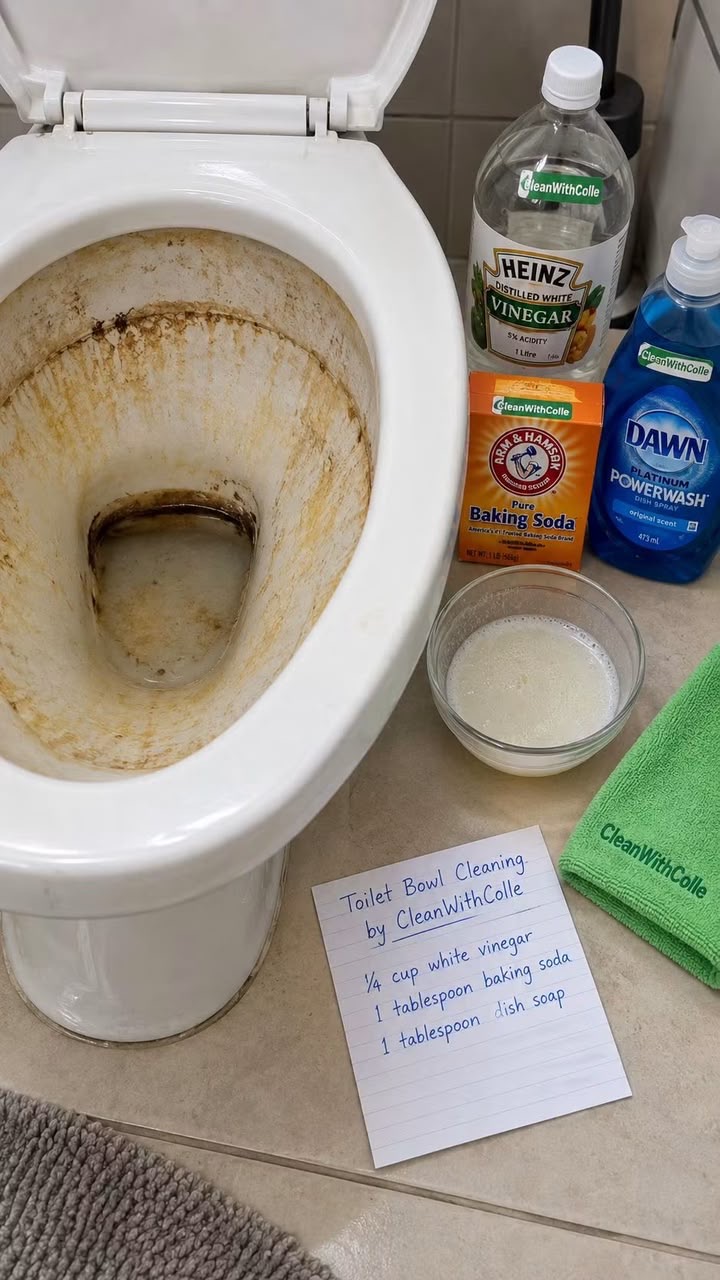
Keep your toilet bowl clean, fresh, and sparkling with this simple homemade toilet cleaner made with white vinegar, baking soda, and dish soap. This easy DIY cleaning solution uses common household ingredients to help loosen light mineral deposits, remove everyday grime, and make routine bathroom cleaning easier.
It takes only a few minutes to prepare and is a convenient option for regular toilet maintenance without purchasing a specialized cleaner.
Recipe Overview
| Detail | Information |
| Preparation Time | 5 minutes |
| Application Time | 15–30 minutes |
| Total Time | 20–35 minutes |
| Yield | 1 cleaning treatment |
| Difficulty | Easy |
| Best For | Routine toilet bowl cleaning and light mineral deposits |
Why You’ll Love This Homemade Toilet Cleaner
Simple Ingredients: This DIY toilet cleaner uses three common household ingredients that are easy to find in most supermarkets.
Budget-Friendly Cleaning: Making a small batch at home can be an economical alternative to purchasing a dedicated toilet bowl cleaner.
Easy to Prepare: No special equipment or complicated preparation is required.
Helps Remove Everyday Grime: Dish soap helps loosen dirt and residue, while brushing removes buildup from the toilet bowl.
Convenient for Regular Maintenance: This homemade mixture can be used as part of your normal bathroom cleaning routine.
Ingredients
| Ingredient | Quantity | Purpose |
| White vinegar | 1/4 cup (60 ml) | Helps loosen some mineral deposits and water stains |
| Baking soda | 1 tablespoon | Provides mild abrasive action when used with a brush |
| Dish soap | 1 tablespoon | Helps loosen dirt and residue |
Equipment Needed
- 1 small mixing bowl
- 1 toilet bowl brush
- 1 measuring cup and tablespoon
- Protective cleaning gloves, if desired
Step-by-Step Instructions
Step 1: Prepare the Mixture
Pour the white vinegar into a small bowl. Add the baking soda slowly, allowing the mixture to fizz. Once the initial fizzing settles, stir in the dish soap gently.
Important: Vinegar and baking soda react with each other and release carbon dioxide gas. The fizzing is temporary, and the ingredients largely neutralize each other. Never mix this preparation in a sealed container.
Step 2: Apply to the Toilet Bowl
Pour the mixture carefully around the inside of the toilet bowl, concentrating on areas with visible stains or light mineral deposits.
Use the toilet brush to spread the mixture over the surface if needed.
Step 3: Allow It to Sit
Leave the mixture in the bowl for approximately 15–30 minutes.
This gives the solution time to loosen some surface grime. However, because vinegar and baking soda neutralize each other, this mixture may not be particularly effective against heavy limescale.
Step 4: Scrub the Bowl
Using a toilet brush, scrub the inside walls, beneath the rim, and the bottom of the bowl.
Pay special attention to stained areas and spots where residue tends to accumulate.
Step 5: Flush and Rinse
Flush the toilet to rinse away the loosened dirt and cleaning mixture.
Inspect the bowl and repeat the brushing process if necessary.
Best Tips for Better Results
Clean Regularly: Frequent cleaning helps prevent dirt and mineral deposits from accumulating.
Use a Dedicated Toilet Brush: A sturdy toilet brush makes it easier to reach beneath the rim and around the bottom of the bowl.
Address Hard Water Stains Separately: For stubborn limescale, use a commercially available toilet descaler according to its label instructions rather than relying on this mixture.
Wear Gloves: Cleaning gloves can help protect your hands during bathroom cleaning.
Never Mix Cleaning Chemicals: Never combine this homemade mixture with bleach, ammonia, or commercial toilet cleaners. Mixing cleaning products can release dangerous gases or cause other hazardous reactions.
Best Ingredient Options
White Vinegar: Standard household white vinegar is the preferred option for this recipe. Other types of vinegar may leave unwanted colors or odors.
Baking Soda: Use ordinary household baking soda, not baking powder.
Dish Soap: A small amount of regular dishwashing liquid helps loosen everyday grime. Avoid adding excessive soap, as it can create unnecessary residue.
Recipe Variations
For Routine Cleaning: Use the mixture as described above for light soil and regular toilet maintenance.
For Light Surface Stains: Apply the mixture, let it sit briefly, and scrub thoroughly with a toilet brush.
For Heavy Limescale: Choose a dedicated toilet descaler designed for mineral deposits. Follow the product instructions carefully and never combine it with other cleaners.
What to Use Alongside This Cleaner
For a more complete bathroom cleaning routine, clean the toilet seat, lid, flush handle, and surrounding surfaces separately with an appropriate bathroom surface cleaner.
Use a separate cloth for the exterior of the toilet and another for other bathroom surfaces to reduce cross-contamination.
Make-Ahead Instructions
This mixture is best prepared immediately before use. The vinegar and baking soda react as soon as they are combined, so storing the finished mixture does not offer a meaningful cleaning advantage.
Prepare only the amount needed for one cleaning session.
Storage
Do not store the mixed solution in a sealed bottle or container because the reaction between vinegar and baking soda releases gas.
Keep the individual ingredients in their original containers, tightly closed and out of reach of children and pets.
Reusing the Mixture
This recipe is intended for a single cleaning session. Discard any unused mixture appropriately rather than keeping it for future use.
Never pour the mixture into a container that previously held bleach or another cleaning chemical unless it has been thoroughly cleaned and is suitable for reuse.
Common Mistakes to Avoid
Expecting Heavy Limescale to Disappear: This mixture may help with light grime, but it is not a reliable treatment for thick mineral deposits.
Mixing Too Quickly: Adding baking soda to vinegar causes fizzing. Add it slowly to reduce overflow and splashing.
Using a Sealed Container: Gas released during the reaction can build pressure in a closed container.
Combining Different Cleaners: Never mix this recipe with bleach, ammonia, or other commercial cleaning products.
Skipping the Scrubbing Step: Brushing is essential for physically removing loosened dirt and residue.
Frequently Asked Questions
1. Can this homemade toilet cleaner remove limescale?
It may help loosen light mineral deposits, but its effectiveness is limited because vinegar and baking soda neutralize each other. Heavy limescale generally requires a suitable commercial descaler.
2. How long should I leave the mixture in the toilet bowl?
Allow it to sit for 15–30 minutes before scrubbing and flushing.
3. Can I use this cleaner every day?
For most households, daily toilet cleaning with this mixture is unnecessary. Regular cleaning according to your household’s needs is generally sufficient.
4. Does baking soda disinfect the toilet?
No. Baking soda is not a registered disinfectant and should not be relied upon to kill harmful germs. Use a suitable toilet disinfectant according to its label when disinfection is needed.
5. Can I add bleach for extra cleaning power?
No. Never mix bleach with vinegar or other acidic cleaners. This can release toxic chlorine gas.
6. Is this cleaner safe for every toilet?
It is generally suitable for routine cleaning of standard glazed ceramic toilet bowls, but always follow the toilet manufacturer’s care instructions. Avoid applying the mixture to incompatible materials or surrounding surfaces without checking their cleaning requirements.
7. Why does the mixture fizz?
Vinegar is acidic, while baking soda is alkaline. When combined, they react and release carbon dioxide gas, producing bubbles and foam.
Final Thoughts
This homemade toilet bowl cleaner is a simple, low-cost option for tackling everyday grime with ingredients commonly found at home. For the best results, apply the mixture fresh, scrub the bowl thoroughly, and flush to rinse.
Keep in mind that this recipe is intended for routine cleaning rather than heavy-duty descaling or disinfection. For stubborn limescale or situations requiring germ-killing performance, choose a product specifically designed for the task and always follow its safety instructions.