
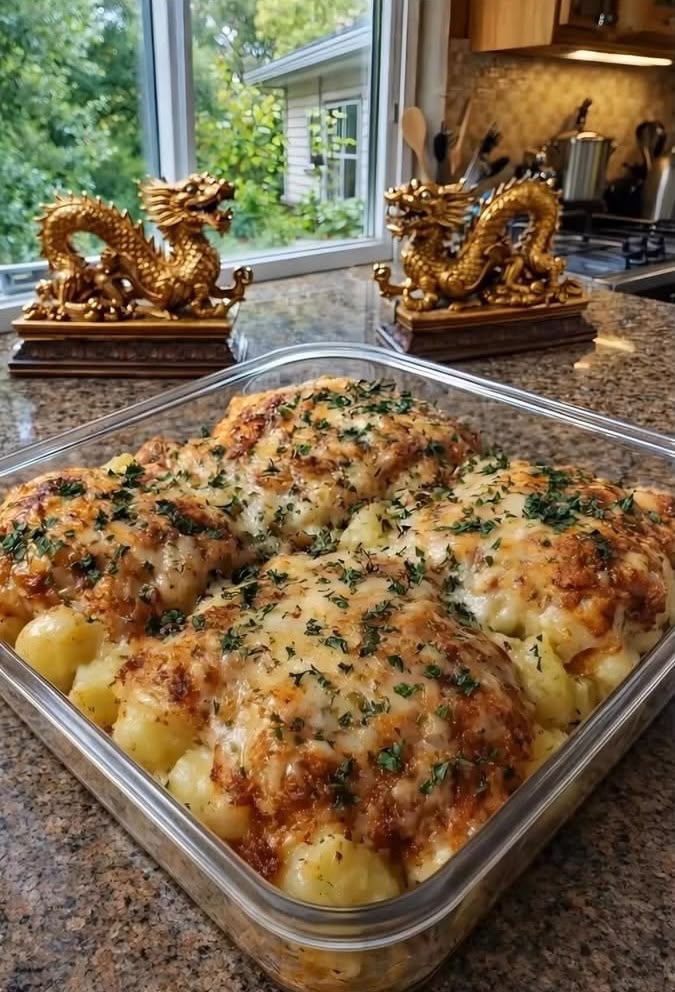
This cheesy chicken and potato casserole is the ultimate comfort food, combining tender, seasoned chicken, soft golden potatoes, and a generous layer of melted cheese. Baked together until bubbling and beautifully golden, this easy oven-baked dinner is packed with savory flavors and simple ingredients the whole family will love.
The chicken is seasoned with paprika, garlic, and aromatic herbs, then layered over tender potatoes and topped with mozzarella, cheddar, or Gouda cheese. A touch of cream adds extra richness, while fresh parsley brings a bright finish to this hearty meal.
Whether you’re preparing a cozy weeknight dinner or a satisfying weekend meal, this cheesy chicken and potato bake is an easy, delicious recipe worth adding to your regular rotation.
Recipe Overview
| Details | Information |
| Prep Time | 20 minutes |
| Cook Time | 35–40 minutes |
| Total Time | 55–60 minutes |
| Servings | 4 |
| Cuisine | American-inspired |
| Course | Main Course |
| Cooking Method | Stovetop and Oven |
| Oven Temperature | 375°F–400°F (190°C–200°C) |
| Difficulty | Easy |
Why You’ll Love This Recipe
Cheesy and comforting: Melted cheese creates a delicious golden topping that pairs perfectly with tender chicken and soft potatoes.
A complete family dinner: Chicken and potatoes provide a satisfying combination of protein and carbohydrates in one convenient baking dish.
Simple everyday ingredients: You can prepare this recipe with common pantry seasonings, fresh chicken, potatoes, and your favorite cheese.
Easy to customize: Choose mozzarella for a stretchy texture, cheddar for a sharper flavor, or Gouda for a creamy, rich finish.
Perfect for meal preparation: The casserole can be assembled ahead of time, making dinner easier on busy evenings.
Ingredients
For the Chicken and Potatoes
| Ingredient | Quantity |
| Boneless, skinless chicken breasts or thighs | 4 pieces (about 1½–2 lb / 680–900 g) |
| Large potatoes, peeled and diced | 4–5 (about 2 lb / 900 g) |
| Olive oil | 2 tablespoons |
| Paprika | 1 teaspoon |
| Garlic powder | 1 teaspoon |
| Herbes de Provence or dried oregano | ½ teaspoon |
| Salt | ½–1 teaspoon, to taste |
| Ground black pepper | ¼–½ teaspoon |
| Shredded mozzarella, cheddar, or Gouda | 7 oz (200 g) |
| Heavy cream or cooking cream | 2 tablespoons |
| Fresh parsley, chopped | 2 tablespoons |
Optional Additions
| Ingredient | Quantity |
| Onion, thinly sliced | 1 small |
| Garlic, minced | 2 cloves |
| Grated Parmesan cheese | 2 tablespoons |
| Chicken broth | ¼ cup (60 ml), if needed |
Step-by-Step Instructions
Step 1: Prepare the Potatoes
Preheat your oven to 375°F–400°F (190°C–200°C).
Peel the potatoes and cut them into evenly sized cubes, approximately ¾ inch (2 cm) wide.
Bring a large pot of salted water to a boil. Add the diced potatoes and cook for 10–12 minutes, until they are beginning to soften but still hold their shape.
Drain the potatoes thoroughly and allow excess steam to escape for a minute or two.
Transfer the potatoes to a lightly greased baking dish and spread them into an even layer.
Step 2: Prepare the Chicken Seasoning
In a small bowl, combine the olive oil, paprika, garlic powder, dried herbs, salt, and black pepper.
Mix well to create a fragrant seasoning mixture.
Pat the chicken dry with paper towels. If the chicken breasts are particularly thick, cut them into evenly sized portions so they cook more consistently.
Rub the seasoning mixture over all sides of the chicken until evenly coated.
Step 3: Sear the Chicken
Heat a large skillet over medium-high heat.
Add the seasoned chicken and sear for approximately 3–4 minutes per side, until lightly golden brown.
The goal is to develop a flavorful exterior rather than cook the chicken completely at this stage.
If you’re using thick chicken breasts, avoid overcrowding the skillet. Sear in batches if necessary.
Transfer the browned chicken to a plate.
Step 4: Assemble the Casserole
Arrange the seared chicken pieces over the layer of potatoes in the baking dish.
If desired, scatter thinly sliced onion and minced garlic over the potatoes for additional flavor.
Drizzle the cooking cream evenly over the chicken and potatoes. For a slightly saucier casserole, add a little chicken broth.
Sprinkle the shredded cheese generously over the top, covering the chicken and potatoes as evenly as possible.
For an extra flavorful crust, mix the mozzarella or cheddar with a little grated Parmesan before adding it to the dish.
Step 5: Bake Until Golden and Tender
Place the casserole in the preheated oven and bake for approximately 20–30 minutes, depending on the size and thickness of the chicken pieces.
The cheese should melt completely and develop a lightly golden, bubbling surface.
Check the thickest part of the chicken with a food thermometer. Chicken must reach an internal temperature of 165°F (74°C) to be safe to eat.
If the cheese browns too quickly before the chicken is cooked, loosely cover the dish with aluminum foil and continue baking until the chicken reaches the required temperature.
If you prefer a deeper golden crust, place the casserole under the broiler for 1–2 minutes at the end, watching closely to prevent burning.
Step 6: Add Fresh Parsley
Remove the casserole from the oven and let it rest for 5 minutes.
Sprinkle freshly chopped parsley over the top for a burst of color and fresh flavor.
Serve warm, spooning generous portions of chicken, potatoes, and melted cheese onto each plate.
Best Tips for Perfect Chicken and Potato Casserole
Cut the potatoes evenly: Uniform pieces cook at approximately the same rate, helping prevent some potatoes from becoming mushy while others remain firm.
Do not overboil the potatoes: They should be partially tender before baking, not falling apart. This helps them maintain their texture in the casserole.
Sear the chicken first: Browning the chicken develops extra flavor and gives the finished dish a more appetizing appearance.
Choose evenly sized chicken pieces: Similar thickness helps all the chicken cook at a similar rate.
Use freshly shredded cheese: Cheese shredded at home often melts more smoothly than some pre-shredded varieties.
Keep an eye on moisture: The potatoes and chicken release liquid during baking. Add broth only if you want a saucier result.
Check the internal temperature: Oven times vary, so use a thermometer to confirm the chicken has reached 165°F (74°C).
Let the casserole rest: A short resting period helps the juices settle and makes serving easier.
Best Ingredient Options
Chicken breasts: Boneless, skinless chicken breasts are lean and easy to portion. Choose pieces of similar thickness for even cooking.
Chicken thighs: Boneless, skinless thighs are naturally juicier and offer a richer flavor. They can be an excellent choice for a more tender casserole.
Potatoes: Yukon Gold potatoes provide a creamy texture, while Russet potatoes become fluffy and absorb the flavors of the seasoning.
Mozzarella cheese: Ideal for a stretchy, gooey topping with a mild flavor.
Cheddar cheese: Adds a richer, sharper taste and a beautiful golden finish.
Gouda cheese: Offers a smooth, creamy texture and a slightly sweet, buttery flavor.
Cooking cream: A small amount adds richness without making the dish overly heavy. You can substitute half-and-half or a suitable cooking cream alternative.
Herbs: Oregano, thyme, Italian seasoning, or Herbes de Provence all complement chicken and potatoes.
Recipe Variations
Garlic Parmesan Chicken Casserole: Add minced garlic and grated Parmesan to the cheese topping for a deeper, savory flavor.
Creamy Mushroom Chicken Bake: Sauté sliced mushrooms with the onion and add them between the potatoes and chicken.
Broccoli Cheddar Chicken Casserole: Add lightly steamed broccoli florets before sprinkling the cheese over the dish.
Spicy Paprika Chicken Bake: Add cayenne pepper or chili flakes to the seasoning mixture for a gentle kick of heat.
Loaded Chicken and Potato Casserole: Add diced bell peppers, green onions, and extra cheese for a colorful, hearty variation.
Italian Herb Chicken Casserole: Season the chicken with oregano, basil, thyme, and a little Parmesan for a Mediterranean-inspired flavor.
Extra-Creamy Version: Replace the small amount of cream with a prepared garlic cream sauce, adding enough to coat the ingredients without completely submerging them.
What to Serve With Cheesy Chicken and Potato Casserole
Fresh green salad: Lettuce, cucumber, tomatoes, and a light vinaigrette balance the richness of the melted cheese.
Steamed broccoli: Broccoli adds freshness, color, and a tender-crisp texture to the meal.
Roasted green beans: Lightly seasoned green beans make a simple and flavorful side dish.
Garlic bread: A slice of warm garlic bread is perfect for soaking up the creamy juices from the casserole.
Roasted carrots: Their natural sweetness complements the savory chicken and herbs.
Cucumber and tomato salad: A refreshing salad with lemon juice and fresh herbs adds brightness to the plate.
Make-Ahead Instructions
You can prepare the potatoes and seasoning mixture ahead of time, and you can sear the chicken in advance.
For the best texture, partially assemble the casserole, allow the ingredients to cool if they are warm, cover, and refrigerate promptly. Ideally, bake within 24 hours.
If preparing the entire casserole ahead, keep it refrigerated at 40°F (4°C) or below. Add the cheese just before baking if you want the freshest, most attractive topping.
A cold casserole may require additional baking time. Check the chicken’s internal temperature rather than relying only on the recipe timing.
Storage Instructions
Allow leftover casserole to cool slightly and transfer it to an airtight container. Refrigerate within 2 hours of cooking.
Store in the refrigerator for 3–4 days.
For food safety, do not leave cooked chicken at room temperature for extended periods. Reheat only the portion you plan to eat.
Reheating Instructions
Oven: Preheat to 350°F (175°C). Place a portion in an oven-safe dish, cover loosely with foil, and heat for approximately 15–20 minutes or until the center reaches 165°F (74°C).
Microwave: Place an individual portion in a microwave-safe dish. Cover loosely and heat in short intervals, stirring the potatoes where possible, until thoroughly hot.
Air fryer: Reheat a suitable portion at approximately 320°F (160°C), checking frequently. Cover loosely if the cheese begins to brown too quickly.
If the casserole seems dry, add a small splash of chicken broth or cream before reheating.
Freezing Instructions
This casserole can be frozen, although the texture of the potatoes and cream sauce may change slightly after thawing.
For best results, freeze fully cooked portions in airtight, freezer-safe containers after they have cooled.
Label the containers with the date and use within 2–3 months for best quality.
Thaw overnight in the refrigerator before reheating. Heat until the center reaches 165°F (74°C).
If you plan to freeze the dish specifically for later meals, slightly firm potatoes may retain their texture better than potatoes cooked until very soft.
Common Mistakes to Avoid
Using raw, large potato cubes: The chicken may finish cooking before the potatoes become tender. Parboiling the potatoes first helps the entire casserole cook evenly.
Overcooking the potatoes before baking: Very soft potatoes may break apart when mixed with the chicken juices. Stop boiling when they are just beginning to soften.
Skipping the chicken sear: Although optional, searing creates a richer flavor and helps the chicken develop a more appealing exterior.
Adding too much liquid: Excess broth or cream can leave the casserole watery. Start with the recommended amount and add more only if needed.
Using uneven chicken pieces: Thick pieces may remain undercooked while thinner pieces become dry. Choose pieces of similar size and check the thickest portion.
Baking without checking doneness: A golden cheese topping does not guarantee that the chicken is cooked through. Always verify an internal temperature of 165°F (74°C).
Burning the cheese: If the top becomes too dark before the chicken is ready, cover loosely with foil and continue baking.
Serving immediately: Let the casserole rest for a few minutes so the juices settle and the portions are easier to serve.
Nutrition Estimate
The following nutrition values are approximate and depend on the type of chicken, potatoes, cheese, and cream used.
| Nutrient | Estimated Amount per Serving |
| Calories | 450–600 kcal |
| Protein | 40–55 g |
| Carbohydrates | 35–45 g |
| Total Fat | 16–28 g |
| Saturated Fat | 7–13 g |
| Fiber | 4–6 g |
| Sugar | 2–5 g |
| Sodium | 500–850 mg |
These estimates assume four servings and do not include optional ingredients. Actual values will vary with portion size and product brands.
Frequently Asked Questions
1. Can I use chicken thighs instead of chicken breasts?
Yes. Boneless, skinless chicken thighs are an excellent substitute and often produce a juicier result. Cooking time will depend on the size of the pieces, so check that the thickest part reaches 165°F (74°C).
2. Do I have to boil the potatoes before baking?
Parboiling is recommended because it helps the potatoes become tender at the same time as the chicken. You can use raw potatoes, but they need to be cut smaller and the casserole will generally require a longer cooking time. Monitor the chicken carefully to avoid overcooking it.
3. Which cheese melts best?
Mozzarella creates a stretchy topping, cheddar adds a stronger flavor, and Gouda provides a creamy finish. A mixture of mozzarella and cheddar is an excellent all-purpose combination.
4. Can I make this casserole without cream?
Yes. You can omit the cream for a lighter result or replace it with a little chicken broth. The chicken and potatoes will still be flavorful, although the casserole will be less creamy.
5. Why is my chicken casserole watery?
Excess liquid can come from the chicken, potatoes, vegetables, or too much broth. Drain the potatoes thoroughly, avoid adding unnecessary liquid, and make sure the chicken is not releasing excessive moisture into the dish.
6. Can I add vegetables to the casserole?
Absolutely. Broccoli, mushrooms, bell peppers, spinach, and onions all work well. Cook moisture-rich vegetables first when necessary to avoid making the casserole watery.
7. Can I prepare this recipe the day before?
Yes. Assemble the casserole, cover it, and refrigerate it promptly. Bake within 24 hours for best quality, adding extra time if it is still cold when it goes into the oven.
8. How do I know when the chicken is fully cooked?
Use a food thermometer inserted into the thickest part of the chicken. It must reach 165°F (74°C). Color alone is not a reliable indicator of doneness.
9. Can I freeze leftovers?
Yes. Store cooled portions in freezer-safe containers for up to 2–3 months for best quality. Thaw in the refrigerator and reheat thoroughly before serving.
10. How can I make the cheese topping extra crispy?
Use a combination of cheddar and Parmesan, and briefly broil the casserole at the end of cooking. Watch continuously, as cheese can burn quickly under the broiler.
Final Thoughts
This cheesy chicken and potato casserole is a comforting, satisfying meal that brings together tender chicken, soft potatoes, aromatic herbs, and a delicious golden cheese topping.
With simple ingredients and straightforward preparation, it is a practical choice for family dinners, meal preparation, and cozy evenings at home. Customize it with your favorite cheese, add extra vegetables, or make it creamier to suit your taste.
Serve it warm with a fresh salad or steamed vegetables for a balanced, delicious dinner that everyone can enjoy.
Recipe note: This dish contains chicken, dairy, and may contain gluten depending on the ingredients used. It may not be suitable for everyone, so consult a qualified healthcare professional if you have specific medical or dietary concerns.