
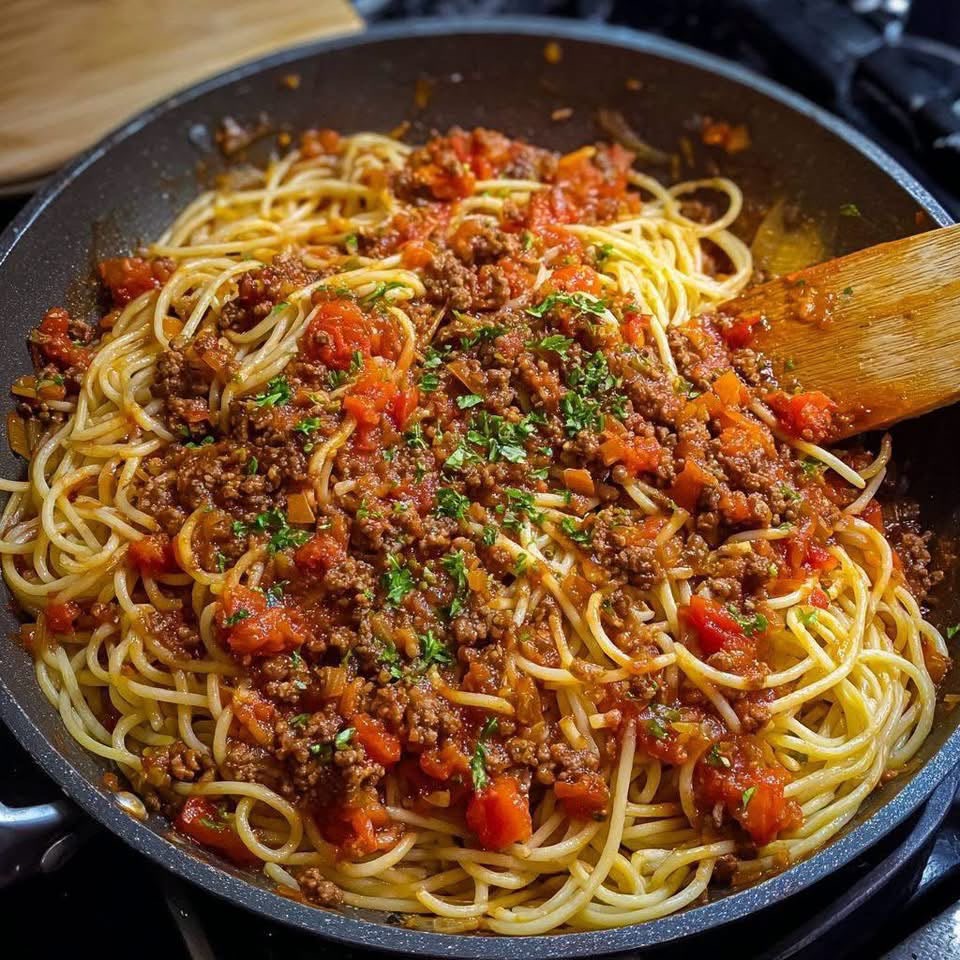
Classic Spaghetti Bolognese is a comforting Italian-inspired dinner made with tender spaghetti, savory ground beef, aromatic garlic and onions, and a rich tomato sauce simmered until deliciously flavorful. Finished with freshly grated Parmesan cheese and fresh parsley, this homemade pasta dish is perfect for family dinners, busy weeknights, or a cozy weekend meal.
This easy spaghetti Bolognese recipe uses simple pantry ingredients and straightforward cooking techniques to create a satisfying meal without spending hours in the kitchen. The ground beef adds a hearty texture, while the tomatoes, herbs, and garlic create a delicious sauce that coats every strand of pasta.
Whether you’re preparing a quick dinner for the family or looking for an easy homemade pasta recipe, this classic beef spaghetti is a reliable favorite that everyone can enjoy.
Recipe Overview
| Details | Information |
| Preparation Time | 15 minutes |
| Cooking Time | 30 minutes |
| Total Time | 45 minutes |
| Servings | 4 |
| Cuisine | Italian-inspired |
| Course | Main Course |
| Cooking Method | Stovetop |
| Difficulty | Easy |
Why You’ll Love This Recipe
This homemade spaghetti Bolognese delivers the perfect combination of tender pasta, flavorful ground beef, and rich tomato sauce. Every bite is savory, comforting, and satisfying.
The recipe uses affordable ingredients that are easy to find in most grocery stores, making it a practical choice for everyday cooking.
The tomato sauce simmers with garlic, onions, oregano, and basil to develop a delicious flavor without requiring complicated techniques.
You can also customize the recipe with extra vegetables, different herbs, or your favorite grated cheese. It is easy to prepare ahead of time and works well for family meals throughout the week.
Ingredients
For the Spaghetti Bolognese
| Ingredient | Quantity |
| Spaghetti | 400 g (14 oz) |
| Ground beef | 500 g (1.1 lb) |
| Crushed tomatoes | 1 can (400 g / 14 oz) |
| Tomato paste | 2 tablespoons |
| Yellow onion | 1 medium, finely chopped |
| Garlic | 2–3 cloves, minced |
| Carrot | 1 small, finely diced (optional) |
| Olive oil | 2 tablespoons |
| Dried oregano | 1 teaspoon |
| Dried basil | 1 teaspoon |
| Salt | To taste |
| Freshly ground black pepper | To taste |
| Fresh parsley | 2 tablespoons, chopped |
| Grated Parmesan cheese | ¼–½ cup, for serving |
Optional Ingredients
| Ingredient | Quantity | Purpose |
| Beef broth or water | ¼–½ cup | Adjusts sauce consistency |
| Red pepper flakes | A pinch | Adds mild heat |
| Bay leaf | 1 | Adds aromatic depth |
| Sugar | ½ teaspoon, optional | Balances acidic tomatoes |
| Unsalted butter | 1 tablespoon | Adds richness to the finished sauce |
Step-by-Step Instructions
Step 1: Prepare the Vegetables
Finely chop the onion, mince the garlic, and dice the carrot into small pieces.
Heat the olive oil in a large skillet or deep sauté pan over medium heat.
Add the chopped onion and carrot. Cook for approximately 3–4 minutes, stirring occasionally, until the vegetables begin to soften.
Add the minced garlic and cook for another 30–60 seconds until fragrant. Avoid browning the garlic too much, as it can develop a bitter taste.
Step 2: Brown the Ground Beef
Add the ground beef to the skillet.
Use a wooden spoon to break the meat into small pieces and distribute it evenly across the pan.
Cook for approximately 7–10 minutes, stirring occasionally, until the beef is thoroughly browned and reaches an internal temperature of 160°F (71°C).
If there is excessive fat in the skillet, carefully drain some of it before continuing.
Step 3: Add the Tomato Paste and Tomatoes
Stir the tomato paste into the browned beef and vegetables. Cook for approximately 1 minute to deepen its flavor.
Add the crushed tomatoes, dried oregano, dried basil, salt, and freshly ground black pepper.
Mix everything thoroughly until the beef is evenly coated in the tomato sauce.
If the sauce appears too thick, add a small amount of water or beef broth.
Step 4: Simmer the Bolognese Sauce
Reduce the heat to low and let the sauce simmer gently for 15–20 minutes, stirring occasionally.
Keep the pan partially covered to reduce splattering while allowing excess moisture to escape.
As the sauce simmers, the tomatoes soften and the garlic, herbs, and beef develop a richer flavor.
Taste the sauce before serving and adjust the salt, pepper, and herbs as needed.
For a smoother, richer finish, stir in a small amount of butter at the end if desired.
Step 5: Cook the Spaghetti
While the sauce simmers, bring a large pot of water to a boil.
Add a generous pinch of salt, then add the spaghetti.
Cook according to the package instructions until the pasta is al dente, meaning tender but still slightly firm in the center.
Before draining, reserve approximately ½ cup of pasta cooking water.
Drain the spaghetti without rinsing it. The remaining starch on the pasta helps the sauce cling to the noodles.
Step 6: Combine the Spaghetti and Sauce
Add the drained spaghetti directly to the skillet with the Bolognese sauce.
Toss the pasta gently until every strand is coated.
If the sauce is too thick, add a little reserved pasta water, one tablespoon at a time, until the consistency is glossy and easy to mix.
Allow the pasta and sauce to cook together for 1–2 minutes so the flavors combine.
Step 7: Garnish and Serve
Divide the spaghetti among serving plates or bowls.
Sprinkle with freshly grated Parmesan cheese and chopped parsley.
Serve immediately while the pasta is hot, with extra Parmesan and freshly ground black pepper on the side.
Best Tips for Perfect Spaghetti Bolognese
Brown the beef properly. Allow the ground beef to develop a little color before adding the tomatoes. Browning creates a deeper, more savory flavor.
Dice the vegetables finely. Small pieces of onion and carrot soften quickly and blend naturally into the sauce.
Cook the tomato paste briefly. Stirring it into the beef before adding the tomatoes helps develop a richer tomato flavor.
Simmer gently. A gentle simmer allows the ingredients to combine without reducing the sauce too quickly.
Salt the pasta water. Properly seasoned cooking water adds flavor to the spaghetti itself.
Reserve the pasta water. A little starchy water helps bind the sauce to the pasta and creates a smoother finish.
Finish the pasta in the sauce. Tossing the spaghetti with the sauce for the final minute or two helps the flavors come together.
Grate the cheese fresh. Freshly grated Parmesan usually offers a better texture and more pronounced flavor than many pre-grated alternatives.
Best Ingredient Options
Ground beef: Lean ground beef works well for a lighter sauce, while beef with a little more fat can provide a richer flavor. Drain excess fat if needed.
Spaghetti: Traditional spaghetti is a great choice, but linguine, fettuccine, penne, or rigatoni can also be used.
Tomatoes: Canned crushed tomatoes are convenient and consistent. Diced tomatoes can create a chunkier sauce, while plain tomato passata produces a smoother texture.
Tomato paste: This ingredient intensifies the tomato flavor and helps create a thicker sauce.
Carrot: Although optional, finely diced carrot adds subtle sweetness and balances the acidity of the tomatoes.
Herbs: Dried oregano and basil provide a convenient flavor base. Fresh basil or parsley can be added near the end for a brighter finish.
Parmesan cheese: Freshly grated Parmesan is a classic topping. Another hard, aged cheese suitable for grating can also work.
Recipe Variations
Spicy Beef Spaghetti: Add red pepper flakes or a pinch of chili powder to the sauce for a little heat.
Extra Vegetable Bolognese: Add finely diced mushrooms, zucchini, or celery alongside the onion and carrot for additional flavor and texture.
Creamy Tomato Beef Spaghetti: Stir in 2–3 tablespoons of cream near the end of cooking for a softer, creamier sauce.
Cheesy Bolognese Pasta: Mix a little grated mozzarella into the hot pasta and sauce, then finish with Parmesan for extra cheesiness.
Whole-Wheat Spaghetti Bolognese: Replace regular spaghetti with whole-wheat pasta for a nuttier flavor and additional fiber.
Baked Spaghetti Bolognese: Transfer the combined pasta and sauce to an oven-safe dish, top with mozzarella, and bake at 375°F (190°C) for approximately 10–15 minutes, until the cheese melts and begins to turn golden.
What to Serve With Spaghetti Bolognese
Garlic bread: Warm garlic bread is perfect for soaking up the extra tomato and beef sauce.
Fresh green salad: Lettuce, cucumber, tomatoes, and a light vinaigrette provide a refreshing contrast to the hearty pasta.
Roasted vegetables: Roasted zucchini, bell peppers, carrots, or broccoli make delicious vegetable sides.
Steamed broccoli: Lightly seasoned broccoli adds color and pairs well with the savory sauce.
Caprese-style salad: Tomatoes, mozzarella, fresh basil, and olive oil create a fresh Italian-inspired accompaniment.
Extra Parmesan and fresh herbs: A final sprinkle of cheese and parsley adds flavor and makes the dish look especially appetizing.
Make-Ahead Instructions
The Bolognese sauce can be prepared up to 3 days in advance and stored in an airtight container in the refrigerator.
For the best texture, cook the spaghetti shortly before serving and combine it with the reheated sauce.
If you prefer to prepare the entire meal in advance, slightly undercook the pasta before mixing it with the sauce. This helps prevent it from becoming too soft when reheated.
Reheat the sauce gently on the stovetop, adding a splash of water or broth if it has thickened during refrigeration.
Storage Instructions
Allow leftover spaghetti Bolognese to cool slightly, then transfer it to shallow, airtight containers.
Refrigerate within 2 hours of cooking and store at 40°F (4°C) or below.
Cooked spaghetti with meat sauce can generally be refrigerated for 3–4 days.
For the best texture, store extra sauce separately from the pasta when possible.
Reheating Instructions
Stovetop: Place the spaghetti and sauce in a skillet over medium-low heat. Add a splash of water or broth and stir gently until heated throughout.
Microwave: Transfer a serving to a microwave-safe dish, add a tablespoon of water, cover loosely, and heat in short intervals. Stir halfway through to distribute the heat evenly.
Oven: Place the pasta in an oven-safe dish, add a little sauce or water, cover with foil, and heat at 350°F (175°C) until hot throughout.
For food safety, reheat leftovers to an internal temperature of 165°F (74°C).
Freezing Instructions
The Bolognese sauce freezes particularly well, making it a convenient option for future meals.
Allow the sauce to cool safely, then divide it into freezer-safe containers or bags. Label each container with the date.
Freeze for up to 2–3 months for the best quality.
Thaw overnight in the refrigerator and reheat gently in a saucepan until thoroughly hot.
Cook fresh spaghetti when possible for the best texture. If freezing the fully assembled pasta, be aware that the spaghetti may become softer after thawing and reheating.
Common Mistakes to Avoid
Overcooking the spaghetti. Pasta continues to soften when mixed with hot sauce. Cook it until al dente to help maintain a pleasant texture.
Adding tomatoes before browning the beef. Browning the meat first helps develop a deeper, more savory flavor.
Skipping the tomato paste. Tomato paste adds concentrated flavor and helps make the sauce richer.
Using too much heat while simmering. A rapid boil can cause the sauce to reduce too quickly and splatter. Keep the heat low and stir occasionally.
Draining all the pasta water without reserving any. Starchy pasta water helps adjust the sauce consistency and allows it to coat the spaghetti more effectively.
Making the sauce too thick. If the sauce becomes overly concentrated, add a small amount of water or broth until it reaches the desired consistency.
Adding all the cheese too early. Freshly grated Parmesan is best used as a finishing touch so its flavor remains prominent.
Nutrition Estimate
The following values are approximate per serving, assuming four servings and including spaghetti, ground beef, tomatoes, vegetables, and olive oil. Parmesan cheese is included in the upper end of the estimates.
| Nutrient | Estimated Amount Per Serving |
| Calories | 550–700 kcal |
| Protein | 30–40 g |
| Carbohydrates | 65–80 g |
| Fat | 18–28 g |
| Saturated Fat | 5–10 g |
| Fiber | 5–8 g |
| Sugar | 8–12 g |
| Sodium | 500–900 mg |
Actual nutrition values vary depending on the fat content of the ground beef, the type of pasta, the tomato product, and the amount of cheese and salt used.
For a lighter version, choose lean ground beef, measure the olive oil carefully, use whole-wheat pasta, and serve moderate portions of Parmesan.
Frequently Asked Questions
Can I use fresh tomatoes instead of canned tomatoes?
Yes. Use approximately 400–500 g of chopped ripe tomatoes. Fresh tomatoes may contain more water and may require additional simmering time to develop a thicker sauce.
How do I make the Bolognese sauce thicker?
Simmer the sauce uncovered for a few extra minutes to allow excess moisture to evaporate. You can also add a small amount of tomato paste for a more concentrated flavor.
Can I make this recipe without carrots?
Absolutely. The carrot is optional and mainly adds subtle sweetness. You can leave it out or replace it with finely diced celery or mushrooms.
Which ground beef is best for spaghetti Bolognese?
Lean or moderately fatty ground beef both work well. Lean beef produces a less greasy sauce, while beef with a little more fat can offer a richer flavor.
Can I prepare the sauce without tomato paste?
Yes. The recipe will still work with crushed tomatoes alone, although the sauce may be less concentrated. Allow it to simmer a little longer if necessary.
Why should I save pasta cooking water?
Pasta water contains starch released during cooking. Adding a small amount to the sauce helps it cling to the spaghetti and creates a smoother consistency.
Can I freeze spaghetti Bolognese?
Yes. The sauce freezes especially well for up to 2–3 months for the best quality. You can also freeze the combined pasta and sauce, although the texture of the spaghetti may soften.
How do I know when the ground beef is fully cooked?
The ground beef should be thoroughly browned, with no raw areas remaining, and reach an internal temperature of 160°F (71°C).
Can I make this recipe ahead of time?
Yes. Prepare the sauce in advance, refrigerate it for up to 3 days, and cook the spaghetti fresh when you’re ready to serve.
Final Thoughts
This classic spaghetti Bolognese with ground beef and homemade tomato sauce is a simple, comforting dinner that brings together familiar ingredients and delicious flavors.
With tender spaghetti, savory beef, aromatic garlic, sweet onions, and a rich tomato sauce, this easy pasta recipe is perfect for weeknight meals and relaxed family dinners.
Customize it with extra vegetables, a little spice, or your favorite grated cheese, and serve it with garlic bread or a fresh salad for a complete meal.
Once you try this homemade spaghetti Bolognese, it may become one of your favorite easy ground beef dinner recipes. Enjoy it hot, freshly garnished, and generously topped with Parmesan cheese!