
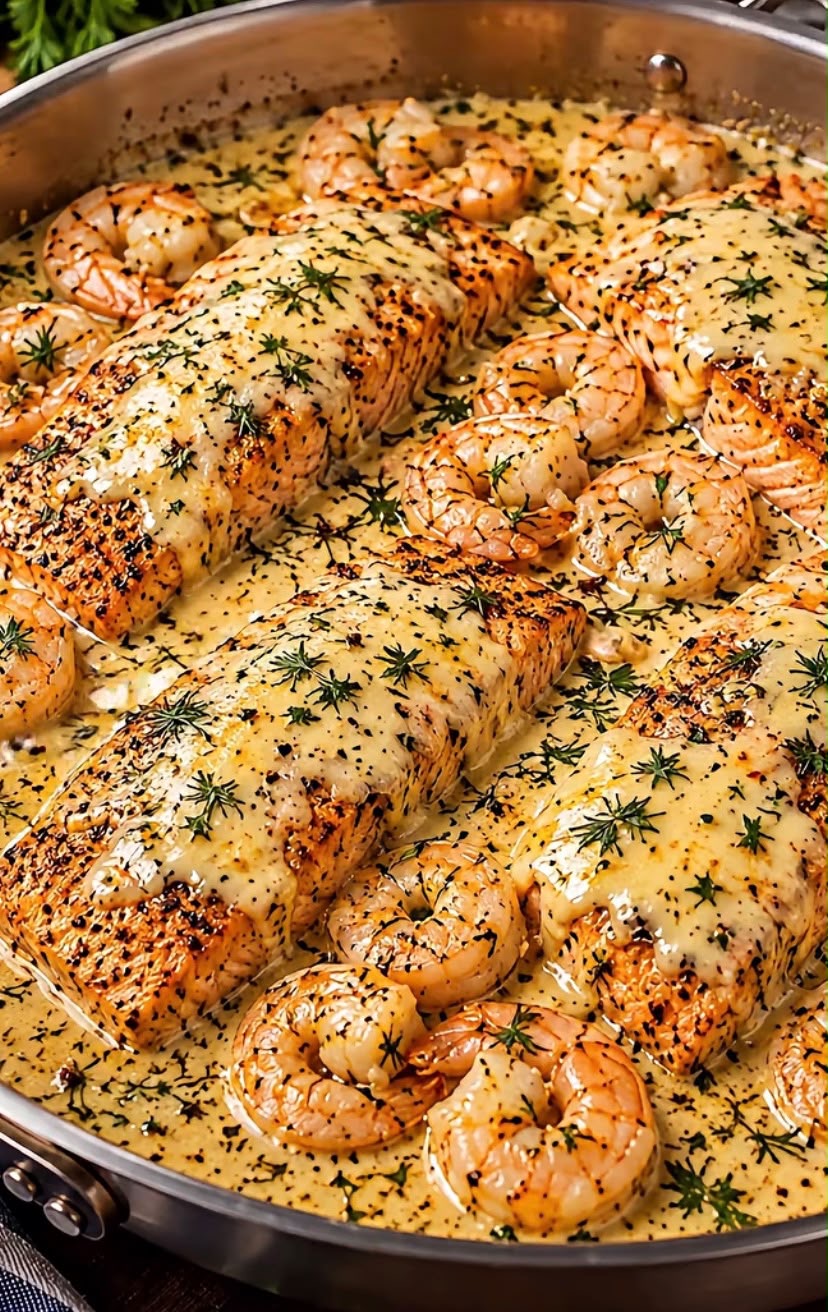
This Creamy Garlic Thyme Salmon and Shrimp recipe is a delicious, restaurant-quality seafood dinner made with tender salmon fillets, juicy shrimp, and a rich garlic Parmesan cream sauce. Fresh thyme, lemon juice, and fragrant garlic bring out the natural flavors of the seafood, creating a comforting dish that feels both elegant and easy to prepare.
Everything comes together in one skillet, making this recipe perfect for a special dinner, a cozy family meal, or an impressive weekend dish. Serve it over rice, toss it with pasta, or pair it with steamed vegetables to enjoy every drop of the creamy garlic sauce.
Recipe Overview
| Detail | Information |
| Preparation Time | 10 minutes |
| Cooking Time | 20 minutes |
| Total Time | 30 minutes |
| Servings | 4 |
| Course | Main Course |
| Cuisine | Seafood / Mediterranean-inspired |
| Cooking Method | Pan-seared |
| Difficulty | Easy to Intermediate |
Why You’ll Love This Recipe
Rich and Creamy Sauce: Heavy cream, Parmesan cheese, garlic, and butter create a smooth, savory sauce that perfectly complements the salmon and shrimp.
Tender, Flavorful Seafood: Pan-searing gives the salmon a beautiful golden crust while keeping the inside moist. The shrimp cook quickly and become juicy and tender.
Fresh Herb Flavor: Fresh thyme adds an aromatic, earthy note, while lemon juice balances the richness of the cream.
One-Pan Convenience: The salmon, shrimp, and sauce are prepared in the same skillet, making cleanup simple and allowing the sauce to absorb all the delicious flavors left behind by the seafood.
Perfect for Special Occasions: This elegant seafood dinner looks impressive without requiring complicated cooking techniques or hard-to-find ingredients.
Ingredients
For the Salmon and Shrimp
| Ingredient | Quantity |
| Salmon fillets, skin on or off | 4 |
| Large shrimp, peeled and deveined | 250 g (about 9 oz) |
| Olive oil | 2 tablespoons, divided |
| Butter | 2 tablespoons, divided |
| Paprika | 1 teaspoon |
| Garlic powder | 1 teaspoon |
| Salt | To taste |
| Freshly ground black pepper | To taste |
For the Creamy Garlic Sauce
| Ingredient | Quantity |
| Garlic cloves, minced | 4 |
| Heavy cream | 250 ml (about 1 cup) |
| Vegetable or fish broth, or dry white wine | 60 ml (¼ cup) |
| Grated Parmesan cheese | 50 g (about ½ cup) |
| Fresh lemon juice | 1 tablespoon |
| Fresh thyme leaves | 3–4 sprigs |
| Fresh parsley, chopped | 1–2 tablespoons, for garnish |
Ingredient note: Use freshly grated Parmesan for the smoothest sauce. If using salted broth or Parmesan, taste the sauce before adding extra salt.
Step-by-Step Instructions
Step 1: Prepare and Season the Seafood
Pat the salmon fillets and shrimp dry with paper towels. Removing excess moisture helps the seafood develop a golden crust instead of steaming in the pan.
Season the salmon on both sides with salt, black pepper, paprika, and garlic powder.
Season the shrimp lightly with the same mixture, adjusting the seasoning to your taste.
Set the seafood aside while you prepare the skillet.
Step 2: Sear the Salmon
Heat 1 tablespoon of olive oil and 1 tablespoon of butter in a large, heavy-bottomed skillet over medium-high heat.
Once the butter has melted and the pan is hot, place the salmon fillets in the skillet. If using skin-on salmon, start with the skin side down.
Cook for approximately 3–4 minutes per side, depending on the thickness of the fillets. The salmon should develop a golden exterior and release easily from the pan when ready to turn.
Transfer the salmon to a clean plate. It will finish cooking when returned to the sauce later.
Step 3: Cook the Shrimp
Add the shrimp to the same skillet and cook for approximately 2–3 minutes total, turning halfway through.
The shrimp should turn pink and opaque. Avoid overcooking, as they will become tough and rubbery.
Transfer the cooked shrimp to the plate with the salmon.
Step 4: Sauté the Garlic
Reduce the heat to medium and add the remaining tablespoon of butter to the skillet.
Add the minced garlic and cook for about 30–60 seconds, stirring frequently until fragrant.
Avoid browning the garlic too much, as burnt garlic can make the sauce bitter.
Step 5: Deglaze the Pan
Pour the vegetable broth, fish broth, or dry white wine into the skillet.
Use a wooden spoon to scrape up the flavorful browned bits from the bottom of the pan. Let the liquid simmer for approximately 2 minutes to reduce slightly.
This step adds depth to the creamy sauce and helps bring together the flavors of the salmon, shrimp, and seasonings.
Step 6: Make the Creamy Garlic Thyme Sauce
Reduce the heat to medium-low and pour in the heavy cream.
Add the lemon juice, half of the fresh thyme leaves, and grated Parmesan cheese. Stir gently until the cheese melts into the cream.
Allow the sauce to simmer gently for 3–5 minutes, stirring occasionally, until it thickens slightly.
Keep the heat low enough to prevent the cream from boiling vigorously. If the sauce becomes too thick, add a small splash of broth.
Taste and adjust the seasoning with salt and black pepper as needed.
Step 7: Return the Seafood to the Skillet
Carefully return the salmon fillets and shrimp to the skillet, nestling them into the creamy garlic sauce.
Spoon the sauce over the seafood so the tops are coated.
Simmer gently for approximately 2 minutes, or until the salmon is fully cooked and the shrimp are heated through. The salmon should reach an internal temperature of 145°F (63°C) at its thickest part.
Avoid stirring aggressively, as the salmon fillets can break apart.
Step 8: Garnish and Serve
Remove the skillet from the heat and sprinkle the remaining fresh thyme and chopped parsley over the seafood.
Serve immediately while the sauce is warm and creamy.
Pair the salmon and shrimp with basmati rice, fresh pasta, mashed potatoes, or steamed vegetables for a complete and satisfying meal.
Best Tips for Perfect Creamy Salmon and Shrimp
Pat the Seafood Dry: Removing excess moisture is essential for achieving a golden crust and preventing the seafood from releasing too much water into the pan.
Choose Similar-Sized Salmon Fillets: Fillets of similar thickness cook more evenly and make timing easier.
Avoid Overcooking the Shrimp: Shrimp cook quickly. Remove them as soon as they become pink and opaque, then return them to the sauce at the end.
Use Fresh Garlic: Freshly minced garlic provides a stronger, more aromatic flavor than garlic powder alone.
Keep the Sauce at a Gentle Simmer: High heat can cause cream sauces to separate or become greasy. Gentle heat helps create a smooth consistency.
Add Parmesan Gradually: Stir the cheese into the warm cream in small amounts to help it melt evenly.
Balance the Richness with Lemon: A little fresh lemon juice brightens the sauce and complements the natural flavor of the seafood.
Serve Immediately: Cream sauces are at their best when freshly prepared. If the sauce thickens while standing, loosen it with a small splash of warm broth.
Best Ingredient Options
Salmon: Fresh or thawed frozen salmon fillets both work well. Choose center-cut fillets of similar thickness for more consistent cooking.
Shrimp: Large or jumbo shrimp are ideal because they remain substantial in the creamy sauce. Fresh or frozen peeled shrimp can be used, provided frozen shrimp are fully thawed and patted dry.
Heavy Cream: Heavy cream creates a rich, velvety sauce. Cooking cream can also work, although the consistency may vary by brand.
Parmesan Cheese: Freshly grated Parmesan provides a savory, slightly nutty flavor. Pecorino Romano can be substituted, but it is saltier.
Fresh Thyme: Fresh thyme gives the sauce a fragrant herbal flavor. If using dried thyme, start with approximately ½ teaspoon.
Broth: Fish broth gives the sauce a seafood-forward flavor, while vegetable broth provides a milder alternative. Low-sodium broth makes seasoning easier to control.
White Wine: Dry white wine adds acidity and depth. If you prefer not to use wine, replace it with vegetable or fish broth.
Recipe Variations
Creamy Lemon Garlic Salmon: Add extra lemon zest and a little more lemon juice for a brighter, citrus-forward sauce.
Spicy Garlic Salmon and Shrimp: Add a pinch of red pepper flakes or cayenne pepper when sautéing the garlic.
Spinach and Garlic Cream Sauce: Stir in a handful of fresh spinach after adding the cream and cook until wilted.
Sun-Dried Tomato Seafood: Add chopped sun-dried tomatoes to the garlic before pouring in the broth for a sweet, tangy flavor.
Mushroom Cream Sauce: Sauté sliced mushrooms after removing the seafood, then prepare the sauce in the same skillet.
Dairy-Lighter Version: Use a suitable light cooking cream, understanding that the sauce may be thinner and less rich. Avoid boiling it vigorously.
Herb Variation: Replace some of the thyme with fresh dill or parsley for a different flavor profile that works beautifully with salmon.
What to Serve With Creamy Garlic Salmon and Shrimp
Basmati Rice: Fluffy rice absorbs the creamy garlic sauce and makes the dish especially satisfying.
Fresh Pasta: Linguine, fettuccine, or spaghetti pairs beautifully with the sauce. Toss the pasta directly with a little of the cream sauce before serving.
Mashed Potatoes: Creamy mashed potatoes create a comforting side dish and soak up the buttery sauce.
Steamed Broccoli: Lightly steamed broccoli adds color, texture, and freshness without overpowering the seafood.
Roasted Asparagus: Roasted asparagus with olive oil and lemon complements the garlic, thyme, and Parmesan.
Garlic Bread: Crusty bread is perfect for scooping up any sauce left on the plate.
Fresh Green Salad: A simple salad with mixed greens, cucumber, and lemon vinaigrette helps balance the richness of the cream.
Make-Ahead Instructions
For the best texture, prepare this recipe shortly before serving because salmon and shrimp can become overcooked when reheated.
You can save time by preparing the ingredients in advance. Peel and devein the shrimp, mince the garlic, grate the Parmesan, remove the thyme leaves, and measure the broth and cream.
Store the prepared ingredients separately in the refrigerator. Keep raw seafood refrigerated at 40°F (4°C) or below and cook it promptly.
If you prepare the sauce ahead, refrigerate it separately and reheat gently in a skillet. Add the freshly cooked seafood near the end.
Storage Instructions
Refrigerator: Store leftover salmon and shrimp in an airtight container for up to 3 days at 40°F (4°C) or below.
Refrigerate leftovers within 2 hours of cooking. Store the seafood with some sauce to help prevent it from drying out.
Freezer: Freezing is possible, but the cream sauce may separate and the seafood may become softer after thawing. For the best quality, enjoy this recipe fresh or refrigerated.
If you choose to freeze leftovers, use a freezer-safe airtight container and aim to consume them within 1–2 months for better quality.
Reheating Instructions
Stovetop: Place the seafood and sauce in a skillet over low heat. Add a splash of broth or cream if needed, cover loosely, and warm gently until the center reaches 165°F (74°C). Turn the salmon carefully to avoid breaking it apart.
Microwave: Place a portion in a microwave-safe dish and cover loosely. Heat at medium power in 30-second intervals, stirring the sauce gently between intervals when possible.
Important Tip: Avoid high heat or prolonged reheating. Gentle warming helps preserve the texture of the seafood and reduces the risk of the cream sauce separating.
Freezing Instructions
For the best results, prepare the seafood fresh whenever possible.
If you need to freeze leftovers, allow them to cool promptly and place them in an airtight freezer-safe container with the sauce. Freeze in individual portions for easier thawing.
Thaw overnight in the refrigerator and reheat gently until the center reaches 165°F (74°C). The sauce may require a little extra broth or cream to restore its consistency.
Do not refreeze seafood that has already been thawed and reheated.
Common Mistakes to Avoid
Cooking the Seafood for Too Long: Salmon can become dry and shrimp can turn rubbery if overcooked. Sear them briefly and finish cooking gently in the sauce.
Burning the Garlic: Garlic cooks quickly. Keep stirring and reduce the heat if it begins to brown too rapidly.
Boiling the Cream Sauce: A vigorous boil can cause the sauce to separate. Maintain a gentle simmer instead.
Adding Too Much Salt: Parmesan and broth can both contain significant amounts of sodium. Taste the sauce before adding more salt.
Using Wet Seafood: Excess moisture prevents proper browning and can dilute the sauce. Pat the salmon and shrimp dry before seasoning.
Adding Cold Seafood Directly at the End: If the seafood has cooled significantly, it may need a little extra time to warm through. Reheat gently and check that it is fully cooked.
Skipping the Lemon Juice: The sauce can taste heavy without a touch of acidity. Add fresh lemon juice to brighten the flavor.
Nutrition Estimate
The following values are approximate and depend on the size of the salmon fillets, the type of cream, and the amount of sauce consumed.
| Nutrient | Estimated Amount per Serving |
| Calories | 550–700 kcal |
| Protein | 40–50 g |
| Carbohydrates | 5–10 g |
| Fat | 38–50 g |
| Saturated Fat | 16–24 g |
| Fiber | 0–1 g |
| Sugar | 2–4 g |
| Sodium | 500–900 mg |
These estimates are for one of four servings and do not include rice, pasta, or other side dishes.
Frequently Asked Questions
Can I use frozen salmon and shrimp?
Yes. Thaw both completely in the refrigerator before cooking. Pat them dry with paper towels to remove excess moisture and help them brown properly.
Can I make this recipe without Parmesan cheese?
Yes. You can omit Parmesan or replace it with another hard cheese that melts well. The sauce will have a milder flavor and may be slightly thinner.
Can I use milk instead of heavy cream?
Milk can be used, but the sauce will be thinner and less rich. For a thicker consistency, you may need a small amount of cornstarch mixed with cold broth or milk before adding it to the sauce.
How do I know when salmon is fully cooked?
The most reliable method is to use a food thermometer. The thickest part should reach 145°F (63°C). The flesh should also appear opaque and separate easily with a fork.
How do I know when shrimp are cooked?
Shrimp should turn pink and opaque throughout. They generally cook in just a few minutes, depending on their size. Avoid leaving them in the pan longer than necessary.
Can I make the sauce without white wine?
Absolutely. Vegetable broth or fish broth works perfectly and keeps the sauce flavorful without wine.
Can I use dried thyme instead of fresh thyme?
Yes. Use approximately ½ teaspoon of dried thyme in place of 3–4 fresh sprigs, then adjust according to taste.
What is the best side dish for creamy garlic salmon and shrimp?
Basmati rice, linguine, mashed potatoes, roasted asparagus, and steamed broccoli are all excellent options. Choose a side that complements the rich sauce without overpowering the seafood.
Can I prepare this dish ahead of time?
You can prepare and measure the ingredients in advance, but cooking the seafood just before serving gives the best results. Reheating may soften the salmon and shrimp.
Can I use a different fish?
Yes. Firm white fish such as cod or haddock can work, although cooking times will vary depending on thickness. Check the internal temperature and avoid overcooking.
Final Thoughts
This Creamy Garlic Thyme Salmon and Shrimp recipe is an easy way to create an elegant seafood dinner at home. Tender salmon, juicy shrimp, fragrant garlic, fresh thyme, and a velvety Parmesan cream sauce come together in one skillet for a meal that feels special without requiring complicated preparation.
Serve it with basmati rice, fresh pasta, or roasted vegetables to make the most of the delicious sauce. With a few simple ingredients and careful cooking, you can prepare a flavorful dinner that is perfect for family meals, date nights, or weekend entertaining.
Save this recipe for your next seafood night, and enjoy every bite of this creamy, garlicky goodness!