
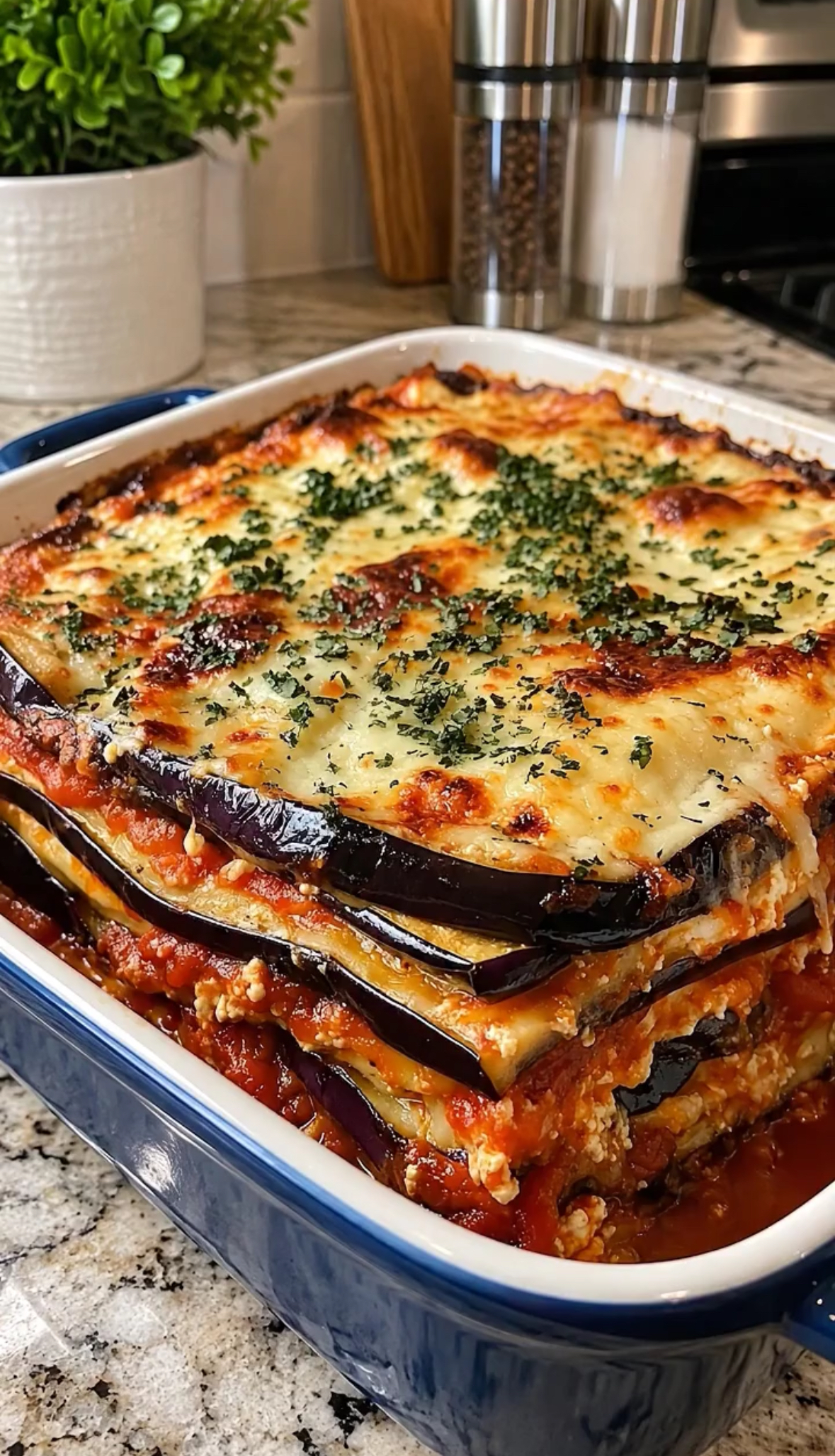
This Classic Layered Eggplant Parmesan is a delicious, comforting casserole made with tender roasted eggplant, rich homemade tomato sauce, creamy ricotta, and layers of melted mozzarella and Parmesan cheese. It delivers all the cozy flavors of traditional lasagna without using pasta sheets.
Perfect for family dinners, weekend meals, or a make-ahead vegetarian dinner, this oven-baked eggplant casserole is hearty, flavorful, and wonderfully cheesy. Each slice features tender vegetables, savory tomato sauce, and a golden, bubbly cheese topping.
Recipe Overview
| Detail | Information |
| Preparation Time | 35 minutes |
| Eggplant Roasting Time | 15–20 minutes |
| Sauce Preparation Time | 20 minutes |
| Baking Time | 40–45 minutes |
| Resting Time | 15–20 minutes |
| Total Time | Approximately 2 hours |
| Servings | 6–8 |
| Course | Main Course |
| Cuisine | Italian-Inspired |
| Cooking Method | Oven-Baked |
| Difficulty | Moderate |
Why You’ll Love This Recipe
This eggplant Parmesan casserole combines simple ingredients to create a satisfying meal packed with Italian-inspired flavors.
Roasting the eggplant before assembling the casserole gives it a tender texture while helping remove excess moisture.
The homemade tomato sauce adds a rich, savory flavor that pairs beautifully with creamy ricotta and melted mozzarella.
Unlike traditional lasagna, this recipe uses roasted eggplant instead of pasta sheets, making it a delicious alternative for anyone looking to enjoy a vegetable-based casserole.
It is also easy to prepare ahead of time, making it an excellent choice for busy weeknights, family gatherings, and meal preparation.
Ingredients
For the Eggplant Layers
| Ingredient | Quantity |
| Large eggplants | 3 |
| Olive oil | 2 tablespoons |
| Salt | 1 teaspoon, for drawing out moisture |
For the Homemade Tomato Sauce
| Ingredient | Quantity |
| Olive oil | 1 tablespoon |
| Medium onion, finely chopped | 1 |
| Garlic cloves, minced | 3 |
| Crushed tomatoes | 2 cans, 28 oz each (approximately 800 g total, depending on the product size) |
| Dried oregano | 1 teaspoon |
| Dried basil | 1 teaspoon |
| Salt | To taste |
| Black pepper | To taste |
For the Ricotta Cheese Filling
| Ingredient | Quantity |
| Ricotta cheese | 15 oz (425 g) |
| Large egg | 1 |
| Grated Parmesan cheese | 1/2 cup |
| Fresh parsley, finely chopped | 2 tablespoons |
| Salt | A pinch |
| Black pepper | A pinch |
For Layering and Topping
| Ingredient | Quantity |
| Shredded mozzarella cheese | 3 cups (approximately 300 g) |
| Extra grated Parmesan | Optional, for the top |
| Fresh parsley or basil | For garnish |
Step-by-Step Instructions
Step 1: Prepare the Eggplant
Wash the eggplants thoroughly and trim off the stems. Slice them lengthwise into planks approximately 1/4 inch (0.5 cm) thick.
Arrange the slices on paper towels or a clean kitchen towel. Sprinkle them with salt and let them rest for 20–30 minutes. This helps draw out excess moisture and may reduce bitterness.
Pat the eggplant slices thoroughly dry with paper towels to remove the released moisture and excess salt.
Preheat your oven to 400°F (200°C). Arrange the slices in a single layer on parchment-lined baking sheets and brush them lightly with olive oil.
Roast for 15–20 minutes, turning if needed, until the eggplant is tender and lightly golden. Avoid overcrowding the baking sheets so the slices roast evenly.
Remove from the oven and set aside.
Step 2: Make the Tomato Sauce
Heat 1 tablespoon of olive oil in a saucepan over medium heat.
Add the chopped onion and cook for approximately 5 minutes, stirring occasionally, until softened and translucent.
Stir in the minced garlic, dried oregano, dried basil, salt, and black pepper. Cook for about 1 minute until fragrant.
Add the crushed tomatoes and stir well to combine.
Bring the sauce to a gentle simmer and cook uncovered for approximately 15 minutes, stirring occasionally. The sauce should become slightly thicker and develop a rich tomato flavor.
Taste and adjust the seasoning as needed. Remove from the heat.
Step 3: Prepare the Ricotta Filling
In a medium mixing bowl, combine the ricotta cheese, 1 large egg, 1/2 cup grated Parmesan, chopped parsley, and a small pinch of salt and black pepper.
Mix until the ingredients are evenly incorporated and the filling is creamy.
The egg helps bind the ricotta mixture during baking, allowing the finished casserole to hold together more easily when sliced.
Step 4: Assemble the Eggplant Parmesan
Reduce the oven temperature to 375°F (190°C).
Spread approximately 1 cup of tomato sauce across the bottom of a deep 9 × 13-inch baking dish.
Arrange a single layer of roasted eggplant slices over the sauce, covering as much of the surface as possible.
Spread a portion of the ricotta mixture over the eggplant. Add another layer of tomato sauce, followed by a generous sprinkle of shredded mozzarella.
Repeat the layers of roasted eggplant, ricotta mixture, tomato sauce, and mozzarella until all the ingredients have been used.
Finish with tomato sauce, the remaining mozzarella, and a little extra grated Parmesan if desired.
Make sure the top layer is evenly covered with cheese for a golden, bubbly finish.
Step 5: Bake Until Golden and Bubbly
Cover the baking dish loosely with aluminum foil and bake at 375°F (190°C) for 25 minutes.
Carefully remove the foil and continue baking for another 15–20 minutes, until the cheese is fully melted, bubbling around the edges, and golden brown on top.
If you prefer a deeper golden crust, broil for 1–2 minutes at the end, watching closely to prevent burning.
The casserole is ready when it is heated through and the cheese topping looks beautifully melted.
Step 6: Rest, Garnish, and Serve
Remove the casserole from the oven and let it rest for 15–20 minutes before cutting.
This resting period allows the cheese and sauce to settle, helping the layers hold their shape when served.
Sprinkle with freshly chopped parsley or basil just before serving.
Cut into generous squares and serve warm with garlic bread, a crisp green salad, or roasted vegetables.
Best Tips for Perfect Eggplant Parmesan
Slice the eggplant evenly. Uniform slices cook at a similar rate and make the casserole easier to layer.
Remove excess moisture. Salting, drying, and roasting the eggplant helps prevent a watery casserole.
Use a thick tomato sauce. A sauce that is too thin can make the layers loose. Simmer it longer if necessary to reduce excess liquid.
Avoid too much sauce between layers. Use enough to add flavor without drowning the eggplant and ricotta.
Choose good-quality cheese. Whole-milk ricotta and freshly shredded mozzarella provide a creamy texture and excellent melting quality.
Allow enough resting time. Cutting the casserole immediately after baking can cause the layers to slide apart.
Season each component carefully. Taste the sauce before assembling, remembering that Parmesan already contributes saltiness.
Best Ingredient Options
Eggplant: Choose firm, glossy eggplants with smooth skin and no soft spots. Medium-to-large eggplants work well for slicing into layers.
Tomatoes: Canned crushed tomatoes are convenient and reliable. Passata or a good-quality prepared marinara sauce can also be used.
Ricotta: Whole-milk ricotta produces a rich, creamy filling. If it seems watery, drain it in a fine-mesh strainer before mixing.
Mozzarella: Low-moisture mozzarella is ideal for a less watery casserole, while fresh mozzarella provides a softer, creamier texture if drained thoroughly.
Parmesan: Freshly grated Parmesan adds a savory, nutty flavor. Grana Padano is another suitable option.
Fresh herbs: Basil provides a classic Italian flavor, while parsley adds freshness and color.
Recipe Variations
Extra Vegetable Eggplant Parmesan: Add layers of sautéed mushrooms, zucchini, or spinach for extra vegetables and flavor.
Spicy Eggplant Parmesan: Add red pepper flakes to the tomato sauce for a gentle kick of heat.
Extra Cheesy Version: Add a little provolone or another good melting cheese between the layers.
Gluten-Free Eggplant Parmesan: This recipe is naturally suitable for a gluten-free approach when all packaged ingredients, including the sauce and cheese, are verified gluten-free.
Vegan Eggplant Parmesan: Replace the ricotta with a plant-based ricotta alternative, omit the egg or use a suitable vegan binder, and use dairy-free mozzarella and Parmesan alternatives.
Herb-Rich Version: Add fresh basil between the layers and a little chopped parsley to the ricotta mixture for a brighter flavor.
What to Serve With Eggplant Parmesan
Garlic bread: Crisp garlic bread is perfect for soaking up the rich tomato sauce.
Fresh green salad: Lettuce, cucumber, cherry tomatoes, and a light vinaigrette provide a refreshing contrast to the cheesy casserole.
Roasted vegetables: Roasted broccoli, zucchini, carrots, or bell peppers make a colorful side dish.
Rice or quinoa: A small serving of rice or quinoa can make the meal more substantial.
Italian-style soup: A light vegetable soup or minestrone works well as a starter for a comforting Italian-inspired dinner.
Make-Ahead Instructions
You can prepare the tomato sauce and roast the eggplant up to 2 days in advance. Store each component separately in airtight containers in the refrigerator.
You can also assemble the casserole a day ahead, cover it tightly, and refrigerate it until ready to bake.
For the best results, let a cold casserole sit at room temperature for about 20–30 minutes while the oven preheats, provided it remains within safe food-handling limits. You may need to add extra baking time if it is still cold in the center.
Avoid leaving the assembled casserole at room temperature for more than 2 hours.
Storage Instructions
Allow leftover eggplant Parmesan to cool slightly before transferring it to an airtight container.
Refrigerator: Store for 3–4 days at 40°F (4°C) or below.
Freezer: Freeze individual portions or the entire casserole in freezer-safe containers for up to 3 months for best quality.
For freezing an assembled but unbaked casserole, use a freezer-safe dish and wrap it securely to protect against freezer burn. Thaw in the refrigerator before baking when possible.
Label containers with the preparation date so you can keep track of freshness.
Reheating Instructions
Oven: Preheat to 350°F (175°C). Place a portion in an oven-safe dish, cover loosely with foil, and heat for approximately 15–25 minutes, depending on its size. Remove the foil near the end if you want to refresh the cheese topping.
Microwave: Place an individual serving on a microwave-safe plate and cover loosely. Heat in 60–90-second intervals until thoroughly hot, adjusting the time to the portion size and microwave power.
From Frozen: For best results, thaw overnight in the refrigerator before reheating. Heat in the oven until the center reaches 165°F (74°C).
Avoid reheating the same portion repeatedly, as this can affect its texture and quality.
Freezing Instructions
Eggplant Parmesan freezes well, making it a convenient meal-prep option.
For baked portions, allow the casserole to cool, cut it into individual servings, and wrap each portion securely before placing it in a freezer-safe container.
For an entire casserole, use a freezer-safe baking dish and cover it tightly with a suitable lid or several layers of freezer-safe wrapping.
Freeze for up to 3 months for best quality. Thaw in the refrigerator before reheating.
The texture of the eggplant may become slightly softer after freezing and thawing, but the tomato sauce and melted cheese help maintain the casserole’s flavor.
Common Mistakes to Avoid
Skipping the drying step: Excess moisture can make the casserole watery. Always pat the eggplant dry after salting.
Using under-roasted eggplant: Eggplant that has not softened sufficiently may remain firm after baking. Roast until tender before assembling.
Making the sauce too thin: A watery sauce can cause the layers to slide apart. Simmer the sauce until slightly thickened.
Adding too much filling: Thick layers of ricotta can make the casserole difficult to slice. Spread the mixture evenly.
Overloading the dish with cheese: Although cheese is essential to the flavor, excessive amounts can make the casserole greasy and heavy.
Cutting it too soon: Resting the casserole for 15–20 minutes helps the layers set and makes serving easier.
Overbaking the cheese: Keep an eye on the uncovered casserole during the final baking stage to prevent the top from becoming too dark.
Nutrition Estimate
The following values are approximate and will vary depending on the brands used, the amount of oil absorbed by the eggplant, and the final portion size.
| Nutrient | Estimated Amount per Serving |
| Calories | 350–450 kcal |
| Protein | 20–25 g |
| Carbohydrates | 20–30 g |
| Fat | 20–28 g |
| Saturated Fat | 8–12 g |
| Fiber | 5–8 g |
| Sugar | 8–12 g |
| Sodium | 600–900 mg |
These estimates assume approximately 8 servings. Actual nutrition values may vary considerably with ingredient quantities and serving sizes.
Frequently Asked Questions
1. Do I need to peel the eggplant?
No. The skin is edible and helps the slices maintain their shape. If the eggplant has particularly tough skin, you can peel it partially or completely.
2. Why is my eggplant Parmesan watery?
Excess moisture can come from the eggplant, ricotta, fresh mozzarella, or a thin tomato sauce. Salt and dry the eggplant, drain watery cheese, and simmer the sauce until thickened.
3. Can I use store-bought marinara sauce?
Yes. A good-quality marinara sauce saves time and works well in this recipe. Choose a thick sauce and adjust the herbs and seasoning to taste.
4. Can I prepare eggplant Parmesan without frying?
Absolutely. Roasting the eggplant with a light coating of olive oil is a convenient alternative to frying and reduces the amount of oil needed.
5. How do I know when the casserole is ready?
The cheese should be melted and golden, the sauce should bubble around the edges, and the center should be thoroughly hot. The eggplant should be tender when pierced with a knife.
6. Can I make this recipe ahead of time?
Yes. Prepare the components in advance or assemble the casserole and refrigerate it for up to 24 hours before baking.
7. Can I make eggplant Parmesan gluten-free?
Yes. The recipe contains no required flour or breadcrumbs. Check the labels of packaged sauces and cheeses to ensure they meet your dietary requirements.
8. What is the difference between eggplant Parmesan and eggplant lasagna?
Eggplant Parmesan traditionally features eggplant, tomato sauce, and cheese, often in simpler layers. Eggplant lasagna usually uses more distinct layers and may include a ricotta filling, as in this recipe. The names are sometimes used interchangeably.
9. Can I freeze leftover eggplant Parmesan?
Yes. Freeze individual portions in airtight, freezer-safe containers for up to 3 months for best quality. Thaw in the refrigerator before reheating.
10. What can I use instead of ricotta cheese?
Cottage cheese blended until smooth is a practical substitute. Mascarpone can also work, although it produces a richer filling.
Final Thoughts
Classic Layered Eggplant Parmesan is a comforting, cheesy, and flavorful dish that brings together tender roasted eggplant, homemade tomato sauce, creamy ricotta, and golden mozzarella.
With simple preparation steps and ingredients that are easy to find, this casserole is ideal for family dinners, vegetarian meals, and make-ahead cooking.
Serve it with fresh salad and warm garlic bread for a satisfying meal, and enjoy the delicious layers of Italian-inspired comfort in every bite.
⚠️ This recipe may not be suitable for everyone, so it is advisable to consult a doctor if you have specific dietary restrictions or health concerns.