
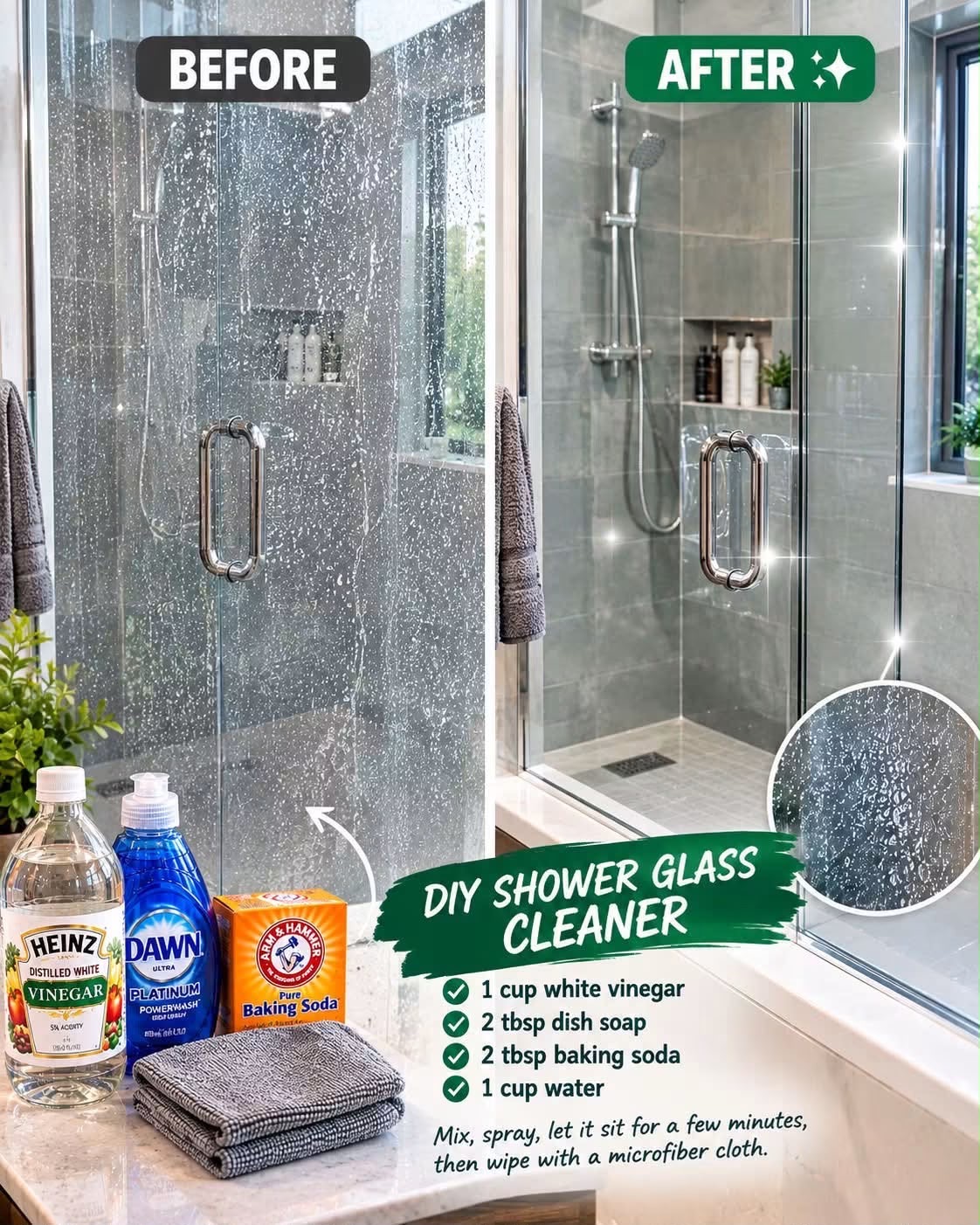
Are soap scum, water spots, and cloudy streaks making your shower glass look dull? This homemade shower glass cleaner offers a simple way to tackle everyday residue using common household ingredients.
With white vinegar, dish soap, and water, you can prepare a budget-friendly cleaner to help loosen soap residue and improve the appearance of glass shower doors. However, hard-water deposits can be stubborn and may require a suitable specialist cleaner.
Before getting started, there is one important adjustment to the original recipe: vinegar and baking soda react with each other, reducing the vinegar’s acidity. For that reason, they are best used separately rather than combined in one cleaning solution.
Recipe Overview
| Detail | Information |
| Preparation Time | 5 minutes |
| Cleaning Time | 5–10 minutes |
| Total Time | Approximately 10–15 minutes |
| Yield | Approximately 1 cup or more, depending on the mixture |
| Difficulty | Easy |
| Best For | Everyday soap residue and light water spots |
| Surface | Compatible glass shower doors |
Why You’ll Love This Homemade Shower Glass Cleaner
This DIY cleaner is easy to prepare and uses ingredients commonly found in the kitchen or laundry area.
White vinegar can help dissolve certain mineral deposits, while dish soap helps loosen oily residue and soap scum from glass surfaces.
The ingredients are inexpensive, making this a practical option for regular shower maintenance.
With a microfiber cloth and a little patience, you can remove everyday grime and help your shower doors look clearer without relying on heavily fragranced products.
Keep in mind that this recipe is intended for suitable glass surfaces. It is not appropriate for every shower finish, especially natural stone surrounding the glass.
Ingredients
For the Homemade Shower Glass Cleaner
| Ingredient | Quantity | Purpose |
| White vinegar | 1 cup | Helps dissolve some mineral deposits |
| Dish soap | 1–2 teaspoons | Helps loosen greasy soap residue |
| Water | 1 cup | Dilutes the vinegar |
Important: The original recipe includes 2 tablespoons of baking soda. For better cleaning performance, leave it out of the vinegar solution. Mixing baking soda and vinegar causes a reaction that neutralizes much of the vinegar’s acidity and releases carbon dioxide gas.
Equipment Needed
A clean spray bottle labeled for household cleaning is useful, along with a microfiber cloth or a non-scratch sponge.
A squeegee can also help remove water from the glass after cleaning.
Step-by-Step Instructions
Step 1: Prepare the Cleaning Solution
In a clean container, combine 1 cup of white vinegar with 1 cup of water.
Add 1–2 teaspoons of dish soap and stir gently to avoid creating excessive foam.
If you prefer to use a spray bottle, pour the solution into it carefully and label the bottle clearly.
Do not add baking soda to this vinegar mixture.
Step 2: Test the Surface
Before cleaning the entire shower, test a small, inconspicuous area of glass.
Make sure the vinegar solution will not contact surrounding marble, limestone, travertine, natural stone, or other acid-sensitive finishes.
Vinegar can etch or damage these materials. If the glass has a special protective coating, consult the manufacturer’s cleaning instructions before using vinegar.
Step 3: Apply the Cleaner
Spray a light, even layer of the solution onto the shower glass.
Work in manageable sections so that the solution does not dry before you wipe it away.
Avoid spraying directly onto metal fittings, natural stone, or other surfaces that may be damaged by acidic cleaners.
Step 4: Let It Work
Allow the solution to sit for approximately 2–5 minutes on compatible glass.
This gives the dish soap time to loosen surface residue and allows the diluted vinegar to act on light mineral deposits.
Do not allow the solution to dry on the glass. Follow the manufacturer’s recommendations if the shower has a protective coating.
Step 5: Wipe the Glass
Using a clean microfiber cloth or a non-scratch sponge, wipe the glass from top to bottom.
Pay extra attention to areas around handles, corners, and the bottom of the shower door, where soap residue often accumulates.
For stubborn deposits, repeat the process or use a glass-safe limescale remover according to its label directions.
Step 6: Rinse and Dry
Rinse the glass thoroughly with clean water to remove all traces of the cleaning solution.
Use a squeegee to remove excess water, working from the top downward.
Finish by drying the edges and corners with a clean microfiber cloth. This helps minimize streaks and water spots.
Best Tips for Sparkling Shower Glass
Use a microfiber cloth. A clean, lint-free cloth helps remove residue without scratching suitable glass surfaces.
Clean regularly. Frequent light cleaning is usually easier than removing weeks of accumulated soap scum.
Use a squeegee after showering. Removing excess water after each shower can help reduce water spots and mineral buildup.
Avoid excessive dish soap. Too much soap can leave a film that makes the glass look cloudy.
Treat heavy limescale separately. Persistent mineral deposits may require a dedicated cleaner specifically labeled as safe for shower glass.
Improve ventilation. Good airflow helps the shower dry faster and reduces persistent moisture.
Best Ingredient Options
White vinegar: Standard white vinegar is useful for certain mineral deposits on compatible surfaces. Avoid using it on natural stone or any finish whose manufacturer prohibits acidic cleaners.
Dish soap: A small amount of ordinary dishwashing liquid helps loosen oily residue and soap scum. Too much may cause streaking.
Water: Diluting the vinegar helps make the solution less concentrated. Use clean water for preparation and rinsing.
Microfiber cloth: This is a practical choice for removing residue and polishing the glass without abrasive scrubbing.
Cleaning Variations
For Everyday Soap Scum
Mix water with a small amount of dish soap. Apply it to compatible glass, wipe gently, and rinse thoroughly.
For Light Water Spots
Use the diluted vinegar solution on compatible glass, allow it to work briefly, and wipe clean. Rinse and dry the surface completely.
For Stubborn Hard-Water Deposits
Choose a commercial limescale remover that specifically states it is safe for shower glass and any surrounding materials. Follow the product label carefully.
For a Quick Daily Glass Cleaner
Use a small amount of dish soap diluted in water for light surface residue. Rinse thoroughly and use a squeegee to prevent streaks.
Common Mistakes to Avoid
Mixing vinegar and baking soda together: Their reaction reduces the vinegar’s acidity, making the mixture less useful for dissolving mineral deposits.
Using too much dish soap: Excess soap can leave a cloudy film and make the glass look streaky.
Leaving cleaner to dry: Dried residue can create additional marks. Clean one section at a time and rinse promptly.
Using vinegar on natural stone: Acidic cleaners can permanently damage marble, limestone, and other acid-sensitive surfaces.
Using abrasive scrubbers: Steel wool, rough scouring pads, and abrasive powders may scratch glass coatings or surrounding finishes.
Skipping the final rinse: Remaining cleaning solution can leave streaks and residue.
Mixing cleaning products: Never combine this solution with bleach, ammonia, or other cleaning chemicals. Rinse thoroughly before switching products.
Safety Precautions
Wear household cleaning gloves if you have sensitive skin, and keep the bathroom well ventilated.
Avoid spraying the solution near your eyes or breathing in the mist.
Keep the mixture away from children and pets, and store it in a clearly labeled container.
Never mix vinegar with bleach or bleach-containing products because this can release dangerous chlorine gas.
If your shower glass has a special protective coating, follow the manufacturer’s instructions before using homemade cleaners.
Frequently Asked Questions
1. Does vinegar remove hard-water stains from shower glass?
Vinegar can help dissolve some mineral deposits on compatible glass. Heavy or long-standing deposits may require a specialized glass-safe descaler.
2. Can I add baking soda to this recipe?
It is better not to add baking soda directly to the vinegar solution. The ingredients react with each other and reduce the acidity needed to dissolve mineral deposits.
3. How long should I leave the cleaner on the glass?
Start with 2–5 minutes on compatible glass. Do not allow the solution to dry, and follow the glass manufacturer’s cleaning instructions.
4. Can I use this cleaner every day?
A diluted dish-soap solution may be suitable for frequent cleaning. Avoid daily vinegar use unless the manufacturer confirms it is compatible with your glass and surrounding finishes.
5. Will this cleaner prevent future water spots?
It can remove some existing residue, but it will not permanently prevent new spots. Using a squeegee after each shower can help reduce water marks.
6. Can I use this solution on shower tiles?
It depends on the material. Vinegar may damage natural stone, some grout finishes, and certain metal surfaces. Check the manufacturer’s recommendations before applying it beyond the glass.
7. Why does my shower glass still look cloudy after cleaning?
Cloudiness may result from stubborn mineral deposits, damaged glass coatings, or etching. If the marks do not improve with suitable cleaning, the glass may need specialist treatment or assessment.
8. Can I store the homemade solution?
For simplicity, prepare small quantities as needed and label the container clearly. Do not store the mixture in a container that could be mistaken for a beverage.
Final Thoughts
This DIY shower glass cleaner is a simple option for tackling everyday soap residue and light water spots on compatible glass surfaces.
By combining diluted white vinegar with a small amount of dish soap, wiping gently, and rinsing thoroughly, you can maintain clearer shower doors with minimal effort.
For the best results, clean regularly, dry the glass after each shower, and use a surface-compatible descaler for stubborn mineral deposits.
A little routine maintenance can make shower glass easier to clean and help keep your bathroom looking fresh and bright.