
Introduction
If you love the look of smooth, hydrated, glowing skin, you may have seen the popular “glass skin” trend on social media. This beauty trend focuses on achieving a fresh, dewy complexion that looks soft, radiant, and well moisturized.
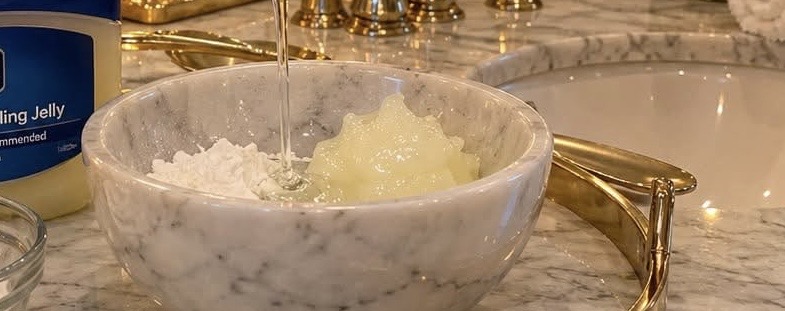
This DIY face mask combines petroleum jelly, baby oil, and cornstarch to create a creamy mixture for temporary skin softness and shine. The ingredients are simple, but it is important to understand their limitations and use them carefully.
Please note: This homemade mask has not been clinically proven to create glass skin, remove wrinkles, or treat acne. Petroleum jelly and mineral oil can help reduce moisture loss, but this mixture may not be suitable for every skin type.
Recipe Overview
| Detail | Information |
| Recipe Name | DIY Glass Skin Face Mask |
| Preparation Time | 5 minutes |
| Application Time | 15–20 minutes, if tolerated |
| Total Time | Approximately 25 minutes |
| Ingredients | 3 |
| Difficulty | Easy |
| Skin Care Goal | Temporary softness and a dewy appearance |
| Suitable For | Some skin types, depending on individual tolerance |
| Patch Test | Recommended before use |
Why You’ll Love This DIY Face Mask
This simple mixture uses three widely available ingredients and requires no complicated equipment. It may leave the skin feeling softer and looking temporarily shinier because of the oily ingredients.
Petroleum jelly acts as an occlusive, meaning it helps reduce water loss from the skin. Mineral oil, commonly found in baby oil, also helps soften the skin and limit moisture loss.
Cornstarch can thicken the mixture and alter its texture, although it does not provide the same moisturizing benefits as a properly formulated skincare product.
The key is to approach this recipe as an optional beauty experiment rather than a proven treatment for skin conditions.
Ingredients
| Ingredient | Quantity | Purpose |
| Plain petroleum jelly (Vaseline) | 1 tablespoon | Helps reduce moisture loss |
| Baby oil | 1 tablespoon | Adds slip and a smooth, oily finish |
| Cornstarch (Maizena) | 1 tablespoon | Thickens the mixture |
Important ingredient note: Choose plain, fragrance-free petroleum jelly and an appropriately formulated cosmetic product if you decide to experiment with this mixture. Baby oil may contain fragrance, which can irritate sensitive skin. Cornstarch is not a necessary ingredient in an effective moisturizer.
Step-by-Step Instructions
Step 1: Prepare a Clean Bowl
Wash your hands and use a clean, dry bowl and spoon. Keeping the preparation area clean helps reduce the risk of contaminating the mixture.
Step 2: Add the Petroleum Jelly
Place one tablespoon of petroleum jelly into the bowl. Because petroleum jelly is thick, allow it to soften slightly at room temperature if necessary. Do not microwave it or heat it directly.
Step 3: Add the Baby Oil
Add one tablespoon of baby oil and mix gently until the two ingredients are reasonably combined.
Step 4: Incorporate the Cornstarch
Add the cornstarch gradually while stirring. The mixture may become thicker, but it may also remain greasy or develop a powdery texture.
Do not add more ingredients simply to make the mixture resemble a commercial cream.
Step 5: Perform a Patch Test
Before applying anything to your face, test a small amount on a limited area of skin, following appropriate cosmetic patch-testing guidance. Do not apply it to broken, irritated, or inflamed skin.
Stop using the mixture if you experience itching, redness, swelling, burning, or discomfort.
Step 6: Consider a Small-Area Application
If the patch test causes no reaction, consider whether the mixture is appropriate for your skin type. For facial use, a commercially formulated, fragrance-free moisturizer is generally a more predictable choice.
If you nevertheless choose to try the mixture, use only a very small amount on a limited area, keep it away from your eyes and lips, and do not leave it on overnight.
Step 7: Remove Gently
If the mixture feels uncomfortable or excessively greasy, remove it with lukewarm water and a gentle cleanser. Avoid scrubbing or using harsh products to remove the oily residue.
There is no established evidence that leaving this DIY mixture on for 15–20 minutes provides additional benefits over using an appropriate moisturizer.
Best Tips for Better-Looking Skin
Apply moisturizer to slightly damp skin to help maintain hydration. Choose a fragrance-free product that matches your skin type and does not cause irritation.
Use a broad-spectrum sunscreen with SPF 30 or higher during the day to help protect your skin from ultraviolet damage.
Introduce new skincare products gradually instead of combining several unfamiliar ingredients at once. This makes it easier to identify the cause of a reaction.
Remember that a glossy appearance is not necessarily a sign of healthier skin. Long-term skin care should focus on comfort, hydration, sun protection, and maintaining the skin barrier.
Best Ingredient Options
| Original Ingredient | Alternative or Recommendation |
| Petroleum jelly | A fragrance-free moisturizer with glycerin or ceramides |
| Baby oil | A fragrance-free facial moisturizer suitable for your skin type |
| Cornstarch | Usually unnecessary in a facial moisturizer |
If you have oily or acne-prone skin, choose a lightweight moisturizer labeled non-comedogenic. If you have sensitive skin, avoid fragranced products and consider asking a dermatologist for personalized advice.
Recipe Variations
Simple Hydrating Routine
Instead of mixing several ingredients, cleanse your face gently and apply a fragrance-free moisturizer containing ingredients such as glycerin or ceramides. This approach is easier to control and may be better tolerated.
Dry-Skin Routine
People with very dry skin may benefit from a suitable moisturizer followed by a thin layer of plain petroleum jelly on particularly dry areas. Avoid applying it over products that irritate your skin.
Oily-Skin Routine
For oily or acne-prone skin, use a lightweight, non-comedogenic moisturizer rather than a thick mixture of petroleum jelly and oil over the entire face.
Sensitive-Skin Routine
Choose products with short, straightforward ingredient lists and no added fragrance. Avoid homemade mixtures if your skin is currently irritated or inflamed.
What to Use With This Skincare Routine
A gentle cleanser can help remove dirt, sweat, and sunscreen without excessively drying the skin.
A moisturizer containing glycerin, ceramides, or hyaluronic acid can help support skin hydration. During the daytime, finish with broad-spectrum sunscreen.
Avoid combining this homemade mixture with strong exfoliating acids, retinoids, or other potentially irritating treatments during the same routine unless a qualified professional has advised you on how to use them safely.
Make-Ahead Instructions
It is best to avoid making a large batch of this homemade mixture. Unlike commercial skincare products, it has not been tested for stability, compatibility, or preservation.
If you decide to prepare a small amount, use clean utensils and avoid introducing water into the mixture. Discard it if its appearance, smell, or texture changes.
A properly formulated commercial moisturizer is a safer choice for regular use.
Storage
Keep the ingredients in their original containers and follow their manufacturers’ storage instructions.
Do not assume that the homemade mixture has the same shelf life as its individual ingredients. Without appropriate stability and contamination testing, a reliable storage period cannot be established.
Reapplication
This mixture is not a proven treatment that needs to be reapplied on a schedule. If your skin feels dry, use a moisturizer formulated for facial skin according to its label.
Stop using any product that causes persistent redness, itching, burning, or new skin irritation.
Freezing
Do not freeze the mixture as a way to preserve it. Freezing does not establish that a homemade cosmetic is safe, stable, or suitable for facial application.
Common Mistakes to Avoid
Applying a thick layer can leave the skin excessively greasy and uncomfortable. More product does not necessarily mean better hydration.
Skipping the patch test increases the chance of an unexpected reaction going unnoticed until the product is applied over a larger area.
Using fragranced baby oil on sensitive skin may cause irritation. People with acne-prone skin may also find that a heavy mixture does not suit their routine.
Another common mistake is believing that an immediate shine means the mixture has removed wrinkles, reversed aging, or permanently changed the skin. Any visible effect is likely to be temporary.
Never apply this mixture inside the eyes, on the eyelids, or to broken skin. Do not use it as a treatment for eczema, acne, rosacea, or other skin conditions without appropriate professional guidance.
Estimated Skin Benefits
| Intended Benefit | What to Expect |
| Temporary softness | Possible |
| Reduced moisture loss | Possible, mainly from petroleum jelly and mineral oil |
| Dewy or shiny appearance | Possible |
| Permanent wrinkle reduction | Not established |
| Acne treatment | Not established |
| Removal of dark spots | Not established |
| Permanent glass-skin effect | Not established |
Results depend on the person’s skin type, the formulation, and individual tolerance.
Frequently Asked Questions
Does this mask really create glass skin?
It may temporarily make skin look shiny and feel softer, but there is no reliable clinical evidence that this particular three-ingredient mixture produces the lasting, smooth complexion promoted in social media videos.
Can I use this mask every day?
Daily use is not recommended because the mixture has not been tested as a facial skincare product. A properly formulated moisturizer is a better option for regular use.
Is petroleum jelly good for dry skin?
Plain petroleum jelly can help reduce water loss and protect dry skin. However, individual suitability varies, and a greasy product may not be comfortable for everyone.
Can this mask cause pimples?
It may not suit people with acne-prone skin, particularly because it combines heavy, oily ingredients. If you notice clogged pores, new breakouts, or irritation, discontinue use.
Can I leave the mask on overnight?
It is better not to leave this untested homemade mixture on overnight. Use a moisturizer specifically formulated and labeled for facial use instead.
Can I use baby oil on my face?
Some people tolerate cosmetic mineral oil, but baby oil may contain fragrance or other ingredients that irritate sensitive skin. Check the label and choose facial products appropriate for your skin type.
How long does it take to see results?
You may notice temporary softness or shine after using moisturizing ingredients, but there is no established timeline for this specific mixture and no evidence that it permanently transforms the skin.
Important Safety Warning ⚠️
This homemade mixture has not been clinically tested for facial safety or effectiveness. It may irritate sensitive skin or be unsuitable for people with acne-prone skin.
Always perform a small-area test before trying a new cosmetic mixture, and stop immediately if you experience burning, itching, redness, swelling, or discomfort. Do not apply it to broken or inflamed skin or near the eyes.
If you have a persistent skin condition, consult a dermatologist before experimenting with homemade skincare products.
This recipe is for informational purposes only and is not a substitute for professional dermatological advice.
Final Thoughts
The three-ingredient glass-skin mask is an example of a popular social media beauty trend, but its advertised benefits should be viewed cautiously. Petroleum jelly and mineral oil can help reduce moisture loss, yet adding baby oil and cornstarch does not automatically make a safe or effective facial treatment.
For a more reliable approach to hydrated, healthy-looking skin, use a gentle cleanser, a suitable moisturizer, and daily sun protection. Choose products according to your skin type instead of relying on viral beauty promises.