
Introduction
There is nothing quite like a warm bowl of homemade beef stew on a chilly evening. This Slow Cooker Beef Stew is packed with tender chunks of beef, hearty potatoes, sweet carrots, and a rich, savory broth infused with garlic, thyme, rosemary, and paprika.
The best part? Your slow cooker does most of the work. Simply add the ingredients, pour in the seasoned beef broth, and let everything cook slowly until the beef becomes fork-tender and the vegetables are perfectly soft.
This easy slow cooker beef stew recipe is ideal for busy weeknights, family dinners, and cozy weekend meals. With simple ingredients and minimal preparation, you can enjoy a satisfying homemade dinner without spending hours in the kitchen.
Serve it with crusty bread to soak up every drop of the flavorful gravy, and you’ll have a comforting meal that everyone will want again.
Recipe Overview
| Recipe Detail | Information |
| Recipe Name | Slow Cooker Beef Stew |
| Cuisine | American / Comfort Food |
| Prep Time | 20 minutes |
| Cook Time | 7–8 hours on LOW or 4–5 hours on HIGH |
| Total Time | Approximately 7 hours 20 minutes to 8 hours 20 minutes on LOW |
| Servings | 6 |
| Cooking Method | Slow cooker |
| Main Ingredient | Stewing beef |
| Difficulty Level | Easy |
| Flavor Profile | Savory, hearty, herby, and rich |
| Best Served With | Crusty bread, dinner rolls, or a fresh salad |
Why You’ll Love This Recipe
Tender, Flavorful Beef: Slow cooking allows tougher cuts of beef to become incredibly tender while absorbing the flavors of the broth, herbs, and seasonings.
A Complete One-Pot Meal: Beef, potatoes, carrots, and onions cook together in one pot, creating a satisfying dinner with minimal cleanup.
Rich Homemade Gravy: Tomato paste, beef broth, garlic, and Worcestershire sauce combine to create a deeply savory broth that coats every ingredient beautifully.
Easy Preparation: There is no complicated cooking technique required. Prepare the vegetables, mix the broth, and let your slow cooker do the rest.
Perfect for Busy Days: This recipe is ideal for days when you want a warm, homemade dinner ready with very little hands-on effort.
Excellent for Leftovers: The stew tastes wonderful the next day as the flavors continue to develop. It is also easy to portion for lunches throughout the week.
Ingredients
The following ingredients make approximately six generous servings of slow cooker beef stew.
Main Ingredients
| Ingredient | Amount | Notes |
| Beef stew meat | 2–2.2 lb (900 g–1 kg) | Chuck roast or blade roast, cut into cubes |
| Carrots | 4 large | Peeled and cut into thick rounds |
| Potatoes | 4 medium | Peeled and cut into chunks |
| Yellow onion | 1 medium | Diced |
| Garlic | 3 cloves | Finely minced |
| Beef broth | 2 cups (480 ml) | Preferably low-sodium |
| Tomato paste | 2 tablespoons | Adds depth and richness |
| Worcestershire sauce | 2 tablespoons | Enhances the savory flavor |
| Dried thyme | 1 teaspoon | Adds an earthy, herbal note |
| Dried rosemary | 1 teaspoon | Adds aromatic flavor |
| Paprika | 1 teaspoon | Adds warmth and color |
| Salt | To taste | Adjust at the end |
| Black pepper | To taste | Freshly ground if possible |
Optional Ingredients
| Ingredient | Amount | Purpose |
| Frozen green peas | 1 cup | Add sweetness and color |
| Cornstarch | 2 tablespoons | Thickens the broth |
| Cold water | 2 tablespoons | Used to make a cornstarch slurry |
| All-purpose flour | 2 tablespoons | Alternative thickener |
| Fresh parsley | 1–2 tablespoons | For garnish |
| Olive oil | 1–2 tablespoons | Optional, for browning the beef |
Note: For the easiest gluten-free version, use certified gluten-free beef broth and Worcestershire sauce, and thicken the stew with cornstarch instead of regular flour.
Step-by-Step Instructions
Step 1: Prepare the Vegetables
Wash and peel the carrots and potatoes. Cut the carrots into thick rounds and the potatoes into evenly sized chunks.
Dice the onion and finely mince the garlic.
Try to keep the vegetable pieces relatively large so they hold their shape during the long cooking process.
Place the potatoes, carrots, and diced onion in the bottom of your slow cooker.
Step 2: Prepare the Beef
Cut the beef into bite-sized cubes, approximately 1–1½ inches (2.5–4 cm) in size.
Pat the meat dry with paper towels if necessary. This helps it brown more effectively if you choose to sear it.
For extra flavor, heat a little olive oil in a skillet over medium-high heat and brown the beef in batches for a few minutes on each side.
This step is optional. You can place the beef directly into the slow cooker if you prefer a simpler preparation.
Arrange the beef cubes over the vegetables.
Step 3: Mix the Seasoned Beef Broth
In a medium bowl or large measuring jug, whisk together the beef broth, tomato paste, Worcestershire sauce, minced garlic, dried thyme, dried rosemary, paprika, salt, and black pepper.
Stir until the tomato paste is fully incorporated into the broth.
Taste the mixture if desired, keeping in mind that the liquid will reduce slightly in flavor intensity as the ingredients cook together.
Step 4: Add the Liquid
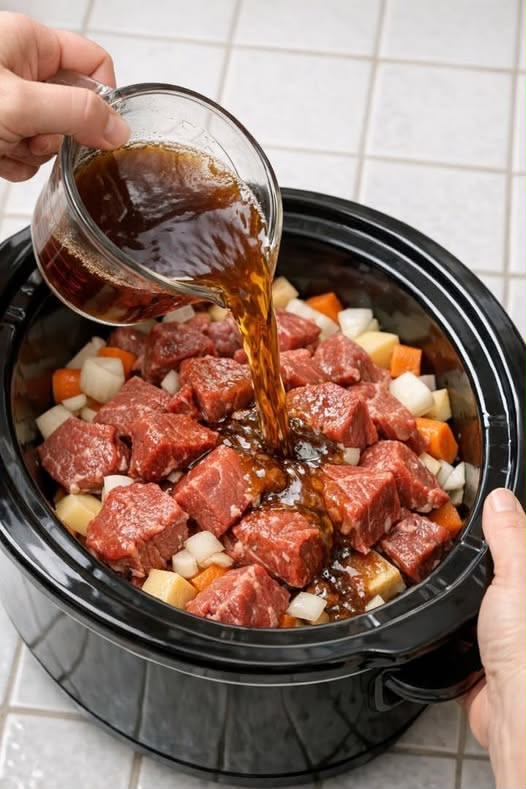
Pour the seasoned broth evenly over the beef and vegetables.
Use a spoon to distribute the liquid if needed, but there is no need to completely submerge every ingredient. The vegetables and beef will release additional moisture as they cook.
Cover the slow cooker with its lid.
Step 5: Slow Cook the Beef Stew
Choose your preferred cooking setting:
LOW: Cook for 7–8 hours.
HIGH: Cook for 4–5 hours.
Cooking times may vary depending on the size of the beef cubes, the type of beef, and your slow cooker.
The stew is ready when the beef is tender enough to break apart easily with a fork and the potatoes and carrots are soft without completely falling apart.
Keep the lid closed as much as possible to maintain a steady cooking temperature.
Step 6: Check the Consistency
Near the end of cooking, check the broth. If you prefer a thinner, more soup-like stew, you may not need to add a thickener.
For a thicker, richer gravy, prepare a slurry by whisking 2 tablespoons of cornstarch with 2 tablespoons of cold water until smooth.
Alternatively, mix 2 tablespoons of all-purpose flour with enough cold water to form a smooth mixture, ensuring there are no lumps.
Stir the thickener into the stew gradually.
Step 7: Add the Green Peas
If you’re using frozen peas, add them during the final 15–30 minutes of cooking.
Stir gently, cover, and allow them to heat through.
Add the thickener during this final stage as well, allowing enough time for the sauce to thicken. Cornstarch generally needs to become thoroughly hot to reach its full thickening power.
If the stew is still too thin, adjust the consistency gradually rather than adding too much thickener at once.
Step 8: Taste and Serve
Taste the finished stew and adjust the salt and black pepper as needed.
If the broth is too thick, add a small amount of hot beef broth. If it is too thin, use a little additional cornstarch slurry and heat until thickened.
Ladle the hot beef stew into bowls and garnish with fresh parsley if desired.
Serve with crusty bread, warm dinner rolls, or a simple green salad for a comforting and satisfying meal.
Best Tips for Perfect Slow Cooker Beef Stew
Choose the Right Cut of Beef: Beef chuck is an excellent choice because its connective tissue softens during slow cooking, producing tender and flavorful meat. Avoid very lean cuts if you want the richest texture.
Cut Vegetables Evenly: Uniform pieces cook more consistently. Keep the potatoes and carrots relatively large so they don’t become mushy before the beef is tender.
Brown the Beef for Extra Flavor: Although optional, searing the beef creates browned surfaces that add a deeper, richer taste to the stew.
Use Low-Sodium Broth: This gives you greater control over the salt level, especially when using Worcestershire sauce and other savory seasonings.
Avoid Adding Too Much Liquid: Slow cookers retain moisture, and the ingredients release liquid as they cook. The stew does not need to be completely covered with broth.
Add Peas Near the End: Frozen peas cook quickly. Adding them during the final 15–30 minutes helps preserve their color and texture.
Allow Enough Cooking Time: If the beef is still tough, continue cooking until it becomes fork-tender. Toughness often means the connective tissue needs more time to soften.
Best Ingredient Options
Beef: Chuck roast, blade roast, or other cuts intended for slow cooking work well. Choose meat with some marbling for better flavor and tenderness.
Potatoes: Yukon Gold potatoes hold their shape while becoming creamy inside. Russet potatoes also work but may break down more during extended cooking.
Carrots: Regular orange carrots are ideal, but rainbow carrots can add visual appeal.
Beef Broth: Low-sodium beef broth is a good everyday choice. Homemade beef stock can add even more depth.
Tomato Paste: This ingredient provides richness and balances the savory flavors. Avoid replacing it with a large quantity of tomato sauce, which can make the stew thinner.
Worcestershire Sauce: Check the label for ingredients that meet your dietary requirements, including halal requirements where applicable. A suitable soy sauce alternative can provide a similar savory note, although the flavor will differ.
Thickener: Cornstarch is a convenient option for a glossy gravy and is naturally gluten-free. All-purpose flour works too, but it must be cooked thoroughly.
Recipe Variations
Classic Beef and Mushroom Stew: Add sliced mushrooms for a deeper, earthy flavor that complements the beef and herbs.
Hearty Beef and Pea Stew: Increase the peas to 1½ cups for extra color and a little sweetness.
Garlic Herb Beef Stew: Add an extra clove of garlic and a little more thyme for a stronger herbal aroma.
Smoky Paprika Beef Stew: Replace regular paprika with smoked paprika for a subtle smoky flavor.
Gluten-Free Beef Stew: Use gluten-free broth and Worcestershire sauce, and thicken the stew with cornstarch instead of all-purpose flour. Verify all packaged ingredients.
Extra Vegetable Beef Stew: Add chopped celery, parsnips, or turnips for more variety. Cut them into substantial pieces to help them retain their texture.
Rich Gravy Version: Brown the beef before slow cooking and finish the stew with a cornstarch slurry. Taste before adding extra seasoning.
What to Serve With Slow Cooker Beef Stew
Crusty Bread: A slice of fresh, crusty bread is perfect for soaking up the rich beef broth.
Dinner Rolls: Soft rolls provide a comforting accompaniment and are ideal for serving with hearty stew.
Green Salad: A crisp salad with a light vinaigrette adds freshness and balances the richness of the meal.
Roasted Green Beans: Roasted or steamed green beans provide a simple vegetable side with a pleasant texture.
Buttered Bread: Warm bread with a little butter makes an easy, satisfying pairing.
Simple Cucumber Salad: A fresh cucumber salad adds a cool, refreshing contrast to the warm stew.
Because this recipe already includes beef, potatoes, and carrots, you don’t need many additional sides to make it a complete meal.
Make-Ahead Instructions
You can prepare the vegetables and measure the seasonings ahead of time to make dinner preparation easier.
Cut the carrots, onions, and potatoes, then refrigerate them in separate covered containers. For the best quality, cut potatoes close to cooking time or keep them submerged in cold water in the refrigerator and drain them thoroughly before use.
You can also combine the broth, tomato paste, Worcestershire sauce, and seasonings in a covered container and refrigerate until needed.
Keep raw beef refrigerated and separate from ready-to-eat foods. Follow your slow cooker’s instructions when adding ingredients, especially if they have been refrigerated.
For an even easier dinner, prepare the ingredients the night before and assemble the stew shortly before cooking.
Storage Instructions
Refrigerator: Transfer leftover stew into shallow, airtight containers and refrigerate within two hours of cooking. Store for 3–4 days.
Freezer: Allow the stew to cool promptly and place it in freezer-safe containers. Leave a little space at the top for expansion. For best quality, use within 2–3 months.
Portioning: Divide the stew into individual servings before storing. This makes it easier to reheat only what you need.
Potatoes may become slightly softer after freezing and thawing, but the stew will still be delicious.
Reheating Instructions
Stovetop: Place the stew in a saucepan and heat over medium heat, stirring occasionally, until it reaches 165°F (74°C). Add a splash of beef broth if the sauce has thickened too much.
Microwave: Place an individual serving in a microwave-safe bowl and cover loosely. Heat in intervals, stirring between each interval to ensure even heating.
From Frozen: Thaw the stew in the refrigerator overnight for best results, then reheat thoroughly. If reheating directly from frozen, use a suitable stovetop method and allow extra time, stirring as it heats.
Always ensure leftovers reach an internal temperature of 165°F (74°C) before serving.
Freezing Instructions
This beef stew freezes well, making it a practical option for meal preparation.
Allow the stew to cool promptly, then divide it into freezer-safe containers or bags. Include enough broth to keep the beef moist and label each container with the date.
Freeze in individual portions for convenient lunches and dinners.
Thaw in the refrigerator overnight whenever possible. Reheat thoroughly before serving, adding a little broth if necessary to restore the original consistency.
For the best texture, avoid repeatedly freezing and thawing the same portion.
Common Mistakes to Avoid
Using the Wrong Beef Cut: Very lean meat may not become as succulent as chuck during extended cooking. Choose a cut suitable for braising or stewing.
Cutting the Vegetables Too Small: Small pieces can break down during long cooking. Use thick carrot slices and medium-sized potato chunks.
Adding Too Much Broth: Excess liquid can leave you with a thin soup rather than a thick stew. Start with the recommended quantity and adjust near the end.
Opening the Lid Frequently: Every time you lift the lid, heat escapes and cooking can take longer. Keep the lid closed until you need to check tenderness.
Adding Thickener Without Mixing It First: Adding dry cornstarch directly to hot liquid can create lumps. Always mix it with cold water first.
Adding Peas Too Early: Frozen peas can become overly soft if cooked for the entire duration. Add them near the end.
Seasoning Too Heavily at the Beginning: Broth and Worcestershire sauce can contribute considerable salt. Start conservatively and adjust after cooking.
Stopping Before the Beef Is Tender: If the beef is tough, give it more time. The stew is ready when the meat and vegetables reach the desired tenderness.
Nutrition Estimate
The following figures are approximate per serving, based on six servings and including the main ingredients but excluding optional peas, additional oil, and bread. Actual values depend on the cut of beef, the broth, and the amount of thickener used.
| Nutrient | Estimated Amount per Serving |
| Calories | 350–450 kcal |
| Protein | 30–38 g |
| Total Fat | 12–20 g |
| Saturated Fat | 4–7 g |
| Carbohydrates | 25–35 g |
| Fiber | 4–6 g |
| Sugars | 5–8 g |
| Sodium | 500–900 mg |
For a more precise estimate, calculate the nutrition using the exact ingredients and brands used. Adding bread or other side dishes will increase the overall calories and carbohydrates of the meal.
Frequently Asked Questions
Can I cook beef stew on LOW overnight?
Yes, if your slow cooker is designed for extended cooking and you follow the manufacturer’s instructions. Choose an appropriate cooking duration and ensure the beef becomes fork-tender. Refrigerate the stew promptly after serving rather than leaving it out overnight.
Why is my slow cooker beef stew watery?
Slow cookers retain moisture, and the beef and vegetables release liquid during cooking. To thicken the broth, add a cornstarch slurry near the end and allow it to heat through.
Can I put raw beef directly into the slow cooker?
Yes. You can add raw beef directly to the slow cooker as long as you follow the appliance’s instructions and use safe food-handling practices. Browning the beef first is optional but adds extra flavor.
Do I need to brown the beef first?
No. Searing is not essential, but it creates a richer flavor and adds browned notes to the finished stew. Skip it if you want to save time.
When should I add frozen peas?
Add frozen peas during the final 15–30 minutes of cooking. This helps them retain their color and texture.
Can I use flour instead of cornstarch?
Yes. Mix the flour with cold water until smooth before adding it to the stew. Allow enough cooking time for the flour to cook through and thicken the broth.
Can I make this beef stew without potatoes?
Absolutely. Replace the potatoes with additional carrots, celery, parsnips, or other suitable vegetables. You can also serve the stew over rice or mashed potatoes prepared separately.
Can I make this recipe gluten-free?
Yes. Use certified gluten-free beef broth and suitable gluten-free Worcestershire sauce. Thicken the stew with cornstarch rather than regular flour, and check the labels of all packaged ingredients.
How do I know when the beef is done?
The beef should be fork-tender and easy to break apart. If it is still tough, continue cooking and check again later. Cooking time depends on the cut, cube size, and slow cooker.
Can I freeze leftover beef stew?
Yes. Store it in airtight, freezer-safe containers for approximately 2–3 months for best quality. Thaw safely and reheat to 165°F (74°C).
Can I prepare the stew without a slow cooker?
Yes. You can prepare it in a covered Dutch oven or heavy pot in the oven at approximately 325°F (165°C). Allow around 2½–3½ hours, checking periodically until the beef is tender and the vegetables are cooked. Cooking time will vary with the cut and size of the beef.
Final Thoughts
This Slow Cooker Beef Stew is everything a comforting homemade dinner should be: hearty, flavorful, easy to prepare, and full of tender beef and vegetables.
The combination of beef broth, tomato paste, garlic, thyme, and rosemary creates a rich, savory sauce, while the slow cooking process allows the ingredients to develop wonderful flavor with very little hands-on work.
Whether you’re making a cozy family dinner, preparing meals ahead of time, or looking for an easy cold-weather recipe, this classic beef stew is a dependable choice.
Serve it with crusty bread, garnish with fresh parsley, and enjoy a warm, satisfying meal that brings everyone to the table.
Tried this recipe? Leave a comment and share your favorite ingredients or serving suggestions!