
Introduction
If you’re looking for an easy, affordable, and comforting side dish, this Slow Cooker Cabbage and Potatoes recipe is a perfect choice. Made with tender green cabbage, hearty potatoes, savory broth, and a touch of butter, this simple Crock-Pot recipe delivers delicious homemade flavor with minimal effort.
The slow cooking process allows the vegetables to absorb the seasonings while becoming wonderfully soft and flavorful. It’s an excellent option for busy weeknights, family dinners, meal prep, or anyone looking for an easy vegetable side dish made with everyday ingredients.
Serve it alongside roasted chicken, grilled beef, or your favorite main course, or enjoy a generous bowl on its own for a simple, satisfying meal.
Recipe Overview
| Recipe Detail | Information |
| Recipe Name | Slow Cooker Cabbage and Potatoes |
| Preparation Time | 15 minutes |
| Cooking Time | 3–4 hours on HIGH or 6–7 hours on LOW |
| Total Time | 3 hours 15 minutes to 7 hours 15 minutes |
| Servings | 4–6 |
| Course | Side Dish or Main Course |
| Cuisine | American-Inspired Comfort Food |
| Cooking Method | Slow Cooking |
| Difficulty | Easy |
| Diet | Vegetarian, when made with vegetable broth and vegetarian butter |
| Main Ingredients | Green cabbage, potatoes, broth, butter, and seasonings |
Why You’ll Love This Recipe
This slow cooker cabbage and potatoes recipe is perfect for anyone who enjoys simple comfort food without spending hours in the kitchen. With only a handful of inexpensive ingredients, you can prepare a delicious homemade dish that fits easily into your weekly meal plan.
One of the best things about this recipe is its convenience. Once you’ve washed, chopped, and seasoned the vegetables, the slow cooker handles most of the work. This makes it especially useful on busy days when you want a warm, homemade meal ready for dinner.
The combination of cabbage and potatoes creates a hearty texture, while butter and broth add richness and savory flavor. Garlic powder and black pepper bring out the natural taste of the vegetables without overpowering them.
It’s also a versatile recipe. You can adjust the seasonings, add fresh herbs, or include other vegetables to suit your preferences. Whether you’re preparing a family dinner or searching for budget-friendly meal ideas, this dish is a practical addition to your recipe collection.
Ingredients
The following ingredients make approximately 4–6 servings.
Main Ingredients
| Ingredient | Quantity | Notes |
| Green cabbage | 1 medium head | Cut into thick wedges or large chunks |
| Yellow or red potatoes | 4–5 medium | Scrubbed and cut into quarters |
| Vegetable broth | 2 cups | Chicken broth can also be used if preferred |
| Unsalted butter | 4 tablespoons | Adds richness and flavor |
| Iodized salt | 1 teaspoon | Adjust to taste |
| Ground black pepper | 1 teaspoon | Adds gentle warmth |
| Garlic powder | 1 teaspoon | Enhances the savory flavor |
Optional Garnishes
| Ingredient | Quantity | Purpose |
| Fresh parsley | 1–2 tablespoons | Adds freshness and color |
| Freshly ground black pepper | To taste | Provides extra seasoning |
| Dried thyme | ¼ teaspoon | Adds an earthy herbal flavor |
| Red pepper flakes | A pinch | Adds a little heat |
Step-by-Step Instructions
Step 1: Prepare the Vegetables
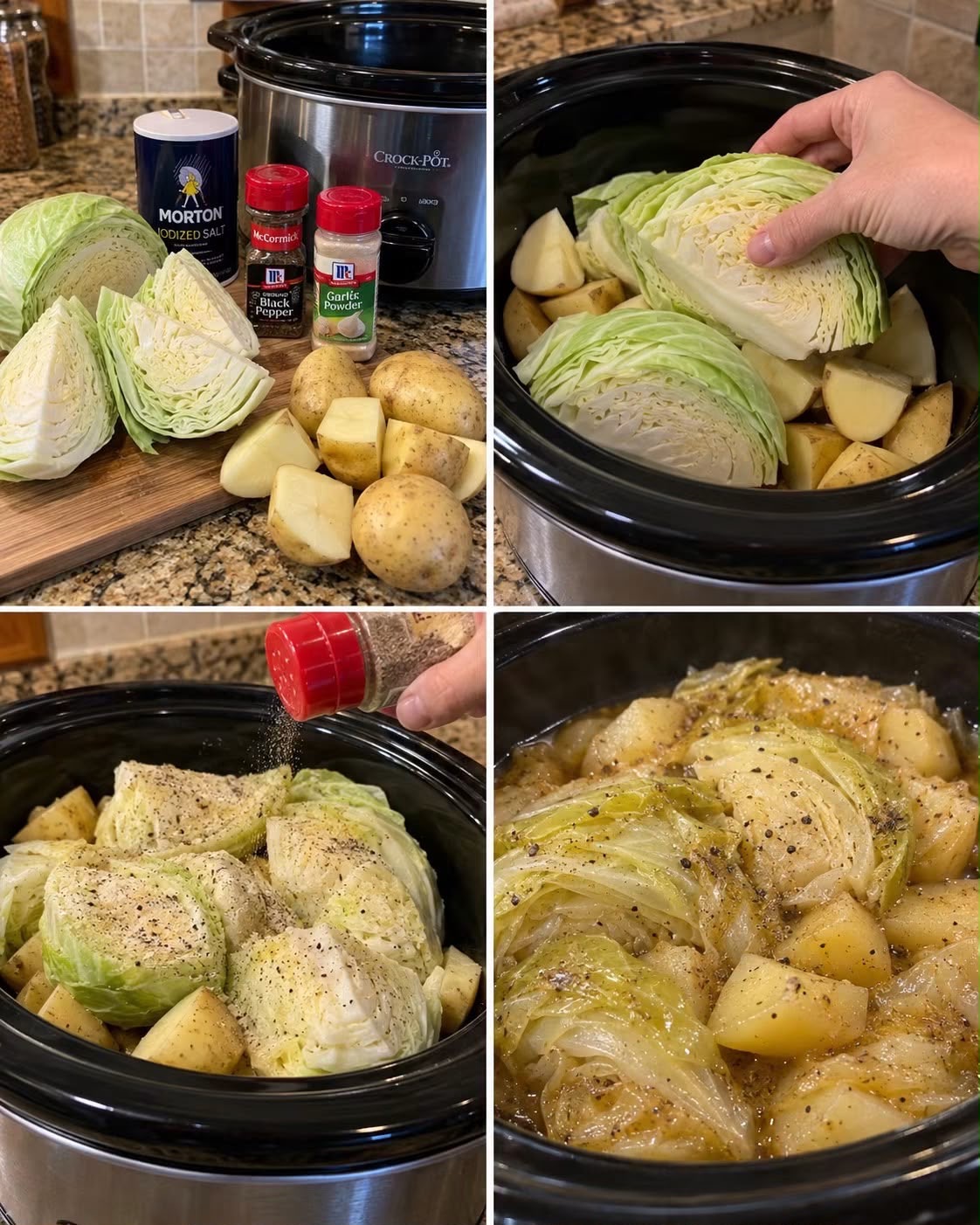
Wash the cabbage thoroughly and remove any damaged outer leaves. Cut it into thick wedges or large chunks, keeping the pieces large enough to hold their shape during cooking.
Scrub the potatoes under running water and cut them into evenly sized quarters or large cubes. If desired, peel them first, although leaving the skins on adds texture and helps reduce food waste.
Step 2: Layer the Potatoes
Arrange the potatoes evenly across the bottom of the slow cooker. Since potatoes generally take longer to become tender than cabbage, placing them at the bottom helps them cook thoroughly in the hot broth.
Try to cut the potatoes into similar-sized pieces so they cook at approximately the same rate.
Step 3: Add the Cabbage
Place the cabbage wedges on top of the potatoes. It may look like the slow cooker is quite full, but cabbage shrinks considerably as it cooks.
Arrange the vegetables as evenly as possible without pressing them down too tightly.
Step 4: Season the Vegetables
Sprinkle the salt, black pepper, and garlic powder over the cabbage and potatoes.
Distribute the seasonings evenly so every portion develops a balanced flavor. If you’re using dried thyme or red pepper flakes, add them at this stage.
Slice the butter into small pieces and place them over the vegetables.
Step 5: Pour in the Broth
Carefully pour the vegetable broth around the sides of the slow cooker. This allows the liquid to settle near the bottom and helps the potatoes cook without washing all the seasonings off the cabbage.
The vegetables do not need to be completely submerged. The cabbage releases moisture as it cooks, creating additional liquid.
Step 6: Cook Until Tender
Cover the slow cooker with its lid and cook according to your schedule.
- HIGH: Cook for approximately 3–4 hours.
- LOW: Cook for approximately 6–7 hours.
Cooking times can vary depending on the slow cooker, the size of the vegetable pieces, and how full the pot is.
The dish is ready when the potatoes are easily pierced with a fork and the cabbage is tender. If the potatoes are still firm, continue cooking and check again after 20–30 minutes.
Keep the lid closed as much as possible to maintain a steady cooking temperature.
Step 7: Taste and Adjust
Once the vegetables are tender, carefully stir the broth and seasonings around the vegetables. Taste and add more salt or black pepper if necessary.
If you prefer a richer flavor, stir a small amount of additional butter into the hot broth.
Step 8: Garnish and Serve
Transfer the cabbage and potatoes to a serving dish or serve them directly from the slow cooker.
Sprinkle with fresh parsley and freshly ground black pepper if desired. Spoon a little of the flavorful cooking liquid over the vegetables before serving.
Enjoy this comforting dish while warm.
Best Tips for Perfect Slow Cooker Cabbage and Potatoes
Cut the vegetables evenly. Similar-sized potato pieces cook more consistently, helping you avoid a mixture of hard and overly soft potatoes.
Place potatoes at the bottom. This position exposes them to the hot cooking liquid and helps them become tender.
Avoid adding too much liquid. Cabbage naturally releases moisture, so two cups of broth are generally sufficient for this recipe. Adding excessive liquid can make the dish watery.
Keep the lid closed. Each time you open the slow cooker, heat escapes and the cooking process slows down.
Check for tenderness before serving. Slow cookers vary, so use a fork to test the potatoes rather than relying exclusively on the clock.
Season gradually. Broth can contain different amounts of sodium. If you’re using salted broth, consider starting with less salt and adjusting at the end.
Best Ingredient Options
Choosing the Potatoes
Yellow potatoes are an excellent choice because they become creamy and tender while generally holding their shape. Red potatoes also work well, particularly if you want firmer pieces.
Russet potatoes can be used, but they tend to break down more easily during extended cooking. Cut them into larger pieces if you choose this variety.
Choosing the Cabbage
Green cabbage is the traditional choice for its mild flavor and sturdy texture. Savoy cabbage can be substituted for a softer, more delicate result.
Red cabbage is another option, although it will change the appearance and flavor of the finished dish.
Choosing the Broth
Vegetable broth keeps the recipe vegetarian. Chicken broth provides a slightly richer savory flavor if a vegetarian dish is not required.
Water can also be used, but the finished dish may have a milder taste. If using water, consider adding a little extra garlic powder, thyme, or another preferred seasoning.
Choosing the Butter
Unsalted butter gives the dish a rich, smooth flavor while allowing you to control the sodium content.
For a dairy-free version, substitute olive oil or a suitable plant-based butter alternative.
Recipe Variations
Garlic Herb Cabbage and Potatoes
For a fragrant variation, add minced fresh garlic, dried thyme, and a little rosemary. These herbs complement both cabbage and potatoes, making the dish especially suitable for a Sunday dinner.
Cheesy Cabbage and Potatoes
For a richer finish, sprinkle shredded cheddar cheese over the cooked vegetables. Cover for a few minutes until the cheese melts. Add the cheese near the end rather than at the beginning for a better texture.
Spicy Cabbage and Potatoes
If you enjoy a little heat, add red pepper flakes, cayenne pepper, or a pinch of smoked paprika. Start with a small amount and adjust to taste.
Carrots and Onions
Add two sliced carrots and one chopped onion to create a more colorful vegetable dish. Place the carrots near the potatoes and distribute the onion between the layers.
The additional vegetables bring natural sweetness and more variety to each serving.
Hearty Beef Variation
To turn this side dish into a more substantial meal, serve it with cooked ground beef or tender pieces of cooked beef. For the best results, cook the beef separately until it reaches a safe internal temperature, then combine it with the vegetables near the end.
You can also use a little beef broth instead of vegetable broth for a deeper savory flavor.
What to Serve With Slow Cooker Cabbage and Potatoes
This recipe pairs beautifully with roasted chicken, grilled beef, baked fish, or homemade meatballs. The mild cabbage and creamy potatoes balance dishes with stronger seasonings and make an excellent addition to a family dinner.
For a simple vegetarian meal, serve the vegetables with crusty bread, a fresh green salad, or cooked beans. The broth can be spooned over the potatoes to create a moist, flavorful serving.
If you’re planning a larger dinner, consider adding roasted carrots, green beans, or a fresh cucumber salad. These sides introduce different textures and brighten up the plate.
For a satisfying lunch, serve a bowl of cabbage and potatoes with warm whole-grain bread and a sprinkle of fresh parsley.
Make-Ahead Instructions
You can prepare the vegetables in advance to make dinner preparation easier. Wash and cut the cabbage and potatoes, then store them separately in airtight containers in the refrigerator.
For best quality, cut potatoes should be kept covered with cold water in the refrigerator and drained thoroughly before cooking. Use them within about 24 hours for this preparation.
You can also measure the seasonings and prepare the broth ahead of time. When you’re ready to cook, assemble the ingredients in the slow cooker and begin cooking.
For food safety, refrigerate prepared ingredients promptly and avoid leaving cut vegetables or other perishable ingredients at room temperature for extended periods.
Storage Instructions
Allow leftovers to cool slightly, then transfer them to shallow, airtight containers. Refrigerate within two hours of cooking, or sooner in very hot conditions.
Store the cooked cabbage and potatoes in the refrigerator for 3–4 days.
Keep some of the cooking liquid with the vegetables to help maintain moisture. Store leftovers in individual portions for convenient lunches and dinners.
Always check leftovers for unusual odors, mold, or other signs of spoilage, and discard anything that appears unsafe.
Reheating Instructions
Microwave
Place a portion in a microwave-safe dish and add a tablespoon or two of broth or water if the vegetables seem dry.
Cover loosely and heat in short intervals, stirring gently between intervals, until the food is steaming hot throughout.
Stovetop
Transfer the leftovers to a saucepan with a small splash of broth or water. Cover and warm over medium-low heat, stirring carefully to prevent the potatoes from breaking apart.
Slow Cooker
For a larger quantity of refrigerated leftovers, a slow cooker can be used for reheating, but it is not the best method for quickly warming small portions. Reheat leftovers promptly using a microwave or stovetop, then use a slow cooker to keep already-hot food warm if needed.
Reheat leftovers to an internal temperature of 165°F (74°C).
Freezing Instructions
You can freeze this recipe, although the texture of the cabbage and potatoes may change after thawing. Potatoes can become grainy or softer, while cabbage may lose some of its structure.
For best results, allow the vegetables to cool, portion them into freezer-safe containers, and include a little cooking liquid to help prevent drying.
Label the containers with the date and freeze for up to 2–3 months for best quality.
Thaw overnight in the refrigerator and reheat until steaming hot throughout. If the texture becomes softer than expected, gently mash some of the potatoes into the broth to create a rustic, comforting consistency.
Common Mistakes to Avoid
Cutting the potatoes too small. Small pieces can become mushy during several hours of slow cooking. Larger chunks generally retain their shape better.
Adding excessive broth. Too much liquid can dilute the flavor and leave the vegetables swimming in broth. Begin with the recommended two cups and adjust only if necessary.
Opening the lid repeatedly. Frequent lid removal allows heat to escape and can increase the cooking time.
Overcooking the cabbage. Extended cooking can make cabbage excessively soft. Begin checking the vegetables toward the earlier end of the suggested cooking time.
Forgetting to taste before serving. Different broths and potato varieties can affect the final flavor. Taste the cooking liquid and adjust the seasonings at the end.
Leaving leftovers out too long. Refrigerate cooked food promptly and reheat leftovers thoroughly before eating.
Nutrition Estimate
The following nutrition information is an estimate per serving, assuming six servings and including the butter and vegetable broth. Actual values depend on ingredient brands, vegetable sizes, and portion sizes.
| Nutrient | Estimated Amount |
| Calories | 200–240 kcal |
| Carbohydrates | 30–38 g |
| Protein | 4–5 g |
| Total Fat | 8–10 g |
| Saturated Fat | 5–6 g |
| Fiber | 5–7 g |
| Sugar | 4–6 g |
| Sodium | 400–700 mg |
These values are estimates, not laboratory measurements. The sodium content can vary significantly depending on the broth and the amount of salt used.
Frequently Asked Questions
Can I cook cabbage and potatoes together in a slow cooker?
Yes. They can cook together successfully. Place the potatoes at the bottom and the cabbage on top to help the potatoes cook thoroughly while the cabbage softens.
Do I need to boil the potatoes before adding them?
No. Raw potatoes can go directly into the slow cooker. Simply wash them, cut them into evenly sized pieces, and allow sufficient cooking time.
Should I add water or broth?
Vegetable broth provides the best flavor for a vegetarian version. Chicken broth is another option, while water works if you prefer a milder taste.
Can I make this recipe without butter?
Yes. Replace the butter with olive oil or a suitable dairy-free alternative. You can also omit it, although the finished dish will have a lighter flavor.
Why are my potatoes still hard?
The potatoes may need additional cooking time, especially if they are large or the slow cooker is very full. Keep the lid closed and continue cooking until a fork slides easily into the center.
Can I cook this recipe overnight?
Although low-temperature cooking can take several hours, leaving the recipe cooking overnight may result in overly soft cabbage and potatoes. Follow the manufacturer’s instructions for your slow cooker and choose a cooking period appropriate for your schedule.
Is this recipe vegetarian?
Yes, provided you use vegetable broth and vegetarian-compatible butter or oil. Check the ingredient labels of packaged products if you follow a strict vegetarian diet.
Can I add meat to this recipe?
Yes. Cooked beef or chicken can be added near the end to create a heartier meal. If using raw meat, follow a tested slow-cooker recipe with appropriate liquid amounts, cooking times, and food-safety temperatures.
How do I prevent the dish from becoming watery?
Use the recommended amount of broth, avoid adding unnecessary water, and remember that cabbage releases moisture as it cooks. If there is excess liquid at the end, serve the vegetables with a slotted spoon or transfer the cooking liquid to a saucepan and reduce it separately.
How long do leftovers last?
Refrigerated leftovers generally keep for 3–4 days in an airtight container. Reheat them to 165°F (74°C) before serving.
Conclusion: A Simple and Comforting Slow Cooker Recipe
Slow Cooker Cabbage and Potatoes is an easy, budget-friendly dish that transforms everyday vegetables into a warm and satisfying meal. With tender cabbage, soft potatoes, aromatic seasonings, and buttery broth, it’s a wonderful choice for busy weeknights, family gatherings, and simple homemade dinners.
The recipe is easy to customize with fresh herbs, carrots, onions, or your favorite seasonings. Serve it as a vegetable side dish or pair it with beef or chicken for a more filling meal.
If you love practical slow cooker recipes that use affordable ingredients and require very little hands-on preparation, add this comforting cabbage and potatoes dish to your weekly menu.
Give this recipe a try, and share your favorite variation in the comments!