
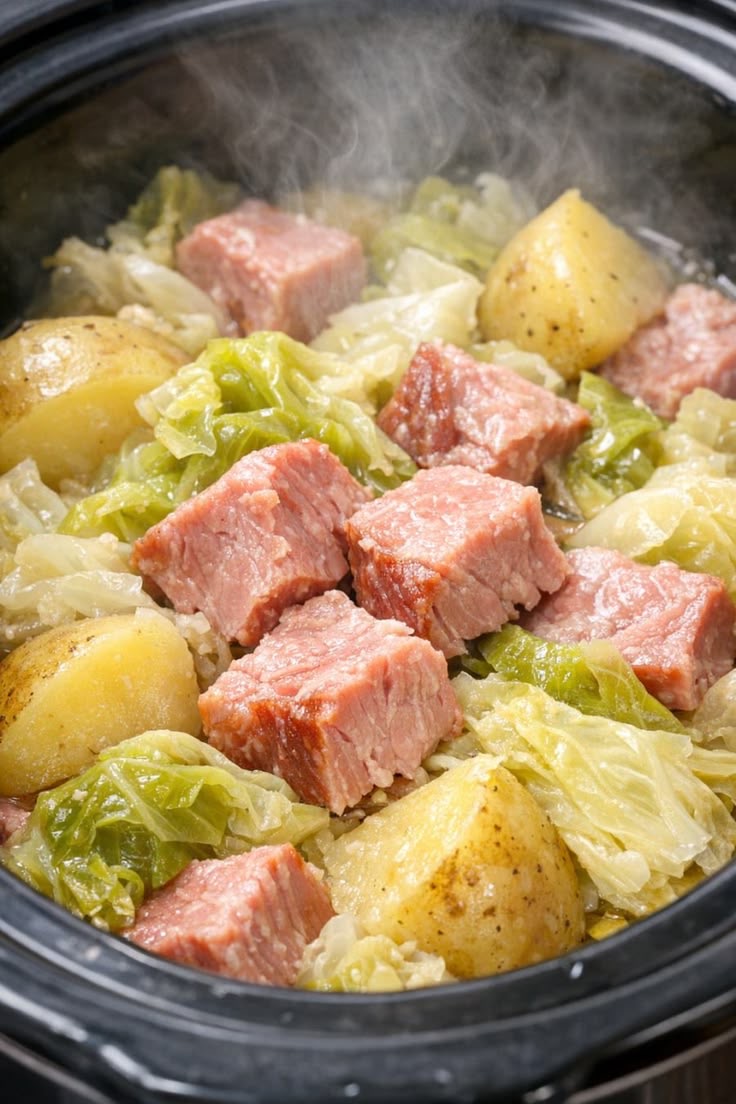
Looking for a hearty, comforting dinner that practically cooks itself? This Slow Cooker Beef, Cabbage, and Potatoes recipe combines tender beef, buttery potatoes, sweet carrots, and soft cabbage in a rich, savory broth.
Inspired by the classic corned beef and cabbage dinner, this Crock-Pot version is easy to prepare and perfect for busy weeknights, family gatherings, and cozy weekend meals. Slow cooking allows the beef and vegetables to develop deep flavor while requiring very little hands-on effort.
This recipe uses beef brisket or another suitable beef cut, making it a delicious alternative to traditional versions that use other meats. Serve it with some of the flavorful cooking broth for a satisfying one-pot meal.
Recipe Overview
| Detail | Information |
| Prep Time | 20 minutes |
| Cook Time | 7–8 hours on LOW or 4–5 hours on HIGH |
| Total Time | Approximately 7 hours 20 minutes to 8 hours 20 minutes |
| Servings | 6–8 |
| Cuisine | American-inspired comfort food |
| Cooking Method | Slow cooker |
| Difficulty | Easy |
| Main Ingredients | Beef, cabbage, potatoes, carrots, onions |
| Best For | Family dinners, hearty meals, meal prep |
Why You’ll Love This Recipe
A complete one-pot meal: Tender beef, potatoes, carrots, cabbage, and onions cook together in one slow cooker, making preparation and cleanup simple.
Rich, savory flavor: Beef broth, garlic, and optional apple cider vinegar create a flavorful cooking liquid that complements the vegetables and meat.
Perfect for busy days: Once the ingredients are assembled, the slow cooker handles most of the work. You can prepare everything in the morning and enjoy a hearty dinner later.
Comforting and satisfying: The combination of tender beef, soft cabbage, and potatoes makes this recipe ideal for colder weather and family meals.
Easy to customize: You can adjust the vegetables, seasonings, and broth according to your preferences or what you have available.
Ingredients
For the Beef and Vegetables
| Ingredient | Quantity | Notes |
| Beef brisket or suitable slow-cooking beef | 3–4 lb (1.4–1.8 kg) | Choose a cut suited to long, moist cooking |
| Green cabbage | 1 medium head | Cut into large wedges |
| Yellow or red potatoes | 1.5 lb (700 g) | Halved or quartered |
| Yellow onion | 1 large | Sliced or chopped |
| Carrots | 3–4 medium | Peeled and cut into large chunks |
| Beef broth | 4 cups (960 ml) | Use lower-sodium broth if preferred |
| Apple cider vinegar | 2 tablespoons | Optional, for a brighter flavor |
| Garlic powder | 1 teaspoon | Adds savory flavor |
| Black pepper | To taste | Freshly ground is ideal |
| Salt | To taste | Adjust based on the broth and seasoning |
Optional Seasonings
| Ingredient | Quantity | Purpose |
| Bay leaves | 1–2 | Add an earthy aroma |
| Dried thyme | ½ teaspoon | Adds herbal flavor |
| Mustard seeds | ½ teaspoon | A traditional-style seasoning option |
| Whole black peppercorns | ½ teaspoon | Adds a gentle peppery flavor |
| Fresh parsley | 1–2 tablespoons | Chopped for garnish |
Important ingredient note: Traditional corned beef is beef brisket that has been cured in a seasoned brine. If you use fresh, uncured beef instead, the result will be a delicious beef-and-cabbage stew rather than traditional corned beef and cabbage. Choose the version that suits your taste and check packaged ingredients if you have dietary requirements.
Step-by-Step Instructions
Step 1: Prepare the Vegetables
Wash the potatoes and cut them into halves or quarters, depending on their size. Peel the carrots and cut them into large chunks.
Slice the onion and cut the cabbage into large wedges, keeping a portion of the core attached to help the wedges hold together during cooking.
Place the onions, carrots, and potatoes at the bottom of a 6- to 7-quart slow cooker.
Step 2: Add the Beef
Place the beef brisket on top of the vegetables.
If using packaged corned beef, follow the package directions for rinsing and seasoning. If it includes a spice packet, sprinkle the seasoning over the meat as directed.
If using fresh beef brisket instead, season it with garlic powder, black pepper, thyme, and other preferred spices. Add salt cautiously, especially if the broth is already seasoned.
Step 3: Add the Broth
Pour the beef broth around the meat and vegetables.
Add the apple cider vinegar if desired. It provides a mild tang that balances the richness of the beef.
Add the bay leaves or other optional seasonings. The liquid does not need to completely cover every ingredient because the slow cooker retains moisture during cooking.
Step 4: Slow Cook the Beef and Root Vegetables
Cover the slow cooker with its lid and cook using one of the following settings:
- LOW: 7–8 hours.
- HIGH: 4–5 hours.
Cooking times depend on the size, thickness, and type of beef cut, as well as the slow cooker itself. The beef should become tender, and the potatoes and carrots should be nearly cooked before you add the cabbage.
For a large or particularly tough brisket, additional cooking time may be necessary.
Step 5: Add the Cabbage
Approximately 1–1½ hours before serving, arrange the cabbage wedges over the beef and vegetables.
Press them gently into the cooking liquid without crushing them. Replace the lid and continue cooking until the cabbage is tender and the beef is ready.
If you prefer firmer cabbage, add it closer to the end of cooking. Smaller wedges will soften faster than large ones.
Step 6: Check for Doneness
Check that the beef is tender enough to slice or pull apart easily with a fork.
For food safety, whole cuts of beef should reach at least 145°F (63°C), followed by a three-minute rest. However, brisket generally needs substantially more cooking time to become fork-tender. For corned beef brisket, tenderness is a useful sign that the connective tissue has softened.
Check that the potatoes and carrots are also tender. Remove the bay leaves before serving.
Step 7: Slice and Serve
Transfer the beef to a cutting board and allow it to rest briefly if appropriate for the cut. Slice corned beef brisket against the grain for a more tender bite.
Arrange the beef, cabbage, potatoes, carrots, and onions on a large serving platter. Spoon a little of the cooking broth over the top and garnish with fresh parsley if desired.
Serve hot with extra broth on the side.
Best Tips for Success
Choose a suitable beef cut. Brisket is a traditional choice for corned beef and cabbage. Other slow-cooking cuts, such as chuck, work well for a fresh-beef version but will have a different flavor and texture.
Layer the vegetables correctly. Potatoes, carrots, and onions go near the bottom, where they can cook in the hot liquid. Add cabbage later to help prevent it from becoming overly soft.
Avoid adding too much salt. Corned beef and packaged broth can already contain a substantial amount of sodium. Taste the cooking liquid before adding extra salt.
Keep the lid closed. Opening the slow cooker repeatedly releases heat and can extend the cooking time. Check the dish only when necessary.
Slice the beef against the grain. This is particularly important for brisket because cutting across the muscle fibers helps make each slice easier to chew.
Adjust the cabbage cooking time. If you like cabbage that retains some structure, add it during the final hour. If you prefer very soft cabbage, allow additional time.
Best Ingredient Options
Beef brisket: Ideal for a traditional corned beef-style dinner when using properly cured corned beef. Fresh brisket works for a similar slow-cooked meal but will not have the same cured flavor.
Potatoes: Yukon Gold potatoes have a creamy texture, while red potatoes tend to hold their shape well. Russet potatoes can be used, but they may break apart more easily during long cooking.
Cabbage: Green cabbage is the classic option. Savoy cabbage can also be used, although its leaves may soften more quickly.
Carrots: Carrots contribute natural sweetness and color. Cut them into large pieces so they do not become overly soft.
Beef broth: Regular beef broth adds richness, while lower-sodium broth offers better control over the final salt level.
Apple cider vinegar: This ingredient is optional. A small amount adds brightness to the broth without making the dish taste strongly acidic.
Recipe Variations
Slow Cooker Corned Beef and Cabbage
For a more traditional version, use cured corned beef brisket with its included spice packet. Follow the package directions and add the cabbage during the final 1–1½ hours of cooking.
Beef and Cabbage Stew
Cut suitable beef into large chunks and cook it with the potatoes, carrots, onions, broth, and seasonings. Add the cabbage near the end for a hearty stew-style meal.
Garlic Herb Beef and Vegetables
Add minced garlic, dried thyme, rosemary, and a bay leaf to the broth. These seasonings give the dish a fragrant, savory flavor that works especially well with fresh beef.
Slow Cooker Beef with Red Potatoes
Replace the yellow potatoes with red potatoes. Their firm texture makes them a good choice if you prefer potato pieces that hold their shape after several hours of cooking.
Extra Vegetable Version
Add celery, parsnips, or turnips along with the carrots and potatoes. Cut all the vegetables into similarly sized chunks so they cook more evenly.
Lower-Sodium Version
Choose fresh beef instead of cured corned beef, use lower-sodium beef broth, and season with garlic, thyme, bay leaf, and black pepper. This changes the traditional flavor but gives you greater control over sodium.
What to Serve With Beef, Cabbage, and Potatoes
Crusty bread is perfect for soaking up the savory broth. A warm baguette or rustic loaf makes a simple accompaniment.
Mustard sauce pairs especially well with traditional corned beef. Serve a small amount on the side for a sharp contrast to the tender meat.
Fresh green salad adds a crisp, refreshing element to balance the richness of the beef and potatoes.
Roasted vegetables can add extra color and texture, although the slow cooker meal already contains several vegetables.
Pickled vegetables provide a tangy contrast, particularly when serving cured corned beef.
Make-Ahead Instructions
You can wash and cut the vegetables a day in advance. Store the prepared vegetables in covered containers in the refrigerator.
Keep raw beef refrigerated separately until you are ready to cook. For the best food safety, assemble the ingredients shortly before starting the slow cooker rather than leaving raw meat and vegetables at room temperature.
If using cured corned beef, follow any preparation instructions on the package, including whether rinsing is recommended.
Storage Instructions
Allow leftovers to cool slightly and divide them into shallow, airtight containers. Refrigerate within two hours of cooking.
Store the cooked beef and vegetables in the refrigerator for 3–4 days. Keeping the food with some of the cooking broth helps preserve moisture and flavor.
Reheating Instructions
Stovetop: Place the beef and vegetables in a saucepan with some cooking broth. Cover and heat gently until everything is hot throughout.
Microwave: Place a serving in a microwave-safe dish, add a spoonful of broth, cover loosely, and heat in short intervals. Turn or stir the food as needed for even heating.
Oven: Place the leftovers in an oven-safe dish with a little broth. Cover with foil and heat at 325°F (165°C) until thoroughly warmed.
Reheat leftovers to 165°F (74°C). Avoid repeatedly reheating the same portion.
Can You Freeze This Recipe?
Yes. The beef and cooking broth freeze well, although cabbage and potatoes may become softer after thawing.
For best results, place cooled portions in freezer-safe containers with some broth and freeze for up to 2–3 months.
Thaw overnight in the refrigerator and reheat thoroughly. If you prefer firmer cabbage, you can prepare fresh cabbage separately when serving the thawed beef.
Common Mistakes to Avoid
Adding the cabbage too early: Cabbage cooks faster than brisket and root vegetables. Adding it toward the end helps prevent it from becoming mushy.
Using the wrong beef cut for the desired result: Fresh chuck or brisket makes a delicious slow-cooked meal, but it will not taste exactly like cured corned beef. Choose cured brisket if you want the traditional flavor.
Overseasoning the broth: Cured beef, spice packets, and broth can all contain salt. Taste the liquid before adding additional seasoning.
Cutting the vegetables too small: Small pieces may fall apart during several hours of cooking. Larger chunks hold their shape better.
Expecting tough brisket to become tender immediately: Brisket needs sufficient time for its connective tissue to soften. If it is still tough, continue cooking and check again.
Slicing the beef with the grain: Cutting along the muscle fibers can result in tougher slices. Look for the direction of the fibers and slice across them.
Nutrition Estimate
Nutrition values vary depending on the beef cut, whether the meat is cured, the amount of broth consumed, and the portion size.
| Nutrient | Estimated Amount per Serving |
| Calories | 400–550 kcal |
| Protein | 30–40 g |
| Carbohydrates | 30–45 g |
| Total Fat | 15–25 g |
| Saturated Fat | 5–9 g |
| Fiber | 5–8 g |
| Sodium | 600–1,500 mg |
These estimates are based on approximately 6–8 servings. Cured corned beef can contain considerably more sodium than fresh beef, so the actual amount may fall outside this range.
Frequently Asked Questions
Can I use fresh beef instead of corned beef?
Yes. Fresh beef brisket or chuck can be used for a delicious beef, cabbage, and potato dinner. However, traditional corned beef is cured, so fresh beef will have a different flavor and texture.
When should I add the cabbage?
Add the cabbage during the final 1–1½ hours of cooking. If you prefer firmer cabbage, add it closer to the end and check its tenderness periodically.
Can I use red potatoes?
Absolutely. Red potatoes are an excellent option because they tend to hold their shape well during slow cooking. Cut larger potatoes into halves or quarters.
Do I need to cover the meat completely with broth?
No. Slow cookers retain moisture, and the vegetables release additional liquid as they cook. Add enough broth to provide moisture and flavor without necessarily covering every ingredient.
How do I know when the beef is ready?
The beef should be cooked safely and tender enough to slice or pull apart easily. Tough brisket may need additional time even after reaching a safe minimum temperature.
Can I cook this recipe overnight?
Follow the recommended cooking times and your slow cooker’s instructions. Avoid extending the cooking time unnecessarily, and use the appliance’s keep-warm function only as directed by the manufacturer.
Is this recipe good for meal prep?
Yes. The beef, potatoes, and vegetables can be divided into individual containers with some broth for convenient meals over the next few days. Refrigerate promptly and reheat thoroughly.
How can I make the broth more flavorful?
Use a well-seasoned beef broth, add bay leaves and thyme, and include the spice packet if you are preparing cured corned beef. A small amount of apple cider vinegar can brighten the flavor.
Final Thoughts
This Slow Cooker Beef, Cabbage, and Potatoes recipe is a hearty, comforting dinner made with tender beef, soft cabbage, potatoes, carrots, and a flavorful broth.
Whether you prepare it with traditional cured corned beef or fresh slow-cooking beef, this easy Crock-Pot meal is perfect for family dinners and busy days. Let the slow cooker do the work, then serve everything warm with plenty of savory broth.
Save this recipe for your next cozy dinner and enjoy a classic combination of beef and vegetables with minimal effort!
Social Media Caption
🥩🥬🥔 The Ultimate Slow Cooker Comfort Food!
Tender beef, buttery potatoes, sweet carrots, and soft cabbage simmer together in a rich, savory broth. This easy Crock-Pot dinner is hearty, delicious, and perfect for family meals. Just prep the ingredients, let the slow cooker do the work, and enjoy a comforting homemade dinner! ✨
Hashtags
#SlowCookerRecipes #CrockPotMeals #BeefAndCabbage #CornedBeefAndCabbage #SlowCookerBeef #ComfortFood #EasyDinner #OnePotMeal #HeartyMeals #FamilyDinner #PotatoRecipes #HomeCooking