
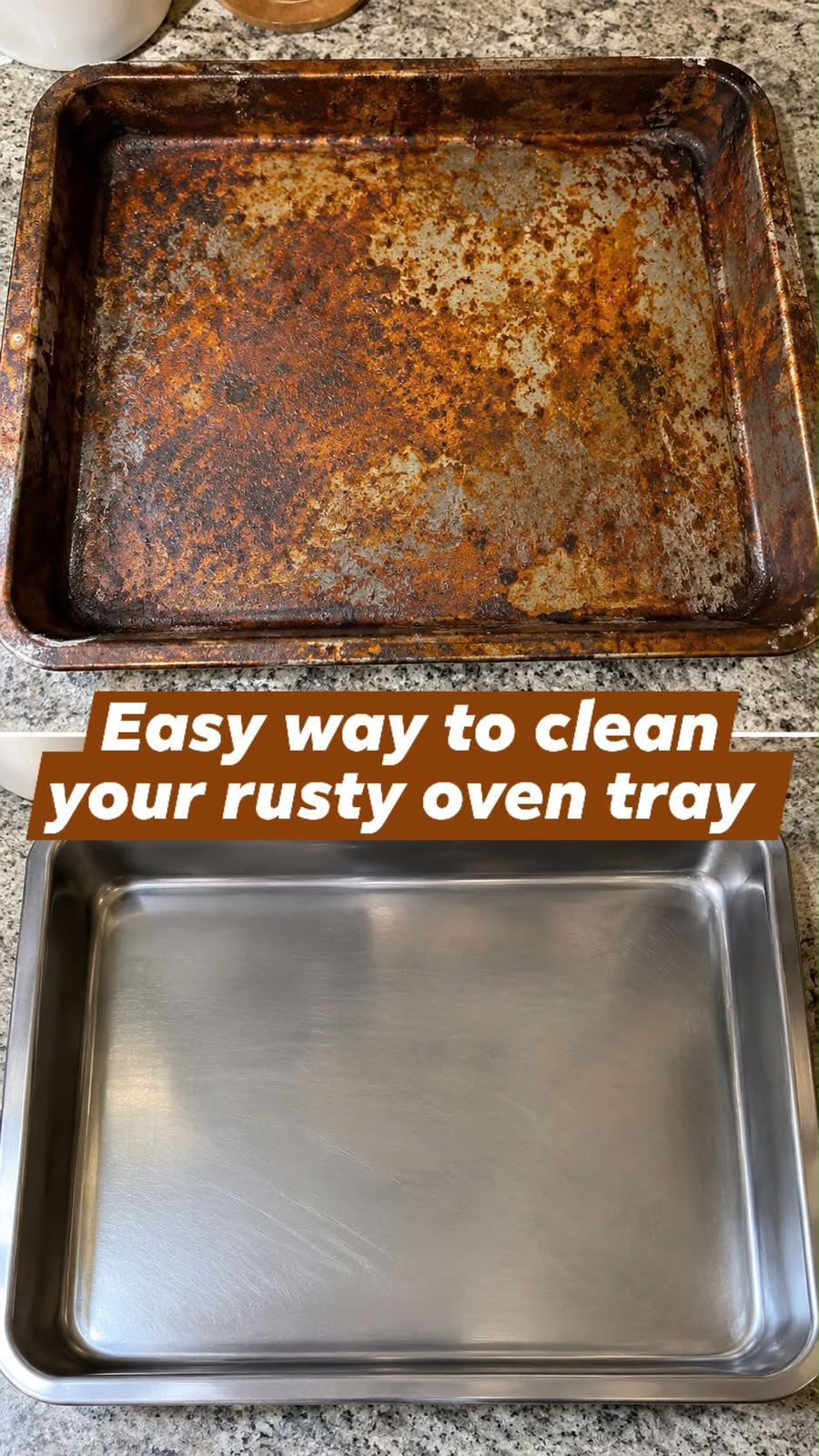
Restore the appearance of your oven tray with this simple homemade cleaning method using baking soda, white vinegar, or hydrogen peroxide. This cleaning paste can help loosen stubborn grease, burnt-on food, and some surface rust, making the tray easier to scrub and clean.
Recipe Overview
| Detail | Information |
| Preparation Time | 5 minutes |
| Resting Time | 2–4 hours |
| Cleaning Time | 10–15 minutes |
| Total Time | Approximately 2–4 hours |
| Difficulty | Easy |
| Best For | Suitable oven trays, baking pans, and cookware |
| Main Ingredients | Baking soda and a compatible cleaning liquid |
Ingredients and Materials
1 cup baking soda
Approximately 1/4 cup hydrogen peroxide or white vinegar, added gradually
1–2 teaspoons dish soap
Warm water, as needed
A soft sponge or non-abrasive cleaning brush
A clean microfiber cloth or towel
- Protective gloves, if desired
Important: Do not mix hydrogen peroxide and vinegar together. Choose one liquid, and never combine this cleaning paste with bleach or other cleaning chemicals.
Step-by-Step Instructions
Step 1: Prepare the Cleaning Paste
Place the baking soda in a small bowl. Gradually add either white vinegar or hydrogen peroxide, stirring until you obtain a thick, spreadable paste.
Add the liquid slowly because vinegar reacts with baking soda and produces fizz. The bubbling is temporary and does not necessarily make the mixture more effective.
Step 2: Apply the Paste
Spread the paste over the affected areas of the oven tray, focusing on burnt grease, dark stains, and light surface rust.
Avoid applying abrasive mixtures to non-stick coatings or delicate finishes, as they may become scratched or damaged.
Step 3: Let It Sit
Leave the paste on the tray for approximately 15–30 minutes initially, especially if you are unsure how the material will react.
For suitable, uncoated metal surfaces with stubborn grease, you can allow a baking soda paste to sit longer. Do not leave acidic cleaners on aluminum or other reactive metals for extended periods.
Step 4: Gently Scrub the Surface
Use a soft sponge or non-abrasive brush to loosen the softened grease and food residue.
For stainless steel, scrub gently in the direction of the metal grain. Avoid steel wool, harsh scouring pads, and aggressive scraping that could damage the finish.
Step 5: Wash and Rinse
Wash the tray with warm water and a small amount of dish soap. Rinse thoroughly to remove all remaining baking soda, cleaning solution, and loosened residue.
Step 6: Dry Thoroughly
Immediately dry the tray with a clean towel, especially if it is made of carbon steel or another rust-prone material.
For suitable uncoated steel trays, applying a very thin layer of cooking oil after drying may help protect the surface, provided the manufacturer’s care instructions allow it.
Best Tips for Better Cleaning Results
For fresh grease stains, clean the tray as soon as it has cooled sufficiently. Fresh residue is generally easier to remove than grease that has been baked on repeatedly.
For stubborn burnt-on grease, a baking soda paste and a little patience may be more effective than aggressive scrubbing. Repeat the process if necessary rather than damaging the tray with harsh tools.
If you notice rust, first identify the material and check whether the tray has a protective coating. Rust on deeply pitted metal may not be completely removable, and a badly corroded tray may need to be replaced.
Cleaning Tips by Material
| Tray Material | Recommended Method | What to Avoid |
| Stainless steel | Baking soda paste, dish soap, and a soft sponge | Chlorine bleach and harsh abrasives |
| Aluminum | Warm water, dish soap, and a gentle sponge | Prolonged vinegar or peroxide exposure |
| Non-stick coating | Warm soapy water and a soft sponge | Abrasive powders, steel wool, and harsh chemicals |
| Uncoated carbon steel | Baking soda paste, gentle scrubbing, and immediate drying | Leaving the tray wet |
| Enamel-coated metal | Warm soapy water and a non-abrasive sponge | Scratches, chips, and sudden temperature changes |
Common Mistakes to Avoid
Using too much force: Excessive scrubbing can scratch the surface and make future cleaning more difficult.
Mixing cleaning chemicals: Never mix vinegar with hydrogen peroxide in the same container, and never combine either with bleach.
Leaving metal wet: Moisture can encourage rust to return, particularly on uncoated steel.
Ignoring damaged coatings: If a non-stick coating is peeling, flaking, or deeply scratched, replacing the tray is generally safer than attempting to restore it.
Frequently Asked Questions
Can baking soda remove burnt grease?
Yes. Baking soda can help loosen some burnt-on food and grease, especially when combined with warm water and gentle scrubbing. Very old or heavily carbonized deposits may require repeated cleaning or a suitable commercial oven-tray cleaner.
Does white vinegar remove rust?
White vinegar can help dissolve some surface rust on compatible metals. However, prolonged exposure may damage aluminum, coatings, or other reactive materials.
Can I use hydrogen peroxide on every oven tray?
No. Check the manufacturer’s care instructions before using hydrogen peroxide, especially on non-stick, aluminum, or coated surfaces.
Will this method make a badly rusted tray look new again?
Not necessarily. Light surface rust may improve, but deep corrosion, pitting, and damaged coatings cannot always be restored safely.
Final Thoughts
Cleaning a rusty oven tray does not always require expensive products. Baking soda, dish soap, warm water, and gentle scrubbing can help remove many everyday stains and burnt-on food residues.
The most important step is choosing a method that suits the tray’s material. Clean gently, rinse thoroughly, dry immediately, and replace any tray with severe corrosion or a deteriorating non-stick coating.