
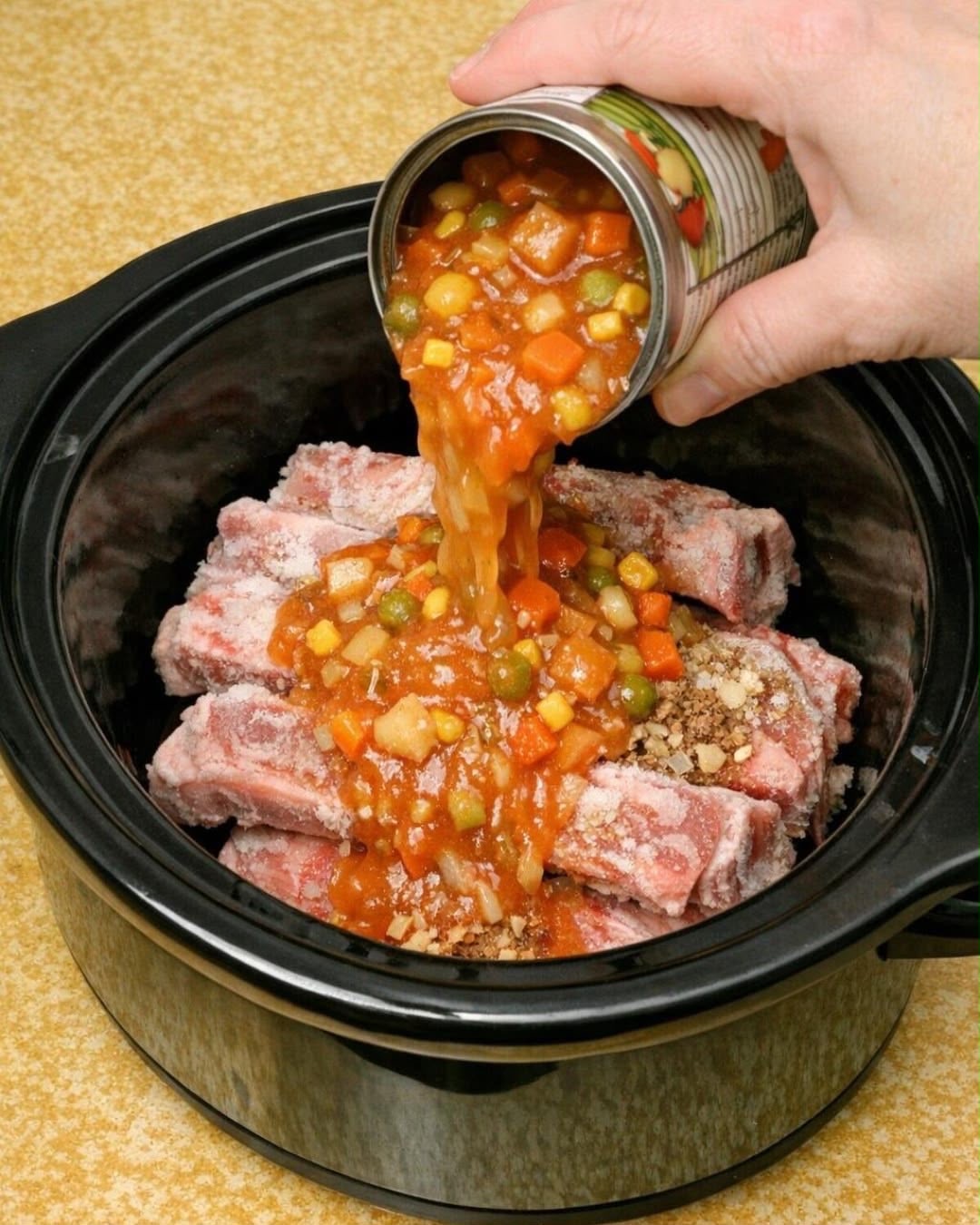
This Slow Cooker Beef Ribs and Vegetable Stew is a comforting, hearty meal made with tender beef ribs, rich vegetable soup, and savory seasonings. With just a few simple ingredients and minimal preparation, this easy crockpot beef recipe delivers delicious flavor while the meat slowly cooks until tender and juicy.
Perfect for busy weeknights, cozy family dinners, or a satisfying weekend meal, this slow cooker stew is an effortless way to enjoy a warm, home-cooked dish.
Recipe Overview
| Details | Information |
| Prep Time | 10 minutes |
| Cook Time | 7–8 hours on LOW or 4–5 hours on HIGH |
| Total Time | Approximately 7 hours 10 minutes to 8 hours 10 minutes on LOW |
| Servings | 4–6 |
| Cooking Method | Slow cooker |
| Cuisine | American comfort food |
| Difficulty | Easy |
Why You’ll Love This Recipe
This slow cooker beef ribs recipe requires only a handful of ingredients, making it ideal for anyone who wants a delicious homemade dinner without spending hours in the kitchen. The slow cooking process helps the beef become tender while the vegetable soup creates a rich, savory sauce. It is versatile, budget-friendly, and easy to serve with your favorite side dishes.
Ingredients
| Ingredient | Quantity |
| Raw beef back ribs or beef stew meat | 2–3 lb (1–1.4 kg), thawed |
| Condensed vegetable soup | 2 cans (10.5 oz / 300 g each) |
| Water or beef broth | 1 cup (240 ml) |
| Onion powder | 1 teaspoon |
| Black pepper | To taste |
| Garlic powder | Optional, to taste |
| Salt | Optional, to taste |
Optional substitution: Replace the onion powder with one packet of dry onion soup mix. If using a soup mix or salty broth, taste the finished dish before adding extra salt.
Step-by-Step Instructions
Step 1: Prepare the Beef
If using frozen beef ribs, thaw them safely in the refrigerator before cooking. Pat the beef dry with paper towels and trim away any excessive surface fat if desired.
Arrange the beef ribs in an even layer at the bottom of a slow cooker. If using beef stew meat, distribute the pieces evenly so they cook consistently.
Step 2: Add the Seasonings
Sprinkle the onion powder, black pepper, and optional garlic powder over the beef. Distribute the seasonings evenly to give the meat a balanced, savory flavor.
Step 3: Add the Vegetable Soup
Pour both cans of condensed vegetable soup over the beef. Add the water or beef broth and gently spread the mixture around the meat.
The soup forms the base of the cooking sauce, so additional liquid is usually unnecessary unless your particular soup is very thick.
Step 4: Slow Cook Until Tender
Cover the slow cooker with its lid and cook until the beef is fork-tender.
- LOW: 7–8 hours.
- HIGH: 4–5 hours.
Cooking times can vary depending on the thickness of the ribs, the slow cooker model, and the amount of meat. Check that the beef is thoroughly cooked and tender before serving.
For food safety, do not place frozen beef directly into a slow cooker because it may remain at an unsafe temperature for too long. Thaw it first.
Step 5: Finish the Sauce
Once the beef is tender, gently stir the sauce around the meat. If there is excess fat on the surface, skim it off with a spoon.
Taste the sauce and adjust the seasoning if necessary. Allow the stew to rest for a few minutes before serving.
Step 6: Serve and Enjoy
Serve the beef ribs hot with generous spoonfuls of vegetable sauce. Pair the stew with mashed potatoes, steamed rice, buttered noodles, or crusty bread to soak up the flavorful gravy.
Best Tips
For the best results, choose beef ribs with enough meat to remain juicy during slow cooking. Thaw the meat before adding it to the slow cooker, avoid lifting the lid repeatedly, and wait until the end before adjusting the salt. If you prefer a thicker sauce, remove the cooked beef and simmer the sauce separately in a saucepan until it reaches your desired consistency.
Best Ingredient Options
Beef back ribs provide a rich flavor and a tender, satisfying texture, while beef stew meat is a convenient alternative. Beef broth adds a deeper savory taste than water, and garlic powder or freshly minced garlic can provide extra flavor. Choose a condensed vegetable soup that you enjoy, since its flavor will influence the finished sauce.
Recipe Variations
For a more substantial vegetable beef stew, add chopped carrots, potatoes, celery, or mushrooms during cooking. For a deeper flavor, brown the thawed beef ribs in a hot skillet before transferring them to the slow cooker. You can also add a small amount of Worcestershire sauce or dried thyme for a richer, more aromatic sauce.
What to Serve With Beef Ribs
Creamy mashed potatoes are an excellent choice because they absorb the savory sauce beautifully. Steamed white rice, buttered egg noodles, roasted vegetables, or warm crusty bread also complement the dish. For a lighter meal, serve the beef ribs with a crisp green salad or steamed green beans.
Make-Ahead Instructions
You can prepare the ingredients the night before by measuring the seasonings and storing them separately. Keep the thawed beef refrigerated in a covered container until you are ready to cook. For food safety, do not leave raw meat sitting at room temperature or store raw meat mixed with ingredients in an unplugged slow cooker overnight.
Storage Instructions
Allow leftovers to cool slightly, then transfer them to shallow, airtight containers and refrigerate within two hours of cooking.
- Refrigerator: Store for 3–4 days.
- Freezer: Freeze in airtight, freezer-safe containers for approximately 2–3 months for best quality.
Store the beef with some of its sauce to help prevent it from drying out. Label the containers with the date so you can keep track of storage time.
Reheating Instructions
For the best texture, reheat the beef and sauce in a covered saucepan over medium-low heat until steaming hot, stirring occasionally. Add a small splash of water or broth if the sauce has thickened too much.
You can also reheat individual portions in the microwave in a microwave-safe container, stirring halfway through. Reheat leftovers to an internal temperature of 165°F (74°C).
Freezing Instructions
Let the stew cool promptly, then divide it into meal-sized portions. Place the beef and sauce in freezer-safe containers or heavy-duty freezer bags, leaving a little room for expansion. Seal, label, and freeze.
Thaw frozen leftovers in the refrigerator overnight before reheating. Avoid thawing meat dishes on the kitchen counter.
Common Mistakes to Avoid
Cooking frozen beef directly in a slow cooker can create food-safety risks, so always thaw the meat first. Adding too much liquid may dilute the vegetable soup’s flavor, while excessive salt can make the sauce unpleasantly salty. Opening the lid frequently can also slow cooking and extend the time needed for the beef to become tender.
Nutrition Estimate
The following values are approximate and will vary according to the cut of beef, the amount of fat, the soup brand, and serving size.
| Nutrient | Estimated Amount per Serving |
| Calories | 350–500 kcal |
| Protein | 25–35 g |
| Carbohydrates | 12–20 g |
| Total Fat | 20–35 g |
| Saturated Fat | 7–13 g |
| Fiber | 1–3 g |
| Sodium | 600–1,200 mg |
These estimates assume approximately 4–6 servings and do not include optional side dishes. Check product labels for a more accurate sodium estimate, particularly when using canned soup and prepared broth.
Frequently Asked Questions
Can I use beef stew meat instead of beef ribs?
Yes. Beef stew meat works well in this recipe. Cut the meat into evenly sized pieces and cook until it is fork-tender. Cooking time may vary depending on the size of the pieces and your slow cooker.
Can I add potatoes and carrots?
Absolutely. Chopped potatoes and carrots make the stew more filling. Cut them into similarly sized pieces and place them around the beef so they cook evenly.
Can I make this recipe without condensed vegetable soup?
Yes. You can substitute homemade vegetable soup or a mixture of beef broth, tomato paste, and chopped vegetables. You may need additional seasonings or a thickener to achieve a similar consistency.
How do I make the sauce thicker?
Remove the beef once it is tender. Simmer the sauce in a saucepan until reduced, or mix one tablespoon of cornstarch with one tablespoon of cold water and stir the mixture into gently simmering sauce until thickened.
How do I know when the beef ribs are ready?
The meat should be thoroughly cooked and easy to pierce with a fork. Beef ribs are generally tender when their connective tissue has softened during slow cooking. A food thermometer can help verify food safety; whole cuts of beef should reach at least 145°F (63°C) followed by a three-minute rest, although ribs typically need longer cooking to become tender.
Can I prepare this recipe in advance?
Yes. Cook the stew, refrigerate it promptly, and reheat portions when needed. The flavors may become even more developed after resting overnight in the refrigerator.
Is this recipe suitable for meal prep?
Yes. Divide the finished stew into individual portions and refrigerate or freeze them. Serve with freshly prepared rice, potatoes, or vegetables for convenient meals throughout the week.
Final Thoughts
This Slow Cooker Beef Ribs and Vegetable Stew is a simple, satisfying dinner that combines tender beef, savory vegetable sauce, and convenient slow cooker preparation. With minimal hands-on work and flexible serving options, it is an excellent addition to your collection of easy family dinner recipes.
Serve it with mashed potatoes, rice, or warm bread for a comforting meal that everyone can enjoy. Save this recipe for your next cozy dinner and make the most of a delicious, home-cooked beef stew.