
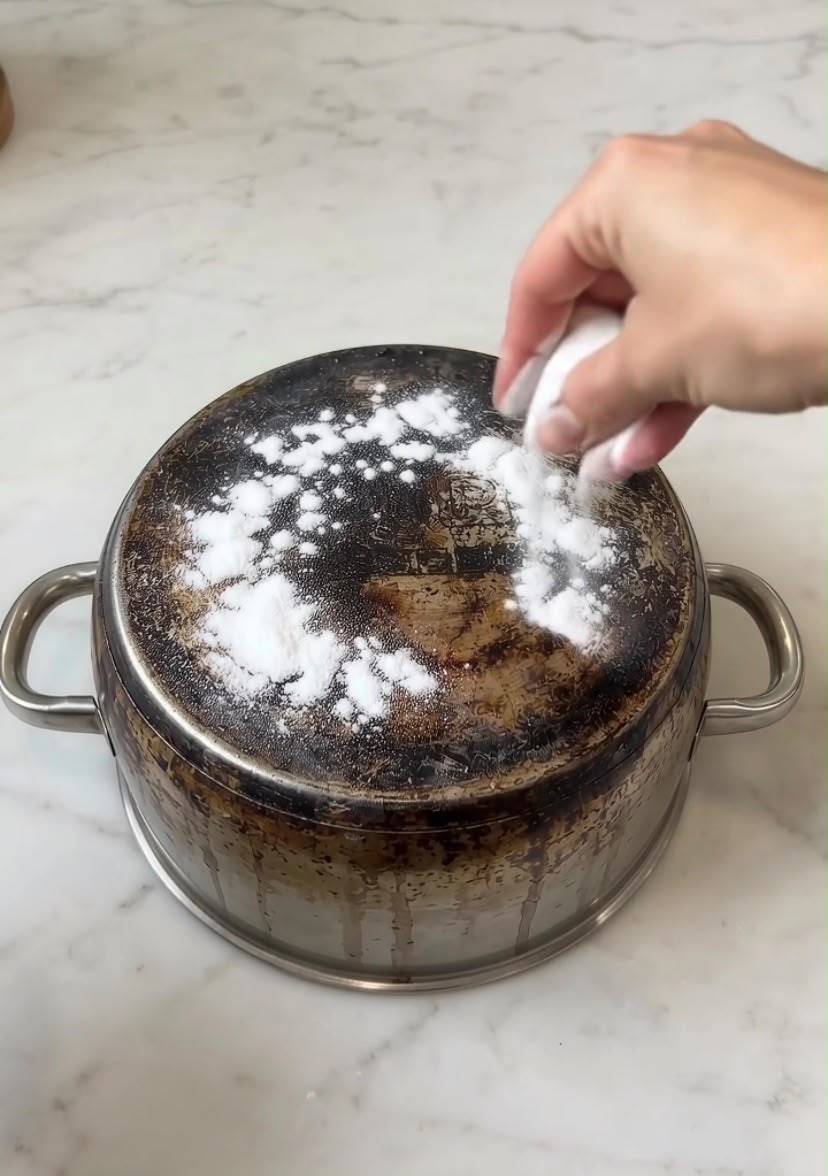
Burnt-on food, stubborn grease, and dark stains can make stainless steel pots and pans look old and difficult to clean. Fortunately, you don’t need expensive cleaning products or harsh chemicals to restore their shine. With a few simple household ingredients, you can loosen stubborn burnt residue and make your cookware look much cleaner.
This easy homemade cleaning method combines baking soda and white vinegar to help remove burnt-on food, grease, and discoloration from stainless steel cookware. It is an affordable and practical cleaning solution that takes only a few minutes to prepare.
Cleaning Method Overview
| Details | Information |
| Preparation Time | 2 minutes |
| Resting Time | 10–15 minutes |
| Cleaning Time | 5 minutes |
| Total Time | 17–22 minutes |
| Difficulty | Easy |
| Best For | Stainless steel pots and pans |
| Cleaning Method | Baking soda and white vinegar |
Why You’ll Love This Cleaning Method
This homemade cleaning trick uses inexpensive ingredients that are commonly found in most kitchens. It helps loosen stubborn burnt residue, reduces greasy buildup, and makes everyday cookware easier to clean without relying on aggressive cleaning products.
Ingredients and Supplies
| Ingredient | Quantity | Purpose |
| Baking soda | 3–4 tablespoons | Helps loosen burnt-on residue |
| White vinegar | ½ cup | Helps dissolve mineral deposits and loosen buildup |
| Warm water | As needed | Helps rinse away dirt and residue |
| Non-abrasive sponge | 1 | Gently cleans the surface |
| Paper towels | Optional | Helps remove loosened residue |
Step-by-Step Cleaning Instructions
Step 1: Sprinkle the Baking Soda
Make sure the stainless steel pot or pan is completely cool. Sprinkle a generous layer of baking soda over the burnt areas, paying particular attention to dark stains and stubborn food residue.
Step 2: Add White Vinegar
Slowly pour a small amount of white vinegar over the baking soda. The mixture will begin to fizz and bubble. This reaction helps loosen some of the surface residue, making cleaning easier.
Step 3: Let the Mixture Sit
Allow the mixture to rest for approximately 10–15 minutes. This gives the ingredients time to work on the stains. For particularly stubborn residue, you may need to repeat the cleaning process.
Step 4: Gently Scrub the Surface
Using a soft, non-abrasive sponge, gently scrub the affected areas in circular motions. Avoid steel wool, rough scouring pads, or abrasive tools that could scratch the stainless steel finish.
Step 5: Rinse and Dry
Rinse the cookware thoroughly with warm water to remove all remaining baking soda, vinegar, and loosened residue. Dry immediately with a clean microfiber cloth to prevent water spots.
Your stainless steel cookware should now look cleaner and brighter!
Best Tips for Removing Burnt Stains
Always allow your cookware to cool completely before cleaning. For particularly stubborn burnt food, add enough water to cover the affected area and gently simmer it for 5–10 minutes before applying the baking soda treatment.
Use a soft sponge and clean in the direction of the stainless steel grain whenever possible. Repeating the process is generally safer than using excessive force.
Best Cleaning Alternatives
If you don’t have white vinegar, you can try lemon juice for light cleaning and freshening. Baking soda mixed with a little water can also create a gentle cleaning paste for localized stains.
For very stubborn discoloration, use a stainless steel cleaner specifically designed for cookware and follow the manufacturer’s instructions.
Common Cleaning Mistakes to Avoid
Avoid scrubbing hot cookware because sudden temperature changes can damage certain surfaces or cause burns.
Never mix vinegar with chlorine bleach or other chlorine-based cleaning products, as this can release dangerous toxic gas.
Do not use harsh steel wool or abrasive cleaners on polished stainless steel. Always test a cleaning method on a small, inconspicuous area first.
How to Prevent Burnt Stains in the Future
Clean your pots and pans soon after cooking instead of allowing food residue to harden.
Avoid heating an empty stainless steel pan for extended periods, and use an appropriate cooking temperature to prevent food from sticking and burning.
Soak stubborn food residue in warm water before washing, and dry your cookware after rinsing to maintain its appearance.
Frequently Asked Questions
1. Can baking soda remove burnt food from stainless steel?
Yes. Baking soda is a mild abrasive that can help loosen burnt-on food and surface residue when used with gentle scrubbing.
2. How long should I leave baking soda and vinegar on a burnt pan?
For ordinary burnt stains, allow the mixture to sit for approximately 10–15 minutes before gently scrubbing and rinsing.
3. Can I use this method on the outside of a stainless steel pot?
Yes, provided the exterior is stainless steel. Apply the mixture to the affected area, avoid sensitive decorative finishes, and rinse thoroughly.
4. Will vinegar damage stainless steel?
Brief contact with diluted household vinegar is generally suitable for stainless steel. However, avoid prolonged soaking, especially with concentrated vinegar, and rinse thoroughly afterward.
5. What if the burnt stains do not disappear?
Repeat the cleaning process or simmer water in the pan to loosen stubborn food residue. For permanent heat discoloration, a dedicated stainless steel cleaner may be more effective.
Final Thoughts
Removing burnt stains from stainless steel cookware doesn’t have to be difficult or expensive. Baking soda, white vinegar, and a little gentle scrubbing can help restore the appearance of everyday pots and pans.
Try this simple homemade cleaning method the next time you discover stubborn burnt residue in your kitchen. With regular care and proper cleaning techniques, your stainless steel cookware can stay cleaner, brighter, and ready for your next meal.