
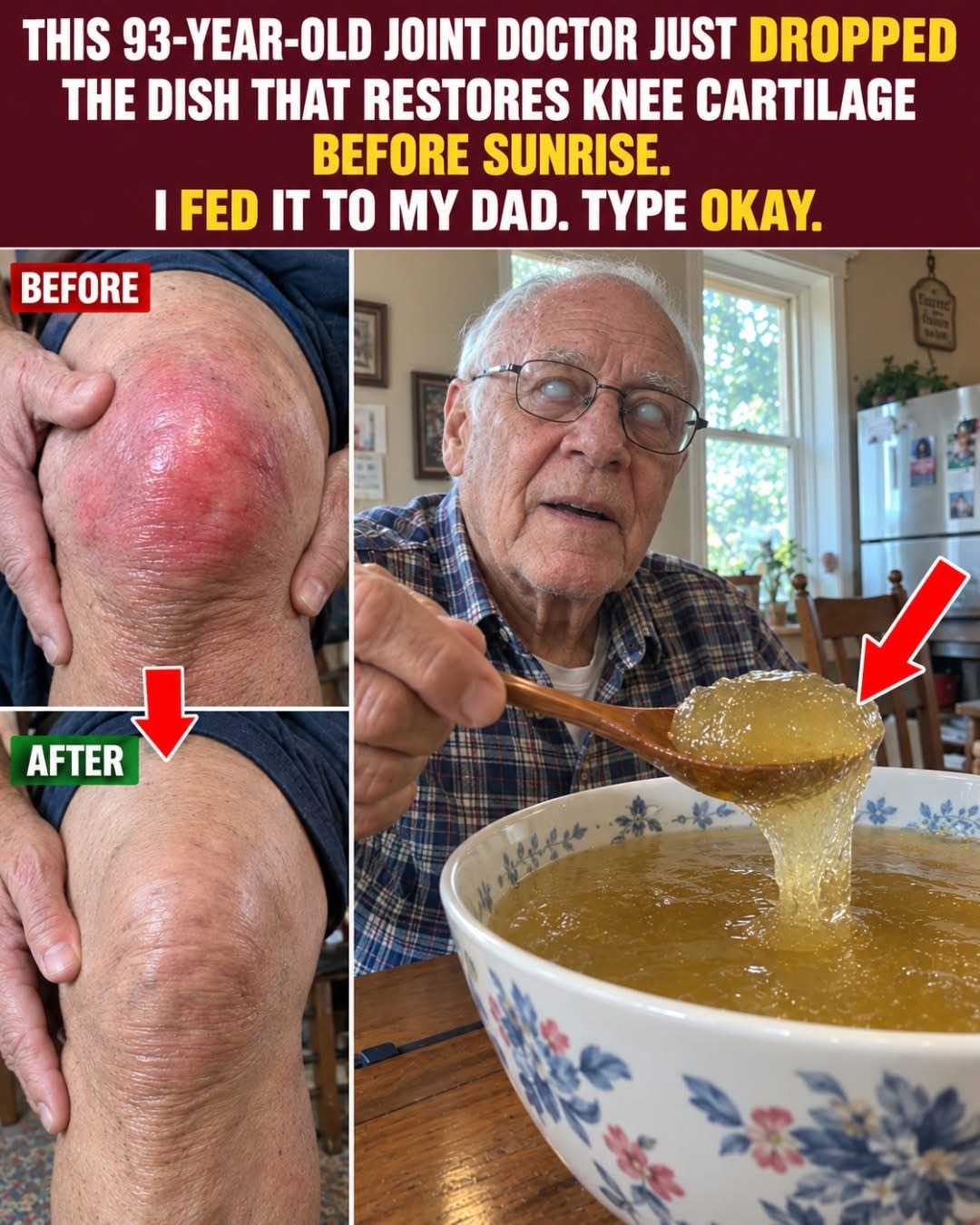
There is no secret soup that can rebuild knee cartilage overnight. Knee cartilage has limited capacity for self-repair, and no single food can regenerate damaged cartilage by the next morning.
However, a homemade bone broth can be a nourishing addition to a balanced diet. Long-simmered bones and connective tissues produce gelatin and collagen-derived peptides, while vegetables, ginger, and turmeric add flavor and beneficial plant compounds.
This recipe is best viewed as a nutrient-rich comfort food, not a treatment for osteoarthritis or damaged cartilage.
Recipe Overview
| Detail | Information |
| Prep Time | 15 minutes |
| Cooking Time | 12–24 hours |
| Total Time | About 12–24 hours |
| Servings | 8–10 cups |
| Difficulty | Easy |
| Cooking Method | Slow simmer / slow cooker |
🦴 Ingredients
| Ingredient | Amount |
| Mixed beef bones | 500 g |
| Chicken feet or wings | 500 g |
| Apple cider vinegar | 2 tbsp |
| Fresh turmeric | 1 inch (2–3 cm) |
| Fresh ginger | 1 inch (2–3 cm) |
| Yellow onion | 1 medium |
| Garlic | 4 cloves |
| Water | 8 cups (about 2 liters) |
| Black pepper | To taste |
| Salt | To taste |
| Fresh parsley | Optional |
Choosing the Bones
For a gelatin-rich broth, combine bones containing connective tissue with marrow bones.
Beef marrow bones contribute richness and body, while chicken feet are particularly rich in connective tissue and can produce a naturally gelatinous broth when chilled.
Step-by-Step Instructions
1. Prepare the Bones
Rinse the bones and chicken pieces under cold water.
For a deeper, richer flavor, you can roast the beef bones at 200°C / 400°F for approximately 30–40 minutes before making the broth.
This step is optional.
2. Prepare the Vegetables
Peel and roughly chop the onion.
Crush the garlic cloves.
Slice the fresh ginger and turmeric into thin pieces.
You don’t need to chop everything finely because the solids will eventually be strained out.
3. Add Everything to the Pot
Place the bones and chicken feet or wings into a large stockpot or slow cooker.
Add the onion, garlic, ginger, turmeric, apple cider vinegar, and black pepper.
Pour in enough water to cover the ingredients.
Avoid overfilling the pot.
4. Begin Cooking
If using a stockpot, bring the mixture slowly to a gentle simmer.
Once simmering, reduce the heat to very low.
The broth should gently bubble rather than boil aggressively.
If using a slow cooker, cook on the low setting.
5. Simmer Slowly
Cook for approximately 12–24 hours.
The longer cooking time allows connective tissues to break down and contributes to a richer, more gelatinous broth.
Check the water level occasionally if using a stockpot and add hot water if necessary to keep the ingredients mostly submerged.
6. Remove the Solids
Once cooking is complete, carefully strain the broth through a fine-mesh strainer.
Discard the cooked bones, vegetables, and other solids.
Never reuse cooked bones.
7. Season
Add salt to taste.
You can also add a little additional freshly ground black pepper.
Avoid adding excessive salt, especially if you’re drinking the broth regularly.
8. Cool and Store Safely
If you aren’t serving the broth immediately, cool it promptly and refrigerate it in shallow containers.
Once chilled, the broth may become firm and jelly-like. This is a normal sign that gelatin is present.
The broth will become liquid again when reheated.
🍵 How to Serve
Pour approximately 1 cup of warm broth into a mug or bowl.
You can enjoy it plain or add fresh parsley, a squeeze of lemon, or a few vegetables.
It also works beautifully as a base for soups, stews, sauces, and rice dishes.
🌿 Optional Flavor Additions
For a more aromatic broth, add carrots and celery during cooking.
Bay leaves can provide additional flavor.
A small amount of rosemary or thyme also works well.
For a warming version, add a little ground cumin or additional ginger.
Best Tips for Gelatin-Rich Broth
Use plenty of connective-tissue-rich ingredients such as chicken feet, joints, tendons, or cartilage-containing bones.
Keep the temperature low. A gentle simmer is preferable to vigorous boiling.
Don’t add excessive water. Using just enough to cover the ingredients helps create a more concentrated broth.
Allow the finished broth to cool completely in the refrigerator. A properly gelatinized broth may become noticeably firm.
Storage
Store cooled bone broth in an airtight container in the refrigerator.
For longer storage, freeze it in individual portions.
Ice-cube trays or small freezer-safe containers are convenient when you only need a small amount for cooking.
Reheating
Warm the broth gently on the stovetop or in the microwave.
Bring only the amount you plan to consume to serving temperature.
Can Bone Broth Rebuild Knee Cartilage?
No.
Bone broth contains collagen and gelatin-derived compounds, but drinking broth does not mean that those compounds travel directly to a damaged knee and rebuild cartilage.
Cartilage repair is biologically complex, and there is currently no evidence that drinking a bowl of bone broth can regenerate worn knee cartilage overnight.
Some research has investigated collagen or collagen-derived supplements in relation to joint symptoms, but that is different from proving that homemade bone broth regenerates cartilage.
🏃 Supporting Knee Health
A nutritious diet is only one part of maintaining joint health.
Regular, appropriately chosen exercise can help strengthen the quadriceps, hamstrings, and gluteal muscles, improving support around the knee.
Maintaining a healthy body weight can also reduce the mechanical load placed on the knees.
For persistent or worsening knee pain, swelling, stiffness, instability, or difficulty walking, a healthcare professional can determine the underlying cause and recommend appropriate treatment.
Physical therapy and other medical treatments may be appropriate depending on the diagnosis.
Frequently Asked Questions
Can I drink bone broth every morning?
Bone broth can be incorporated into a balanced diet if it suits your nutritional needs. It should not replace a varied diet containing adequate protein, vegetables, fruits, whole grains, and other nutrient-rich foods.
Does bone broth contain collagen?
Long-simmered bones and connective tissues release collagen-derived gelatin and peptides into the broth. The exact amount varies considerably depending on the bones, ingredients, cooking method, and water ratio.
Does turmeric rebuild cartilage?
No. Turmeric is a flavorful spice containing curcumin and other compounds being studied for their biological effects, but it should not be presented as a treatment that regenerates damaged knee cartilage.
How long should I cook bone broth?
A slow simmer of 12–24 hours works well for this recipe. Chicken-based broths can sometimes require less time, while longer cooking is commonly used for beef bones.
Why didn’t my broth turn into jelly?
The broth may not contain enough collagen-rich connective tissue, or it may have been diluted with too much water. It can still be perfectly good to eat even if it remains liquid when chilled.
⚠️ Important Health Disclaimer
This bone broth is a food, not a medical treatment. It cannot rebuild knee cartilage overnight or cure osteoarthritis. Nutritional foods can support overall health, but persistent joint pain or suspected cartilage damage should be evaluated by a qualified healthcare professional.
If knee pain is severe, follows a significant injury, is accompanied by major swelling, redness, fever, or an inability to bear weight, seek medical attention.
Final Thoughts
This Slow-Simmered Collagen Bone Broth is a comforting, savory recipe that makes excellent use of collagen-rich bones and connective tissues. Its naturally gelatinous texture makes it especially satisfying when served hot.
Enjoy it as part of a balanced diet—but don’t believe viral claims promising overnight cartilage regeneration. Healthy joints are supported by a combination of appropriate movement, nutrition, weight management when relevant, and evidence-based medical care when needed.