
Dry, rough, and cracked heels can be uncomfortable and frustrating, especially when the skin becomes thick, flaky, or tight.
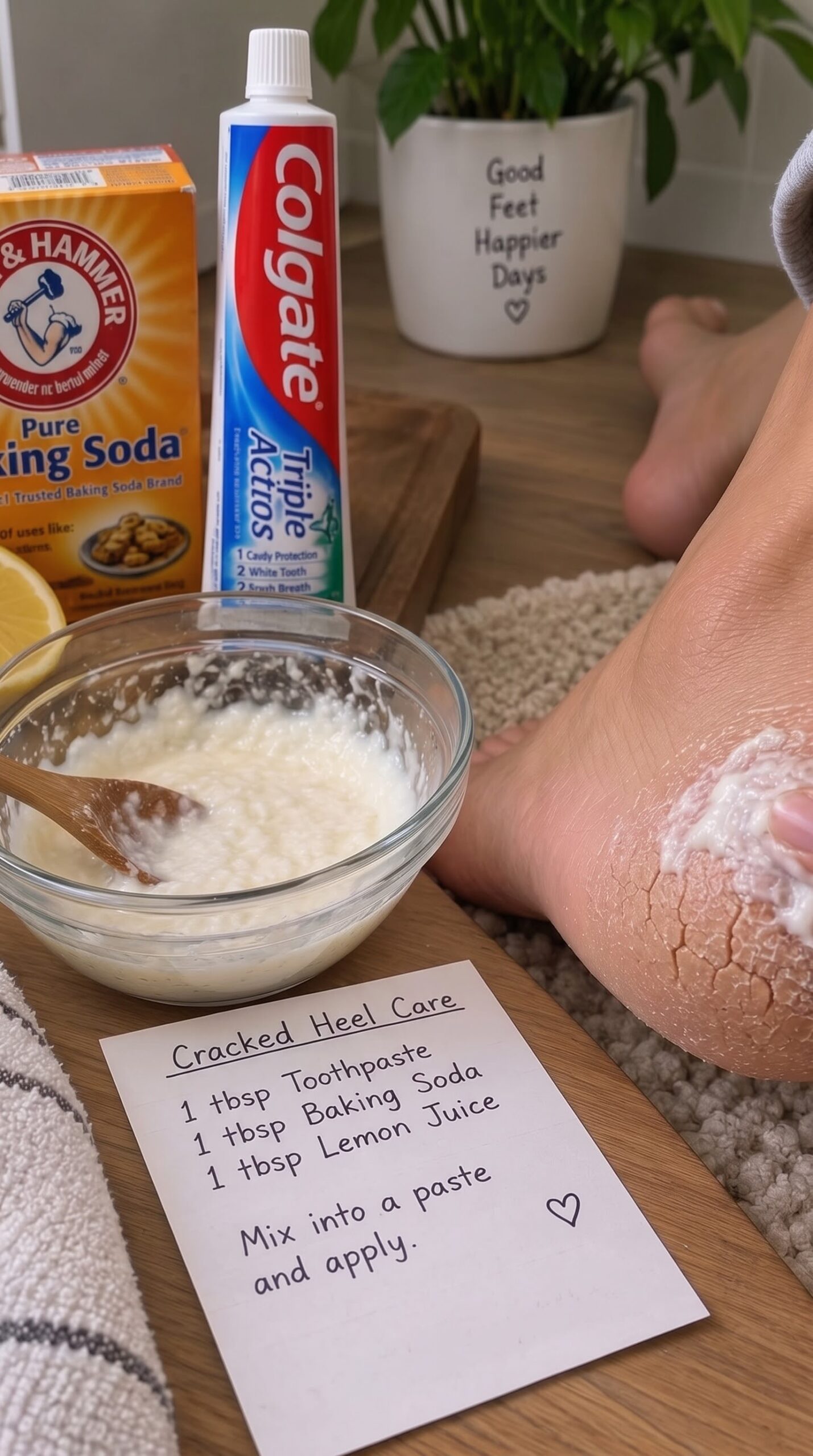
Many homemade heel remedies circulating online combine ingredients such as toothpaste, baking soda, and lemon juice. However, these ingredients can be irritating when applied to already dry, cracked, or broken skin.
A gentler approach is to soften the skin and focus on restoring moisture rather than aggressively scrubbing away the cracks.
This simple at-home routine uses lukewarm water, a rich moisturizer, and petroleum jelly to help keep dry heels feeling softer and more comfortable.
🧴 What You’ll Need
| Item | Amount |
| Lukewarm water | Enough for a foot soak |
| Mild cleanser | Small amount, optional |
| Thick fragrance-free moisturizer | Generous amount |
| Petroleum jelly | Generous amount |
| Clean cotton socks | 1 pair |
📝 Instructions
1. Clean Your Feet
Wash your feet gently with lukewarm water and a mild cleanser.
Avoid very hot water, which can leave dry skin feeling tighter.
Pat your feet dry with a soft towel instead of rubbing them aggressively.
2. Soften the Skin
Soak your feet in lukewarm water for approximately 5–10 minutes.
This helps soften dry surface skin and makes moisturizing more comfortable.
There is no need to use lemon juice, baking soda, toothpaste, or other harsh household ingredients.
3. Gently Remove Loose Skin
After soaking, use a soft washcloth to gently wipe away loose flakes.
Do not aggressively scrub the heels.
If the cracks are deep, painful, bleeding, or open, skip exfoliation completely and concentrate on moisturizing.
4. Apply Moisturizer
Pat your feet dry, leaving the skin slightly damp.
Apply a generous layer of thick, fragrance-free moisturizer to the heels.
Creams and ointments are generally more suitable for very dry skin than lightweight lotions.
5. Seal in Moisture
Apply a thin layer of petroleum jelly over the moisturizer.
This creates an occlusive layer that helps reduce moisture loss from the surface of the skin.
6. Put on Cotton Socks
Put on a clean pair of cotton socks after applying the moisturizer and petroleum jelly.
For convenience, this routine can be done before bedtime and left overnight.
⭐ Best Tips for Softer Heels
Consistency is more important than aggressive exfoliation.
Moisturize your heels regularly, particularly after bathing and before going to bed.
Choose comfortable footwear that reduces excessive friction and pressure around the heel.
Avoid picking, cutting, or peeling thick skin because doing so can cause additional injury.
If your heels are severely cracked, don’t use rough scrubs or abrasive tools directly over the damaged areas.
🚫 What About the Viral Toothpaste, Baking Soda & Lemon Recipe?
The original viral recipe combines:
- 1 tablespoon toothpaste
- 1 tablespoon baking soda
- 1 tablespoon lemon juice
The mixture is then applied to the heels and scrubbed after 10–15 minutes.
Although this type of DIY recipe is popular online, it isn’t necessary for basic cracked-heel care.
Lemon juice is acidic and may sting irritated or broken skin. Baking soda can also be irritating or drying for some people, while toothpaste is formulated for oral hygiene rather than damaged skin.
Using an abrasive mixture on existing cracks can potentially increase irritation.
For that reason, a simple moisturizing routine is a gentler alternative.
🧴 Why Moisturizing Matters
Cracked heels often occur when the skin becomes excessively dry and loses flexibility.
Keeping the skin moisturized can help improve its softness and reduce the rough, tight feeling associated with dryness.
Applying moisturizer while the skin is slightly damp and then using petroleum jelly can help retain moisture.
❓ Frequently Asked Questions
Can I use lemon juice on cracked heels?
It is better to avoid lemon juice on cracked or broken skin because it can cause stinging and irritation.
Can baking soda remove hard heel skin?
Baking soda isn’t necessary for treating dry heels and may irritate or dry some people’s skin. Gentle care and regular moisturization are preferable.
Can toothpaste be used on feet?
Toothpaste is designed for teeth, not cracked skin. There is no need to apply it to damaged heels.
Should I scrub cracked heels?
Avoid aggressive scrubbing. If the skin is merely rough and intact, gentle removal of loose flakes may be appropriate. Deep or painful cracks should not be scrubbed.
Can I use petroleum jelly on cracked heels?
Yes. Petroleum jelly can be used as a protective moisturizing layer, particularly when applied over a suitable moisturizer.
How often should I moisturize?
For very dry heels, moisturizing regularly can be helpful. Applying a thick moisturizer before bed is a convenient way to maintain a consistent routine.
⚠️ When to Seek Professional Advice
Deep, painful, bleeding, swollen, or infected-looking cracks should not be treated with homemade scrubs.
If the skin isn’t improving with regular moisturizing or the problem keeps returning, consider speaking with a dermatologist or other qualified healthcare professional.
🌿 Final Thoughts
A viral DIY recipe may make cracked heels look like a problem that can be solved with a quick scrub, but damaged skin generally benefits from gentle care rather than harsh ingredients.
Instead of using lemon juice, baking soda, and toothpaste, focus on briefly softening the skin, avoiding aggressive exfoliation, applying a rich moisturizer, and sealing in moisture with petroleum jelly.
Simple, gentle, and consistent care is the better approach for dry, rough heels. 🦶✨
⚠️ Note: This article provides general skin-care information and is not a diagnosis or a substitute for professional medical advice. If heel cracks are deep, painful, bleeding, infected, or persistent, consult a qualified healthcare professional.