
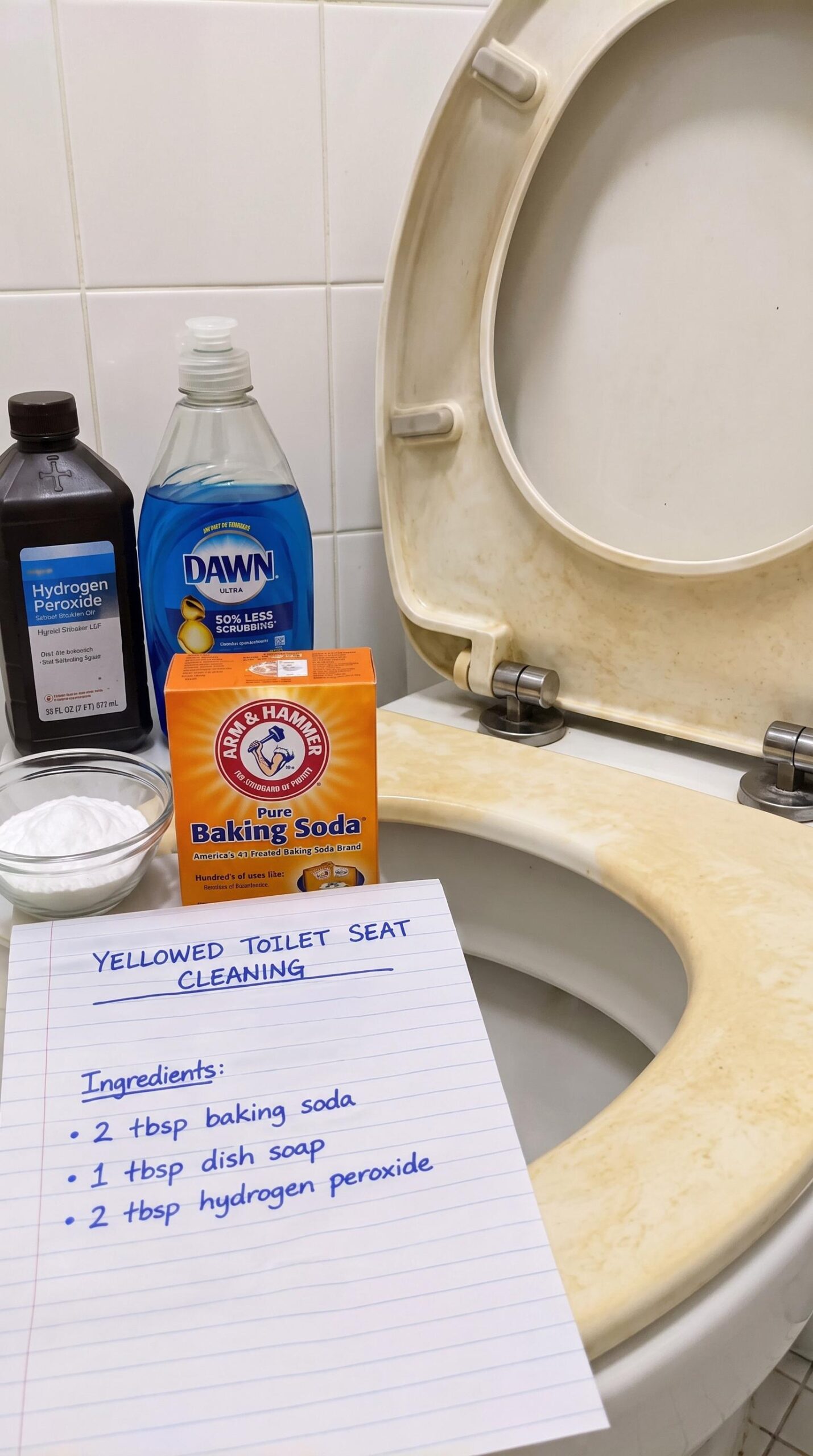
If your toilet seat has developed yellow stains, this simple homemade cleaning mixture can help remove surface discoloration, soap residue, and everyday grime.
The method uses baking soda, dish soap, and hydrogen peroxide to create a mild abrasive cleaning paste.
Ingredients
| Ingredient | Amount |
| Baking soda | 2 tbsp |
| Dish soap | 1 tbsp |
| 3% hydrogen peroxide | 2 tbsp |
Step-by-Step Instructions
Prepare the Cleaning Area
Open a window or turn on the bathroom ventilation fan before cleaning.
Put on household cleaning gloves to protect your hands.
Raise the toilet seat and clean away any loose dirt or debris first.
Make the Cleaning Paste
Add 2 tablespoons of baking soda to a small bowl.
Add 1 tablespoon of dish soap and 2 tablespoons of 3% hydrogen peroxide.
Mix gently until you have a smooth, spreadable paste.
Apply the Mixture
Spread a thin layer of the mixture over the yellowed areas of the toilet seat.
Use a soft sponge or microfiber cloth to gently work the mixture into the surface.
Avoid aggressive scrubbing, especially on plastic seats with a glossy finish, because abrasive cleaning can create scratches.
Let It Sit
Leave the mixture on the stained areas for approximately 5–10 minutes.
Do not allow the mixture to dry completely on the surface.
Wipe Clean
Wipe the toilet seat thoroughly with a clean, damp microfiber cloth.
Rinse the cloth frequently while removing the cleaning mixture.
Rinse and Dry
Wipe the entire seat again with clean water to remove any remaining residue.
Dry thoroughly with a clean towel or microfiber cloth.
Best Tips
Test the mixture on a small, inconspicuous area first, especially if the toilet seat is colored, painted, or has a special finish.
For stubborn discoloration, repeating the cleaning process is safer than aggressively scrubbing the surface.
Regular cleaning can help prevent yellow buildup from becoming difficult to remove.
If the yellow color is actually permanent discoloration caused by aging plastic, UV exposure, or degradation of the seat material, cleaning may not restore the original white color.
Important Cleaning Safety
Use 3% hydrogen peroxide intended for household use.
Never mix hydrogen peroxide with bleach, ammonia, vinegar, toilet-bowl cleaners, or other chemical cleaning products.
Use this recipe only on the toilet seat and follow the manufacturer’s cleaning instructions for your particular seat.
If the seat is cracked, badly worn, or the discoloration is inside the plastic itself, replacing the seat may be the better option.
Frequently Asked Questions
Will baking soda remove yellow stains from a toilet seat?
Baking soda can help remove surface grime and discoloration because it provides gentle scrubbing action.
However, it cannot reverse permanent plastic discoloration.
Can I leave the mixture overnight?
No. There is generally no benefit to leaving the mixture on overnight.
A short contact time followed by thorough rinsing is preferable.
Can I use this on every toilet seat?
Not necessarily. Different toilet seats have different finishes and materials.
Check the manufacturer’s care instructions and perform a small spot test first.
How often should I clean a toilet seat?
Regular cleaning once or twice a week can help control everyday dirt and buildup, with more frequent cleaning when needed.
Final Thoughts
This simple baking soda, dish soap, and hydrogen peroxide cleaning method can be useful for freshening a yellowed toilet seat and removing surface grime.
For the best results, use gentle pressure, rinse the surface thoroughly, and avoid mixing cleaning chemicals.
If the yellowing is caused by the plastic itself rather than surface staining, a new toilet seat may be the only way to achieve a completely white appearance.