
Introduction
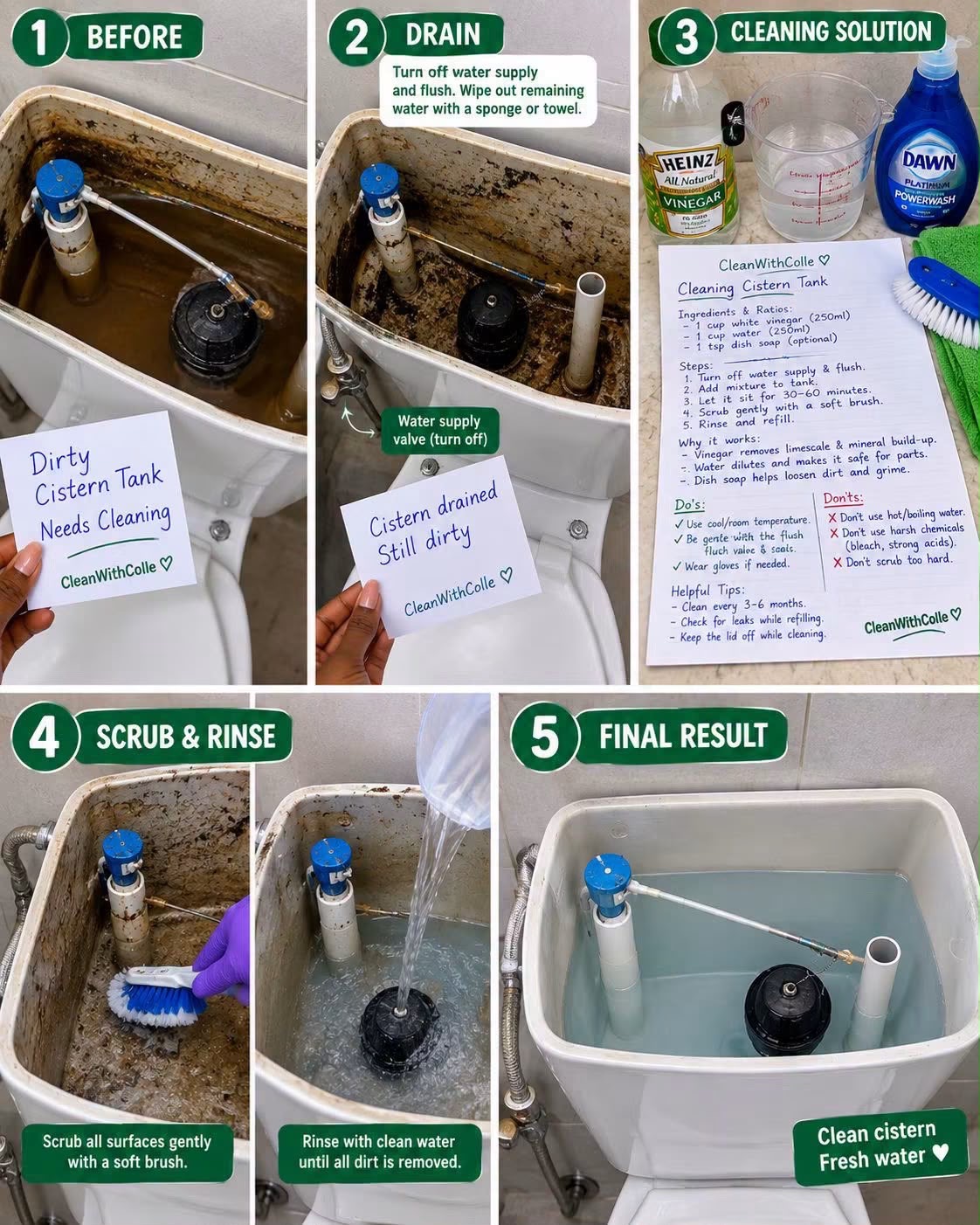
Over time, a toilet cistern tank can collect limescale, mineral deposits, dirt, and grime.
Regular cleaning helps keep the tank fresh and can support the proper operation of the flushing components.
This simple cleaning method uses white vinegar and water, with a small amount of dish soap as an optional addition.
🧴 Ingredients & Ratios
| Ingredient | Amount |
| 🥛 White vinegar | 1 cup (250 ml) |
| 💧 Water | 1 cup (250 ml) |
| 🧼 Dish soap | 1 teaspoon, optional |
🛠️ What You’ll Need
- A soft cleaning brush or old toothbrush
- Household cleaning gloves, if desired
- A clean cloth
- A small container for mixing the solution
🚽 Step-by-Step Cleaning Instructions
Turn Off the Water Supply
Turn off the water supply connected to the toilet cistern.
Flush the toilet to empty as much water as possible from the tank.
Prepare the Cleaning Solution
Mix 1 cup (250 ml) of white vinegar with 1 cup (250 ml) of water in a container.
If the tank contains stubborn dirt or grime, add 1 teaspoon of dish soap.
Add the Mixture
Slowly pour the cleaning mixture into the empty cistern tank.
Try to avoid unnecessary splashing around the surrounding area.
Let It Sit
Allow the mixture to sit for approximately 30–60 minutes.
This gives the vinegar time to help loosen limescale and mineral deposits.
Scrub Gently
Using a soft brush, gently scrub the inside walls of the tank and areas where deposits have accumulated.
Be particularly gentle around the flush valve, seals, rubber components, and other mechanical parts.
Rinse the Tank
After cleaning, rinse the tank thoroughly with clean water.
Make sure there is no visible residue left behind.
Refill the Tank
Turn the water supply back on and allow the cistern to refill.
While it is filling, carefully check the connections, seals, and surrounding area for any signs of leakage.
✨ Why This Cleaning Method Works
🥛 White Vinegar
White vinegar contains acetic acid, which can help loosen and dissolve limescale and certain mineral deposits.
💧 Water
Water dilutes the vinegar and makes the cleaning solution milder for routine cleaning.
🧼 Dish Soap
A small amount of dish soap can help loosen dirt, grime, and other residues from surfaces inside the tank.
✅ Do’s
- Use cool or room-temperature water.
- Use a soft brush for cleaning.
- Handle the flush valve and seals gently.
- Wear gloves if you prefer to protect your hands.
- Check for leaks after turning the water supply back on.
❌ Don’ts
- Do not use hot or boiling water.
- Do not use harsh cleaning chemicals.
- Do not mix vinegar with bleach or other cleaning products.
- Avoid strong acids that may damage certain components.
- Do not scrub rubber seals or mechanical parts aggressively.
💡 Helpful Cleaning Tips
Clean Every 3–6 Months
For routine maintenance, cleaning the cistern every 3–6 months can be a practical schedule, depending on water quality and how quickly mineral deposits build up.
Check for Leaks
When the tank begins to refill, inspect the connections, seals, and flushing mechanism.
Finding a leak early can help prevent water waste and more significant plumbing problems.
Keep the Lid Off While Cleaning
Remove the cistern lid while cleaning so you can see the internal components clearly and reach the areas that need attention.
🧽 For Heavy Limescale
If you notice a significant amount of limescale or mineral buildup, avoid forcing or scraping the components.
It is better to clean gently and repeat the process if necessary than to use abrasive tools or aggressive chemicals that could damage the tank components.
🏠 Preventive Maintenance
Regularly cleaning the cistern and checking its seals and flushing mechanism can help keep the toilet functioning properly.
If you notice persistent leaks, a malfunctioning flush mechanism, or damaged components, consider replacing the affected part or contacting a qualified plumber.
⚠️ Important Safety Precautions
Never mix white vinegar with bleach or other cleaning chemicals.
Use cleaning products that are appropriate for your toilet’s materials and follow the manufacturer’s recommendations whenever they are available.
Keep cleaning products away from children and pets.
Conclusion
Cleaning a toilet cistern tank does not have to be complicated.
With white vinegar, water, a soft brush, and a little patience, you can tackle everyday limescale, mineral deposits, dirt, and grime without using unnecessarily harsh cleaning methods.
Regular maintenance every few months, combined with checking for leaks and worn components, can help keep your toilet cistern clean and working properly.