
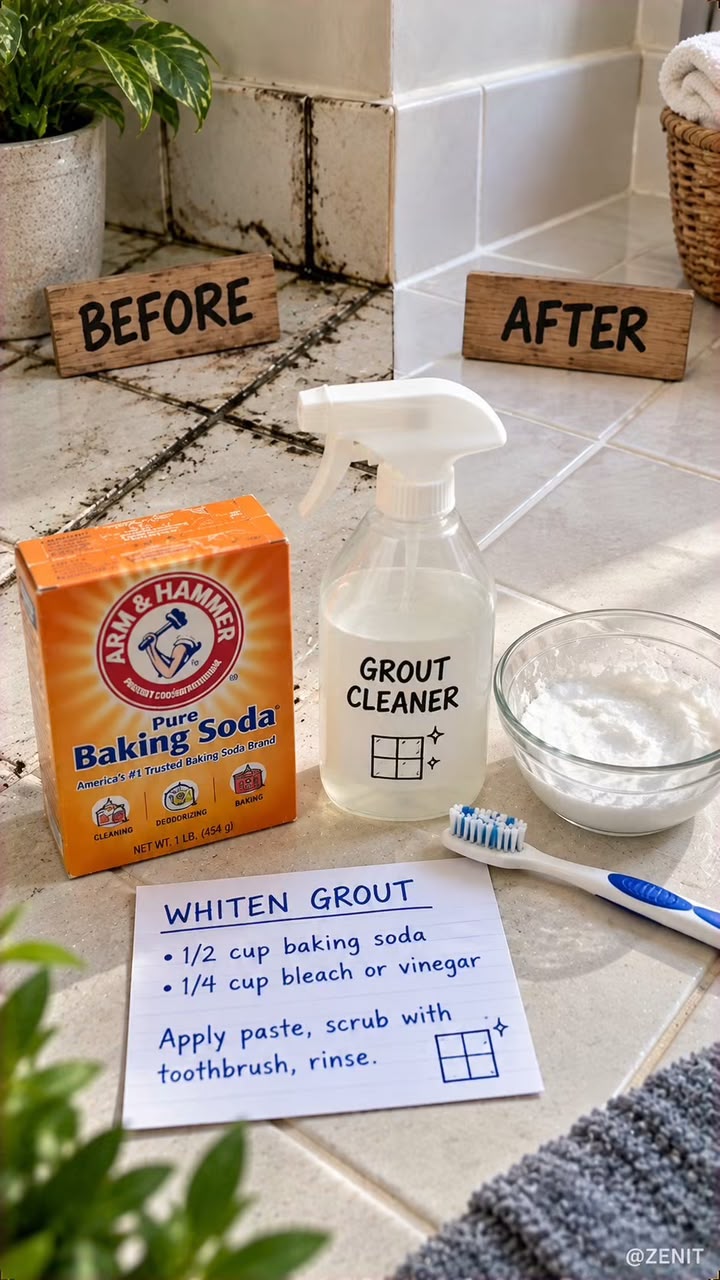
Dirty or discolored grout can make an otherwise clean bathroom or kitchen look dull. This simple homemade grout-cleaning method uses baking soda to create a gentle scrubbing paste, with either diluted vinegar or a separate bleach-based option depending on the type of staining.
The baking soda helps loosen surface grime, while brushing works the cleaner into the grout lines. With a little patience and some scrubbing, this method can help refresh the appearance of many tiled surfaces.
🧼 Cleaning Overview
| Item | Details |
| Preparation | 5 minutes |
| Cleaning Time | 10–20 minutes |
| Difficulty | Easy |
| Best For | Tile grout and surface dirt |
| Method | Scrub and rinse |
| Tools | Small bowl + grout brush or old toothbrush |
🛒 Ingredients
Option 1: Baking Soda & Vinegar
- ½ cup baking soda
- ¼ cup white vinegar
- Water, as needed
Option 2: Baking Soda & Diluted Bleach
- ½ cup baking soda
- ¼ cup properly diluted bleach solution, following the bleach product’s label directions
Important: Do not combine bleach and vinegar. Never mix bleach with vinegar, ammonia, acids, or other household cleaners because dangerous fumes can form.
🧰 What You’ll Need
- Small mixing bowl
- Old toothbrush or grout-cleaning brush
- Measuring cups
- Spray bottle for plain water or a compatible grout-cleaning solution
- Rubber gloves
- Clean cloth or sponge
🧽 Step-by-Step Instructions
1. Prepare the Area
Remove loose dirt, hair, and debris from the tiled surface.
Open windows or turn on the bathroom ventilation fan to improve airflow.
If you’re using a commercial bleach product, read and follow its label instructions carefully.
2. Make the Baking Soda Paste
Place ½ cup of baking soda in a small bowl.
For the vinegar method, gradually add ¼ cup of white vinegar and stir until you have a thick, spreadable paste.
If the mixture is too thin, add a little more baking soda.
3. Apply to the Grout
Spread a small amount of the paste directly onto the grout lines.
Work in small sections rather than covering the entire floor or wall at once.
For the bleach option, use the baking-soda mixture and diluted bleach only as directed by the bleach label—and keep bleach completely separate from vinegar.
4. Scrub the Grout
Using an old toothbrush or grout brush, scrub the grout lines with firm back-and-forth movements.
Pay particular attention to areas with visible dirt or discoloration.
For stubborn buildup, allow a compatible baking-soda-based paste to sit briefly before scrubbing again.
5. Rinse Thoroughly
Once the grout has been scrubbed, rinse the area thoroughly with clean water.
Use a clean sponge or cloth to remove the loosened residue.
Repeat the rinsing process if necessary so no cleaner remains on the tile or grout.
6. Dry the Surface
Wipe the tiles and grout with a clean, dry microfiber cloth.
Allow the area to dry completely.
The grout may appear different once all moisture and residue have disappeared.
✨ Best Tips for Cleaner-Looking Grout
Always test your chosen cleaning method on a small, inconspicuous area first, especially when working with colored grout, natural stone, or delicate surfaces.
Use a dedicated grout brush when possible. Its narrower shape makes it easier to work directly along the grout lines.
Avoid using excessive pressure on damaged or crumbling grout because aggressive scrubbing can make the problem worse.
For regular maintenance, wiping tiled surfaces frequently can help prevent dirt and soap residue from building up.
🧴 Best Cleaning Option
Baking soda is useful when you need mild mechanical scrubbing action.
Vinegar is an acidic cleaner, but it is not suitable for every tile or grout surface, particularly acid-sensitive natural stones such as marble, limestone, and travertine.
Bleach can help whiten some stained grout, but it should be used carefully, with adequate ventilation and according to the product label.
For colored grout, natural stone, or uncertain surfaces, a cleaner specifically labeled as safe for that material is often the safer choice.
🚿 Where to Use It
This cleaning method can be useful on compatible ceramic or porcelain tile grout in areas such as:
- Bathroom floors
- Shower walls
- Kitchen backsplashes
- Entryway tiles
- Laundry-room floors
Always check the surface material before using vinegar or bleach.
⚠️ Important Safety Precautions
Never mix bleach with vinegar.
Never combine bleach with ammonia, acids, toilet-bowl cleaners, or other household cleaning products.
Wear gloves when handling cleaning solutions and keep the area well ventilated.
Keep cleaning products away from children and pets.
Do not use vinegar-based cleaners on marble, limestone, travertine, or other acid-sensitive natural stone.
If using bleach, follow the manufacturer’s dilution, contact-time, ventilation, and rinsing instructions rather than assuming that a homemade concentration is appropriate.
❓ Frequently Asked Questions
Can baking soda whiten grout?
Baking soda can help remove surface dirt and discoloration through gentle scrubbing, which may make grout look cleaner and brighter. It does not necessarily restore permanently stained grout to its original color.
Can I mix baking soda with vinegar?
They can be combined for certain cleaning applications, but the mixture quickly reacts and fizzes, reducing the effectiveness of each ingredient. For grout cleaning, use them cautiously and never combine vinegar with bleach.
Can I use this on colored grout?
Test a small hidden area first. Strong cleaning agents, especially bleach, can affect some colored grout.
Can I use vinegar on all tiles?
No. Vinegar can damage acid-sensitive natural stone such as marble, limestone, and travertine.
How often should I clean grout?
For regularly used bathrooms and kitchens, light maintenance cleaning every week or two can help prevent heavy buildup. Deeper cleaning can be done when visible discoloration develops.
What if the grout is still dark after cleaning?
Persistent dark areas may be caused by deep staining, mold growth, damaged grout, or moisture problems rather than ordinary surface dirt. In those cases, repeated aggressive scrubbing may not solve the underlying issue.
🧽 Final Thoughts
A simple baking-soda-based cleaning paste and some careful scrubbing can help refresh dirty-looking grout on compatible tile surfaces.
The key is to choose the cleaning agent according to the material, rinse thoroughly, and never mix bleach with vinegar or other incompatible cleaners.
For best results, work in small sections, scrub the grout carefully, rinse away all residue, and allow the surface to dry completely.