
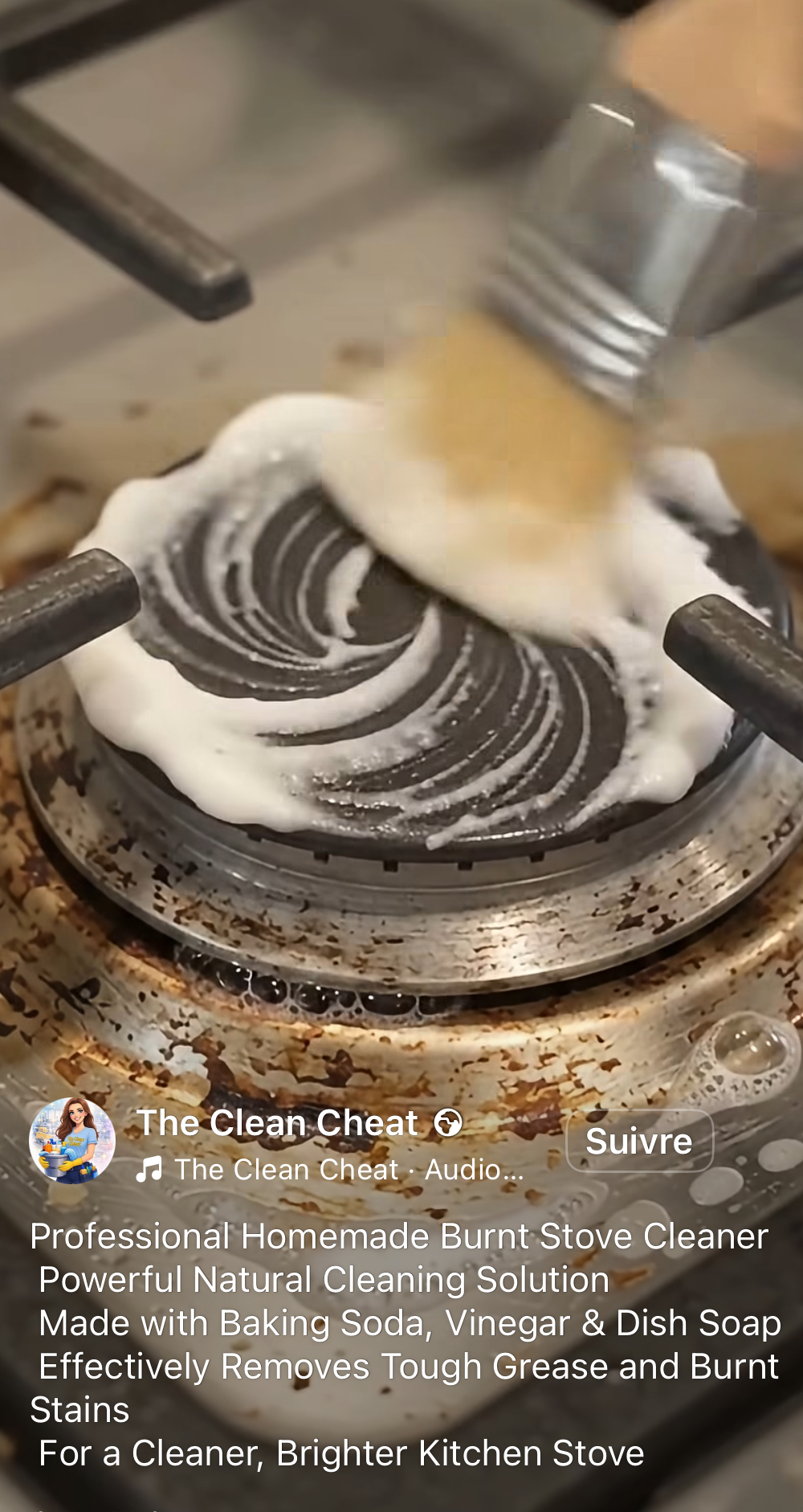
If your stovetop is covered with stubborn grease, food splatters, and burnt-on residue, this simple homemade cleaning paste can help loosen the mess and make scrubbing easier.
Made with baking soda, dish soap, and a small amount of white vinegar, this DIY cleaner is inexpensive and easy to prepare. It works especially well on removable grates and suitable hard surfaces where grease and food residue have accumulated.
Cleaning Overview
| Details | Information |
| Preparation Time | 5 minutes |
| Application Time | 15–30 minutes |
| Difficulty | Easy |
| Best For | Grease and food residue |
| Type | Homemade Cleaning Paste |
Ingredients
| Ingredient | Amount |
| Baking soda | ½ cup |
| Dish soap | ¼ cup |
| White vinegar | 2–3 tbsp |
| Water | Optional, if needed |
Step-by-Step Instructions
Step 1: Make the Cleaning Paste
Add the baking soda to a small bowl.
Pour in the dish soap and mix until the ingredients are well combined.
Slowly add the white vinegar while stirring.
The mixture will fizz because the acidic vinegar reacts with the baking soda.
Continue mixing until you have a thick, spreadable paste. If the mixture is too thick, add a very small amount of water.
Step 2: Prepare the Stovetop
Make sure the stovetop is completely cool before cleaning.
Remove the grates and burner caps if your appliance allows you to do so.
Apply the cleaning paste to suitable greasy or dirty surfaces using a sponge, soft brush, or cleaning brush.
For removable grates, you can spread the paste over the areas with the most baked-on residue.
Important: Do not allow the mixture to enter gas burner openings, ignition ports, electrical components, or other appliance openings.
Step 3: Let It Sit
Allow the paste to sit for approximately 15–30 minutes.
The baking soda and dish soap help loosen grease and stuck-on food residue, making the surface easier to scrub.
For particularly stubborn buildup, you may need to repeat the process rather than aggressively scrubbing the surface.
Step 4: Scrub Gently
Use a non-abrasive sponge or soft cleaning brush to gently scrub the dirty areas.
Work in small sections and apply additional paste if necessary.
Avoid using harsh abrasive pads on stainless steel, glass, ceramic, or other delicate cooktop surfaces because they can cause scratches.
Step 5: Wipe and Rinse
Use a clean, damp cloth to remove the cleaning mixture.
Wipe the surface several times until all residue has been removed.
For removable parts, rinse them thoroughly with clean water and dry them completely before putting them back on the stovetop.
Finally, dry the stovetop with a clean microfiber cloth for a clean, polished appearance.
Best Cleaning Tips
Always clean your stovetop when it is completely cool. Never apply homemade cleaning mixtures to hot burners or hot surfaces.
For fresh grease, wipe the spill as soon as the surface has cooled. Fresh residue is much easier to remove than heavily baked-on buildup.
For stubborn stains, repeat the cleaning process instead of applying excessive pressure.
Use a soft sponge or suitable cleaning brush on delicate surfaces to reduce the risk of scratches.
Remove all cleaning residue with clean water, especially around areas where food is prepared.
Best Ingredient Options
Baking soda: Provides gentle abrasive action that can help loosen stuck-on food and grease.
Dish soap: Helps break down oily and greasy residue.
White vinegar: Its acidity can help with certain mineral and food residues, although it is not a replacement for a dedicated degreaser.
Water: A small amount can be added if the mixture needs to be adjusted to a more spreadable consistency.
Important Safety Notes
Never mix this cleaner with bleach, ammonia, oven cleaner, or other commercial cleaning chemicals. Combining cleaning products can produce dangerous fumes or chemical reactions.
Do not use vinegar-based mixtures on surfaces that are specifically labeled as incompatible with acidic cleaners.
For glass or ceramic cooktops, check the manufacturer’s cleaning instructions before using baking soda or any homemade abrasive mixture.
Do not put homemade cleaning paste inside gas burner openings, jets, ignition components, or electrical parts.
After cleaning gas burner components, make sure every removable part is completely dry and correctly positioned before using the stove.
If your stovetop manufacturer recommends a specific cleaner, follow those instructions first.
What This Cleaner Can Help With
This homemade paste can be useful for removing everyday kitchen buildup such as dried food splashes, greasy residue, and some baked-on food deposits.
Very old carbonized or heavily burnt residue may require several applications or a specialized cooktop cleaner.
The result can vary depending on the stovetop material and how long the residue has been present.
Common Mistakes to Avoid
Cleaning a hot stovetop: Always wait until the appliance is completely cool.
Using too much vinegar: A small amount is sufficient. More vinegar does not necessarily make the cleaner more effective.
Scrubbing too aggressively: Excessive scrubbing can damage delicate surfaces.
Leaving residue behind: Thoroughly wipe and rinse the area after cleaning.
Getting cleaner inside burner openings: Keep the paste away from gas ports, igniters, electrical components, and other openings.
Mixing cleaning chemicals: Never combine this homemade cleaner with bleach, ammonia, or other chemical cleaners.
Frequently Asked Questions
Can I use this cleaner on a glass cooktop?
Check the manufacturer’s instructions first. Some glass and ceramic cooktops require specialized cleaning products and can be scratched by abrasive materials.
Can I use it on gas stove grates?
It can be useful for suitable removable grates, but check the manufacturer’s care instructions first. Remove the grates and clean them separately when possible.
How long should I leave the paste on?
Start with 15–30 minutes. For stubborn buildup, repeating the process is safer than aggressively scrubbing.
Can I use this cleaner on stainless steel?
Use caution. Baking soda can be mildly abrasive, and vinegar can affect some finishes. Test a small, inconspicuous area first and follow the appliance manufacturer’s recommendations.
Does vinegar and baking soda make a stronger cleaner?
The mixture fizzes when combined, but the two ingredients also react with each other and partially neutralize one another. The cleaning power of this recipe mainly comes from the dish soap, gentle scrubbing action, and baking soda’s mild abrasiveness, rather than the fizz itself.
What should I use for extremely burnt-on grease?
For heavy carbonized buildup, a manufacturer-approved degreaser or cooktop cleaner may be more effective than a homemade mixture. Always follow the product’s safety instructions.
Final Thoughts
This simple homemade stovetop cleaning paste can be a convenient option for tackling everyday grease, food splashes, and stuck-on kitchen residue.
The combination of baking soda and dish soap provides gentle scrubbing and grease-cutting action, while a small amount of white vinegar creates the familiar fizzing reaction.
For the best results, always start with a completely cool surface, work gently, rinse thoroughly, and follow your appliance manufacturer’s cleaning recommendations. 🧽✨
⚠️ Safety reminder: Always test any homemade cleaner on a small, inconspicuous area first and never mix it with bleach, ammonia, oven cleaner, or other household chemicals.