
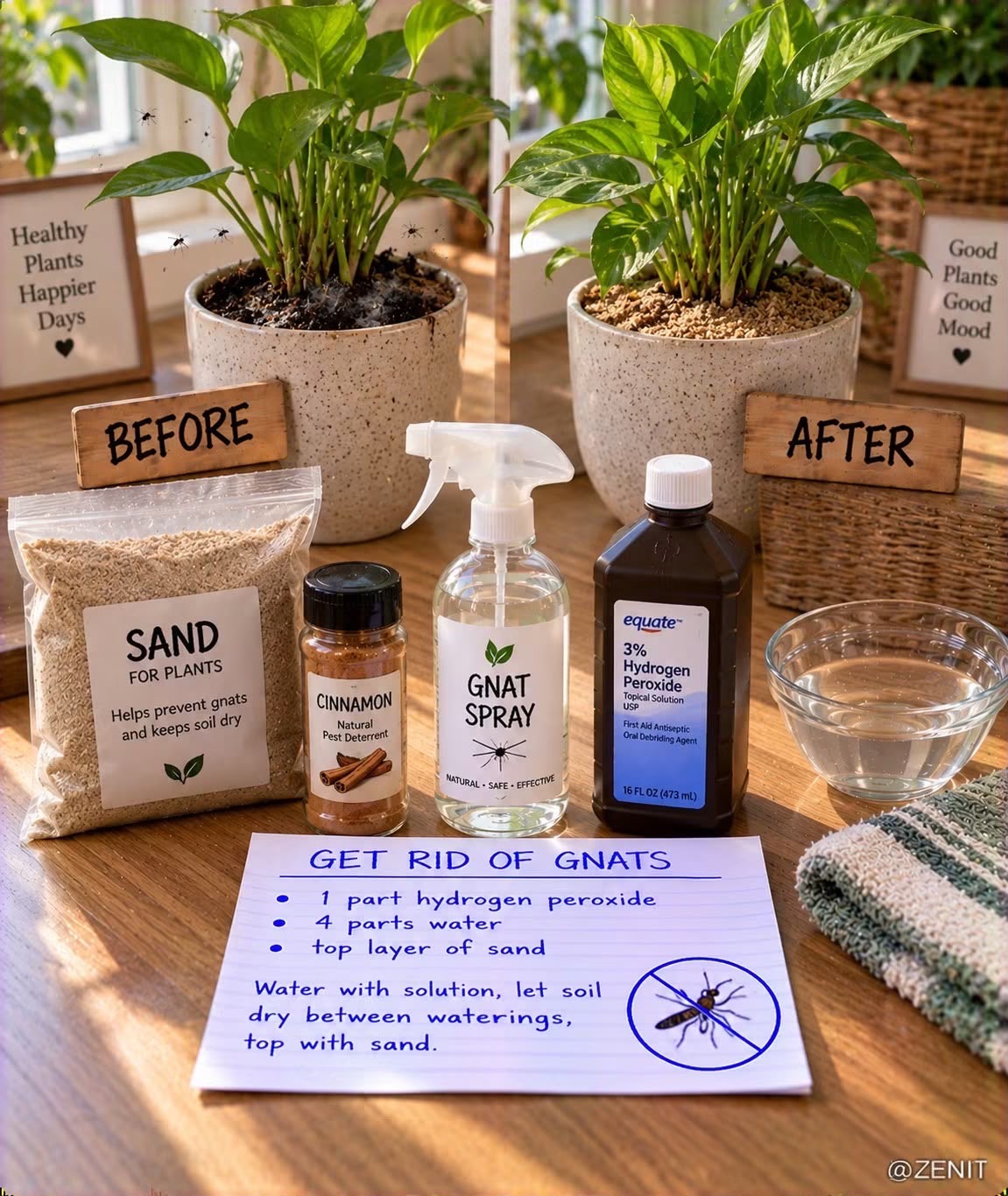
Fungus gnats are tiny flying insects that are commonly found around moist potting soil. Their larvae live in the soil and feed on organic matter, and heavy infestations can sometimes affect young or stressed plants.
One of the most important ways to reduce fungus gnats is to manage moisture. This simple treatment combines careful watering with a diluted 3% hydrogen peroxide solution and a dry surface barrier to help make the potting soil less attractive to these pests.
🌿 Treatment Overview
| Category | Details |
| Preparation Time | 2 minutes |
| Treatment Time | During watering |
| Best For | Fungus gnats and larvae in potting soil |
| Main Method | Moisture control + soil treatment |
| Difficulty | Easy |
🛒 Ingredients & Supplies
| Item | Amount |
| 3% hydrogen peroxide | 1 part |
| Clean water | 4 parts |
| Fine horticultural sand | Enough to cover the soil surface |
| Ground cinnamon | Optional |
| Watering can or suitable container | 1 |
Important Note
Use only 3% hydrogen peroxide and dilute it with water as described. Do not use concentrated hydrogen peroxide on plants or soil.
Because plant species and potting mixes vary, it is a good idea to test the diluted solution on one plant first and observe how it responds.
🧪 How to Make the Solution
For a small batch, combine:
1 part 3% hydrogen peroxide + 4 parts clean water
For example, mix 1 cup of 3% hydrogen peroxide with 4 cups of water.
Gently stir or swirl the mixture to combine.
Prepare only the amount you need rather than storing a large batch.
🌱 Step-by-Step Instructions
Step 1: Prepare the Anti-Gnat Solution
Measure 1 part 3% hydrogen peroxide and 4 parts water.
Pour them into a clean watering can or suitable container and mix gently.
Do not increase the concentration. A stronger solution is not necessarily more effective and may damage plant roots or beneficial soil organisms.
Step 2: Treat the Potting Soil
Apply the diluted solution to the potting soil rather than spraying the leaves.
Water the soil evenly, using only the amount appropriate for the particular plant and pot.
The goal is to treat the upper soil where fungus gnat larvae may be present without keeping the potting mix excessively wet.
Step 3: Allow the Soil to Dry
Allow the upper layer of the potting soil to dry between waterings, according to the plant’s normal watering requirements.
Fungus gnats are strongly associated with consistently moist soil, so avoiding unnecessary overwatering is one of the most important steps in reducing their numbers.
Do not allow plants that require consistently moist soil to dry out excessively. Different plants have different watering needs.
Step 4: Add a Surface Barrier
Once the soil surface is appropriately dry, add a layer of fine horticultural sand over the top.
A layer of approximately ½–¾ inch (1–2 cm) can create a physical barrier that makes it more difficult for adult fungus gnats to reach moist soil and lay eggs.
Make sure the material is suitable for use around plants and does not prevent proper drainage or air circulation.
Step 5: Optional Cinnamon
If desired, sprinkle a small amount of ground cinnamon over the soil surface.
Cinnamon is sometimes used as a traditional household gardening remedy, but it should not be considered a proven standalone treatment for a fungus gnat infestation.
Use only a light amount rather than covering the soil heavily.
⭐ Best Tips for Getting Rid of Fungus Gnats
Avoid frequent watering when your plants do not need it. Constantly damp potting soil can create favorable conditions for fungus gnats.
Remove dead leaves and other decaying organic material from the surface of the pot.
Make sure your pots have adequate drainage holes and that excess water can escape freely.
Yellow sticky traps placed near affected plants can help catch adult fungus gnats and reduce their population.
For persistent infestations, consider replacing heavily infested potting soil with fresh, sterile potting mix when appropriate for the plant.
🪴 Best Prevention Methods
Allowing the soil surface to dry appropriately between waterings is one of the simplest ways to make indoor plants less attractive to fungus gnats.
Avoid leaving standing water in saucers or decorative containers.
When purchasing new plants, inspect the potting soil and leaves for signs of pests before bringing them near your existing houseplants.
Keep indoor plants clean and remove fallen leaves from the surface of the soil.
🔄 Alternative Treatment Options
Yellow sticky traps are useful for catching adult fungus gnats.
A thin layer of an appropriate inorganic soil-covering material can also help reduce access to the soil surface.
For severe or persistent infestations, biological controls such as beneficial nematodes or products specifically labeled for fungus gnats may be more reliable than homemade remedies.
⚠️ Common Mistakes to Avoid
Do not use undiluted hydrogen peroxide directly on plant roots or potting soil.
Do not increase the concentration in an attempt to kill more larvae.
Do not repeatedly soak the soil, because excessive moisture can contribute to root problems and create conditions that favor fungus gnats.
Do not rely on cinnamon alone to control an established infestation.
Do not cover drainage holes with sand or another material.
Do not apply any treatment without checking whether the plant species can tolerate it.
❓ Frequently Asked Questions
What are fungus gnats?
Fungus gnats are small, mosquito-like flies commonly found around damp indoor potting soil. Their larvae live in the soil.
Why do I keep getting fungus gnats?
The most common reason is consistently moist potting soil. Overwatering and poor drainage can create favorable conditions for their life cycle.
Does hydrogen peroxide kill fungus gnat larvae?
A diluted 3% hydrogen peroxide solution is commonly used by home gardeners as a soil treatment, but its effectiveness can vary. It should be used cautiously because excessive concentrations can harm plant roots and soil life.
Can I use this treatment on every houseplant?
Not necessarily. Different plants have different sensitivities and watering requirements. Test cautiously and prioritize proper moisture management.
Is cinnamon enough to eliminate fungus gnats?
No. Cinnamon should not be considered a reliable standalone treatment for an established infestation. Moisture control, sticky traps, and appropriate pest-management methods are generally more useful.
How long does it take to get rid of fungus gnats?
Because fungus gnats have multiple life stages, eliminating an infestation may take several weeks. Consistent moisture control and targeting both adults and larvae are important.
🌿 Final Thoughts
This natural fungus gnat approach focuses on the most important part of controlling these tiny pests: managing moisture in the potting soil.
A properly diluted 3% hydrogen peroxide solution can be used cautiously as a soil treatment, while allowing the appropriate portion of the soil to dry and adding a physical surface barrier can make the environment less attractive to fungus gnats.
For persistent infestations, combine good watering practices with yellow sticky traps and, when necessary, a plant-safe pest-control product specifically labeled for fungus gnats.