
Introduction
Bed bugs can be difficult to eliminate because they hide in mattresses, bed frames, furniture, cracks, and other small spaces.
A successful bed bug treatment usually requires more than one step. Thorough cleaning, frequent vacuuming, heat treatment for washable fabrics, mattress protection, and monitoring can work together to reduce an infestation.
This practical home bed bug control plan uses common household supplies and focuses on cleaning, isolation, monitoring, and safe application.
For a large or persistent infestation, professional pest control may be necessary.
Recipe Overview
| Category | Details |
| Preparation Time | 30–60 minutes |
| Active Treatment Time | 1–2 hours |
| Laundry Treatment | 30–60 minutes per load |
| Monitoring Period | Several weeks |
| Difficulty | Moderate |
| Best For | Early-stage or limited infestations |
| Main Focus | Cleaning, vacuuming, heat, isolation, and monitoring |
Why You’ll Love This Treatment Plan
This approach combines several important bed bug control methods instead of relying on a single product.
It helps reduce hiding places and removes bed bugs and eggs from areas that can be safely cleaned.
The mattress encasement and bed bug interceptors are especially useful because they help isolate the sleeping area and make future monitoring easier.
The plan is also inexpensive compared with many professional pest control services, although severe infestations may still require professional treatment.
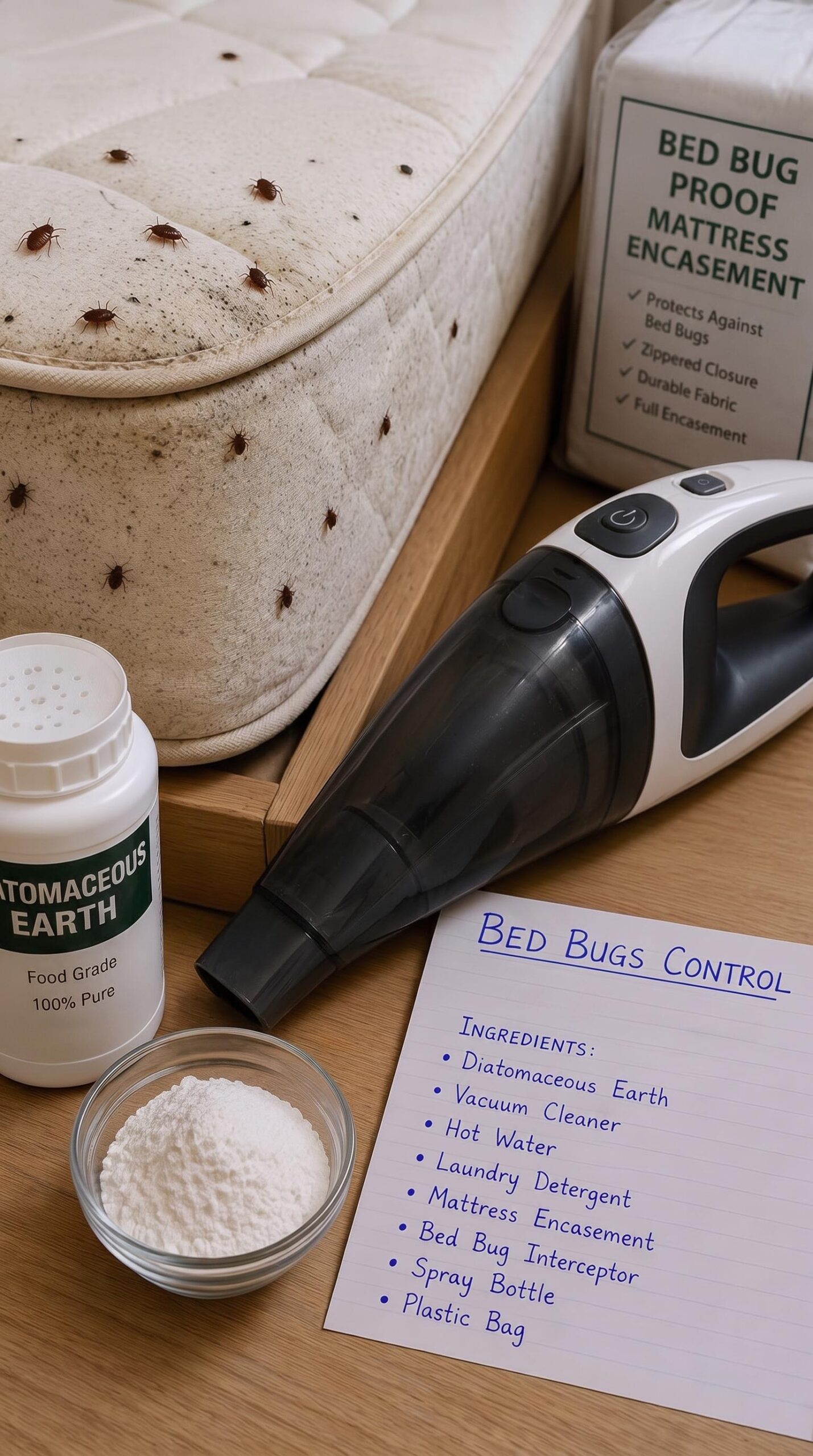
Ingredients and Supplies
| Supply | Suggested Amount | Purpose |
| Diatomaceous Earth | Small amount | Helps control insects when properly applied |
| Vacuum Cleaner | 1 | Removes bed bugs, eggs, and debris |
| Hot Water | As needed | Cleaning washable surfaces |
| Laundry Detergent | As needed | Washing bedding and clothing |
| Mattress Encasement | 1 | Seals the mattress and prevents access |
| Bed Bug Interceptors | 4 | Monitors and traps bugs around bed legs |
| Spray Bottle | 1 | For water-based cleaning solution |
| Plastic Bags | Several | Isolates contaminated clothing and fabrics |
Important Note About Diatomaceous Earth
Use only a product specifically labeled for indoor pest control.
Avoid creating airborne dust. Do not apply large piles of powder around the bedroom.
Keep it away from children and pets, and follow the product label carefully.
Step-by-Step Instructions
Step 1: Confirm the Problem
Before beginning treatment, inspect the mattress, box spring, bed frame, headboard, and nearby furniture.
Look for live insects, tiny dark spotting, shed skins, eggs, or other signs of bed bug activity.
Avoid moving furniture or bedding into another bedroom because this can spread the infestation.
Step 2: Remove Bedding Carefully
Place sheets, blankets, pillowcases, and washable clothing directly into plastic bags before carrying them to the laundry area.
Seal the bags tightly.
This helps prevent insects from dropping off during transportation.
Step 3: Wash and Heat-Treat Fabrics
Wash washable bedding and clothing using the hottest water temperature that the fabric can safely tolerate.
Dry items thoroughly using a high-heat dryer setting when permitted by the care label.
The dryer is particularly important because sustained heat can kill bed bugs and their eggs.
Items that cannot be washed should be evaluated according to their material and the manufacturer’s care instructions.
Step 4: Vacuum Thoroughly
Use a vacuum cleaner with a suitable attachment to clean mattress seams, bed-frame joints, baseboards, cracks, and nearby furniture.
Move slowly around seams and crevices.
Pay particular attention to areas where the mattress touches the bed frame.
After vacuuming, immediately empty the vacuum according to the manufacturer’s instructions.
If the vacuum uses a disposable bag, seal the used bag inside a plastic bag before disposal.
Step 5: Clean the Surrounding Area
Remove unnecessary clutter around the bed.
Clean hard surfaces with an appropriate household cleaner or water-based cleaning solution.
A spray bottle can be used to apply a suitable cleaning solution to compatible hard surfaces.
Do not spray homemade mixtures onto mattresses, electrical equipment, upholstered furniture, or other materials unless the product is specifically appropriate for that surface.
Step 6: Install the Mattress Encasement
Place a bed-bug-proof mattress encasement completely around the mattress.
Close the zipper fully and inspect the enclosure for gaps or damage.
Keep the encasement on the mattress continuously according to the manufacturer’s instructions.
Do not remove it simply because you stop seeing insects.
Step 7: Install Bed Bug Interceptors
Place one interceptor underneath each leg of the bed.
Make sure the bed does not touch nearby walls, furniture, curtains, or other objects.
The goal is to create a monitored pathway between the floor and the bed.
Check the interceptors regularly for insect activity.
Step 8: Use Diatomaceous Earth Carefully
If you choose to use diatomaceous earth, apply only a very thin layer in appropriate cracks and crevices and strictly follow the product label.
Avoid spreading it into the air.
Do not place loose powder on areas where people or pets regularly walk, sleep, or play.
More powder does not necessarily mean better pest control.
Step 9: Keep the Sleeping Area Isolated
After treatment, keep the bed separated from walls and other furniture.
Avoid storing clothing, bags, boxes, or other belongings underneath the bed.
This makes monitoring easier and reduces potential hiding places.
Step 10: Continue Monitoring
Bed bug control usually requires persistence.
Inspect the bed area and interceptors regularly.
Continue vacuuming and laundering appropriate fabrics as needed.
If live bed bugs continue to appear despite repeated treatment, consider contacting a licensed pest management professional.
Best Tips
Start treatment as soon as you have confirmed bed bug activity.
Avoid moving to another bedroom because this can allow bed bugs to follow you and establish additional hiding areas.
Reduce clutter around the bed so inspections become easier.
Use sealed plastic bags when transporting potentially infested fabrics.
Keep the mattress encasement intact and regularly inspect it for tears.
Check bed bug interceptors frequently, especially during the first several weeks.
Follow every pesticide or pest-control product label exactly.
Best Ingredient Options
Diatomaceous Earth
Choose a product labeled for pest control and indoor use when appropriate.
Avoid using industrial-grade powders or products not intended for indoor insect control.
Mattress Encasement
Choose a durable encasement specifically designed to prevent bed bugs from escaping or entering.
A strong zipper and tightly sealed seams are important features.
Bed Bug Interceptors
Select interceptors designed to fit securely beneath bed legs.
Transparent designs can make inspection easier.
Vacuum Cleaner
A vacuum with a crevice attachment is particularly useful for mattress seams, furniture joints, and narrow cracks.
Plastic Bags
Use strong, sealable bags large enough to contain bedding and clothing without overfilling them.
Recipe Variations
Minimal-Supply Method
If you do not have every item, begin with careful vacuuming, laundry treatment, clutter reduction, mattress protection, and monitoring.
Bedroom-Focused Treatment
Concentrate the initial cleaning effort on the bed, nightstands, headboard, baseboards, and furniture immediately surrounding the sleeping area.
Whole-Room Cleaning Plan
For more extensive activity, gradually inspect and clean other furniture and storage areas without unnecessarily moving belongings from one room to another.
What to Serve With
This is a household pest-control plan, so there is no food or beverage pairing.
Instead, the best combination is vacuuming + laundry heat treatment + mattress encasement + bed isolation + monitoring.
Using these measures together is more practical than depending on a single home remedy.
Make-Ahead Instructions
The preparation can be organized before treatment begins.
Place plastic bags, laundry supplies, the vacuum cleaner, mattress encasement, and interceptors where they are easily accessible.
Wash and dry bedding before completing the final bedroom cleaning.
Do not remove items from sealed bags until they have been appropriately treated.
Storage
Keep unused supplies in their original packaging and follow the manufacturer’s storage instructions.
Store diatomaceous earth securely and away from children, pets, food, and areas where the powder could become airborne.
Keep unused plastic bags and cleaning supplies in a dry storage area.
Reheating
Reheating is not applicable to this household treatment plan.
For washable fabrics, use the hottest washing and drying temperatures permitted by the item’s care instructions rather than attempting to “reheat” the bedroom or household.
Never use an improvised heat source to heat a room or mattress because of the risk of fire or property damage.
Freezing
Freezing can sometimes be used for suitable small items, but it is not the easiest method for treating an entire bedroom.
If considering freezing, use a reliable freezer and research the requirements for the specific item and infestation before relying on this method.
Do not assume that simply placing an item in a freezer for a short period will eliminate an infestation.
Common Mistakes to Avoid
Moving to Another Bedroom
Sleeping in another room can potentially spread the infestation.
Spreading Clutter
Moving boxes, clothing, or furniture between rooms can create additional hiding places.
Using Excessive Diatomaceous Earth
Large quantities of dust can increase inhalation exposure without necessarily improving results.
Spraying Random Household Mixtures
Many homemade sprays have not been proven to eliminate bed bugs or their eggs.
Avoid spraying unknown mixtures on mattresses, furniture, or electrical equipment.
Ignoring the Bed Frame
Bed bugs can hide in joints, cracks, screw holes, and other parts of the frame.
Removing the Mattress Encasement Too Early
An encasement should remain securely closed according to the manufacturer’s instructions.
Stopping After One Cleaning
Seeing fewer insects does not always mean the infestation has been completely eliminated.
Continue monitoring and repeat appropriate cleaning measures.
Using Unsafe Heat
Never use a space heater, hair dryer, heat gun, or other improvised heating device to treat a mattress or room.
Professional heat treatment uses specialized equipment and temperature monitoring.
Nutrition Estimate
| Nutritional Information | Amount |
| Calories | Not applicable |
| Protein | Not applicable |
| Carbohydrates | Not applicable |
| Fat | Not applicable |
| Fiber | Not applicable |
| Sugar | Not applicable |
This is a household pest-control treatment rather than a food recipe, so nutritional values do not apply.
Frequently Asked Questions
What is the fastest way to start bed bug control?
Begin by containing bedding and clothing, laundering and thoroughly drying suitable fabrics, vacuuming the sleeping area, reducing clutter, and installing a mattress encasement and bed interceptors.
Can a vacuum cleaner remove bed bugs?
Vacuuming can physically remove bed bugs, eggs, and debris from accessible areas.
However, vacuuming alone should not be considered a guaranteed complete treatment.
Does hot water kill bed bugs?
High temperatures can kill bed bugs, but the effectiveness depends on achieving sufficient heat for an adequate period.
For laundry, follow the fabric care label and use a thorough drying cycle when appropriate.
Does diatomaceous earth kill bed bugs?
Diatomaceous earth can be used as an insect-control product when applied correctly, but it should not be treated as an instant solution.
Use only an appropriate labeled product and follow all safety directions.
Should I throw away my mattress?
Not necessarily.
A suitable mattress encasement can help isolate a mattress, while proper cleaning and professional treatment may allow furniture to remain in use.
Can bed bugs spread to other rooms?
Yes.
They can spread when people move between rooms and when infested clothing, luggage, furniture, or other belongings are transported.
How long does bed bug treatment take?
The timeline varies depending on the size and severity of the infestation.
Successful bed bug control often requires repeated inspection and treatment rather than a single cleaning session.
When should I call professional pest control?
Consider professional help when the infestation is widespread, continues after repeated cleaning and monitoring, or involves multiple rooms.
A licensed pest management professional can identify the infestation and recommend an appropriate treatment strategy.
Final Thoughts
Bed bug control requires patience, organization, and consistency.
A practical home strategy combines thorough vacuuming, careful laundry handling, heat-based fabric treatment, mattress encasement, bed bug interceptors, clutter reduction, and regular monitoring.
Avoid unsafe DIY pesticide applications or improvised heat treatments.
For persistent or extensive infestations, professional pest control can provide a safer and more comprehensive solution.