
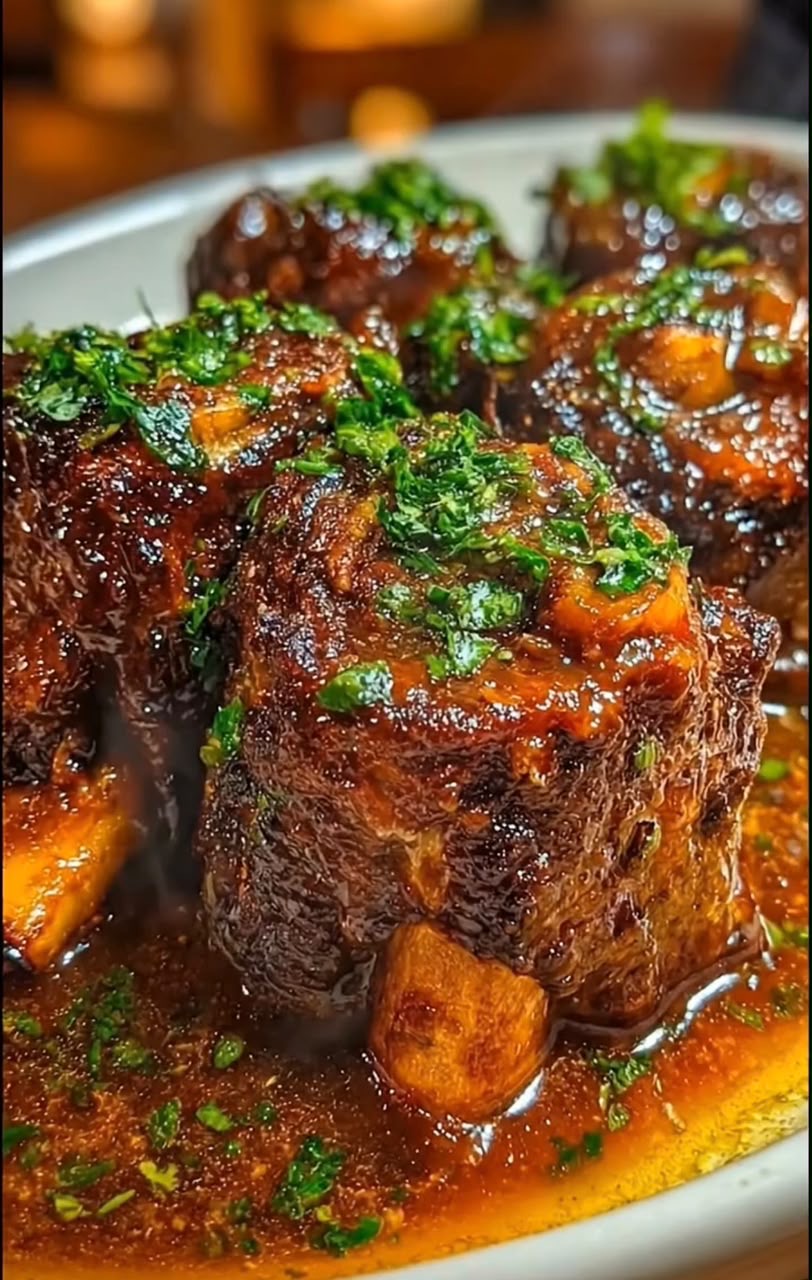
Slow-Braised Oxtail with Red Wine Reduction & Lemon-Parsley Gremolata
Tender, fall-apart oxtail slowly braised in red wine, beef stock, aromatic vegetables, and herbs is the ultimate comfort food. After several hours in the oven, the meat becomes incredibly tender while the braising liquid transforms into a deeply flavorful, glossy sauce.
A fresh lemon-parsley gremolata is the perfect finishing touch. Its bright citrus, fresh herbs, and subtle garlic cut through the richness of the braised beef, creating a beautifully balanced dish.
Serve this luxurious slow-braised oxtail over creamy polenta, mashed potatoes, or buttered pappardelle for a restaurant-style meal at home.
Recipe Overview
| Category | Details |
| Recipe | Slow-Braised Oxtail with Red Wine Reduction |
| Yield | 4 servings |
| Prep Time | 20 minutes |
| Cook Time | 3½–4 hours |
| Total Time | About 4 hours 15 minutes |
| Cooking Method | Oven braising |
| Temperature | 325°F (160°C) |
| Main Protein | Beef oxtail |
| Difficulty | Moderate |
Why You’ll Love This Recipe
This recipe turns an inexpensive, flavorful cut of beef into an exceptionally tender and elegant meal.
The long, slow braising process allows the connective tissue around the bones to break down, creating incredibly succulent meat and a naturally rich sauce.
The red wine adds depth and complexity, while tomato paste, garlic, onions, carrots, celery, thyme, and bay leaves create a classic savory foundation.
The lemon-parsley gremolata brings freshness to every bite, keeping the finished dish from feeling overly heavy.
It is also an excellent make-ahead meal because the flavor becomes even more developed after resting overnight.
Ingredients
For the Braised Oxtail
| Ingredient | Amount |
| Oxtail segments or thick-cut bone-in beef short ribs | 4 lbs (1.8 kg) |
| Olive oil | 2 tbsp |
| Yellow onion, finely diced | 1 medium |
| Carrots, finely diced | 2 large |
| Celery, finely diced | 2 stalks |
| Garlic, minced | 4 cloves |
| Tomato paste | 2 tbsp |
| Full-bodied red wine | 2 cups (475 ml) |
| Beef or bone stock | 3–4 cups (750–950 ml) |
| Bay leaves | 2 |
| Fresh thyme | 4 sprigs |
| Kosher salt | To taste |
| Freshly cracked black pepper | To taste |
| All-purpose flour | For dusting |
For the Lemon-Parsley Gremolata
| Ingredient | Amount |
| Fresh flat-leaf parsley, finely chopped | ½ cup |
| Fresh lemon zest | 1 tbsp |
| Garlic, finely minced or grated | 1 clove |
| Extra-virgin olive oil | 1 tbsp |
| Sea salt | Pinch |
Step-by-Step Instructions
1. Prepare the Oxtail
Pat the oxtail pieces thoroughly dry with paper towels. Removing excess moisture helps the meat develop a deeper brown crust during searing.
Season generously on all sides with kosher salt and freshly cracked black pepper.
Lightly dust the pieces with all-purpose flour, shaking off any excess.
2. Preheat the Oven
Preheat your oven to 325°F (160°C).
Use a large Dutch oven or another heavy, oven-safe pot with a tight-fitting lid.
3. Sear the Meat
Heat the olive oil in the Dutch oven over medium-high heat.
Working in batches, add the oxtail pieces without overcrowding the pot.
Sear for approximately 8–10 minutes total, turning the pieces so that several sides become deeply browned.
The goal is a rich, dark crust rather than simply cooking the outside of the meat.
Transfer the browned meat to a plate and set aside.
4. Cook the Aromatic Vegetables
Reduce the heat to medium.
Add the diced onion, carrots, and celery to the flavorful fat remaining in the pot.
Cook for approximately 6–8 minutes, stirring occasionally, until the vegetables soften and begin to caramelize.
Add the minced garlic and tomato paste.
Cook for another 1 minute, stirring constantly, until the garlic becomes fragrant and the tomato paste darkens slightly.
5. Deglaze with Red Wine
Slowly pour the red wine into the Dutch oven.
As the wine hits the hot pot, use a wooden spoon to scrape the browned bits from the bottom.
Those caramelized bits contain concentrated flavor and will become part of the sauce.
Bring the wine to a gentle simmer and cook uncovered for approximately 6–8 minutes, or until it has reduced by about half.
6. Add the Beef and Stock
Return the browned oxtail pieces to the Dutch oven.
Arrange them so they sit comfortably in the cooking liquid.
Pour in enough beef or bone stock to bring the liquid approximately three-quarters of the way up the meat. You may need anywhere from 3 to 4 cups depending on the size and shape of your pot.
Add the bay leaves and fresh thyme.
Bring the liquid to a gentle simmer.
7. Braise Slowly
Cover the Dutch oven tightly with its lid.
Transfer it to the preheated oven.
Braise for approximately 3 to 3½ hours, checking toward the end of cooking.
The oxtail is ready when the meat is extremely tender and can be pulled easily from the bone with a fork.
If the meat still feels firm, continue cooking for another 20–30 minutes and check again.
8. Prepare the Gremolata
While the meat is finishing, prepare the fresh topping.
Combine the chopped parsley, lemon zest, minced or grated garlic, extra-virgin olive oil, and a small pinch of sea salt in a bowl.
Mix well and set aside.
For the freshest flavor, prepare the gremolata shortly before serving.
9. Remove the Meat
Carefully remove the tender oxtail pieces from the Dutch oven.
Place them on a plate or baking dish and loosely cover with foil to keep them warm.
Be gentle because the meat may be so tender that it begins separating from the bones.
10. Strain the Braising Liquid
Pour the braising liquid through a fine-mesh strainer into a saucepan.
Press lightly on the vegetables to extract their flavorful liquid, then discard the vegetables and herbs.
Skim the excess fat from the surface.
For an even cleaner sauce, you can refrigerate the strained braising liquid before finishing the recipe. The fat will solidify on top and can be removed easily.
11. Reduce the Sauce
Place the saucepan over medium-high heat.
Simmer the strained liquid for approximately 8–10 minutes, or until it becomes darker, glossier, and slightly thickened.
Taste and adjust the seasoning with salt and freshly cracked black pepper if needed.
Remember that the flavor will become more concentrated as the sauce reduces, so avoid adding too much salt too early.
12. Assemble and Serve
Place the tender oxtail pieces on individual plates.
Spoon the glossy red wine reduction generously over the meat.
Finish each serving with a generous sprinkle of fresh lemon-parsley gremolata.
Serve immediately with creamy polenta, mashed potatoes, or buttered pappardelle.
Best Tips for Perfect Braised Oxtail
Pat the meat very dry before seasoning and searing. Moisture on the surface can prevent proper browning.
Do not overcrowd the Dutch oven. Sear the meat in batches if necessary so that each piece has enough contact with the hot surface.
Take your time with the browning stage. A deep brown crust contributes significant flavor to the finished sauce.
Reduce the wine before adding the stock. This concentrates its flavor and helps create a more balanced braising liquid.
Keep the meat partially submerged rather than completely covered. The combination of moist braising and exposed meat helps produce excellent texture.
The most important test for doneness is tenderness rather than the clock. Oxtail can require slightly more or less cooking time depending on the size of the pieces and your oven.
Best Ingredient Options
Oxtail
Choose meaty oxtail pieces with a good balance of meat, bone, and connective tissue. The bones and connective tissue are particularly valuable during a long braise because they contribute body and richness to the cooking liquid.
Beef Short Ribs
Thick-cut bone-in beef short ribs make an excellent alternative if oxtail is unavailable. Use approximately the same total weight.
Red Wine
Cabernet Sauvignon, Syrah, Merlot, or another dry full-bodied red wine can work beautifully.
Choose a wine that you would also enjoy drinking. Avoid very sweet wines for this preparation.
Beef Stock
A rich, unsalted or low-sodium beef stock gives you more control over the final seasoning.
Bone stock can also be used for an especially rich sauce.
Recipe Variations
Mushroom Oxtail Braise
Add sliced mushrooms during the final hour of cooking for an earthy variation with even more savory depth.
Herb-Forward Version
Add a small sprig of rosemary alongside the thyme for a stronger herbal character.
Extra Vegetable Version
Add additional carrots, pearl onions, or mushrooms to make the braise more substantial.
Short Rib Version
Replace the oxtail with approximately 4 pounds of bone-in beef short ribs and follow the same general method.
What to Serve With Slow-Braised Oxtail
Creamy mashed potatoes are one of the easiest choices because they soak up the rich red wine sauce beautifully.
Creamy polenta provides a soft, buttery base that complements the tender beef.
Buttered pappardelle turns the braise into an especially satisfying pasta dinner.
For a lighter contrast, serve the beef with roasted green beans, steamed broccoli, asparagus, or a crisp green salad with lemon vinaigrette.
Crusty bread is also excellent for soaking up every last bit of the sauce.
Make-Ahead Instructions
This dish is ideal for making ahead.
Prepare the braise completely, then allow the meat and sauce to cool.
Store the meat and sauce separately in airtight containers in the refrigerator.
The next day, remove any solidified fat from the surface of the chilled sauce.
Reheat the meat gently in the sauce over low heat or in a covered oven-safe dish at approximately 300°F (150°C) until thoroughly heated.
Prepare the gremolata fresh before serving.
Storage
Allow leftovers to cool before refrigerating.
Store the beef and sauce in airtight containers in the refrigerator for up to 3–4 days.
Keep the gremolata refrigerated separately and ideally use it within a couple of days for the freshest flavor.
Reheating
For the best results, reheat the oxtail gently in its sauce.
Place the meat and sauce in a covered saucepan or Dutch oven over low heat until hot throughout.
You can also reheat it in a covered oven-safe dish at 300°F (150°C).
Avoid aggressive boiling because it can cause the sauce to reduce too far and may affect the texture of the meat.
Freezing
The braised beef and sauce can be frozen.
Allow everything to cool completely before transferring to freezer-safe containers.
Freeze for up to approximately 3 months for the best quality.
Thaw overnight in the refrigerator before reheating gently in a saucepan or covered Dutch oven.
Prepare fresh gremolata after reheating rather than freezing it with the beef.
Common Mistakes to Avoid
Skipping the Sear
Putting the raw meat directly into the braising liquid means missing an important opportunity to build deep roasted flavor.
Crowding the Pot
Too many pieces at once can cause the meat to steam instead of brown. Work in batches when necessary.
Using Too Much Liquid
The meat does not need to be completely submerged. Too much liquid can produce a thinner, less concentrated sauce.
Rushing the Braise
Oxtail is a tough, collagen-rich cut that benefits from long, gentle cooking. If it is still difficult to pull from the bone, it probably needs more time.
Not Reducing the Sauce
The braising liquid is flavorful, but reducing it after straining concentrates the flavor and creates a more luxurious consistency.
Making the Gremolata Too Early
Fresh parsley and lemon zest taste brightest when prepared close to serving time.
Nutrition Estimate
Approximate values per serving, excluding optional side dishes:
| Nutrient | Estimated Amount |
| Calories | 750–900 kcal |
| Protein | 55–65 g |
| Fat | 45–60 g |
| Saturated Fat | 17–22 g |
| Carbohydrates | 15–20 g |
| Fiber | 2–3 g |
| Sugar | 5–7 g |
| Sodium | Varies by stock and seasoning |
These values are estimates and can vary considerably depending on the exact cut of beef, amount of rendered fat, wine, stock, and serving size.
Frequently Asked Questions
Can I make this recipe without red wine?
Yes. Replace the wine with additional beef stock. The finished sauce will have a different flavor profile, but the dish can still be rich and satisfying.
Why is my oxtail still tough?
If the meat is still tough after the suggested cooking time, it usually needs additional braising time. Continue cooking until the meat becomes fork-tender and pulls easily from the bone.
Can I use beef short ribs instead of oxtail?
Absolutely. Thick-cut bone-in beef short ribs are an excellent substitute. The cooking process remains essentially the same, although the exact cooking time can vary.
Do I need to flour the meat?
Flour is optional. It can help with browning and slightly contribute to thickening the sauce, but you can skip it if you prefer.
Can I make the sauce thicker?
Yes. Continue reducing the strained braising liquid until it reaches your preferred consistency. Remember that the sauce will thicken further as it cools.
Can I prepare this recipe the day before?
Yes. In fact, making it a day ahead can make the meal even easier to serve. Refrigerating the braising liquid also makes it simple to remove excess solidified fat before reheating.
What is the best side dish for braised oxtail?
Creamy mashed potatoes, polenta, and buttered pappardelle are excellent choices because they complement the rich sauce and provide a base for soaking it up.
When should I add the gremolata?
Add the gremolata immediately before serving. The fresh parsley, lemon zest, and garlic provide a bright contrast to the rich braised beef.
Final Thoughts
Slow-braised oxtail is a beautiful example of how patience can transform a humble cut of beef into an incredibly tender and flavorful meal.
The combination of deeply browned meat, aromatic vegetables, full-bodied red wine, beef stock, and fresh herbs creates a sauce packed with savory depth. After hours of gentle cooking, the meat becomes wonderfully tender and nearly falls from the bone.
The final lemon-parsley gremolata is what brings everything together. Its fresh citrus and herbs add brightness to the rich beef and create a balanced, elegant finish.
Serve it over creamy mashed potatoes, soft polenta, or buttery pappardelle, and you have a comforting dinner that feels special enough for a weekend gathering while still being wonderfully homey.