
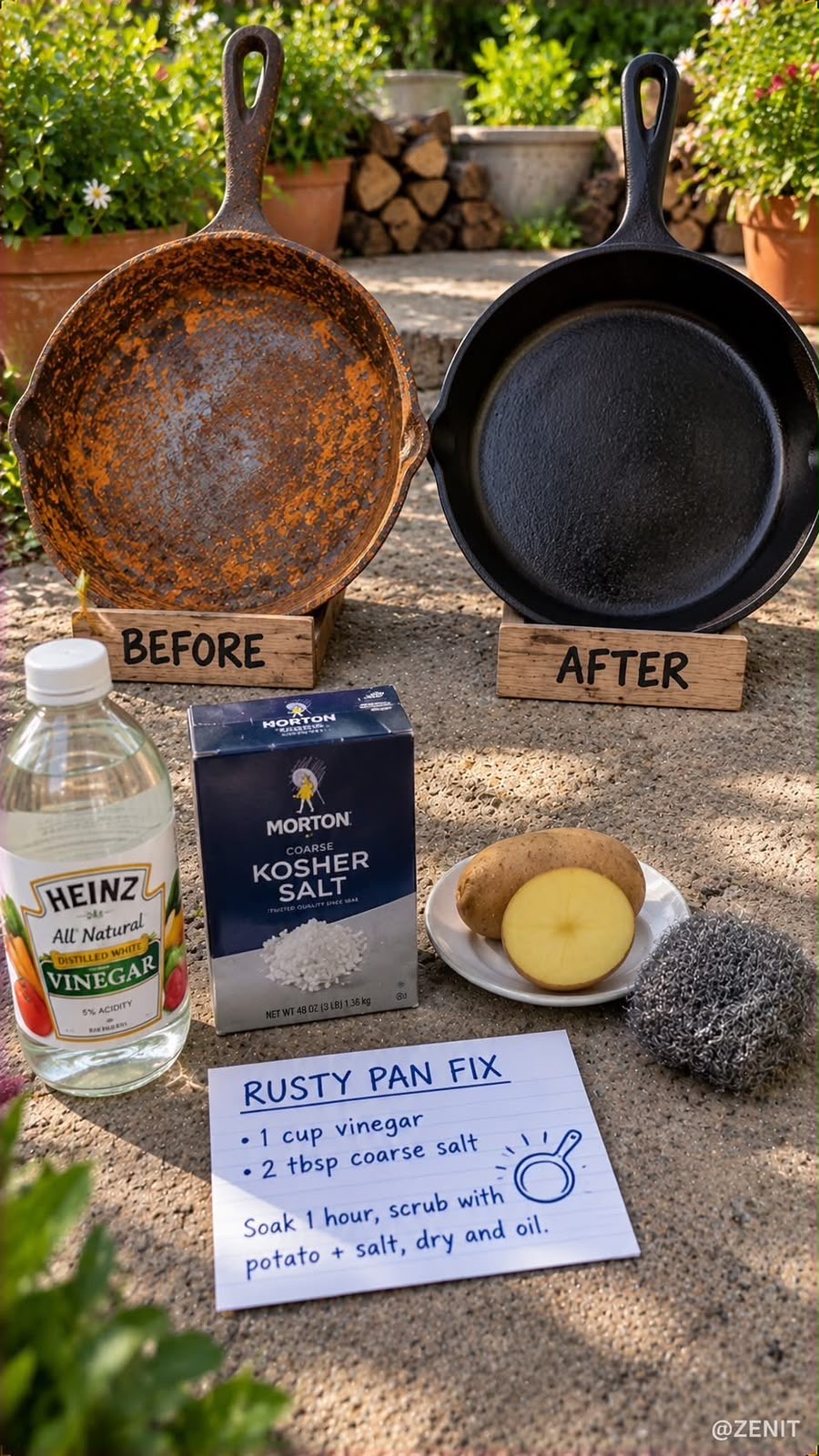
Rusty Pan Fix: How to Remove Rust with Vinegar, Salt & Potato
A rusty pan doesn’t always need to be thrown away. With a few simple household ingredients, you can loosen surface rust, scrub away the residue, and give your pan a fresh layer of protection.
This simple vinegar, salt, and potato method is especially useful for lightly to moderately rusted metal or cast-iron cookware. The potato provides a convenient surface for scrubbing, while coarse salt adds gentle abrasion and white vinegar helps loosen rust.
Rusty Pan Fix Overview
| Category | Details |
| Preparation Time | 5 minutes |
| Soaking Time | 1 hour |
| Scrubbing Time | 5–15 minutes |
| Total Time | About 1 hour 20 minutes |
| Best For | Light to moderate surface rust |
| Method | Vinegar, coarse salt & potato |
| Yield | 1 cleaned pan |
Why You’ll Love This Rust Removal Method
This method uses inexpensive ingredients that are easy to find in most kitchens.
The coarse salt helps provide friction while scrubbing, and the cut potato is comfortable to hold and easy to work across the rusty surface.
White vinegar can help loosen surface rust, making it easier to remove without relying entirely on aggressive scrubbing.
It is also a useful way to give an older pan a fresh start before re-seasoning or protecting the cooking surface.
Materials Needed
| Ingredient / Material | Amount | Purpose |
| Distilled white vinegar | 1 cup | Helps loosen surface rust |
| Coarse kosher salt | 2 tbsp | Provides abrasive scrubbing action |
| Potato | 1 | Used as a natural scrubber |
| Cooking oil | As needed | Protects and seasons the pan |
| Steel wool pad | Optional | For stubborn surface rust |
Step-by-Step Instructions
1. Prepare the Rusty Pan
Remove any loose food residue or dirt from the pan.
If the pan has large flakes of rust, gently brush or wipe away the loose pieces first.
Place the pan on a stable surface where you can work comfortably.
2. Add the Vinegar and Salt
Pour 1 cup of distilled white vinegar into the rusty pan.
Add 2 tablespoons of coarse kosher salt.
Spread the mixture over the rusty areas so the affected surface is well covered.
Let the mixture sit for approximately 1 hour.
For heavily rusted cookware, you may need additional mechanical scrubbing rather than simply extending the soaking time.
3. Scrub with the Potato
Cut the potato in half.
Take one half and place the cut side against the rusty surface.
Use firm, circular motions to scrub the pan. The salt will create additional friction while the vinegar helps loosen the rust.
Continue working over the rusty areas until the visible rust begins to lift.
Add a little more coarse salt if necessary.
4. Use Steel Wool for Stubborn Rust
If some rust remains after using the potato, an optional steel wool pad can provide stronger abrasion.
Scrub carefully and concentrate on the rusty areas rather than unnecessarily scratching unaffected surfaces.
For cast iron, avoid treating the pan as though it were stainless steel: excessive aggressive scrubbing can remove the existing seasoning.
5. Rinse Thoroughly
Once the rust has been removed as much as reasonably possible, rinse the pan thoroughly with clean water.
Make sure no vinegar or loose rust particles remain.
6. Dry the Pan Completely
Dry the pan immediately and thoroughly.
For cookware that can rust easily, place it over low heat for a few minutes to evaporate remaining moisture.
This step is particularly important because leaving water on bare metal can allow rust to return quickly.
7. Apply Cooking Oil
Once the pan is completely dry, apply a very thin layer of cooking oil.
Use a clean cloth or paper towel to spread the oil evenly over the surface.
Avoid leaving a thick, sticky layer of oil behind.
For cast-iron cookware, this oiling step can be followed by proper oven seasoning according to the manufacturer’s recommendations.
Best Tips for Removing Rust
Fresh surface rust is generally easier to remove than thick, deeply established rust. If the pan has only a few rusty spots, concentrate your scrubbing efforts on those areas.
Use coarse salt when possible because its texture provides more friction than fine table salt.
Don’t rely on vinegar alone to remove severe rust. Heavily corroded cookware may require repeated mechanical cleaning or a dedicated rust-removal method appropriate for the pan’s material.
Dry the pan immediately after rinsing. Moisture is one of the easiest ways to encourage new rust.
Always finish with a light protective layer of oil on suitable bare-metal cookware.
Best Ingredient and Material Options
Distilled white vinegar is a practical choice because it is inexpensive and acidic enough to help loosen surface rust.
Coarse kosher salt works well because its larger crystals provide useful abrasion during scrubbing.
A firm, fresh potato makes a convenient scrubber because it is easy to grip and provides a moist surface for working with the salt.
For more stubborn rust, a suitable steel wool pad can provide additional mechanical cleaning.
Variations
Potato and Salt Scrub
For very light surface rust, you may be able to skip the extended vinegar soak and use a potato with coarse salt as a simple scrub.
Vinegar and Salt Treatment
For rusty areas that need more loosening, the vinegar and salt soak can be used before mechanical scrubbing.
Stronger Mechanical Cleaning
For more established rust, use an appropriate scrubber for the cookware material. Always consider whether the pan has a protective coating or seasoning before choosing an abrasive.
What to Do After Rust Removal
Once the pan is clean and completely dry, protect the exposed metal with a thin coating of cooking oil if the cookware is designed to be seasoned.
For cast iron, proper seasoning is especially important because it helps create a protective cooking surface.
If the pan has a manufacturer-applied nonstick coating, enamel, or another special finish, follow the manufacturer’s care instructions instead of using aggressive abrasives.
Make-Ahead Instructions
The vinegar mixture itself can be prepared immediately before cleaning.
It is best to complete the soaking, scrubbing, rinsing, drying, and oiling in one session rather than leaving the pan wet after cleaning.
Storage
Store the cleaned pan in a completely dry location.
If the cookware is made from bare metal or cast iron, a very thin protective layer of oil can help reduce exposure to moisture.
Avoid storing the pan while it is damp.
Common Mistakes to Avoid
Leaving the Pan Wet
A freshly cleaned metal surface can begin developing rust again if moisture remains on it. Dry the pan thoroughly after rinsing.
Using Too Much Oil
A heavy layer of oil can become sticky and unpleasant. For seasoning or protection, a thin and even coating is generally preferable.
Scrubbing Too Aggressively
Very aggressive abrasives can damage certain finishes or remove seasoning from cast iron. Choose the scrubbing method according to the pan’s material.
Assuming Every Pan Can Be Treated the Same Way
Bare cast iron, carbon steel, stainless steel, enamel-coated cookware, and nonstick pans have different care requirements. Check the manufacturer’s recommendations when you’re unsure.
Expecting One Treatment to Remove Severe Corrosion
Deep rust or pitting may require a more intensive restoration process. A simple vinegar-and-salt treatment is best viewed as a household method for surface rust rather than a guarantee for severely damaged cookware.
Frequently Asked Questions
Can vinegar remove rust from a pan?
Vinegar can help loosen surface rust because it contains acetic acid. Mechanical scrubbing is still needed to physically remove the loosened rust.
How long should I soak the rusty pan?
This method uses approximately 1 hour of soaking. The exact time needed can vary depending on the amount of rust and the material of the pan.
Can I use regular salt?
Coarse salt is preferable because its larger crystals provide more abrasion while scrubbing.
Why use a potato?
A halved potato provides a convenient surface for holding and working the salt against the rusty area. It is an inexpensive alternative to using your bare hands for the scrubbing mixture.
Can I use steel wool?
Steel wool can help with stubborn rust on appropriate cookware, but it may scratch or damage certain finishes. Use it cautiously and only when suitable for the pan’s material.
Do I need to oil the pan afterward?
Bare metal cookware should generally be protected from moisture after rust removal. For cast iron and carbon steel, applying a thin layer of cooking oil and properly seasoning the cookware can help protect the surface.
Can this method fix deeply pitted rust?
It may improve the appearance of surface rust, but deep corrosion and pitting may not be completely reversible with a simple household treatment.
Final Thoughts
Before replacing a rusty pan, try giving it a careful cleaning. A combination of distilled white vinegar, coarse salt, a potato, thorough drying, and a thin layer of oil can be a simple approach for tackling light surface rust.
The most important part is to match the cleaning method to the cookware. Once the rust is removed, keep the pan dry and properly protected to help prevent the problem from returning.
⚠️ Safety Note: This method is intended for suitable metal cookware with surface rust. Always check the manufacturer’s care instructions, especially for nonstick, enamel-coated, or specially finished pans. If the cookware has severe corrosion, deep pitting, or a damaged coating, consider replacing it rather than attempting aggressive restoration.IA rusty pan doesn’t always need to be thrown away. With a few simple household ingredients, you can loosen surface rust, scrub away the residue, and give your pan a fresh layer of protection.
This simple vinegar, salt, and potato method is especially useful for lightly to moderately rusted metal or cast-iron cookware. The potato provides a convenient surface for scrubbing, while coarse salt adds gentle abrasion and white vinegar helps loosen rust.
Rusty Pan Fix Overview
| Category | Details |
| Preparation Time | 5 minutes |
| Soaking Time | 1 hour |
| Scrubbing Time | 5–15 minutes |
| Total Time | About 1 hour 20 minutes |
| Best For | Light to moderate surface rust |
| Method | Vinegar, coarse salt & potato |
| Yield | 1 cleaned pan |
Why You’ll Love This Rust Removal Method
This method uses inexpensive ingredients that are easy to find in most kitchens.
The coarse salt helps provide friction while scrubbing, and the cut potato is comfortable to hold and easy to work across the rusty surface.
White vinegar can help loosen surface rust, making it easier to remove without relying entirely on aggressive scrubbing.
It is also a useful way to give an older pan a fresh start before re-seasoning or protecting the cooking surface.
Materials Needed
| Ingredient / Material | Amount | Purpose |
| Distilled white vinegar | 1 cup | Helps loosen surface rust |
| Coarse kosher salt | 2 tbsp | Provides abrasive scrubbing action |
| Potato | 1 | Used as a natural scrubber |
| Cooking oil | As needed | Protects and seasons the pan |
| Steel wool pad | Optional | For stubborn surface rust |
Step-by-Step Instructions
1. Prepare the Rusty Pan
Remove any loose food residue or dirt from the pan.
If the pan has large flakes of rust, gently brush or wipe away the loose pieces first.
Place the pan on a stable surface where you can work comfortably.
2. Add the Vinegar and Salt
Pour 1 cup of distilled white vinegar into the rusty pan.
Add 2 tablespoons of coarse kosher salt.
Spread the mixture over the rusty areas so the affected surface is well covered.
Let the mixture sit for approximately 1 hour.
For heavily rusted cookware, you may need additional mechanical scrubbing rather than simply extending the soaking time.
3. Scrub with the Potato
Cut the potato in half.
Take one half and place the cut side against the rusty surface.
Use firm, circular motions to scrub the pan. The salt will create additional friction while the vinegar helps loosen the rust.
Continue working over the rusty areas until the visible rust begins to lift.
Add a little more coarse salt if necessary.
4. Use Steel Wool for Stubborn Rust
If some rust remains after using the potato, an optional steel wool pad can provide stronger abrasion.
Scrub carefully and concentrate on the rusty areas rather than unnecessarily scratching unaffected surfaces.
For cast iron, avoid treating the pan as though it were stainless steel: excessive aggressive scrubbing can remove the existing seasoning.
5. Rinse Thoroughly
Once the rust has been removed as much as reasonably possible, rinse the pan thoroughly with clean water.
Make sure no vinegar or loose rust particles remain.
6. Dry the Pan Completely
Dry the pan immediately and thoroughly.
For cookware that can rust easily, place it over low heat for a few minutes to evaporate remaining moisture.
This step is particularly important because leaving water on bare metal can allow rust to return quickly.
7. Apply Cooking Oil
Once the pan is completely dry, apply a very thin layer of cooking oil.
Use a clean cloth or paper towel to spread the oil evenly over the surface.
Avoid leaving a thick, sticky layer of oil behind.
For cast-iron cookware, this oiling step can be followed by proper oven seasoning according to the manufacturer’s recommendations.
Best Tips for Removing Rust
Fresh surface rust is generally easier to remove than thick, deeply established rust. If the pan has only a few rusty spots, concentrate your scrubbing efforts on those areas.
Use coarse salt when possible because its texture provides more friction than fine table salt.
Don’t rely on vinegar alone to remove severe rust. Heavily corroded cookware may require repeated mechanical cleaning or a dedicated rust-removal method appropriate for the pan’s material.
Dry the pan immediately after rinsing. Moisture is one of the easiest ways to encourage new rust.
Always finish with a light protective layer of oil on suitable bare-metal cookware.
Best Ingredient and Material Options
Distilled white vinegar is a practical choice because it is inexpensive and acidic enough to help loosen surface rust.
Coarse kosher salt works well because its larger crystals provide useful abrasion during scrubbing.
A firm, fresh potato makes a convenient scrubber because it is easy to grip and provides a moist surface for working with the salt.
For more stubborn rust, a suitable steel wool pad can provide additional mechanical cleaning.
Variations
Potato and Salt Scrub
For very light surface rust, you may be able to skip the extended vinegar soak and use a potato with coarse salt as a simple scrub.
Vinegar and Salt Treatment
For rusty areas that need more loosening, the vinegar and salt soak can be used before mechanical scrubbing.
Stronger Mechanical Cleaning
For more established rust, use an appropriate scrubber for the cookware material. Always consider whether the pan has a protective coating or seasoning before choosing an abrasive.
What to Do After Rust Removal
Once the pan is clean and completely dry, protect the exposed metal with a thin coating of cooking oil if the cookware is designed to be seasoned.
For cast iron, proper seasoning is especially important because it helps create a protective cooking surface.
If the pan has a manufacturer-applied nonstick coating, enamel, or another special finish, follow the manufacturer’s care instructions instead of using aggressive abrasives.
Make-Ahead Instructions
The vinegar mixture itself can be prepared immediately before cleaning.
It is best to complete the soaking, scrubbing, rinsing, drying, and oiling in one session rather than leaving the pan wet after cleaning.
Storage
Store the cleaned pan in a completely dry location.
If the cookware is made from bare metal or cast iron, a very thin protective layer of oil can help reduce exposure to moisture.
Avoid storing the pan while it is damp.
Common Mistakes to Avoid
Leaving the Pan Wet
A freshly cleaned metal surface can begin developing rust again if moisture remains on it. Dry the pan thoroughly after rinsing.
Using Too Much Oil
A heavy layer of oil can become sticky and unpleasant. For seasoning or protection, a thin and even coating is generally preferable.
Scrubbing Too Aggressively
Very aggressive abrasives can damage certain finishes or remove seasoning from cast iron. Choose the scrubbing method according to the pan’s material.
Assuming Every Pan Can Be Treated the Same Way
Bare cast iron, carbon steel, stainless steel, enamel-coated cookware, and nonstick pans have different care requirements. Check the manufacturer’s recommendations when you’re unsure.
Expecting One Treatment to Remove Severe Corrosion
Deep rust or pitting may require a more intensive restoration process. A simple vinegar-and-salt treatment is best viewed as a household method for surface rust rather than a guarantee for severely damaged cookware.
Frequently Asked Questions
Can vinegar remove rust from a pan?
Vinegar can help loosen surface rust because it contains acetic acid. Mechanical scrubbing is still needed to physically remove the loosened rust.
How long should I soak the rusty pan?
This method uses approximately 1 hour of soaking. The exact time needed can vary depending on the amount of rust and the material of the pan.
Can I use regular salt?
Coarse salt is preferable because its larger crystals provide more abrasion while scrubbing.
Why use a potato?
A halved potato provides a convenient surface for holding and working the salt against the rusty area. It is an inexpensive alternative to using your bare hands for the scrubbing mixture.
Can I use steel wool?
Steel wool can help with stubborn rust on appropriate cookware, but it may scratch or damage certain finishes. Use it cautiously and only when suitable for the pan’s material.
Do I need to oil the pan afterward?
Bare metal cookware should generally be protected from moisture after rust removal. For cast iron and carbon steel, applying a thin layer of cooking oil and properly seasoning the cookware can help protect the surface.
Can this method fix deeply pitted rust?
It may improve the appearance of surface rust, but deep corrosion and pitting may not be completely reversible with a simple household treatment.
Final Thoughts
Before replacing a rusty pan, try giving it a careful cleaning. A combination of distilled white vinegar, coarse salt, a potato, thorough drying, and a thin layer of oil can be a simple approach for tackling light surface rust.
The most important part is to match the cleaning method to the cookware. Once the rust is removed, keep the pan dry and properly protected to help prevent the problem from returning.