
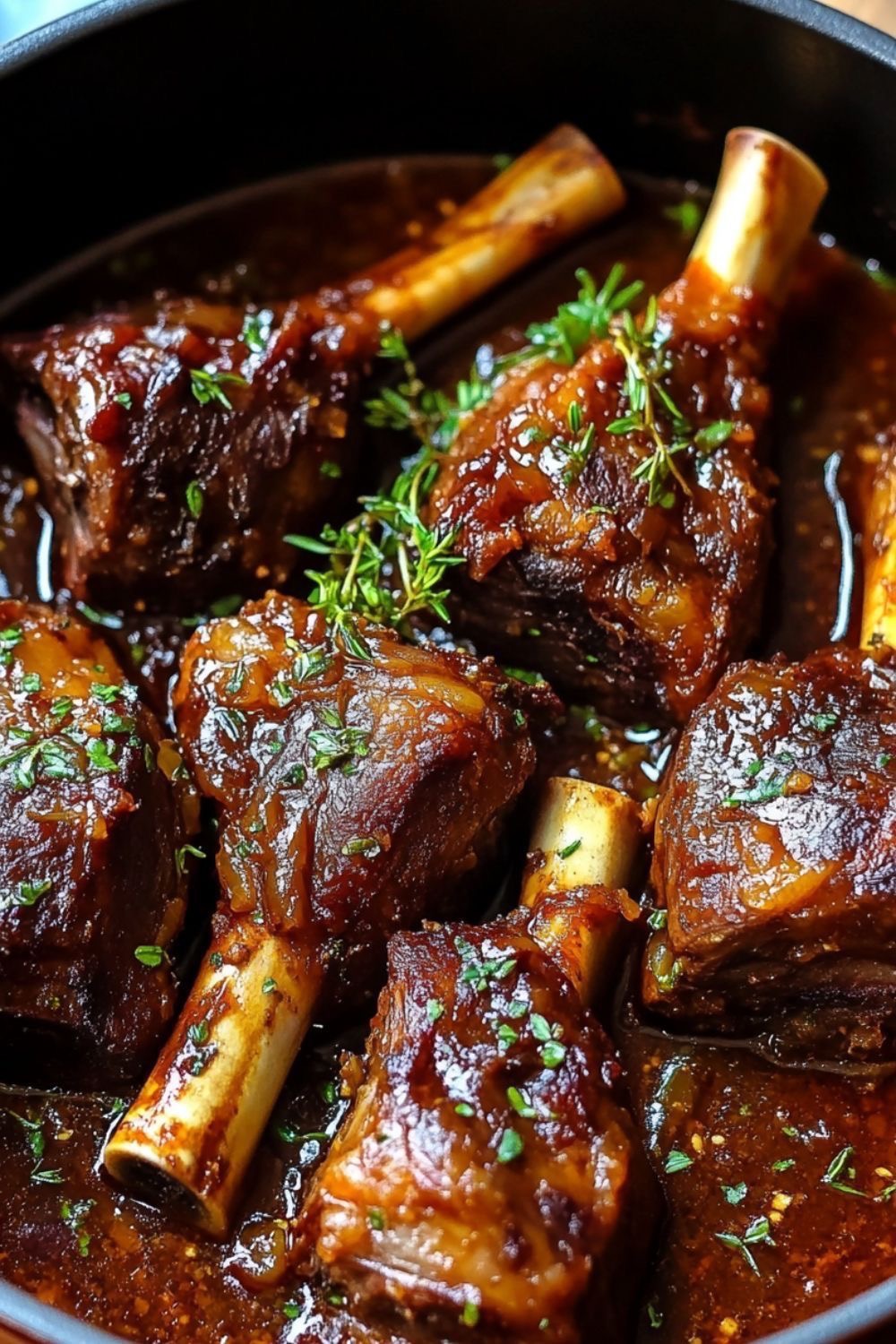
These Slow-Braised Lamb Shanks are incredibly tender, rich, and full of deep savory flavor. The lamb is first seared until beautifully browned, then slowly braised with onions, carrots, celery, garlic, tomato paste, herbs, and beef broth until the meat becomes so tender that it practically falls away from the bone.
The braising liquid is then reduced into a thick, glossy glaze and spooned generously over the lamb, creating an impressive and comforting dinner that feels perfect for a special occasion.
Using beef broth in place of wine keeps the recipe alcohol-free while still giving the sauce plenty of body and flavor.
Recipe Overview
| Category | Details |
| Prep Time | 20 minutes |
| Cook Time | 2½–3 hours |
| Total Time | About 3½ hours |
| Servings | 4 |
| Cuisine | Mediterranean-inspired |
| Course | Main Course |
| Method | Oven-Braised |
| Difficulty | Moderate |
Ingredients
For the Lamb
| Ingredient | Amount |
| Bone-in lamb shanks | 4, about 1 lb (450 g) each |
| Kosher salt | 1½ tsp |
| Freshly ground black pepper | 1 tsp |
| Olive oil | 2 tbsp |
For the Braising Sauce
| Ingredient | Amount |
| Yellow onion, finely chopped | 1 large |
| Carrots, finely diced | 2 medium |
| Celery stalks, finely diced | 2 |
| Garlic, minced | 4 cloves |
| Tomato paste | 2 tbsp |
| Beef broth | 4 cups (960 ml), divided |
| Fresh thyme | 3 sprigs |
| Fresh rosemary | 2 sprigs |
| Bay leaf | 1 |
| Fresh parsley, chopped | For garnish |
| Fresh thyme | Extra for garnish |
Instructions
1. Preheat the Oven
Preheat your oven to 325°F (160°C).
Place a large heavy-bottomed Dutch oven or oven-safe pot over medium-high heat.
2. Prepare the Lamb
Pat the lamb shanks thoroughly dry with paper towels.
Season them generously on all sides with the kosher salt and freshly ground black pepper.
Drying the lamb well before searing helps create a deeper, darker crust.
3. Sear the Lamb Shanks
Add the olive oil to the Dutch oven.
Once hot, carefully add the lamb shanks.
Sear them for approximately 8–10 minutes, turning occasionally, until deeply browned on all sides.
Do not rush this step. The browned bits created on the bottom of the pot will add tremendous flavor to the final sauce.
Transfer the browned lamb shanks to a plate and leave the rendered fat and browned bits in the pot.
4. Sauté the Vegetables
Reduce the heat to medium.
Add the chopped onion, carrots, and celery to the Dutch oven.
Cook for approximately 5–7 minutes, stirring occasionally, until the vegetables begin to soften.
Add the minced garlic and cook for another 1 minute, stirring until fragrant.
5. Cook the Tomato Paste
Add the tomato paste to the vegetables.
Cook for approximately 2 minutes, stirring frequently.
The tomato paste should darken slightly. This helps develop a deeper, richer flavor in the braising liquid.
6. Deglaze the Pot
Pour approximately 2 cups (480 ml) of beef broth into the Dutch oven.
Use a wooden spoon to scrape the bottom of the pot, loosening all the browned bits.
Bring the liquid to a vigorous simmer and cook for approximately 5–7 minutes, allowing it to reduce slightly.
7. Add the Lamb and Herbs
Return the seared lamb shanks to the Dutch oven, arranging them over the vegetables.
Pour in the remaining 2 cups (480 ml) of beef broth.
Add the thyme sprigs, rosemary, and bay leaf.
The liquid should come partway up the sides of the lamb rather than completely covering the shanks.
8. Begin the Braise
Bring the liquid to a gentle simmer on the stovetop.
Cover the Dutch oven tightly with its lid.
Transfer the covered pot to the preheated oven.
9. Slow-Braise the Lamb
Cook for approximately 2½–3 hours.
Check the lamb after about 2½ hours.
The shanks are ready when the meat is extremely tender and easily pulls away from the bone when tested with a fork.
If the meat is still firm, continue cooking and check again every 20–30 minutes.
10. Remove the Lamb
Carefully remove the Dutch oven from the oven.
Using tongs or a large spoon, gently transfer the lamb shanks to a serving platter.
Cover them loosely with aluminum foil to keep them warm while you finish the sauce.
Be careful when handling the lamb because the meat may be extremely tender and can separate from the bone.
11. Skim the Sauce
Remove the thyme, rosemary stems, and bay leaf from the braising liquid.
Use a spoon to skim away excess fat from the surface.
You can also pour the liquid through a fine-mesh strainer if you prefer a smoother sauce, although leaving the softened vegetables in the sauce creates a more rustic finish.
12. Reduce the Glaze
Place the Dutch oven back on the stovetop over medium-high heat.
Bring the braising liquid to a steady boil.
Cook uncovered for approximately 10–15 minutes, stirring occasionally, until the liquid reduces and becomes thicker, darker, and glossy.
Taste the sauce and adjust the seasoning with additional salt and pepper if needed.
13. Serve
Return the lamb shanks to the serving platter if desired.
Spoon the hot reduced glaze generously over the lamb.
Garnish with fresh thyme sprigs and chopped parsley.
Serve immediately while the lamb is hot and exceptionally tender.
Why You’ll Love This Recipe
These lamb shanks are slow-cooked until the meat becomes incredibly tender and rich.
Searing the lamb before braising creates a deeply browned exterior and adds layers of savory flavor to the sauce.
The combination of onion, carrot, celery, garlic, and tomato paste creates a flavorful foundation for the braising liquid.
The final reduction concentrates everything into a glossy sauce that is perfect for spooning over the tender lamb.
Best Tips for Success
Pat the lamb shanks completely dry before seasoning and searing. Moisture on the surface can prevent proper browning.
Do not overcrowd the Dutch oven. If necessary, sear the lamb in batches so each shank has enough contact with the hot surface.
Take time to brown the lamb deeply. A dark golden-brown crust contributes significantly to the final flavor.
Keep the Dutch oven covered during the oven braising stage so the lamb remains surrounded by moist heat.
The exact cooking time can vary depending on the size of the shanks. Tenderness is a better indicator of doneness than the clock.
Best Ingredient Options
Lamb shanks are ideal for slow braising because the long cooking time helps break down their connective tissue and produces exceptionally tender meat.
Beef broth creates a rich, savory base for the sauce.
For a slightly lighter flavor, chicken broth can be used instead.
Fresh rosemary and thyme provide a classic herb combination, while bay leaf adds subtle depth to the braising liquid.
Recipe Variations
For a Mediterranean-inspired version, add a strip of lemon zest and a pinch of dried oregano to the braising liquid.
For extra richness, stir a small knob of butter into the finished sauce after reducing it.
You can add sliced mushrooms along with the vegetables for an earthy variation.
For a slightly spicy version, add a pinch of red pepper flakes to the vegetables while they cook.
A small amount of pomegranate molasses can also be stirred into the finished sauce for a sweet-tangy Middle Eastern-inspired variation.
What to Serve With It
Creamy mashed potatoes are an excellent choice because they absorb the rich braising sauce beautifully.
For a lighter option, serve the lamb with roasted vegetables such as carrots, cauliflower, or green beans.
Rice, couscous, or pearl couscous also make excellent accompaniments.
Warm crusty bread can be served alongside the lamb to soak up every bit of the glossy sauce.
Make-Ahead Instructions
Lamb shanks are an excellent make-ahead meal because their flavor often becomes even better after resting.
Prepare the lamb completely, allow it to cool slightly, and refrigerate it in its braising liquid.
The following day, skim any solidified fat from the surface before reheating.
Warm the lamb gently in a covered Dutch oven over low heat or in a 325°F (160°C) oven until heated through.
Reduce the sauce again before serving if necessary.
Storage
Allow leftovers to cool before transferring them to an airtight container.
Store the lamb and sauce together in the refrigerator for up to 3–4 days.
Keeping the lamb in the sauce helps prevent the meat from drying out.
Reheating
For the best results, place the lamb and sauce in a covered oven-safe dish.
Reheat at 325°F (160°C) until the lamb is heated through, approximately 20–30 minutes, depending on portion size.
You can also reheat individual portions gently on the stovetop over low heat.
Avoid high heat because it can dry out the tender lamb.
Freezing
Lamb shanks freeze very well.
Allow them to cool completely before placing them in an airtight freezer-safe container with plenty of the sauce.
Freeze for up to 3 months.
Thaw overnight in the refrigerator before reheating gently in a covered dish.
Common Mistakes to Avoid
Avoid skipping the initial searing step. Browning the lamb creates important flavor for both the meat and sauce.
Do not completely cover the lamb with broth. The shanks should be partially submerged so they braise rather than boil.
Avoid cooking at too high a temperature in the oven. Low and slow cooking is what makes the lamb tender.
Do not discard the braising liquid after cooking. It contains concentrated flavor and becomes the perfect finishing sauce once reduced.
Avoid boiling the finished sauce for too long because it can become overly salty as the liquid evaporates.
Nutrition Estimate
Nutrition values are approximate and depend on the size of the lamb shanks and how much rendered fat is removed.
| Nutrient | Approx. Per Serving |
| Calories | 600–700 kcal |
| Protein | 45–55 g |
| Fat | 38–45 g |
| Carbohydrates | 12–16 g |
| Fiber | 3–4 g |
| Sugar | 6–8 g |
| Sodium | 800–1,000 mg |
Frequently Asked Questions
Why are my lamb shanks still tough?
Lamb shanks contain connective tissue that needs time to break down. If the meat is still tough, continue braising until it becomes fork-tender and begins pulling away from the bone.
Can I make these without wine?
Yes. This version uses beef broth instead of wine and still produces a rich, deeply savory sauce.
Can I use a slow cooker?
Yes. Sear the lamb and sauté the vegetables first, then transfer everything to a slow cooker. Cook on LOW for approximately 7–8 hours, or until the lamb is fork-tender. Reduce the sauce separately on the stovetop before serving.
Can I use boneless lamb?
You can, but bone-in lamb shanks are particularly flavorful and are well suited to long braising. Cooking time may also vary with the cut and size.
How do I know when lamb shanks are done?
The meat should be extremely tender and pull away from the bone easily with a fork. If it still feels firm, it needs more cooking time.
Can I prepare lamb shanks the day before?
Absolutely. They are an excellent make-ahead dish. Refrigerating them overnight also makes it easy to remove excess solidified fat from the sauce before reheating.
Final Thoughts
Slow-Braised Lamb Shanks are the definition of comforting slow-cooked food. The lamb is deeply browned before being gently braised with aromatic vegetables, garlic, tomato paste, herbs, and rich beef broth.
After several hours in the oven, the meat becomes incredibly tender and practically falls from the bone. Reducing the braising liquid at the end transforms it into a glossy, intensely savory sauce that brings the entire dish together.
Serve the lamb over creamy mashed potatoes, rice, or couscous and spoon plenty of the rich sauce over the top for a memorable, satisfying meal.