
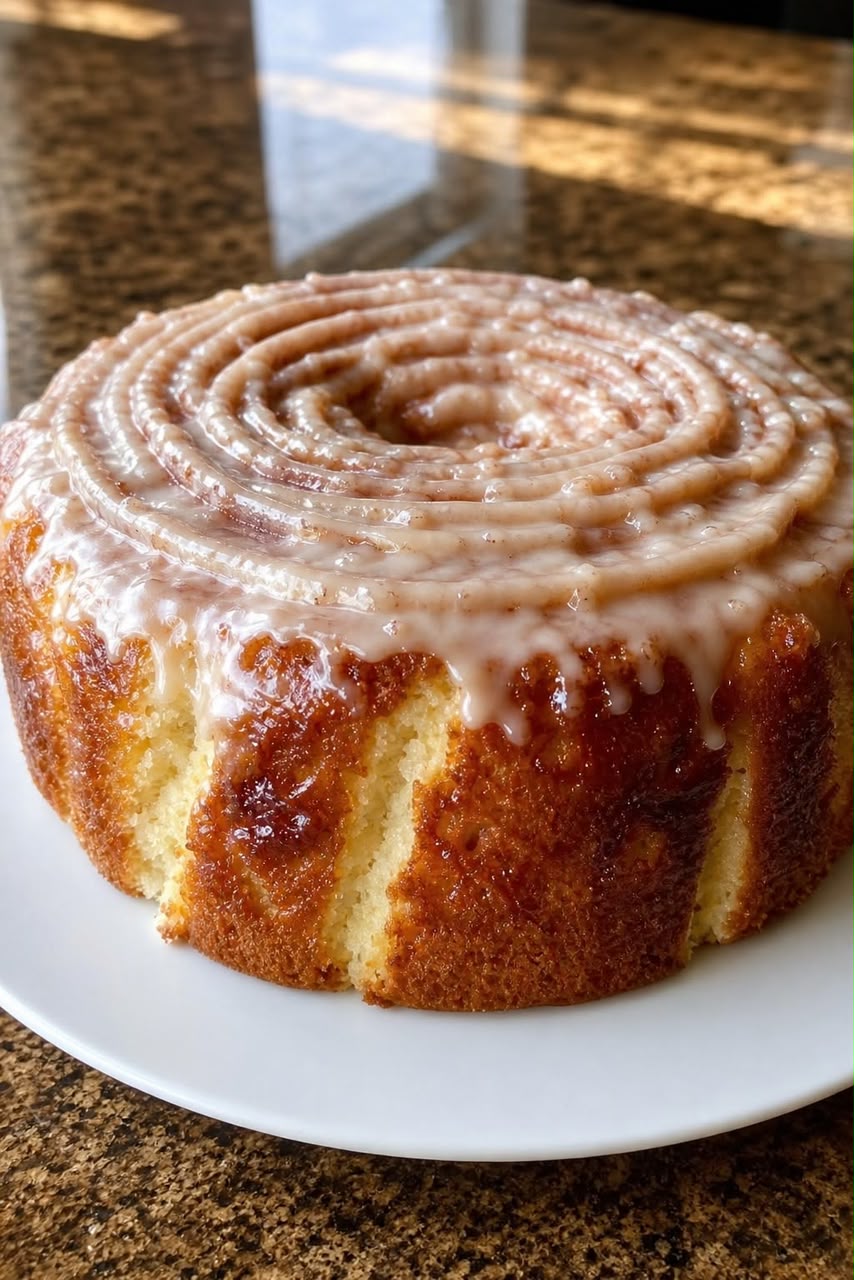
This Moist Vanilla Spiral Bundt Cake is a beautifully simple homemade dessert with a soft, buttery crumb, a golden caramelized crust, and a delicate powdered sugar glaze.
Baked in a decorative spiral or textured Bundt pan, the cake develops an elegant molded shape with concentric grooves and vertical ridges. The simple glaze naturally follows those lines, creating a beautiful semi-translucent finish without complicated decorating techniques.
With basic pantry ingredients and an easy preparation method, this cake is perfect for afternoon tea, weekend baking, family gatherings, brunch, or a simple homemade dessert.
Recipe Overview
| Details | Information |
| Recipe | Moist Vanilla Spiral Bundt Cake |
| Prep Time | 20 minutes |
| Baking Time | 40–45 minutes |
| Cooling Time | 30 minutes |
| Total Time | About 1 hour 30 minutes |
| Servings | 10–12 |
| Difficulty | Easy |
| Oven Temperature | 180°C / 350°F |
| Texture | Soft, moist, and buttery |
| Flavor | Classic vanilla |
| Glaze | Powdered sugar and milk |
Why You’ll Love This Recipe
This cake is incredibly easy to prepare while still looking elegant enough for a special occasion.
The combination of melted butter, milk, eggs, and vanilla creates a tender crumb with a rich homemade flavor.
The decorative pan gives the cake its beautiful spiral appearance, while the simple glaze settles into the grooves and creates naturally flowing drips along the sides.
You also do not need a complicated frosting. The two-ingredient glaze is quick to prepare and adds just the right amount of sweetness.
Ingredients
For the Cake
| Ingredient | Amount |
| All-purpose flour | 250 g |
| Granulated sugar | 200 g |
| Large eggs | 4 |
| Unsalted butter, melted | 150 g |
| Milk | 100 ml |
| Baking powder | 1 sachet, approximately 10–11 g |
| Vanilla extract | 1 teaspoon |
For the Glaze
| Ingredient | Amount |
| Powdered sugar | 150 g |
| Milk | 2–3 tablespoons |
You may also want a little extra butter for generously greasing the decorative pan.
Step-by-Step Instructions
1. Preheat the Oven
Preheat your oven to 180°C / 350°F.
Place the oven rack in the center position so the cake bakes evenly.
2. Prepare the Decorative Pan
Generously butter a spiral or decorative Bundt-style cake pan.
Make sure the butter reaches all the vertical ridges and concentric grooves of the pan. This is especially important when using a highly detailed mold because the cake needs to release cleanly without damaging its pattern.
For additional protection, you can lightly dust the buttered pan with flour and shake out any excess.
3. Whisk the Eggs and Sugar
Add the eggs and granulated sugar to a large mixing bowl.
Using an electric mixer or whisk, beat them for about 3–5 minutes, until the mixture becomes lighter in color, fluffy, and slightly thickened.
This helps incorporate air into the batter and contributes to a lighter texture.
4. Add the Butter, Milk, and Vanilla
Slowly add the melted butter to the egg mixture.
Pour in the milk and add the vanilla extract.
Mix gently until the ingredients are evenly combined.
Allow the melted butter to cool slightly before adding it so it is warm rather than extremely hot.
5. Add the Flour and Baking Powder
Sift the flour and baking powder together.
Gradually add the dry ingredients to the wet mixture.
Mix gently until you have a smooth batter with no visible lumps.
Avoid overmixing once the flour has been incorporated. Stop mixing as soon as the batter becomes smooth.
6. Fill the Pan
Pour the batter evenly into the prepared decorative pan.
Gently tap the pan on the counter once or twice to help release any large air bubbles.
Do not fill the pan all the way to the top. Leave some room for the cake to rise during baking.
7. Bake
Place the cake in the preheated oven and bake for 40–45 minutes.
The exact baking time can vary depending on the size and depth of your decorative pan.
The cake should develop a beautiful golden-brown, lightly caramelized crust.
Insert a toothpick or wooden skewer into the thickest part of the cake. It should come out clean or with a few moist crumbs attached.
If the cake is browning too quickly before the center is fully baked, loosely cover the top with aluminum foil for the remaining baking time.
8. Cool and Unmold
Remove the cake from the oven and let it cool in the pan for approximately 10 minutes.
Carefully loosen the edges if necessary.
Place a large serving plate over the pan, then gently turn the cake over.
Lift the pan carefully and allow the cake to cool completely.
Do not glaze the cake while it is still hot, as the glaze may become too thin and run off the surface.
How to Make the Glaze
Place the powdered sugar in a small bowl.
Gradually add 2 tablespoons of milk, stirring continuously.
Continue mixing until the glaze is completely smooth.
The glaze should be fluid enough to drizzle but thick enough to cling to the cake and slowly run down its grooves.
If the glaze is too thick, add the remaining milk a little at a time.
If it becomes too thin, add a little more powdered sugar.
How to Decorate the Spiral Cake
Place the completely cooled cake on a serving plate.
Using a spoon, slowly drizzle the glaze over the top of the cake.
Follow the natural circular lines and grooves created by the decorative pan.
Allow some of the glaze to collect in the concentric grooves before it naturally flows over the vertical ridges and down the sides.
For the most attractive finish, drizzle the glaze slowly and allow it to follow the shape of the cake rather than spreading it with a knife.
Let the glaze sit at room temperature for approximately 20–30 minutes, or until it has partially set.
Best Tips
Grease every part of the decorative pan carefully. The smallest ungreased groove can cause part of the cake to stick during unmolding.
Use eggs and milk that are close to room temperature for a smoother batter.
Do not add extremely hot butter to the eggs. Let the melted butter cool slightly before incorporating it.
Sift the flour and baking powder before adding them to the wet ingredients. This helps create a smoother batter.
Avoid overmixing the batter after adding the flour because excessive mixing can make the cake heavier.
Allow the cake to cool completely before decorating. A cool cake gives the glaze a much better consistency and appearance.
For a beautiful glaze, add the milk gradually. The amount needed can vary slightly depending on the powdered sugar.
Best Ingredient Options
For the richest flavor, use good-quality unsalted butter.
Whole milk provides a slightly richer and softer texture, although regular milk can also be used.
Pure vanilla extract gives the cake a classic vanilla aroma. You can increase the vanilla slightly if you prefer a stronger flavor.
For the glaze, finely powdered sugar creates the smoothest finish.
Recipe Variations
Lemon Vanilla Cake
Add the finely grated zest of one lemon to the cake batter. You can also replace a small amount of the milk in the glaze with fresh lemon juice.
Orange Cake
Add fresh orange zest to the batter for a naturally fragrant citrus flavor. An orange juice glaze can also be used instead of milk.
Cinnamon Vanilla Cake
Add ½ teaspoon of ground cinnamon to the dry ingredients. A tiny pinch of cinnamon can also be added to the glaze.
Almond Cake
Replace a small portion of the vanilla extract with almond extract for a delicate nutty aroma.
Chocolate Glaze
For a richer finish, mix a small amount of unsweetened cocoa powder into the powdered sugar before adding the milk.
What to Serve With
This cake pairs beautifully with freshly brewed coffee, tea, or hot chocolate.
For a lighter dessert, serve slices with fresh strawberries, raspberries, blueberries, or other seasonal fruit.
For a more indulgent presentation, add whipped cream or a scoop of vanilla ice cream alongside each slice.
The cake can also be served simply on its own because the buttery vanilla crumb and sweet glaze provide plenty of flavor.
Make-Ahead Instructions
The cake can be baked one day ahead.
Once completely cooled, keep it covered at room temperature until ready to decorate.
For the freshest appearance, prepare and drizzle the glaze on the day you plan to serve the cake.
If preparing it for a gathering, you can bake the cake the evening before and decorate it the following morning.
Storage
Store the glazed cake in an airtight cake container at room temperature for up to 3 days.
If your kitchen is particularly warm, refrigerate the cake in a tightly covered container for up to 5 days.
Allow refrigerated slices to sit at room temperature for a short time before serving for the best texture.
Reheating
This cake is delicious at room temperature, so reheating is not necessary.
If you prefer a slightly warm slice, microwave it for approximately 8–10 seconds.
Avoid heating it for too long because the glaze can melt and the cake may lose moisture.
Freezing
For the best results, freeze the cake without the glaze.
Allow the cake to cool completely, then wrap it tightly in plastic wrap and place it in a freezer-safe bag or container.
Freeze for up to 2–3 months.
Thaw the cake completely before serving.
Once thawed, prepare a fresh powdered sugar glaze and drizzle it over the cake for the best appearance.
Common Mistakes to Avoid
Do not under-grease a detailed cake pan. Every groove and ridge needs to be coated.
Do not unmold the cake immediately after taking it from the oven. Allowing it to rest for about 10 minutes helps the cake release more easily.
Do not overmix the batter after adding the flour. Mix only until the ingredients are incorporated.
Do not glaze a warm cake because the icing can become too runny and disappear into the surface.
Do not add all the milk to the powdered sugar at once. Gradual additions make it much easier to control the glaze consistency.
Do not rush the cooling process. A completely cooled cake is much easier to glaze neatly.
Nutrition Estimate
Approximate values per serving, assuming 12 servings:
| Nutrient | Estimated Amount |
| Calories | 375 kcal |
| Carbohydrates | 49 g |
| Protein | 5 g |
| Fat | 18 g |
| Saturated Fat | 10 g |
| Sugar | 29 g |
| Fiber | 1 g |
| Sodium | 180 mg |
Nutrition information is an estimate and may vary depending on ingredient brands and serving size.
Frequently Asked Questions
Can I use a regular Bundt pan?
Yes. A regular Bundt pan can be used if you do not have the specific spiral-shaped mold. The cake will still have the same soft vanilla texture and flavor.
Why did my cake stick to the decorative pan?
Detailed cake molds require thorough greasing. Make sure butter reaches every groove and ridge. Lightly dusting the greased pan with flour can provide additional protection.
Can I use salted butter?
Yes. If using salted butter, you may want to avoid adding any additional salt to the recipe.
Can I make the glaze thicker?
Yes. Add more powdered sugar until you reach a thicker, slower-dripping consistency.
Can I make the glaze thinner?
Yes. Add milk gradually, about ½ teaspoon at a time, until it reaches the desired consistency.
How do I know when the cake is done?
Insert a toothpick or wooden skewer into the center. It should come out clean or with a few moist crumbs, but no wet batter.
Can I make this cake without the glaze?
Absolutely. The vanilla cake is delicious on its own. You can simply dust it with powdered sugar before serving.
How long does the glaze take to set?
A thin glaze generally begins to set within 20–30 minutes at room temperature. A thicker glaze may take longer.
Final Thoughts
This Moist Vanilla Spiral Bundt Cake combines a tender, buttery vanilla crumb with a simple powdered sugar glaze and an elegant decorative shape.
The textured pan creates beautiful concentric grooves and vertical ridges, allowing the glaze to flow naturally over the cake and create a bakery-style presentation with very little effort.
It is an easy homemade dessert made with everyday ingredients, making it perfect for everything from a quiet afternoon coffee to a special family gathering.
Slice it once the glaze has set, serve it with your favorite hot drink, and enjoy a classic vanilla cake with a beautiful homemade finish.