
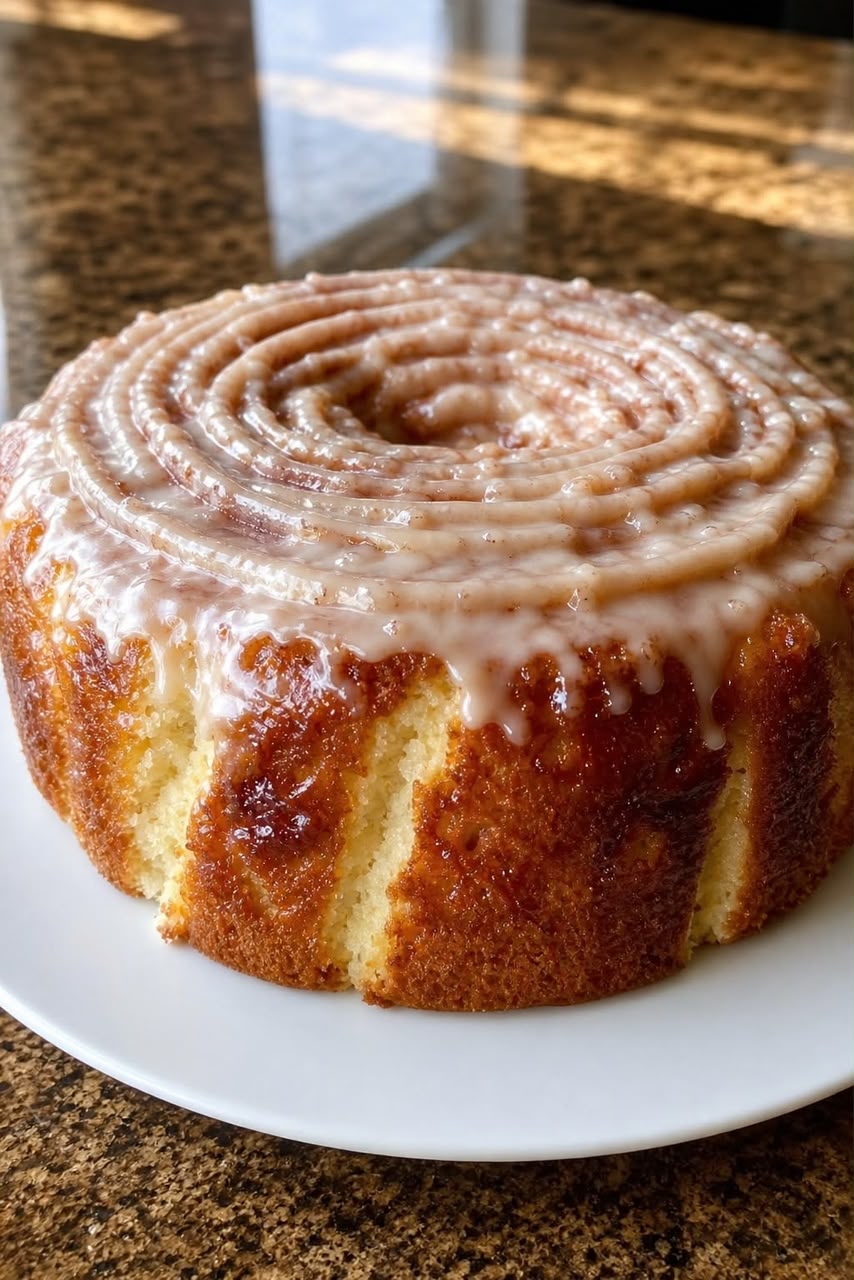
This Moist Vanilla Bundt Cake with Spiral Glaze is a simple, elegant homemade cake baked in a beautifully textured Bundt-style pan. The cake has a soft, buttery crumb, delicate vanilla flavor, and a golden caramelized exterior.
What makes this cake especially beautiful is the glaze. A simple mixture of powdered sugar, milk, and vanilla is drizzled over the ridges of the cake, naturally following the spiral and concentric grooves of the decorative pan.
It is an easy dessert for afternoon tea, family gatherings, holidays, brunch, or any occasion when you want a homemade cake that looks impressive without requiring complicated decorating skills.
Recipe Overview
| Details | Information |
| Recipe | Moist Vanilla Bundt Cake with Spiral Glaze |
| Prep Time | 20 minutes |
| Baking Time | 40–45 minutes |
| Cooling Time | 30–45 minutes |
| Total Time | About 1 hour 35 minutes |
| Servings | 10–12 slices |
| Difficulty | Easy |
| Baking Temperature | 180°C / 350°F |
| Pan | 10-inch / 25-cm decorative Bundt pan |
| Texture | Soft, moist, buttery |
| Flavor | Vanilla and lightly sweet |
Why You’ll Love This Recipe
This vanilla Bundt cake has everything you want in a homemade dessert: a tender crumb, buttery flavor, a golden crust, and a delicate sweet glaze.
The batter is made with basic pantry ingredients, so you do not need any unusual ingredients or complicated techniques.
The decorative pan does most of the work when it comes to presentation. Once the glaze is poured over the ridges, it naturally follows the shape of the cake and creates an elegant spiral effect.
This is also a versatile cake. You can serve it plain with coffee or tea, or add fresh berries, whipped cream, or a scoop of vanilla ice cream for a more indulgent dessert.
Ingredients
For the Cake
| Ingredient | Amount |
| All-purpose flour | 250 g / about 2 cups |
| Granulated sugar | 200 g / 1 cup |
| Large eggs | 4 |
| Unsalted butter, melted | 150 g / ⅔ cup |
| Milk | 100 ml / about ⅓ cup + 1 tbsp |
| Baking powder | 1 sachet / about 10–11 g |
| Vanilla extract | 1 teaspoon |
For the Vanilla Glaze
| Ingredient | Amount |
| Powdered sugar | 150 g / about 1¼ cups |
| Milk | 2–3 tablespoons |
| Vanilla extract | ¼ teaspoon |
| Ground cinnamon | A small pinch, optional |
Step-by-Step Instructions
1. Prepare the Oven and Pan
Preheat your oven to 180°C / 350°F.
Generously grease a decorative Bundt pan with softened butter, making sure to reach all the grooves, ridges, and corners.
For an especially detailed cake pan, take your time with this step. Proper greasing helps prevent the delicate textured cake from sticking during unmolding.
You can also lightly dust the greased pan with flour, then tap out any excess.
2. Whisk the Eggs and Sugar
Add the eggs and granulated sugar to a large mixing bowl.
Beat with an electric mixer for about 3–5 minutes, or until the mixture becomes noticeably lighter in color, fluffy, and slightly thickened.
This step helps incorporate air into the batter and contributes to a lighter cake texture.
3. Add the Butter, Milk, and Vanilla
Slowly pour in the melted butter while mixing gently.
Add the milk and vanilla extract and mix just until combined.
Make sure the melted butter is warm rather than piping hot before adding it to the eggs.
4. Add the Dry Ingredients
In a separate bowl, whisk together the flour and baking powder.
Gradually add the dry ingredients to the wet mixture.
Mix on low speed or use a spatula to gently combine everything until the batter is smooth and free of visible pockets of flour.
Do not overmix the batter. Stop as soon as the ingredients are incorporated.
5. Fill the Bundt Pan
Pour the batter evenly into the prepared decorative Bundt pan.
Gently tap the pan against the countertop once or twice to help release large air bubbles.
Smooth the surface with a spatula if necessary.
6. Bake the Cake
Place the pan in the center of the preheated oven.
Bake for approximately 40–45 minutes, depending on your oven and the depth of the pan.
The cake should become golden brown and slightly caramelized around the edges.
Insert a wooden skewer or toothpick into the thickest part of the cake. It should come out clean or with only a few moist crumbs attached.
If the top begins browning too quickly, loosely cover it with aluminum foil during the final part of baking.
7. Cool Before Unmolding
Remove the cake from the oven and place the pan on a cooling rack.
Allow it to cool in the pan for approximately 10–15 minutes.
Carefully loosen the edges if necessary, then gently invert the cake onto a large serving plate.
Allow the cake to cool completely before adding the glaze.
Trying to glaze the cake while it is still hot can cause the icing to melt too quickly and disappear into the cake.
How to Make the Spiral Glaze
Add the powdered sugar to a small bowl.
Gradually add 2 tablespoons of milk, stirring continuously.
Add the vanilla extract and a tiny pinch of cinnamon if desired.
Continue mixing until the glaze becomes smooth and glossy.
The ideal consistency should be thick enough to cling to the cake but fluid enough to slowly flow down the ridges.
If the glaze is too thick, add another teaspoon of milk at a time.
If it becomes too thin, add a little more powdered sugar.
How to Decorate the Cake
Place the completely cooled cake on a serving plate.
Using a spoon, slowly drizzle the glaze over the top of the cake.
Follow the natural circular grooves of the Bundt pan.
Allow the glaze to collect in the concentric ridges before letting it flow naturally down the vertical sides.
Do not try to make every drip identical. The irregular glaze pattern is what gives this cake its homemade, elegant appearance.
Allow the glaze to set at room temperature for approximately 15–30 minutes before slicing.
Best Tips
Make sure the Bundt pan is thoroughly greased, especially inside the decorative grooves. This is one of the most important steps for getting a clean, attractive cake.
Use room-temperature eggs and milk when possible. Ingredients at similar temperatures generally combine more easily and help create a smoother batter.
Do not overmix once the flour has been added. Excessive mixing can develop too much gluten and make the cake less tender.
Allow the cake to cool before glazing. A completely cooled cake gives you much better control over the glaze.
For the prettiest finish, drizzle the icing slowly rather than pouring it all in one place.
Best Ingredient Options
For the best flavor, use good-quality unsalted butter and pure vanilla extract.
Whole milk gives the cake a richer, softer texture, but 2% milk can also be used.
For a slightly more delicate flavor, you can replace a small portion of the vanilla with almond extract.
If you prefer a stronger vanilla flavor, add up to 1½ teaspoons of vanilla extract to the cake batter.
Recipe Variations
Lemon Vanilla Bundt Cake
Add the finely grated zest of one lemon to the batter. Replace part of the milk in the glaze with fresh lemon juice for a bright citrus finish.
Orange Vanilla Cake
Add 1–2 teaspoons of finely grated orange zest to the cake batter. An orange-flavored glaze made with powdered sugar and fresh orange juice works beautifully.
Cinnamon Vanilla Cake
Add ½ teaspoon of ground cinnamon to the dry ingredients. You can also add a small pinch of cinnamon to the glaze for a warm, bakery-style flavor.
Almond Vanilla Cake
Replace ½ teaspoon of the vanilla extract with almond extract. This creates a subtle almond aroma that pairs particularly well with the buttery cake.
Chocolate Glaze
For a chocolate version, combine powdered sugar with unsweetened cocoa powder and enough milk to create a smooth drizzle.
What to Serve With
Serve this moist vanilla cake with a cup of coffee, black tea, or your favorite afternoon tea.
Fresh berries such as strawberries, raspberries, blueberries, or blackberries add a refreshing contrast to the sweet glaze.
For a more indulgent dessert, serve each slice with a spoonful of whipped cream or a scoop of vanilla ice cream.
A light dusting of powdered sugar can also be added just before serving if you prefer a simpler presentation.
Make-Ahead Instructions
The cake can be baked one day ahead and stored covered at room temperature.
For the best texture, prepare the glaze shortly before serving or on the same day.
If you are preparing the cake for a celebration, bake and cool the cake the day before, then glaze it a few hours before serving.
Storage
Store the glazed cake in an airtight cake container at room temperature for up to 3 days.
Keep the cake away from direct sunlight and excessive heat.
For longer storage, refrigerate the cake in a well-covered container for up to 5 days. Allow individual slices to come close to room temperature before serving for the softest texture.
Reheating
This cake is usually best served at room temperature.
If you prefer it slightly warm, place one slice in the microwave for approximately 8–12 seconds.
Avoid overheating because the glaze can melt and the cake can become dry.
Freezing
The cake can be frozen successfully, preferably without the glaze.
Wrap the completely cooled cake tightly in plastic wrap, followed by aluminum foil or a freezer-safe container.
Freeze for up to 2–3 months.
Thaw overnight in the refrigerator or for several hours at room temperature.
Prepare a fresh glaze after thawing for the best appearance and texture.
Common Mistakes to Avoid
Do not skip greasing the decorative pan. The more detailed the pattern, the more important it is to coat every groove thoroughly.
Do not pour very hot melted butter directly into the egg mixture. Allow it to cool slightly first.
Avoid overmixing after adding the flour. A smooth batter does not require prolonged mixing.
Do not remove the cake from the pan immediately after baking. Giving it around 10–15 minutes to settle makes unmolding easier.
Avoid glazing a warm cake. The icing may become too thin and slide completely off the surface.
Do not add all the milk to the powdered sugar at once. Adding it gradually gives you better control over the consistency.
Nutrition Estimate
Approximate values per serving, based on 12 servings:
| Nutrient | Estimated Amount |
| Calories | 380 kcal |
| Carbohydrates | 49 g |
| Protein | 5 g |
| Fat | 18 g |
| Saturated Fat | 10 g |
| Sugar | 30 g |
| Fiber | 1 g |
| Sodium | 180 mg |
Nutrition information is an estimate and can vary depending on the exact ingredients, serving size, and brands used.
Frequently Asked Questions
Can I use a regular Bundt pan?
Yes. A standard Bundt pan works perfectly. The distinctive spiral appearance comes from the decorative shape of the pan, but the recipe itself does not require a specific design.
Why did my Bundt cake stick to the pan?
The most common causes are insufficient greasing, incomplete coverage of the grooves, or unmolding the cake at the wrong temperature. Grease the entire interior carefully and allow the cake to rest for about 10–15 minutes before turning it out.
Can I make the glaze thicker?
Yes. Simply add more powdered sugar until you reach the desired consistency.
Can I make the glaze thinner?
Yes. Add milk gradually, about ½ teaspoon at a time, until the glaze reaches a smooth pouring consistency.
Can I use melted butter instead of softened butter for greasing the pan?
Yes, but make sure the melted butter reaches all the grooves. A pastry brush can make this easier.
How do I know when the cake is fully baked?
Insert a wooden skewer into the center of the cake. It should come out clean or with a few moist crumbs. If wet batter remains on the skewer, continue baking for several minutes.
Can I make this cake without the glaze?
Absolutely. The cake is delicious on its own. You can simply dust the cooled cake with powdered sugar or serve it plain.
How long should the glaze take to set?
A thin glaze will usually begin setting within 15–30 minutes at room temperature. A thicker glaze may take slightly longer.
Final Thoughts
This Moist Vanilla Bundt Cake with Spiral Glaze is proof that a simple homemade cake can look spectacular with very little decorating effort.
The buttery vanilla cake develops a beautiful golden crust while remaining soft and tender inside. The powdered sugar glaze settles naturally into the decorative grooves, creating an elegant spiral finish.
Whether you serve it for a weekend dessert, afternoon coffee, brunch, or a family celebration, this easy Bundt cake is a beautiful addition to any dessert table.