
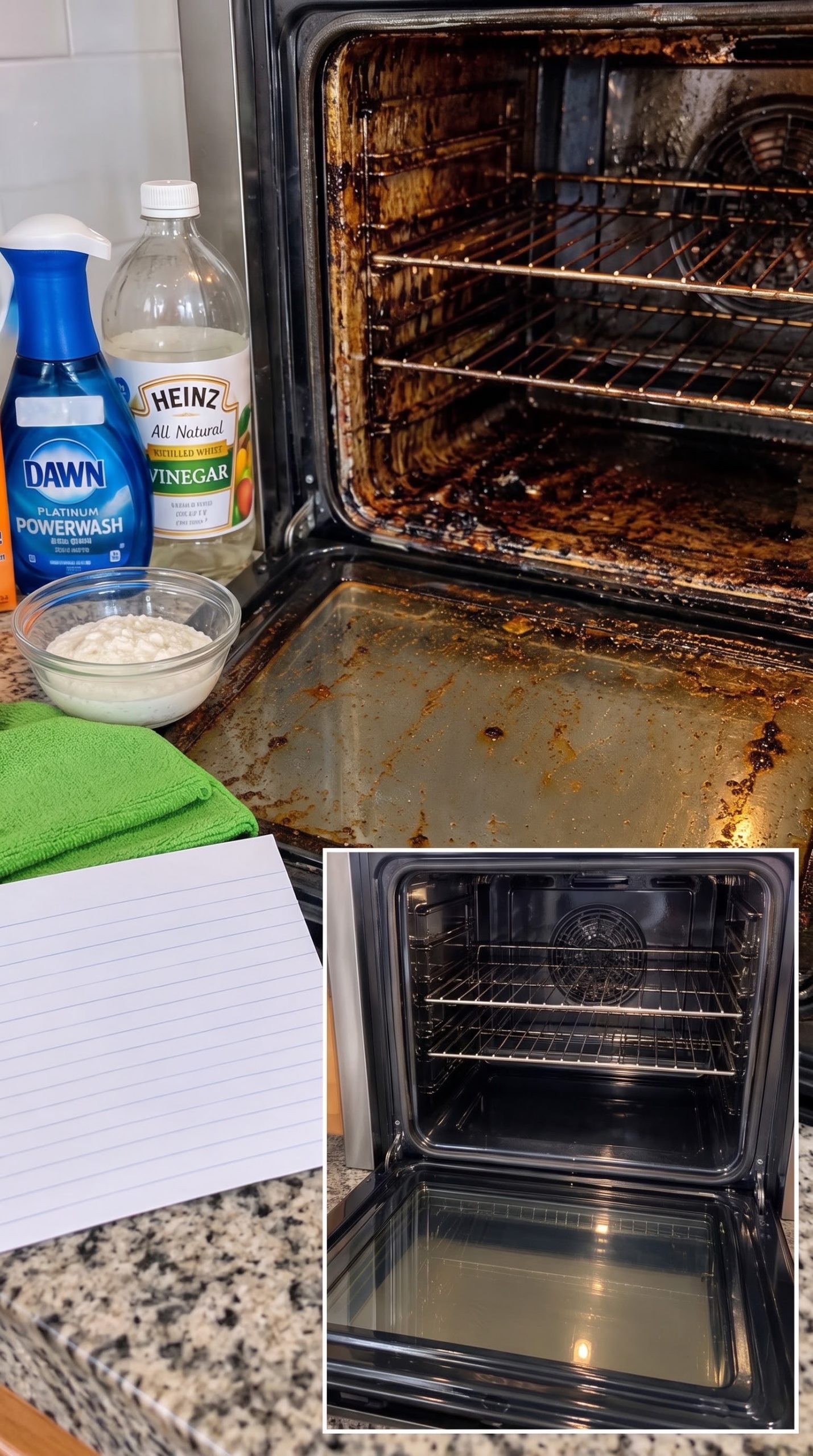
Cleaning a heavily greasy oven can feel like a difficult and time-consuming household chore. Baked-on grease, food splatters, and burnt-on residue can build up over time and make the inside of the oven look dull and dirty.
Fortunately, you can make a simple homemade oven cleaner using baking soda, dish soap, water, and white vinegar. This easy cleaning method helps loosen stubborn grease and food residue so it can be wiped away more easily.
The key is to allow the baking soda paste to sit for several hours before wiping the oven clean.
Cleaning Overview
| Detail | Information |
| Preparation Time | 10 minutes |
| Resting Time | 8–12 hours |
| Cleaning Time | 20–30 minutes |
| Total Time | About 9 hours |
| Difficulty | Easy |
| Method | Homemade oven cleaning |
| Best For | Grease, food splatters, baked-on residue |
| Yield | Enough for one standard oven |
Why You’ll Love This Homemade Oven Cleaner
This homemade oven cleaning method uses simple ingredients that are easy to find and inexpensive compared with many specialized cleaning products.
The baking soda helps loosen stuck-on food and grime while providing gentle scrubbing power when you wipe the surface.
Dish soap is especially useful for greasy areas because it helps break down oily residue.
The long soaking time is one of the most important parts of the method. Instead of relying on aggressive scrubbing, the paste is left on the dirty surfaces for several hours to help soften stubborn buildup.
White vinegar can then be sprayed over the baking soda paste to create a foaming reaction that helps loosen remaining residue and makes wiping easier.
Ingredients
For the Cleaning Paste
| Ingredient | Amount |
| Baking soda | 1/2 cup |
| Dish soap | 1 tablespoon |
| Water | 2–3 tablespoons |
For Cleaning and Finishing
| Item | Amount |
| White vinegar | In a spray bottle, as needed |
| Microfiber cloths | 2–3 |
| Non-abrasive sponge | 1 |
| Small bowl | 1 |
| Cleaning gloves | Optional |
Step-by-Step Instructions
Step 1: Prepare the Cleaning Paste
Add the baking soda to a small bowl.
Add 1 tablespoon of dish soap and 2 tablespoons of water.
Mix everything together until you have a thick, smooth paste.
If the mixture is too dry, add another small amount of water. Add it gradually because the paste should remain thick enough to spread easily over the oven walls.
Step 2: Prepare the Oven
Make sure the oven is completely cool before you begin.
Remove the oven racks and set them aside for separate cleaning.
Remove loose crumbs and large pieces of burnt food using a dry cloth or another suitable non-sharp cleaning tool.
Do not begin cleaning while the oven is hot or warm.
Step 3: Apply the Baking Soda Paste
Using a non-abrasive sponge or suitable cloth, spread a generous layer of the cleaning paste over the dirty interior surfaces of the oven.
Pay particular attention to areas with visible grease, baked-on food, and dark cooking stains.
The paste can also be applied carefully to the inside of the oven door glass if the manufacturer’s cleaning instructions allow it.
Avoid the heating elements, vents, burners, gas injectors, and other electrical or mechanical components.
Do not force the paste into the oven door gasket.
Step 4: Let It Sit
Leave the cleaning paste on the dirty surfaces for approximately 8–12 hours.
For a very dirty oven, leaving it overnight is convenient and gives the paste plenty of time to soften accumulated residue.
Keep the oven door closed during this time.
Step 5: Spray with White Vinegar
After the resting period, lightly spray white vinegar over the baking soda paste.
You may notice a foaming or bubbling reaction as the vinegar comes into contact with the baking soda.
This reaction can help loosen remaining residue and make the paste easier to remove.
There is no need to completely soak the oven. A light, even spray is enough.
Step 6: Wipe Away the Dirt
Use a damp, non-abrasive sponge to wipe away the cleaning paste and loosened grime.
For particularly stubborn areas, allow the dampened residue to sit for a few additional minutes before wiping.
Rinse the sponge frequently with warm water so that you are not simply spreading grease around the oven.
Step 7: Rinse the Surfaces
Take a clean microfiber cloth and dampen it with warm water.
Wipe all accessible surfaces carefully to remove remaining baking soda, dish soap, vinegar, and loosened dirt.
Rinse the cloth frequently and continue wiping until there is no visible cleaning residue left behind.
This step is important because leftover baking soda can leave a white film when it dries.
Step 8: Dry and Polish
Use a clean, dry microfiber cloth to wipe the oven surfaces.
Pay special attention to the oven glass and other smooth surfaces where water spots or streaks may remain.
Leave the oven door open for a while to allow any remaining moisture to evaporate completely.
Best Tips for Cleaning a Dirty Oven
Always start with a completely cool oven.
The cleaning paste should be thick rather than watery. A thick paste stays in place better, especially on vertical oven walls.
For heavy grease buildup, do not rush the process. The long resting time helps soften stubborn residue before you begin wiping.
Use a non-abrasive sponge to help protect glass and enamel surfaces from scratches.
If some stains remain after the first cleaning, repeat the treatment on those specific areas rather than aggressively scrubbing the entire oven.
A clean microfiber cloth is particularly useful for the final wipe because it helps remove residue and reduce streaks.
Best Ingredient Options
Regular baking soda is suitable for making the cleaning paste.
A grease-cutting dish soap can be useful for areas with heavy oily residue.
Plain white vinegar can be used in a spray bottle for the finishing stage.
Microfiber cloths are ideal for wiping and polishing smooth oven surfaces.
Cleaning the Oven Racks
The oven racks should be cleaned separately.
Place the racks in a sink, bathtub, or large basin, depending on their size and the manufacturer’s recommendations.
Apply a thin layer of the baking soda cleaning paste to greasy areas.
Let it sit for approximately 30–60 minutes.
Gently scrub the racks with a suitable sponge or brush, then rinse them thoroughly with clean water.
Dry the racks completely before putting them back into the oven.
Homemade Oven Cleaner Variations
For a lightly dirty oven, you can reduce the resting time and clean the oven after a few hours.
For concentrated grease stains, apply a little extra paste directly to the affected areas.
For regular maintenance cleaning, use a thinner layer of paste and avoid allowing grease and food residue to build up for long periods.
If only a small area needs cleaning, prepare a smaller batch instead of making the full recipe.
What to Avoid
Do not apply the cleaning paste to heating elements.
Do not cover gas burners, gas injectors, ventilation openings, or other technical components.
Avoid saturating electrical components with water or cleaning solutions.
Do not use steel wool or highly abrasive scrubbers on glass or enamel surfaces.
Do not mix white vinegar with bleach, ammonia, or other chemical cleaning products.
Avoid forcing cleaning paste into the oven door gasket.
Always check your oven manufacturer’s instructions before using any homemade cleaning method.
Common Mistakes to Avoid
Cleaning a Hot Oven
Never apply this cleaning paste to a hot oven. Allow the oven to cool completely before starting.
Using Too Much Water
A very watery mixture will run down the oven walls and will be difficult to control. Add water gradually until you achieve a thick paste.
Scrubbing Too Hard
Stubborn stains can be tempting to attack with a rough sponge, but excessive scrubbing may damage certain oven surfaces.
Allow the cleaning paste more time to work instead.
Skipping the Rinsing Step
Baking soda and dish soap residue can remain on the surface if the oven is not wiped thoroughly.
Use clean, damp microfiber cloths and rinse them frequently.
Applying Cleaner to Heating Elements
Heating elements should not be coated with homemade cleaning products. Keep the paste away from them.
Safety Precautions
Always make sure the oven is switched off and completely cool before cleaning.
Wear household cleaning gloves if desired, particularly if you have sensitive skin.
Keep the area well ventilated while cleaning.
Never mix vinegar with bleach, ammonia, or other household chemicals.
For gas ovens, take extra care around burners, gas openings, and injectors.
If your oven has a special coating, self-cleaning function, catalytic liners, or other manufacturer’s cleaning requirements, consult the owner’s manual before using this method.
Frequently Asked Questions
Can I leave the baking soda paste overnight?
Yes. Leaving the paste for approximately 8–12 hours can be convenient for a heavily soiled oven. Overnight application allows you to clean the oven the following morning.
Can I use this method on the oven glass?
The paste may be used on suitable oven glass surfaces, provided that the manufacturer’s instructions permit it. Apply it gently and use a non-abrasive sponge or cloth.
Do I need a lot of vinegar?
No. You only need enough white vinegar to lightly wet the baking soda paste and help loosen the residue.
What if some burnt-on stains remain?
Do not immediately resort to aggressive scrubbing. Remove the loosened residue first, then repeat the paste treatment on the remaining spots.
Can I put the paste on the heating elements?
No. Keep the cleaning paste away from heating elements and other electrical components.
Can I use this method on a gas oven?
The method can be used on appropriate interior surfaces of many gas ovens, but burners, gas injectors, vents, and other technical components must be kept free from the cleaning paste and excess moisture.
How often should I clean my oven?
The ideal frequency depends on how often you use your oven and what you cook. Wiping up spills after the oven has completely cooled can help prevent heavy buildup and make deep cleaning easier.
Final Thoughts
A heavily soiled oven does not always require hours of aggressive scrubbing. This simple homemade cleaning paste combines baking soda, dish soap, and water to help loosen grease and baked-on food residue.
After several hours of resting time, a light spray of white vinegar can help loosen the remaining paste so that the dirt can be wiped away more easily.
The most important steps are allowing enough time for the paste to work, using non-abrasive cleaning tools, and thoroughly rinsing the surfaces afterward.
With regular maintenance and quick attention to fresh spills, it can be much easier to keep your oven looking clean and fresh.