
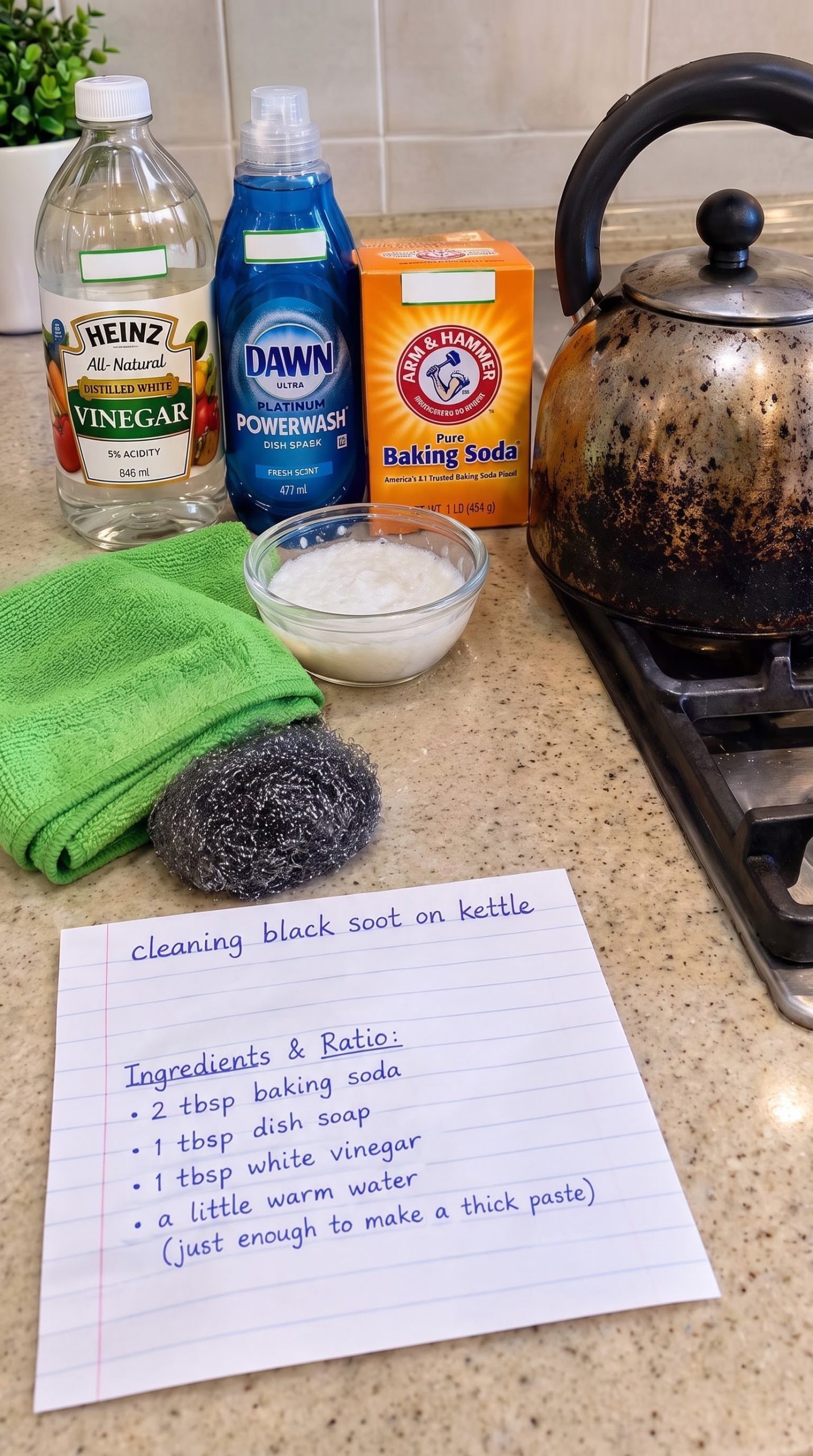
Black soot, burnt-on residue, and greasy buildup can make the outside of a kettle look dirty and difficult to clean. This simple homemade cleaning paste combines baking soda, dish soap, and white vinegar to help loosen stubborn grime and make the kettle easier to wipe clean.
Ingredients
| Ingredient | Amount |
| Baking soda | 2 tablespoons |
| Dish soap | 1 tablespoon |
| White vinegar | 1 tablespoon |
| Warm water | A small amount, as needed |
Add only enough warm water to create a thick, spreadable paste.
Equipment
| Item | Purpose |
| Small bowl | For mixing the cleaning paste |
| Cleaning sponge | For scrubbing the surface |
| Microfiber cloth | For rinsing and polishing |
| Household gloves | Optional, for protecting your hands |
Important: Steel wool can scratch some kettle finishes. Use a non-abrasive sponge whenever possible, especially on painted, polished, coated, or delicate surfaces.
Instructions
Step 1: Prepare the Cleaning Paste
Add 2 tablespoons of baking soda to a small bowl.
Add 1 tablespoon of dish soap and 1 tablespoon of white vinegar.
Mix the ingredients together. The mixture will foam slightly because the baking soda reacts with the vinegar.
Add a few drops of warm water only if needed, and continue mixing until you have a thick, smooth paste.
Step 2: Prepare the Kettle
Make sure the kettle is completely cool before cleaning.
If you are cleaning an electric kettle, unplug it first and keep the electrical base and connector away from water.
Wipe away loose dirt and surface residue with a damp cloth.
Step 3: Apply the Paste
Spread a generous but even layer of the cleaning paste over the areas covered with black soot, burnt residue, or stubborn grime.
Focus on the most heavily stained areas.
Avoid applying the mixture to electrical components, openings, switches, or the electrical base.
Step 4: Let It Sit
Allow the paste to sit for approximately 10 to 15 minutes.
This gives the mixture time to loosen some of the dirt and soften stubborn surface residue.
Do not allow the paste to completely dry and harden on the kettle.
Step 5: Scrub the Stained Areas
Using a suitable cleaning sponge, gently scrub the blackened areas using small circular motions.
For stainless steel, follow the direction of the metal grain when possible.
Although steel wool may help with very stubborn deposits on some durable, uncoated surfaces, it can leave scratches. A non-abrasive or mildly abrasive sponge is generally a safer choice.
Step 6: Rinse Thoroughly
Wipe the surface thoroughly with a clean, damp cloth to remove all traces of the cleaning paste.
Repeat with fresh water until no baking soda, dish soap, or vinegar residue remains.
Never immerse an electric kettle or its electrical base in water.
Step 7: Dry and Polish
Use a clean microfiber cloth to dry the entire exterior.
Buff the surface gently to remove water spots and restore a clean, polished appearance.
For Stubborn Soot
If some black residue remains after the first application, repeat the process rather than applying excessive pressure.
Apply a fresh, thin layer of the paste, allow it to sit for another 10 minutes, and gently scrub again with a suitable sponge.
For heavily burned surfaces, several gentle cleaning sessions are safer than aggressive scrubbing.
Best Cleaning Tips
Always test the cleaning mixture on a small, inconspicuous area first, especially if your kettle has a painted, colored, coated, or polished finish.
Avoid using steel wool on delicate surfaces because it can cause permanent scratches.
Never clean a hot kettle. Allow it to cool completely before applying any cleaning product.
For electric kettles, clean only the exterior with a damp cloth or sponge and keep all electrical parts dry.
If the inside of the kettle needs cleaning, use a separate descaling method that is appropriate for the manufacturer’s instructions. This cleaning paste is intended for exterior soot and grime.
How Often Can You Use This Cleaner?
This homemade cleaner is best used when stubborn soot, grease, or burnt residue appears on the outside of the kettle.
For regular maintenance, simply wiping the kettle with a damp microfiber cloth and a small amount of dish soap can help prevent heavy buildup.
Frequently Asked Questions
Can baking soda remove black soot?
Baking soda has mild abrasive properties and can help loosen certain types of surface grime and residue when combined with gentle scrubbing.
Can I use this cleaner on an electric kettle?
Yes, it can be used to clean the exterior of an electric kettle. However, the kettle, electrical base, plug, and other electrical components should never be submerged in water.
Can I use steel wool on my kettle?
It depends on the material and finish. Steel wool can scratch stainless steel finishes, painted surfaces, coated surfaces, and polished materials. A suitable cleaning sponge is generally a safer option.
How long should I leave the paste on the kettle?
Allow it to sit for approximately 10 to 15 minutes. There is usually no need to leave the mixture on the surface for several hours.
Can I use this recipe inside the kettle?
No. This recipe is designed for cleaning exterior soot and burnt-on residue. For the interior, use a suitable descaling method according to the kettle manufacturer’s recommendations.
Final Thoughts
This simple baking soda, dish soap, and white vinegar paste can be useful for tackling black soot, greasy marks, and stubborn exterior residue on a kettle. The key is to let the mixture work for a short time and scrub gently rather than using excessive force.
With regular wiping and careful cleaning, your kettle can stay cleaner and maintain its appearance for longer.